
Brown rice syrup has a quality most sweeteners don't: it's sticky without being cloying, and mild enough to stay in the background. That stickiness is what makes a brown rice syrup substitute tricky to choose, because the wrong swap turns a chewy granola bar into a crumbly mess or a glossy glaze into a watery drizzle.
The good news is that five common pantry ingredients each do a solid job, depending on what you're making. Ratios below are starting points, not guarantees.
Taste as you go.
Light corn syrup is the closest match for texture and stickiness at a 1:1 ratio. Honey and maple syrup work well but need a 25% reduction. Agave syrup swaps 1:1 with a slightly thinner body. Brown sugar syrup is a fast homemade fix when you have nothing else.
5 Brown Rice Syrup Swaps Ranked by Texture and Flavor
Scan the table first to find your best match, then read the section for that substitute to get ratios and quick fixes.
| # | Substitute | Best For | Ratio | Key Note |
|---|---|---|---|---|
| 1 | Light Corn Syrup | Both | 1:1 | Closest stickiness, neutral flavor |
| 2 | Honey (mild) | Both | ¾:1 | Floral, sweeter, warm slightly |
| 3 | Maple Syrup | Baking | ¾:1 | Caramel notes, deepens color |
| 4 | Agave Syrup | Both | 1:1 | Mild taste, may run thin |
| 5 | Brown Sugar Syrup | Both | 1:1 | Homemade, simmer to thicken |
1. Light Corn Syrup
Light corn syrup is the straightest swap here. It has the same thick, clinging body as brown rice syrup, and its flavor is nearly neutral, so it won't pull your recipe in a different direction.
For cookies, bar bases, and glossy glazes, this is the one to reach for first. If you find yourself needing to swap the corn syrup later too, corn syrup swaps are worth a look before you start.
Light Corn Syrup vs Brown Rice Syrup
Works for: glazes, chewy cookies, no-bake bars, any recipe where stickiness is the main job
Skip if: your recipe needs to avoid corn-based ingredients, or you want a less-processed option
- Ratio: Use exactly 1:1 with no other adjustments needed
- Glaze tip: It dries slightly shinier than brown rice syrup, which is a plus for lacquered-look glazes
- Sweetness note: Corn syrup is slightly sweeter, so reduce added sugar in the recipe by about 1 tablespoon per cup
2. Honey (Mild)
Honey sticks, pours, and coats surfaces the way brown rice syrup does, but it brings a floral note that some recipes love and others don't. Use a mild variety like clover or acacia, not buckwheat, which tastes too strong.
Honey is noticeably sweeter. Start at ¾ of the original amount, then taste the batter before adding more.
If you're curious how honey's flavor actually behaves in dishes, how honey tastes breaks it down well.
- Ratio: ¾ cup honey for every 1 cup brown rice syrup
- Warm it first: Microwave honey for 10-15 seconds so it folds into batters without seizing
- Best uses: Oat bars, granola, honey-glazed roasted vegetables, and any bake where floral flavor is welcome
Skip if you need a flavor-neutral sweetener or you're cooking for someone avoiding honey.
3. Maple Syrup
Maple syrup is a good choice when a slightly toasty, caramel-edged sweetness fits your dish. It is thinner than brown rice syrup at room temperature, but it firms up nicely in the oven and works especially well in cookies, oat bars, and gingerbread-style bakes.
It will deepen the color of what you're baking. That's usually a good thing, but worth knowing ahead of time.
If you're already out of maple syrup too, swapping maple out is a separate call to make.
- Ratio: ¾:1, because maple syrup is sweeter than brown rice syrup
- Color impact: Expect a slightly darker final color, which can look great in rustic bakes
- Thickness fix: If the batter looks too loose, chill it for 15 minutes before baking
Skip if your recipe is meant to stay toasty and neutral without any caramel flavor layered in.
4. Agave Syrup
Agave syrup is mild and pourable, which makes it a clean swap when you need something that won't alter flavor much. It works at a 1:1 ratio in most recipes.
The one issue is that it runs a little thinner than brown rice syrup in hot applications, so sauces and glazes may need a short simmer to cling properly.
Before choosing agave over corn syrup, it's worth understanding how they actually differ. The agave and corn syrup comparison covers the key texture and sweetness differences.
Agave Syrup vs Brown Rice Syrup
Works for: sauces, dressings, mildly flavored bakes, recipes that benefit from a lighter sweetness
Skip if: you need high stickiness in a no-cook recipe and can't simmer to thicken
- Ratio: 1:1, same as the original
- Thickening fix: Simmer the mixture for 1-2 minutes, stirring, if it doesn't cling as expected
- Flavor note: Agave is one of the most neutral options here, great for delicate recipes
5. Brown Sugar + Water Syrup
This is the pantry-rescue option. Combine 2 parts brown sugar with 1 part water, stir over medium heat, and simmer until it looks glossy and coats the back of a spoon.
It takes about 3 minutes and costs almost nothing.
The result is syrupy and sticky, though the caramel notes from the brown sugar do come through. If you want a lighter base and have plain white sugar instead, picking a different sugar might be worth it.
- Ratio: Use 1:1 in place of brown rice syrup once the syrup has cooled slightly
- Thickness check: If it runs off a spoon quickly, simmer 30-60 seconds more
- Best uses: Glazes, sauces, drizzles, and no-bake bar binders in a pinch
- Cool before using: Hot syrup thins out batters; let it sit 5 minutes first
Skip if your recipe needs a very specific sweetness profile and can't tolerate the caramel edge that brown sugar brings.
Making the Substitute Behave Like Brown Rice Syrup
The most common mistake people make is choosing a substitute by flavor alone and ignoring viscosity. Brown rice syrup's job in most recipes is to bind and stick, and if your swap is too thin, even the right ratio won't save a no-bake bar or a sauce that needs to cling.
Focus on matching thickness first, then dial in sweetness.
- Choose your ratio: Start with the listed ratio for your chosen substitute, then taste the batter or sauce before committing. Honey and maple syrup need a 25% reduction; corn syrup and agave use 1:1.
- Manage thickness: If the substitute is thinner than expected, simmer the mixture for 1-2 minutes on low heat, stirring, until it coats a spoon. This works for agave, honey, and brown sugar syrup equally well.
- Check sweetness late: Add any extra sugar or balancing salt after mixing in the substitute, not before. This prevents over-sweetening when your swap is already richer than brown rice syrup.
Frequently Asked Questions
Yes. Light corn syrup swaps directly at 1:1 and matches the stickiness and pour behavior of brown rice syrup closely. Reduce any additional sugar in the recipe by about 1 tablespoon per cup, since corn syrup is slightly sweeter.
Agave syrup and light corn syrup are both very mild. Agave is slightly more neutral in flavor, making it the better pick for delicate recipes where you want no added taste.
Agave runs thinner than brown rice syrup under heat. Simmer the glaze for 1-2 minutes on low heat while stirring until it coats the back of a spoon.
Yes. Both are sweeter than brown rice syrup, so use ¾ cup for every 1 cup of brown rice syrup the recipe calls for. Taste before adding more.
Yes, but keep it to half the original amount. Light molasses is intense and adds a strong bittersweet flavor, so it works best in bold bakes like gingerbread or dark sauces.
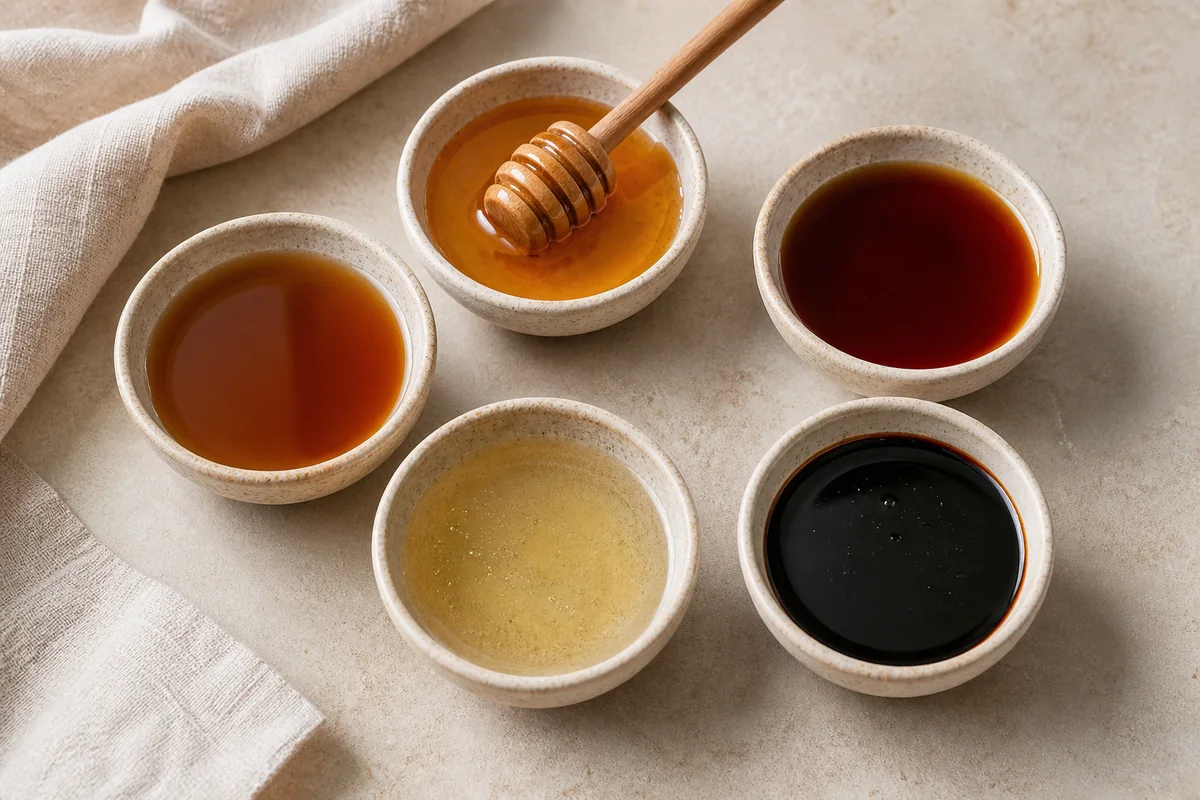
5 Best Brown Rice Syrup Substitutes (Honest Picks)
Ingredients
Equipment
Method
- Choose your substitute based on what you’re making: glaze/sauce stickiness vs cookie chew vs flavor-forward sweetness.
- Start with the listed ratio. If your substitute is thinner (agave) simmer 1–2 minutes longer to thicken.
- If your substitute is sweeter (honey, maple), start with the reduced ratio and taste the batter or sauce.
- For molasses, reduce to the emergency ratio and consider adding a pinch of salt to balance the bitterness.
- Use immediately for best adhesion, or let it cool slightly so it clings better to surfaces.
Notes
- Ratios are starting points; sweetness and thickness vary by brand and how long you cook the mixture.
Tried this recipe?
Let us know how it was!
Carrie is a food writer and editor with more than 15 years of experience. She has worked for some of the biggest names in the food industry, including Bon Appétit, Food & Wine, and Martha Stewart Living.
As the Editor in Chief of EpicureDelight, Carrie oversees all of the content on the site. She also manages the team of contributing writers and editors, who help to create delicious recipes, helpful tips, and informative articles that you’ll find on the site.
A native of the Chicago area, Carrie is passionate about all things food. She loves trying new restaurants and experimenting with new recipes in her kitchen. She’s also a graduate of the Culinary Institute of America, so she knows a thing or two about food!



