
Thick, tangy, and stubbornly spreadable-cream cheese is one of those ingredients that feels hard to replace. But the right cream cheese substitute can match both the texture and the tang without a noticeable dip in quality.
The key is knowing what your recipe actually needs. A bagel spread needs body and a little bite.
A frosting needs smoothness and staying power. A baked cheesecake needs structure that won't crack or weep.
Most swaps work at a 1:1 ratio. If the substitute looks looser than cream cheese, strain it for 20-30 minutes before using.
Strained Greek yogurt is the closest overall swap for spreads. Mascarpone wins for frosting and cheesecake. Ricotta (blended smooth) and cottage cheese (blended and drained) work well in baked goods. Crème fraîche adds tang for cold uses. All sub at a 1:1 ratio-fix texture by straining or blending first.
5 Best Cream Cheese Substitutes Ranked by Texture
| # | Substitute | Best For | Ratio | Key Note |
|---|---|---|---|---|
| 1 | Greek Yogurt (strained) | Spreads & Dips | 1:1 | Strain 20-30 min first |
| 2 | Mascarpone | Frosting & Cheesecake | 1:1 | Milder tang, add lemon |
| 3 | Ricotta (blended) | Baked Goods | 1:1 | Blend until silk-smooth |
| 4 | Cottage Cheese (blended) | Dips & Batters | 1:1 | Blend then drain whey |
| 5 | Crème Fraîche | Cold Uses & Gentle Bakes | 1:1 | Avoid high heat |
1. Greek Yogurt (Strained)
Full-fat Greek yogurt becomes genuinely cream-cheese-thick once the whey drains out. Strain it through cheesecloth for at least 20 minutes, and what's left is dense, tangy, and easy to spread.
If you're deciding whether to skip Greek yogurt entirely in your recipe, skipping yogurt altogether has its own set of options worth checking.
Strained Greek Yogurt
Works for: bagel spreads, dips, cold sauces, cheesecake-style no-bakes
Skip if: you're using low-fat yogurt or can't strain-unstrained yogurt stays thin and separates easily
- Prep: Line a sieve with cheesecloth, add full-fat yogurt, refrigerate for 20-30 minutes
- Texture: After draining, it's thick and scoopable-very close to soft cream cheese
- Tang: Slightly sharper than cream cheese; add a small pinch of sugar for sweet recipes
- Best uses: Bagels, cold dips, no-bake cheesecake fillings, savory spreads
2. Mascarpone
Mascarpone is the smoothest swap on this list. It blends without breaking, holds its shape in frosting, and produces a cheesecake texture that's genuinely hard to distinguish from the original.
The flavor is milder, though. That buttery soft cheese quality is great for desserts, but savory recipes may need a small squeeze of lemon and a pinch of salt to restore bite.
- Sweetness: Slightly richer and creamier than cream cheese; reduce added sugar by 1 teaspoon per cup
- Mixing: Blends without curdling and holds stiff peaks when whipped
- Best uses: Cheesecake, frosting, creamy pasta sauces, tiramisu layers
- Skip if: Your recipe depends on a sharp tang-mascarpone alone won't deliver it without adjustments
If mascarpone is also out, choosing a mascarpone alternative is a separate decision with its own tradeoffs.
3. Ricotta (Blended Smooth)
Ricotta's natural grain is its only obstacle. Blend it until completely smooth-about 90 seconds in a food processor-and it takes on a cream-cheese-like body that works well in baked goods.
You don't always need to drain ricotta first, but if it looks wet, a 15-minute strain helps. Track how long your ricotta has been open by checking its condition-this fresh cheese's storage window is shorter than most people expect.
- Blending: Process for at least 60-90 seconds; stop when no graininess remains
- Moisture: Drain briefly if the ricotta looks loose before blending
- Best uses: Cheesecake-style bakes, stuffed pasta fillings, baked dips
- Skip if: Your ricotta can't be blended smooth-lumpy texture won't disappear in the oven
4. Cottage Cheese (Blended and Drained)
Cottage cheese looks nothing like cream cheese straight from the container. Blend it for 60 seconds, then drain the whey, and you get something surprisingly cohesive and thick.
It's the most budget-friendly option here. The tangy dairy profile is similar enough to work in dips and batters where exact flavor isn't critical.
- Prep: Blend until smooth, then drain through a fine-mesh sieve for 15-20 minutes
- Texture: After draining, it's thick and spreadable with a mild curd-free consistency
- Tang: Milder than cream cheese; add a few drops of lemon juice for more bite
- Best uses: Cold dips, mixed batters, savory baked fillings
- Skip if: You won't drain after blending-whey makes it loose and can affect baking texture
5. Crème Fraîche
Crème fraîche is cultured and creamy with a tang that actually sits close to cream cheese. It spreads well and folds smoothly into cold recipes.
Heat is its weak point. It can split if the temperature gets too high or the bake runs too long.
Use it for cold applications or recipes baked gently at low heat.
Crème Fraîche
Works for: cold spreads, no-bake fillings, dips, gentle bakes under 325°F
Skip if: you're baking at high heat or for extended times-curdling risk increases significantly
- Consistency: Thinner than cream cheese; if it's too loose, refrigerate for 30 minutes before using
- Tang: Closer to cream cheese than mascarpone; no adjustments needed in most savory recipes
- Best uses: Savory spreads, cold dips, gentle cheesecake-style bakes, frosting blends
- Skip if: High-heat baking is involved-go with ricotta or mascarpone instead
Making Cream Cheese Substitutes Work
The decision comes down to two things: texture goal and heat level. For spreads, strain or drain first to build body.
For baked goods, blend smooth to prevent graininess. For frosting, pick a swap that's already thick enough to hold shape without help.
Once the texture is right, fix the flavor. Add a pinch of salt for savory recipes.
Add a squeeze of lemon or a half-teaspoon of sugar for sweet ones. If you're unsure how much tang to add, taste as you go-it's easier to add than to remove.
For plant-based dairy options, cashew-based versions often need both lemon and salt to land in the right flavor range.
- Strain/drain: Greek yogurt, cottage cheese, and sour cream all benefit from 15-30 minutes of draining through a fine-mesh sieve or cheesecloth
- Blend smooth: Ricotta and cottage cheese need a full 60-90 second blend before draining-don't skip this step
- Fix flavor last: For sweet applications, add a tiny pinch of sugar or a few drops of lemon; for savory, add salt in small increments and taste
If you're already working with cream cheese and wondering about its condition, checking soft cheese freshness before swapping out anything is a smart first step.
Frequently Asked Questions
Only if you strain it first. Unstrained yogurt adds moisture that can make baked goods dense or wet. Strain full-fat yogurt for 20-30 minutes, then use at a 1:1 ratio.
Line a sieve with cheesecloth and drain thick-style sour cream for 15-20 minutes. This removes enough whey to give it a spreadable, cream-cheese-like consistency.
Mascarpone is the closest match for texture and smoothness. Blended ricotta works well too, but cottage cheese needs both blending and draining to compete.
Greek yogurt and crème fraîche run tangier than cream cheese; balance with a small pinch of sugar. Mascarpone and cashew-based versions run milder; add lemon juice or salt.
Mascarpone and blended ricotta are the most heat-stable options on this list. Crème fraîche and Greek yogurt are more likely to split under direct or prolonged heat.
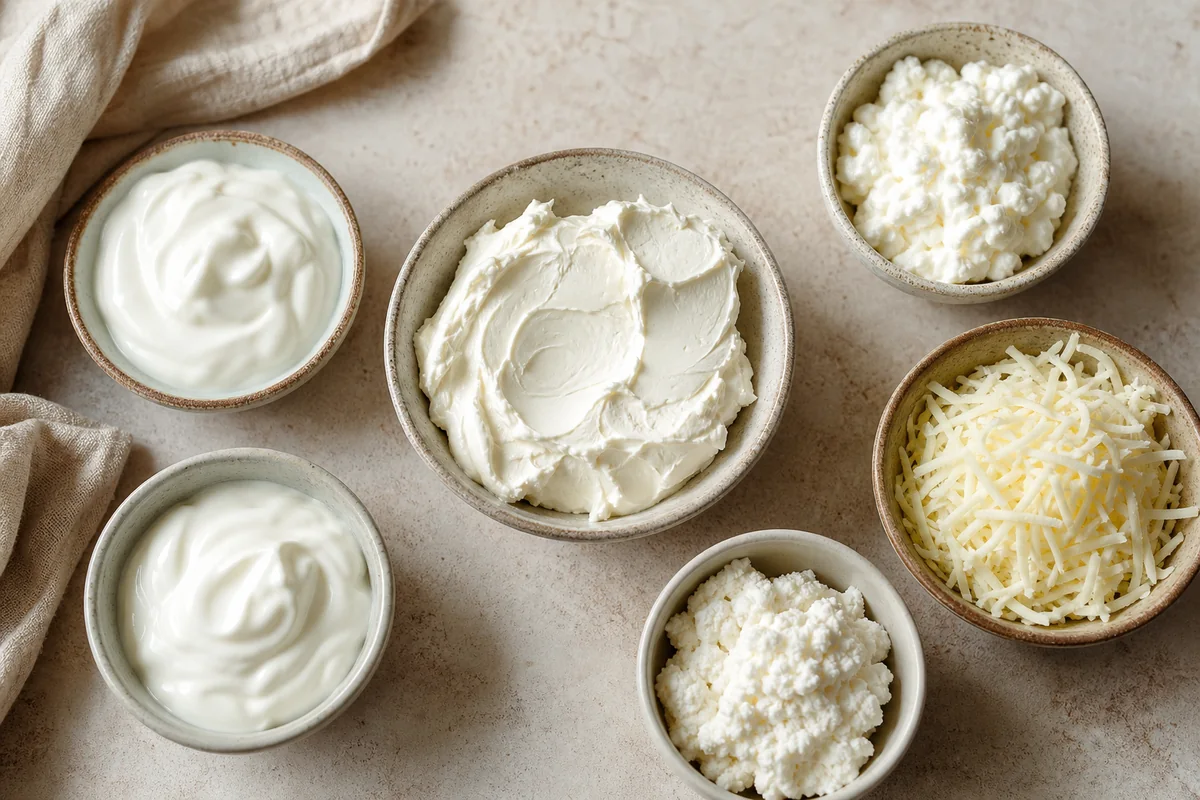
5 Best Cream Cheese Substitutes (Closest Match)
Ingredients
Equipment
Method
- Decide your use: spread/sandwich, frosting/icing, or baking (cheesecake-style vs mixed batter).
- Pick the substitute that matches texture: strain/blend for thickness; use richness-forward swaps for frosting.
- Measure using the listed ratio (1:1). If the substitute looks looser than cream cheese, drain/strain 20–30 minutes first.
- For sweet recipes, balance tang with a small pinch of sugar; for savory, add salt gradually.
- Stir well and taste-test: the goal is a creamy, cohesive texture without a watery or grainy mouthfeel.
Notes
- Strain yogurt/cottage cheese to prevent runniness.
- Blend ricotta/cottage cheese for a smooth, cream-cheese-like texture.
- Avoid overheating cultured dairy swaps; they can split if cooked too aggressively.
Tried this recipe?
Let us know how it was!
Carrie is a food writer and editor with more than 15 years of experience. She has worked for some of the biggest names in the food industry, including Bon Appétit, Food & Wine, and Martha Stewart Living.
As the Editor in Chief of EpicureDelight, Carrie oversees all of the content on the site. She also manages the team of contributing writers and editors, who help to create delicious recipes, helpful tips, and informative articles that you’ll find on the site.
A native of the Chicago area, Carrie is passionate about all things food. She loves trying new restaurants and experimenting with new recipes in her kitchen. She’s also a graduate of the Culinary Institute of America, so she knows a thing or two about food!



