
That warm, toasted smell when cumin seeds hit a dry pan is hard to fake. But if you're mid-recipe and your jar is empty, a good cumin seed substitute can carry most of that earthy, slightly bitter heat without much fuss.
The best swap depends on one thing: how your recipe uses cumin. Whole seeds toasted in oil need a seed replacement with similar texture.
Ground into a blend or stirred into a sauce, almost any earthy spice works.
Whole cumin and ground cumin are the closest swaps. Caraway seeds offer earthy depth with a mild anise edge. Fennel seeds add warmth but skew sweeter. Coriander seeds bring lemony earthiness. Nigella seeds work as an emergency swap with sharper heat.
5 Best Cumin Seed Swaps (When You're Out)
The table below covers ratio and behavior for each swap at a glance. If your recipe needs whole toasted cumin seeds for visible texture, pick a whole-seed option and crush it lightly rather than using a pre-ground spice.
| # | Substitute | Best For | Ratio | Key Note |
|---|---|---|---|---|
| 1 | Whole Cumin | Both | 1:1 | Toast, then crush |
| 2 | Ground Cumin | Sauces | 1:1 | Bloom in hot oil |
| 3 | Caraway Seeds | Both | ¾:1 | Slight anise edge |
| 4 | Fennel Seeds | Braises | ¾:1 | Sweeter, use less |
| 5 | Coriander Seeds | Both | 1:1 | Lemony, not bitter |
1. Whole Cumin
Whole cumin is the most accurate stand-in for cumin seeds, because it is the same spice in the same form. The only difference is context: if your recipe calls for "cumin seeds," you likely already have cumin seeds, so this option applies when you have a different format on hand, like pre-packaged whole cumin labeled differently.
- Flavor match: Nearly identical toasty, earthy warmth with the same slightly bitter finish
- Prep: Toast 30-60 seconds in a dry skillet, then crush lightly with a mortar or the back of a spoon
- Best uses: Tadkas, curry bases, rice dishes, spice rubs where whole seeds are visible
- Grind-friendly: Yes. Grind fully after toasting if your dish needs powdery texture
The seed-versus-ground tradeoff matters most in dishes where texture is part of the experience, like a dal tarka or roasted vegetables.
Whole Cumin in Sauces
Works for: blended sauces, slow braises, or any dish where seeds get soft and disappear into the base
Skip if: your dish needs a fast crunch of visible seed texture that won't soften during cooking
Skip if: you need powdery texture for a dry rub and can't grind. In that case, go straight to ground cumin.
2. Ground Cumin
Ground cumin is the fastest swap in this list. You measure it straight from the jar, no toasting required, and it blends immediately into any sauce, marinade, or spice mix.
The flavor is slightly flatter than freshly toasted seeds, but most dishes won't show the difference once other aromatics are in the pan.
For a deeper, more roasty seed flavor, add ground cumin to hot oil for 15-30 seconds before adding liquid. That step closes most of the gap between ground and whole.
- Ratio: 1:1 is accurate for stews, soups, curries, and slow-cooked dishes
- Blooming: Stir into 1 teaspoon hot oil for 20 seconds before adding onion or liquid for better aroma
- Most accurate in: Chili, lentil soup, marinade pastes, spice blends
Skip if: your recipe needs whole seeds for visual texture or a burst of crunch, like a finishing tarka. Ground cumin won't replicate that.
3. Caraway Seeds
Caraway and cumin share the same base earthiness, but caraway carries a mild anise-like sweetness that cumin doesn't. The difference is subtle in most cooked dishes, especially when the seeds are toasted and crushed.
If your recipe has tomato, yogurt, or heavy spice, caraway fits right in. You can find more whole spice swap options if you want to compare several earthy alternatives side by side.
- Ratio: Use ¾ the amount of cumin seeds called for
- Prep: Toast 30-60 seconds in a dry skillet, then crush lightly before adding
- Best dishes: Lentil soups, spiced rice, roasted root vegetables, flatbreads
- Texture: Similar size and firmness to cumin seeds, so the visual result is close
Skip if: the dish is heavily cumin-forward and you don't want any hint of sweetness. In that case, coriander seeds are a better pick.
4. Fennel Seeds
Fennel seeds are warmer and sweeter than cumin, with a clear licorice note. That said, the aroma is still in the "toasty spiced seed" family, and in braises, slow curries, or spiced meat dishes, fennel disappears into the background reasonably well.
Understanding that sweet-anise profile helps you decide when fennel fits and when it doesn't.
- Ratio: Use ¾ of the cumin seed amount to keep the sweetness in check
- Prep: Toast slightly longer than cumin, about 60-90 seconds, for deeper notes that balance the sweetness
- Best for: Slow braises, pork dishes, tomato-based sauces, spiced lentils
- Avoid in: Recipes where cumin's bitterness is the main flavor driver
Skip if: the recipe is cumin-forward with no other heavy spices to mask the licorice difference. You'll notice it.
5. Coriander Seeds
Coriander seeds have warm earthiness, but the flavor leans lemony and bright rather than smoky-bitter like cumin. They work well when a recipe can handle a slightly fresher note.
Think curries, yogurt-marinated dishes, and lentil soups where citrus warmth is welcome. For a better feel for what they bring, these bright, citrusy notes are worth understanding before you commit.
- Ratio: 1:1, but taste as you go since the flavor differs at the finish
- Prep: Toast 30-45 seconds, then grind for a seamless blend into spice mixes
- Best dishes: Tomato curries, yogurt marinades, lentil dal, spiced chickpeas
| Use | Ratio | Notes |
|---|---|---|
| Curry base | 1:1 | Coriander seeds, toasted and ground; adds lemony warmth |
| Spice rub | 1:1 | Grind fully after toasting for even coating |
| Lentil soup | 1:1 | Toast whole, add early; citrus note softens during simmer |
| Yogurt marinade | ¾:1 | Ground coriander; reduce slightly so it doesn't over-brighten |
Skip if: the dish needs cumin's darker bitterness. Coriander adds brightness, not smokiness.
Making Any Cumin Seed Substitute Taste Right
The key to a good swap is two steps: get the toasty base note first, then match the form your recipe needs. A seed or spice that isn't toasted or bloomed will taste raw and flat next to other aromatics.
If you want to go deeper on how cumin behaves before swapping, checking your existing stock's freshness is worth doing before you reach for an alternative.
Once you've prepped the substitute, these three steps keep the result on track.
- Match the form: If the recipe uses whole seeds, use a whole seed substitute and crush it only if the dish blends later
- Bloom ground spices: Add any ground substitute to hot oil or fat before adding aromatics or liquid for fuller aroma
- Taste at the end: Add a small pinch more substitute after simmering if the warmth feels thin, then balance with a tiny pinch of salt
If you want to compare how well each swap holds up across different dishes, sweet-seed alternatives and earthy seeds often overlap in usefulness more than you'd expect.
Frequently Asked Questions
Ground cumin is the fastest and most accurate swap for most recipes. If you need a whole seed with similar texture, caraway seeds toasted and lightly crushed come closest to cumin's earthy warmth.
Use a 1:1 ratio by volume. Add ground cumin to hot oil for 20 seconds before adding other ingredients to recover some of the toasty aroma that whole seeds provide naturally.
Yes, but use only ¾ of the amount and toast them longer for deeper notes. Fennel is sweeter and more licorice-forward, so it works best in braises or dishes with other strong spices.
Yes, but grind them first. Whole seeds in a dry rub don't blend evenly into meat or vegetables. Toast the seeds, grind to a powder, then mix into your rub.
Toast whole seed substitutes in a dry skillet for 30-60 seconds over medium heat until fragrant. For ground substitutes, stir into hot oil or fat for 15-20 seconds before adding liquid.
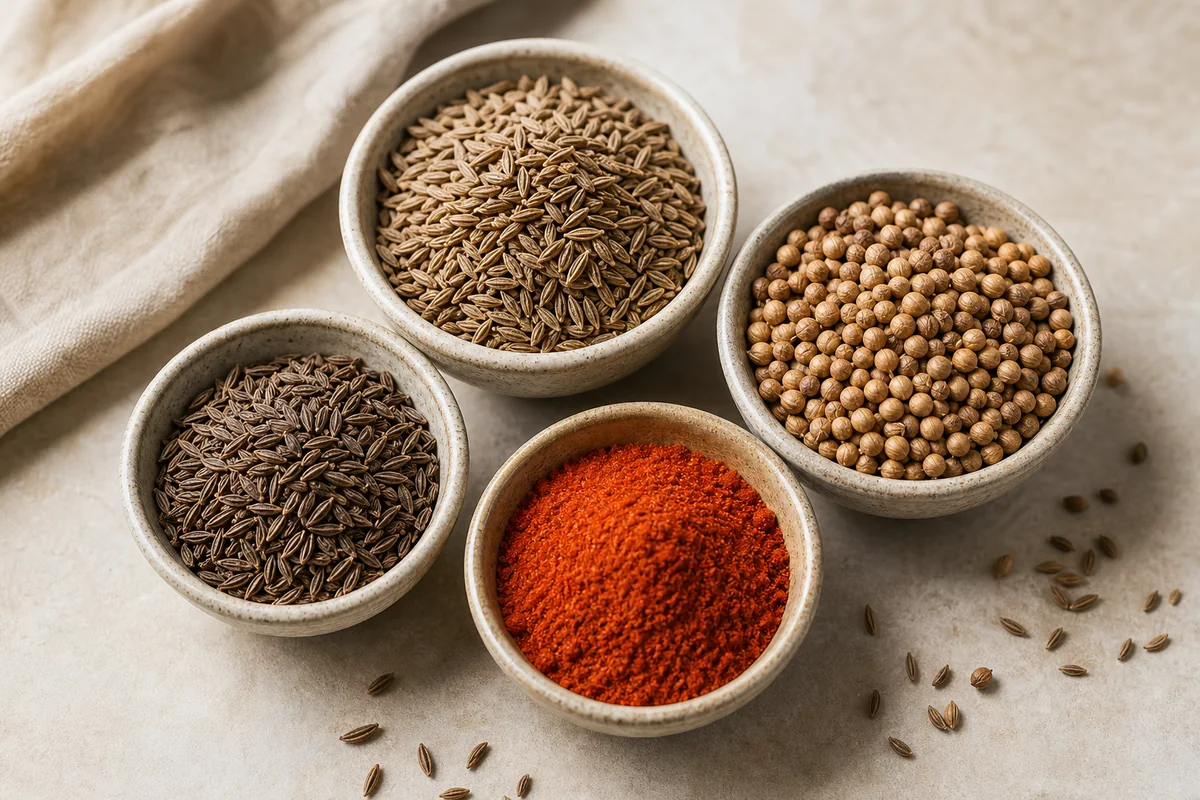
5 Best Cumin Seed Substitutes (Tested Swaps)
Ingredients
Equipment
Method
- Identify how your recipe uses cumin seeds: whole-toasted vs ground/blended, and how strongly the cumin flavor shows.
- Toast the substitute 30–60 seconds in a dry pan (especially seeds) to bring out the same “roasty” base note.
- Swap using the table ratio: for “seed” substitutes use 1:1 (or the listed reduced ratios) and adjust after simmering.
- If your dish needs a powdery texture, crush or grind the toasted substitute before adding so it blends evenly.
- Taste at the end: add a pinch more substitute for warmth, or balance with a tiny bit of salt/sugar to tame off-notes.
Notes
- Toasting is the fastest way to make substitutes taste closer to cumin seed.
- If your recipe includes cumin seeds for texture (whole specks), choose a whole-seed substitute and toast/crush lightly rather than fully grinding.
Tried this recipe?
Let us know how it was!
Carrie is a food writer and editor with more than 15 years of experience. She has worked for some of the biggest names in the food industry, including Bon Appétit, Food & Wine, and Martha Stewart Living.
As the Editor in Chief of EpicureDelight, Carrie oversees all of the content on the site. She also manages the team of contributing writers and editors, who help to create delicious recipes, helpful tips, and informative articles that you’ll find on the site.
A native of the Chicago area, Carrie is passionate about all things food. She loves trying new restaurants and experimenting with new recipes in her kitchen. She’s also a graduate of the Culinary Institute of America, so she knows a thing or two about food!



