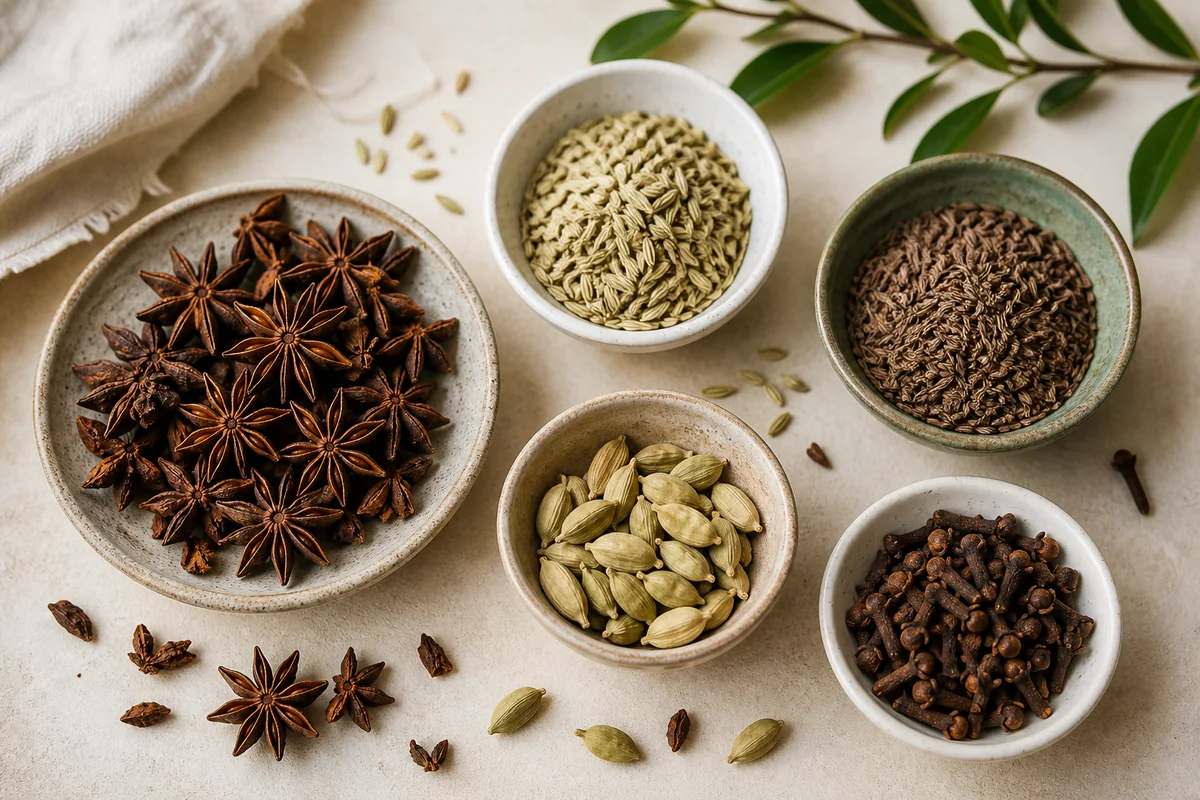
That faint sweet heat you smell when fennel seeds hit a warm pan is hard to fake, but a handful of pantry spices come very close. The fennel seed substitute you pick should match what those seeds are actually doing in your recipe, whether that's delivering anise-sweet flavor, warm aromatic depth, or both.
Fennel seed is sweet and slightly licorice-forward, with a warm background note that deepens when toasted. Most swaps copy either the sweetness or the warmth, rarely both at full strength, so knowing which one your dish needs most saves a lot of guesswork.
Ground anise seed is the closest 1:1 swap for fennel seed in most recipes. Star anise (ground) works well but is more concentrated. Caraway fits savory dishes, while fennel fronds suit finishing and light uses. Licorice root powder and anise extract are strong emergency options that need careful dosing.
Best Fennel Seed Swaps (Ratios and When to Use Each)
The right swap depends on your recipe's flavor goal. Anise-sweet profiles call for ground anise or star anise, warm-earthy profiles call for caraway, and finishing uses can lean on fennel fronds.
Concentrated forms like extract and licorice root need smaller starting doses.
| # | Substitute | Best For | Ratio | Key Note |
|---|---|---|---|---|
| 1 | Ground Anise Seed | Both | 1:1 | Closest anise-sweet flavor |
| 2 | Star Anise (ground) | Both | ¾:1 | More concentrated; adjust |
| 3 | Caraway Seed (crushed) | Savory | 1:1 | Earthy-warm, less sweet |
| 4 | Fennel Fronds (minced) | Both | ¾:1 | Herb-forward, add warm spice |
| 5 | Licorice Root Powder | Sweet | ½:1 | Very sweet; start low |
Anise extract also works in a pinch at roughly ¼:1 when the recipe has liquid components and you can stir it in evenly.
1. Ground Anise Seed
Ground anise seed is the most direct replacement for fennel seed in almost every context. The flavor is slightly sharper and more defined, but in both baked goods and savory dishes, it sits close enough that most people won't notice the difference.
Use it at 1:1 ground to ground, and if your recipe benefits from it, a brief bloom in warm fat or a 30-second dry toast brings the aroma forward quickly. You can also browse anise-seed swap ideas if you find yourself short on this one too.
Ground Anise Seed
Works for: baking (breads, biscotti, cookies), spice blends, sausage seasoning, braised vegetables
Skip if: you want zero bitterness risk-start at ¾:1 if the recipe is very delicate, then taste up
- In baking: Mix into dry ingredients just as you would fennel seed; use pre-ground for even distribution
- In savory dishes: Toast briefly in oil before adding aromatics to bloom the anise note
- Grinding tip: If you only have whole anise seeds, a spice grinder or mortar gives you a finer grind than a rolling pin
Skip if: your recipe needs a milder licorice note. Start at ¾ and taste before adding the rest.
2. Star Anise (Ground)
Star anise carries more concentration than fennel seed, so the starting ratio matters here. Grind the pods fresh if possible, since pre-ground star anise loses its punch fast in storage.
Start at ¾ of the fennel seed amount and taste before committing to a full 1:1. If the batch is mild-flavored and can carry the intensity, you can nudge it up.
Understanding the broader seed-to-pod flavor differences helps you judge how far to push it.
- Best uses: Spiced cakes, braised meats, mulled drinks, and hearty stews where a bold anise note is welcome
- Avoid whole pods: Grinding is non-negotiable here; whole pods leave fibrous bits and uneven flavor pockets
- Intensity check: After your first test batch, note whether the anise reads as background warmth or foreground punch, then adjust down by 1 teaspoon per cup of flour if it's too strong
- Storage note: Ground star anise fades in about 3 months, so check potency before relying on it
Skip if: your recipe is a light cake or delicate cookie where you can't taste-adjust mid-bake.
3. Caraway Seed (Crushed)
Caraway doesn't taste like licorice, but it brings the same kind of aromatic warmth that fennel seed adds to breads, sausages, and cabbage dishes. It's earthier and slightly more bitter at the edges.
Use it at 1:1 crushed, and if the sweet-licorice note is also important to you, stir in a small pinch of ground anise seed alongside it.
- Breads and rolls: Rye bread, seeded flatbreads, and dinner rolls all take caraway well at 1:1
- Stews and braises: Add crushed caraway early with onions so the bitterness cooks off and the warm note stays
- Cabbage dishes: This is caraway's home territory; it pairs naturally with braised or sautéed cabbage
- Sausage blends: Use the same amount as fennel seed called for, but know the result is earthier and less sweet
Skip if: your recipe leans on that sweet anise-forward profile. Caraway is the wrong tool for biscotti or anise cookies.
4. Fennel Fronds (Minced)
Fennel fronds carry the plant's characteristic flavor, but they're more herb-like and lighter than the concentrated punch of the seed. Think of them as a fresh, green echo of the seed's aroma, not a direct replica.
| Use | Ratio | Notes |
|---|---|---|
| Finishing a dish | ¾ teaspoon fronds per 1 teaspoon seed | Stir in off heat or sprinkle just before serving |
| Salad dressings | 1:1 by volume (minced) | Raw use; flavor is closest to seed when freshly chopped |
| Braised vegetables | ¾:1 | Add near the end; long cooking dulls the fresh note |
- Mix in late: Add minced fronds in the last 5 minutes of cooking to preserve the fresh anise note
- Sprinkle on top: Works well as a finishing garnish on fish, roasted carrots, or potato dishes
- Boost the base: If the flavor feels thin, a pinch of ground anise or caraway alongside the fronds fills in the gap
Skip if: you're making a bread, spice cake, or sausage blend that depends on the seed's flavor distributing evenly through the dough.
5. Licorice Root Powder
Licorice root powder is intensely sweet and carries a candy-like licorice flavor that can easily take over a recipe. It works, but it needs a careful hand from the start.
Start at ½ the amount of fennel seed the recipe calls for, then taste the raw mixture before adding more. It fits best in recipes that already lean sweet.
- Best uses: Spiced cookies, glazes, and dessert rubs where a pronounced sweet-licorice note is the goal
- Balancing bitterness: A small pinch of salt or a squeeze of citrus zest keeps the sweetness from going flat
- Start low: Begin at ½:1 and taste; many batches need nothing more than that half-dose
- Avoid acidic batters: Licorice root can turn slightly metallic when mixed with strong acids like lemon juice or buttermilk in large amounts
Skip if: you want a savory or anise-aromatic result rather than a sweet candy-forward flavor.
Making Your Fennel Seed Substitute Taste Right
Getting the swap right is mostly about two things: how you introduce the spice and how you check its strength before it's too late to adjust. Dry spices develop better flavor when they hit heat early, and concentrated substitutes like star anise or extract need a mid-recipe taste check.
For more on how these flavors behave, the flavor profile breakdown for anise is a useful frame when you're calibrating intensity.
- Bloom dry spices first: Toast ground substitutes in a dry pan for 30-60 seconds, or warm them briefly in oil or butter before adding wet ingredients; this unlocks aroma compounds that stay flat when added cold
- Adjust intensity after mixing: Once the substitute is fully incorporated into wet ingredients, taste a small amount before baking or finishing; concentrated forms like licorice root and star anise can be cut back by 25% at this stage
- Grind for even distribution: Whole seeds or pods should be ground fine so flavor spreads through the batter or dough evenly; coarse grinding leaves pockets of intensity and bitter edges
Frequently Asked Questions
Ground anise seed is the closest match at a 1:1 ratio. It shares the same anise-sweet flavor and distributes evenly in doughs and batters without adjusting the recipe's texture.
Start at ¾:1 because star anise is more concentrated than fennel seed. Taste after mixing and increase only if the flavor reads too light for your recipe.
Yes, especially for baked goods. Whole seeds leave uneven flavor pockets and can taste bitter where they concentrate; a spice grinder gives you consistent distribution.
Concentrated substitutes like star anise or licorice root powder were likely used at too high a ratio. Cut the amount by 25% next time and bloom the spice in fat to soften sharp edges.
Crushed caraway seed at 1:1 is the best fit for savory uses. It brings earthy warmth to sausage blends and seeded breads without the candy-like sweetness of anise-forward swaps.
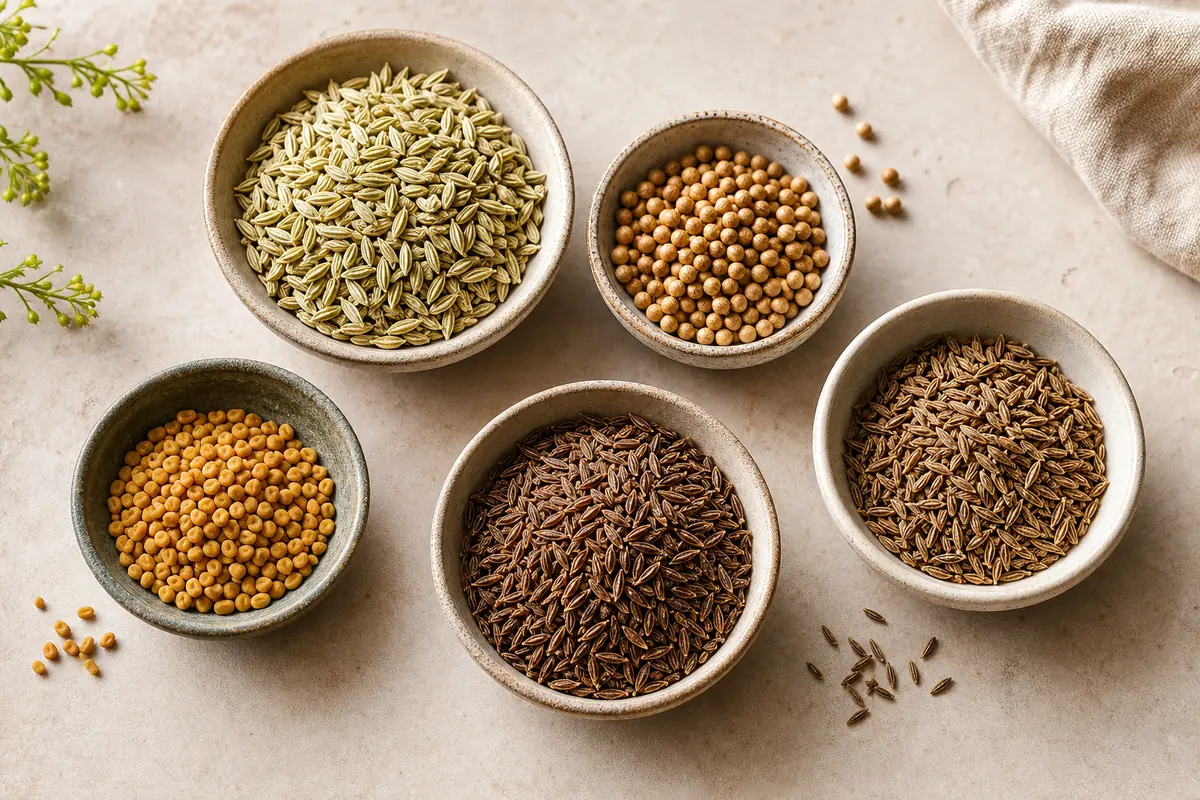
5 Best Fennel Seed Substitutes (Easy Swaps)
Ingredients
Equipment
Method
- Identify the role of fennel seed in your recipe: sweet licorice flavor, warm aromatic depth, or crunchy seed texture.
- Pick the closest match from the list above, then use the listed ratio to swap for the fennel seed amount.
- Bloom the flavor when possible: toast dry spices 30–60 seconds (stir constantly) or briefly warm in fat before adding.
- If your substitute is more concentrated (like star anise, licorice root, or extract), start slightly low and add more after tasting.
- For baking: grind whole seeds/pods (or use ground) so the flavor distributes evenly without bitter specks.
Notes
- Ground substitutes release flavor faster and more evenly than whole pods.
- Concentrated options (extract, licorice root) should be added conservatively.
Tried this recipe?
Let us know how it was!
Carrie is a food writer and editor with more than 15 years of experience. She has worked for some of the biggest names in the food industry, including Bon Appétit, Food & Wine, and Martha Stewart Living.
As the Editor in Chief of EpicureDelight, Carrie oversees all of the content on the site. She also manages the team of contributing writers and editors, who help to create delicious recipes, helpful tips, and informative articles that you’ll find on the site.
A native of the Chicago area, Carrie is passionate about all things food. She loves trying new restaurants and experimenting with new recipes in her kitchen. She’s also a graduate of the Culinary Institute of America, so she knows a thing or two about food!