
That warm, almost medicinal licorice scent rising from anise seed is hard to fake. But the good news is that several spices land close enough that your cookies, cakes, and sweet breads will still taste intentional.
Finding the right anise seed substitute is about matching flavor first, then adjusting for form. A ground spice swaps differently than a liquid extract, and potency varies enough that a 1:1 ratio is not always the right move.
This guide ranks five options by how closely they echo that licorice-anise character, with baking-specific ratios for each. Skip it entirely if you need a neutral swap with zero licorice flavor - anise is distinctive, and there is no flavorless stand-in.
Ground star anise is the closest swap at a 1:1 ratio. Fennel seed follows at 1:1 but skews slightly herbal. Anise extract works at ¼:1. Sambuca and licorice root powder are strong - both start at half the anise seed amount. All five keep the licorice note alive in baking.
Best Anise Seed Substitute Options (Quick Reference)
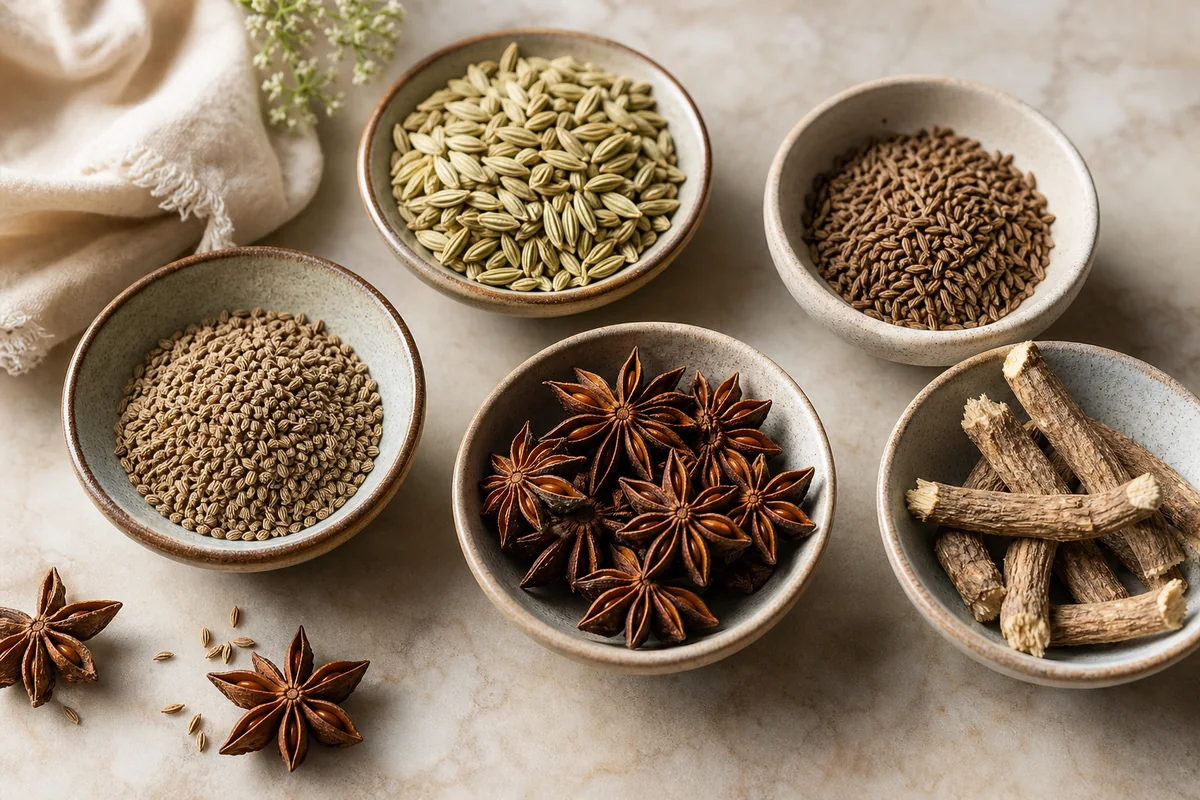
All five swaps below keep some version of the anise-licorice character. None are identical, but ground star anise and fennel seed come closest in dry baking applications.
The table below gives you a fast reference before you pick a section to read fully.
| # | Substitute | Best For | Ratio | Key Note |
|---|---|---|---|---|
| 1 | Star Anise (ground) | Both | 1:1 | Strongest dry match |
| 2 | Fennel Seed (ground) | Both | 1:1 | Slightly herbal edge |
| 3 | Anise Extract | Baking | ¼:1 | Start low, taste first |
| 4 | Sambuca | Baking | ½:1 | Adds sweetness and liquid |
| 5 | Licorice Root Powder | Baking | ½:1 | Bold; can skew sweet |
1. Star Anise (Ground)
Ground star anise is the single closest swap for anise seed. Both belong to the same aroma family - that clean, sweet licorice hit - but star anise is measurably stronger, so do not exceed the 1:1 ratio even if you want more punch.
Read up on the full anise vs star anise flavor differences before using it in a delicate bake, because the gap in intensity matters in thin batters.
- Grind it fresh: Whole star anise ground in a spice grinder gives a finer, more even result than pre-ground.
- Ratio: Use exactly 1:1 (ground star anise : anise seed). Do not add extra to compensate for any perceived difference.
- Best uses: Anise cookies, spiced cakes, sweet breads - any bake where anise seed would be ground anyway.
Skip if: your recipe relies on whole seed texture or very subtle anise fragrance. Ground star anise can overpower a light batter quickly.
Ground Star Anise vs. Anise Seed
Works for: cookies, spiced loaves, biscotti, and cakes where seed is ground or crushed before mixing
Skip if: recipe is very delicate (like chiffon or angel food), or whole seed texture is needed for visual appeal
2. Fennel Seed (Crushed or Ground)
Fennel seed reads as anise-adjacent in most baked goods, though it carries a brighter, slightly green note that anise seed does not. For cookies and quick breads, most tasters will not notice the difference.
If you want to understand exactly what fennel seed tastes like before committing, that comparison is worth a quick check.
- Ratio: 1:1 (fennel seed : anise seed), both ground or crushed to the same texture.
- Best uses: Anise biscotti, spiced shortbread, savory-sweet flatbreads, and holiday cookies.
- Flavor note: Fennel runs slightly more herbal; add a tiny pinch of sugar if you want to nudge it sweeter.
Skip if: the dessert is vanilla-forward or very delicate. Fennel's green edge can push a simple butter cookie in a direction that reads more savory than sweet. Also, if you ever need fennel seed swaps in a different recipe, that resource covers the reverse situation.
3. Anise Extract
Anise extract is fully concentrated, so the swap math changes completely. Where anise seed measures in teaspoons, extract measures in fractions.
The rule of thumb is ¼ teaspoon of extract per 1 teaspoon of anise seed, and you should taste before adding more.
Understanding the broader difference between anise seed vs anise extract can help you decide when extract actually outperforms the seed (like in smooth custards or glazes where specks would stand out).
| Anise Seed Called For | Extract Start Dose | Notes |
|---|---|---|
| 1 tsp | ¼ tsp | Taste batter; add ⅛ teaspoon more if needed |
| 2 tsp | ½ tsp | Mix thoroughly before tasting |
| 1 tbsp | ¾ tsp | Reduce other liquid by 1 teaspoon if batter is thin |
- Mixing matters: Extract can pool if added too fast; stir it into a wet ingredient before combining with flour.
- No liquid adjustment needed for small doses (¼ tsp), but at ¾ teaspoon or more, reduce another liquid by 1 tsp.
Skip if: you need visible seed specks in the crumb, or if you want the slow-release aroma that whole or crushed seed gives as it bakes. Extract flavor can fade faster at high heat than whole spice does.
4. Sambuca (Anise Liqueur)
Sambuca brings strong licorice flavor alongside sweetness and alcohol, which means it does double duty but also double risk. Start at ½ tablespoon of sambuca per 1 tablespoon of anise seed called for, and reduce another liquid in the recipe by the same volume to keep the batter balanced.
If you ever run out of sambuca itself, sambuca substitutes follow a similar logic to what we're doing here - flavor-matching first, then adjusting for sweetness.
Sambuca vs. Dry Spice Swaps
Works for: biscotti, anise-flavored syrups, glazes, moist cakes, and dense cookies where a touch of spirit adds depth
Skip if: the recipe is already sweet, uses a lot of eggs or dairy, or is a dry bake where extra liquid disrupts the crumb
- Ratio: ½:1 (sambuca : anise seed). Start conservative.
- Alcohol bakes off: Most of the alcohol evaporates in the oven, but flavor remains - expect it to taste sweeter than pure seed.
- Liquid balance: Reduce milk or water in the recipe by the same volume of sambuca you add.
- Best uses: Italian-style cookies, cake syrups, and glazes where a little sweetness is welcome.
Skip if: you are baking for children or anyone avoiding alcohol, even in small amounts. The concentration in an unbaked batter is real.
5. Licorice Root Powder (Ground)
Licorice root powder delivers a bold, direct licorice note, but it carries a sweetness that is more candy-like than the spice-like warmth of anise seed. It is also earthy in a way that can read muddy in delicate batters, so this is best reserved for dense, darker bakes.
- Ratio: ½:1 (licorice root powder : anise seed). Start at half and taste the raw batter before adding more.
- Best uses: Spiced cakes, dark gingerbread, dense molasses cookies, or any bake with caramel or brown sugar already present.
Skip if: you want a clean, classic anise-seed profile. Licorice root tilts toward candy rather than spice, which can feel out of place in lighter shortbread or vanilla-based recipes. For very spiced bakes that could also take a blended spice approach, knowing what chinese five spice powder contributes helps you compare your options.
Making Anise Seed Substitutes Taste Right (So They Blend In)
Getting the flavor to sit naturally in your bake takes one extra step beyond swapping and measuring. The biggest mistake is treating all substitutes as if they behave like the seed itself - they don't.
If you're curious about swapping chinese five spice powder in related spiced recipes, the same principle of adjusting potency applies there too.
- Crush or grind whole spices: Whole fennel seed or star anise pods should be ground fine before measuring - whole pieces release flavor unevenly and can leave hard bits in soft batters.
- Add liquids last and adjust: When using extract or sambuca, stir them into another wet ingredient first, then taste the combined mixture before it hits the dry ingredients; this gives you one calibration step before it's mixed in for good.
- Start small, bake one: For cookie batches, bake a single test cookie first. A full tray based on untested potency is a common and avoidable loss.
Frequently Asked Questions
Yes, fennel seed works at a 1:1 ratio when crushed or ground to the same texture. Expect a slightly brighter, more herbal edge rather than pure licorice.
Start at ¼ teaspoon of extract for every 1 teaspoon of anise seed. Mix it into a wet ingredient first, then taste before adding the full amount.
Yes. Whole star anise pods won't distribute evenly in batter. Grind them fine in a spice grinder and then measure at the 1:1 ratio.
Not adjusting for the added liquid. Sambuca makes batters thinner and sweeter - always reduce another liquid in the recipe by the same volume you add.
Use ¾ teaspoon of five-spice per 1 teaspoon of anise seed. The blend includes clove and cinnamon, so it will read as "spiced" rather than purely anise.
5 Best Anise Seed Substitutes That Taste Right
Ingredients
Equipment
Method
- Identify the form you have (whole spice, ground spice, extract, or liqueur) and what you’re baking (cookie, cake, bread, or custard).
- Pick the closest category from the table: ground star anise or fennel seed for the most direct flavor match.
- Apply the listed ratio. For whole spices, crush or grind so the flavor disperses evenly in batter.
- If your substitute is liquid or very potent (extract, liqueur, licorice root), reduce other liquids and start at the low end of the ratio.
- Taste-adjust only after baking the first portion (or during mixing if your batter is thin) so you can tune next time.
Notes
- Ground whole spices release flavor faster and more evenly than leaving them whole.
- For strong substitutes (extract, licorice root), begin lower to avoid a bitter or candy-like finish.
- Five-spice varies by brand; use slightly less and expect a broader spice profile.
Tried this recipe?
Let us know how it was!
Carrie is a food writer and editor with more than 15 years of experience. She has worked for some of the biggest names in the food industry, including Bon Appétit, Food & Wine, and Martha Stewart Living.
As the Editor in Chief of EpicureDelight, Carrie oversees all of the content on the site. She also manages the team of contributing writers and editors, who help to create delicious recipes, helpful tips, and informative articles that you’ll find on the site.
A native of the Chicago area, Carrie is passionate about all things food. She loves trying new restaurants and experimenting with new recipes in her kitchen. She’s also a graduate of the Culinary Institute of America, so she knows a thing or two about food!



