
That orange-cognac bite in a good Margarita or a Crêpes Suzette sauce is surprisingly hard to fake, but not impossible. Grand Marnier substitutes work best when you match two things: orange aroma and a mild aged-spirit warmth. Skip either one and the recipe tastes thinner than it should.
Most swaps use a 1:1 ratio, though extract-based options need scaling down fast. The table below gives you the ratios up front, so you can pick and adjust before you start cooking.
The closest grand marnier substitute is Cointreau at a 1:1 swap, which matches orange brightness with mild spirit warmth. Premium Triple Sec works nearly as well. For the cognac depth, blend orange liqueur with brandy. Extract-based options suit baking when no liqueur is on hand.
5 Best Grand Marnier Substitutes Ranked by Flavor Closeness
Most 1:1 swaps work straight from the bottle for orange-liqueur recipes. Adjust sweetness by 1-2 teaspoon if your result tastes flat or sharp after a taste test.
| # | Substitute | Best For | Ratio | Key Note |
|---|---|---|---|---|
| 1 | Cointreau | Both | 1:1 | Closest orange profile |
| 2 | Premium Triple Sec | Both | 1:1 | Avoid cheap labels |
| 3 | Orange Liqueur + Brandy | Cooking | ¾ + ¼ | Restores cognac warmth |
| 4 | Orange Extract + Syrup + Vodka | Baking | 1:1 equiv. | Go easy on extract |
| 5 | Orange Juice + Cognac Splash | Glazes | ¾:1 | Lighter result overall |
1. Cointreau
Cointreau is the most direct swap here. It is an orange-forward liqueur made from sweet and bitter orange peel, and it hits the same citrus register as Grand Marnier without the price gap.
The main difference is depth. Grand Marnier has a cognac base, so it carries more warmth and body.
Cointreau uses neutral spirit, which means the orange note is brighter but slightly less rounded.
- Cocktails: Replace Grand Marnier at 1:1 in Margaritas, Cosmopolitans, and Sidecars.
- Baking: Add 1 teaspoon brandy per ¼ cup Cointreau if you want more depth in a cake or sauce.
- Glazes: Works exactly as Grand Marnier does; no ratio change needed.
If you want to know more about this liqueur's flavor before committing, clean citrus notes define it across every use.
Skip if: your recipe depends heavily on the brandy-barrel depth, like a classic Crêpes Suzette where that warmth is the whole point.
2. Premium Triple Sec
Triple Sec is drier and simpler than Grand Marnier, but a good-quality bottle holds its own. The label matters here.
Budget Triple Sec is thin and almost medicinal, while premium versions carry real orange oil aroma.
Premium Triple Sec vs. Cointreau
Works for: cocktails, quick marinades, light dessert sauces
Skip if: depth and richness are central to the dish (Cointreau wins there)
- Ratio: 1:1 for all uses.
- Sweetness: Triple Sec often runs sweeter than Grand Marnier; cut sugar in the recipe by 1 teaspoon if needed.
- Shelf life: Wondering how long it keeps? this orange spirit stays good far longer than most people expect.
Skip if: you are making a recipe where the liqueur is a main flavor note (like a soufflé), and a cheap Triple Sec is all you have. The harsh finish will show.
3. Orange Liqueur + Brandy
This is the split that most closely recreates what Grand Marnier actually is. The liqueur carries the orange aroma and the sweetness, while the brandy brings back the aged-spirit warmth.
Use ¾ part orange liqueur and ¼ part brandy to equal 1 full part Grand Marnier. Blend them before adding to batter or sauce.
If you need solid options for the brandy half, picking the right spirit makes a real difference in the final flavor.
- Baking: Stir the blend directly into batter; the brandy note bakes in evenly.
- Sauces: Add off the heat to keep aroma vivid.
- Adjusting: Too boozy? Pull the brandy to ⅛ part and compensate with 1 teaspoon orange zest.
Skip if: you want a quick pour into a cocktail shaker. Pre-blending takes an extra minute and the ratio is harder to eyeball on the fly.
4. Orange Extract + Syrup + Vodka
This is the baking-only rescue option when there is no liqueur in the house. Orange extract is concentrated, so the ratio changes dramatically: use ½ teaspoon extract, 2 tablespoon liquid sweetener options are worth knowing here, and 1½ tablespoon vodka to replace 2 tablespoon Grand Marnier.
The result is flatter in aroma than any bottled liqueur, but it gets the job done in a cake or cookie.
- Extract amount: ½ teaspoon per 2 tablespoon of Grand Marnier called for. Don't exceed this or the flavor turns artificial.
- Syrup: Use simple syrup to match sweetness and add body that vodka alone cannot provide.
- Vodka: Keeps the alcohol percentage closer to what the recipe expects for texture in cakes.
- Extra orange options: If you want to go further, extract-based orange swaps give you more angles.
Skip if: you're mixing cocktails. This combo is too thin and slightly synthetic-tasting to hold up in a drink.
5. Orange Juice + Cognac Splash
For glazes and pan sauces, fresh orange juice with a splash of cognac or bourbon keeps the warmth alive without needing any liqueur at all. Use ¾ cup juice to replace 1 cup Grand Marnier, then add 2 tablespoon cognac or bourbon.
- Glazes: Reduce the juice mixture by a third before adding to the pan for more concentrated flavor.
- Dessert sauces: Finish with ½ teaspoon orange zest to boost aroma the juice loses during cooking.
- Sweetness: Juice is less sweet than the liqueur; add 1 teaspoon sugar or honey to taste.
Skip if: your recipe needs the alcoholic body of a liqueur for texture or flambé. Juice doesn't flame and won't produce the same sauce consistency.
Making Grand Marnier Substitutes Work (Quick Adjustments)
Timing matters as much as the swap itself. Orange aroma is volatile, which means heat drives it off fast.
For baked goods, add the substitute early so the alcohol distributes through the batter and cooks off gradually. For cocktails and glazes, where you want that bright orange note to land on the palate, stir it in at the end.
A few more things can save a recipe that is trending flat or too sharp. If you want a deeper read on the cognac-kissed base you are trying to match, that profile context helps you decide how much to lean on brandy in a split swap.
- Flat orange flavor: Add ½ teaspoon fresh orange zest alongside the substitute to lift aroma without extra sweetness. For more on how zest behaves compared to dried versions, fresh vs. dried zest is a quick comparison worth checking before you reach for the jar.
- Too sharp or boozy: Stir in ½ teaspoon honey or simple syrup to soften the edge and round out the finish.
- Glaze too thin: Reduce by 2 extra minutes over medium heat; juice-based swaps always add water the original recipe didn't account for.
Frequently Asked Questions
Yes, Cointreau swaps 1:1 in almost every recipe. It lacks the cognac warmth, so add a small splash of brandy if that depth matters to your dish.
The orange extract, simple syrup, and vodka blend works well for baking. Use ½ teaspoon extract plus 2 tablespoon syrup plus 1½ tablespoon vodka per 2 tablespoon of Grand Marnier.
Buy a premium label and reduce the amount by 1 tsp. A small squeeze of fresh orange juice alongside it softens any sharp finish noticeably.
It works in baking but needs heavy dilution. Use no more than ½ teaspoon extract per 2 tablespoon Grand Marnier, always paired with simple syrup for sweetness and body.
Add it early in baked goods so the alcohol distributes and cooks off. For cocktails and glazes, add it at the end to keep orange aroma vivid.
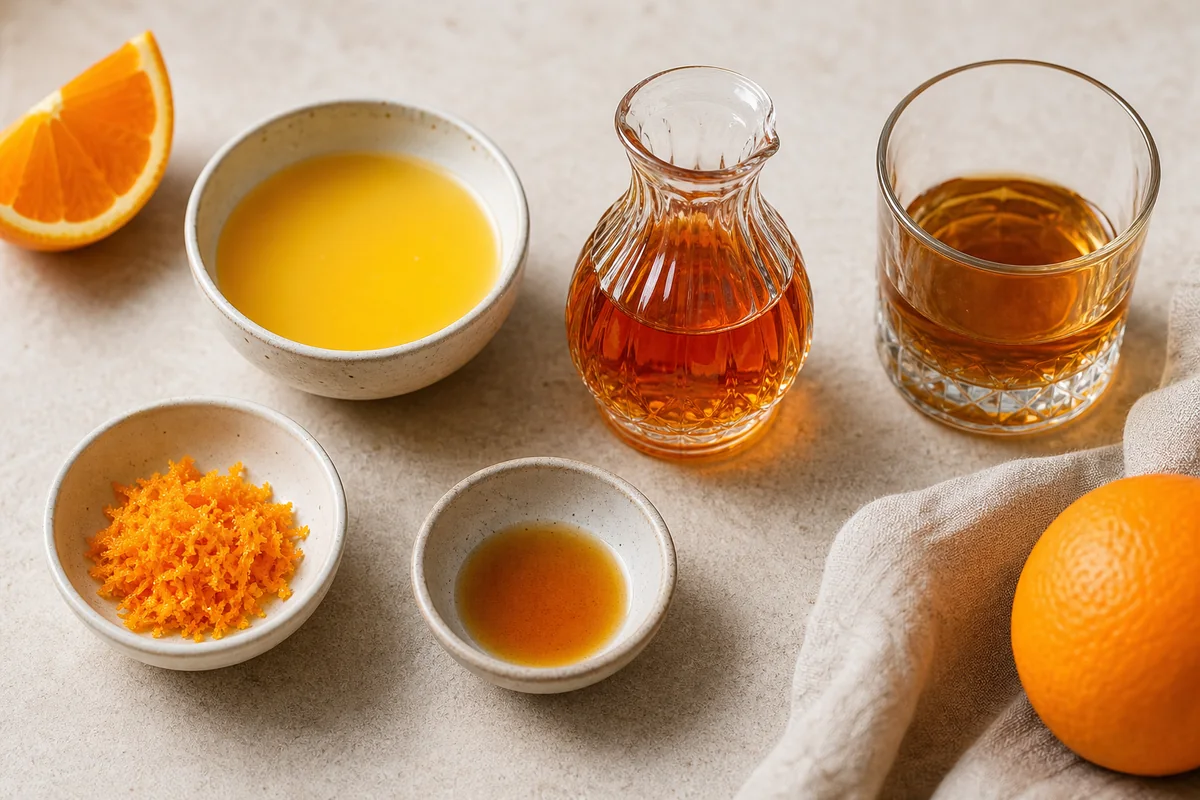
5 Best Grand Marnier Substitutes (with Ratios)
Ingredients
Equipment
Method
- Decide whether your recipe needs orange brightness only or orange + cognac-like warmth (common in desserts and some cocktails).
- Start with the 1:1 substitute closest to the flavor you want (Cointreau or premium Triple Sec for orange-liqueur notes).
- If you’re missing the cognac depth, use the split option: combine orange liqueur with brandy in the listed ratio.
- If using extract-based swaps, reduce extract slightly and rely on syrup/vanilla to mimic sweetness and body.
- Add the substitute early for baked goods (so it distributes) or at the end for cocktails/glazes (so aromas stay vivid).
Notes
- Grand Marnier is an orange-flavored liqueur with cognac-style depth; aim for orange aroma first, then add warmth.
- In baking, sweetness and alcohol volatility matter—start at the listed ratio and adjust only if your batter tastes thin or sharp.
Tried this recipe?
Let us know how it was!
Carrie is a food writer and editor with more than 15 years of experience. She has worked for some of the biggest names in the food industry, including Bon Appétit, Food & Wine, and Martha Stewart Living.
As the Editor in Chief of EpicureDelight, Carrie oversees all of the content on the site. She also manages the team of contributing writers and editors, who help to create delicious recipes, helpful tips, and informative articles that you’ll find on the site.
A native of the Chicago area, Carrie is passionate about all things food. She loves trying new restaurants and experimenting with new recipes in her kitchen. She’s also a graduate of the Culinary Institute of America, so she knows a thing or two about food!



