That thick, tangy spoonful is doing more work than most people realize. Greek yogurt adds structure to baked goods, body to sauces, and a clean acidic punch that dairy-free swaps often miss.
Knowing which greek yogurt substitute to reach for, and why, saves a recipe from going flat or thin.
The right swap depends on what you need most: tang, thickness, or neutral creaminess. A baking recipe tolerates a less tangy sub better than a tzatziki does.
This list covers the closest matches first, then widens out to emergency pantry options.
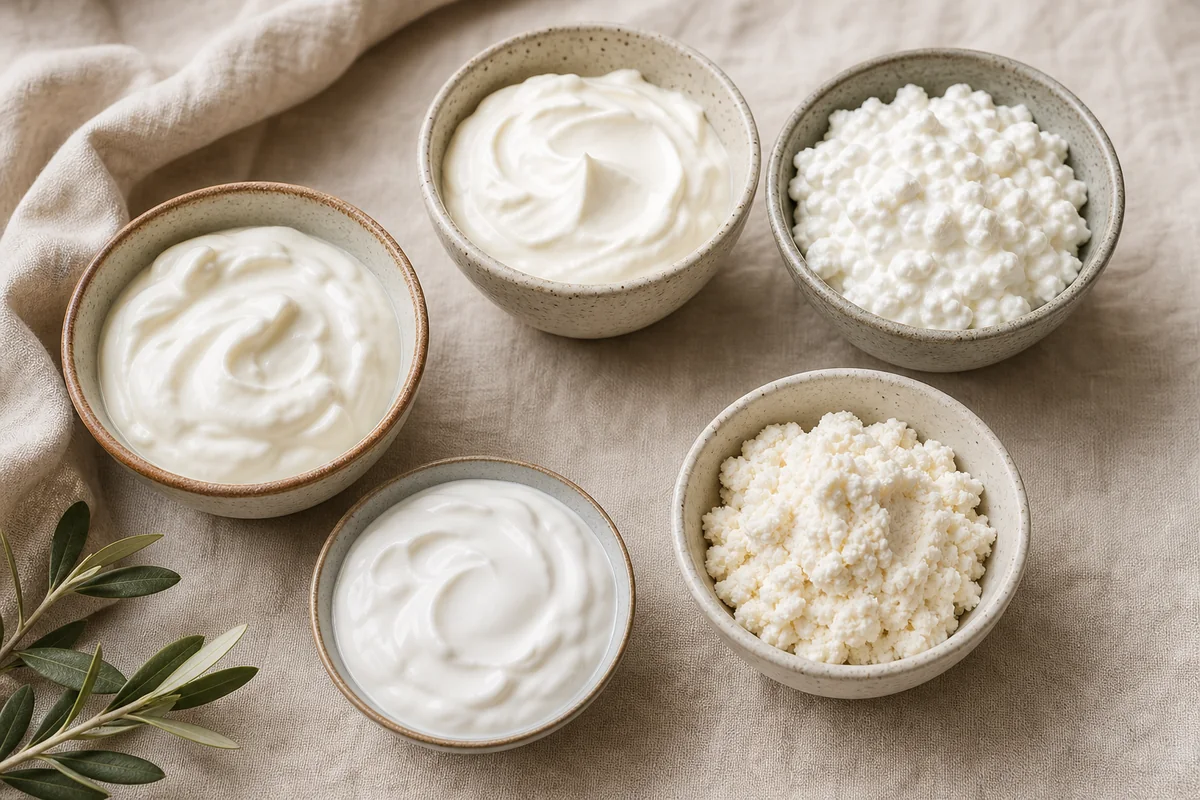
The closest match for Greek yogurt is plain strained yogurt or skyr. Both nail the thick, spoonable texture and fermented tang. Cottage cheese blended smooth works in sauces and smoothies. Crème fraîche and sour cream cover richer, creamier needs. Silken tofu is the best dairy-free option when blended.
5 Best Greek Yogurt Substitutes Ranked by Texture and Tang
The table below is your quick scan before you commit. Each substitute works at a 1:1 ratio.
Match your recipe type first, then check the tang column.
| # | Substitute | Best For | Ratio | Key Note |
|---|---|---|---|---|
| 1 | Plain Strained Yogurt | Both | 1:1 | Closest tang and thickness |
| 2 | Skyr (unsweetened) | Both | 1:1 | Very thick, high-protein |
| 3 | Cottage Cheese (blended) | Both | 1:1 | Blend until fully smooth |
| 4 | Crème Fraîche | Both | 1:1 | Richer, milder tang |
| 5 | Sour Cream | Both | 1:1 | Avoid hard boiling |
Silken tofu is the dairy-free pick. It lands outside the table because it needs seasoning to get close to Greek yogurt's flavor.
Details are in item 5 below.
1. Plain Strained Yogurt
Plain strained yogurt is the match that needs almost no explanation. It has the same fermented tang and the same spoonable drag as Greek yogurt, because structurally they are nearly the same thing.
If your yogurt feels pourable, set it in a cheesecloth-lined strainer over a bowl for 15 to 20 minutes. That brief strain brings it back to the right thickness.
For savory uses, this is the swap we prefer, especially when picking the right curry base matters for a silky sauce.
- Best use: Sauces, dips, baked goods, and anywhere tang is essential
- Ratio: 1:1, no adjustment needed if the yogurt is already thick
- Texture tip: After straining, stir briskly; it smooths out and holds its body well
Skip if: your only option is thin, pourable yogurt and you have no way to strain it. The sauce will be noticeably loose.
2. Skyr (Plain, Unsweetened)
Skyr is denser than most Greek yogurts and slightly higher in protein, so it holds its shape well in dips and baked fillings. The tang is real but a little cleaner and less sharp than Greek yogurt.
That makes it an excellent swap in cheesecake-style desserts where you want body without an aggressive sour note. When comparing the dairy-rich alternatives, skyr consistently comes out ahead for structure.
- Best use: Dips, marinades, baked cheesecakes, and high-protein bowls
- Ratio: 1:1, use straight with no thinning required
- Tang note: Slightly milder than Greek yogurt; add a few drops of lemon if you need more bite
- Prep note: Stir before measuring, as skyr can separate slightly at the top of the container
Skip if: your skyr is sweetened. Sugar in savory sauces is noticeable, and it can interfere with baking rise if your recipe is already balanced.
3. Cottage Cheese (Blended Smooth)
Most people skip cottage cheese because of the curds, but that texture problem disappears in 30 seconds with a blender. Once smooth, this mild soft cheese becomes a surprisingly close yogurt stand-in for warm sauces and smoothies.
The fat content is lower than Greek yogurt, so the result is slightly lighter, but not noticeably so once it's seasoned.
Blended Smooth
Works for: smoothies, creamy pasta sauces, salad dressings, baked goods
Skip if: you're serving it cold as a dip without a blender, since visible curds affect texture
- Best use: Smoothies, cooked sauces, and any recipe where texture is hidden
- Ratio: 1:1 after blending; measure post-blend for accuracy
- Blending tip: Blend on high for at least 45 seconds, then scrape sides and blend 10 more seconds for a fully silky result
Skip if: you don't have a blender and the recipe is served cold. Grainy texture in a cold dip is hard to overlook.
4. Crème Fraîche
Crème fraîche is thick and lush, and it doesn't break under moderate heat the way sour cream sometimes does. The trade-off is tang: it's noticeably milder, almost buttery where Greek yogurt is sharp.
For most baking applications, that difference barely registers. For cold dips, it registers a lot.
You can nudge the flavor closer with a small squeeze of lemon or 3 to 4 drops of white wine vinegar. Stir it in and taste before adding more.
The mild cultured flavor profile of crème fraîche pairs well with herbs, so it works especially well in compound dips where the seasoning does the heavy lifting.
- Best use: Baked toppings, creamy pasta sauces, and herb-forward cold dips
- Ratio: 1:1, no thinning needed
- Tang fix: Add ½ teaspoon lemon juice per ½ cup for savory recipes that need brightness
Skip if: your recipe specifically needs that sharp fermented note, like a tzatziki or a tangy marinade. Crème fraîche is too gentle for that job.
5. Sour Cream
Sour cream is the substitute most people already have, and it works better than its reputation suggests. It has real tang, a thick and spoonable body, and handles baking reliably at 1:1.
The key limitation is heat: hard boiling pushes sour cream toward separation, so stir gently and reduce heat before adding it to hot dishes. Like this tangy cultured dairy, the fridge life is good, so keeping a backup container on hand makes sense.
- Best use: Dips, baked goods, creamy toppings, and gently warmed sauces
- Ratio: 1:1 in cold and baked applications
- Thickness note: Full-fat sour cream is closest to Greek yogurt's body; low-fat versions are looser
- Tang note: Tang is present but slightly less sharp; good enough for most everyday swaps
Skip if: your recipe involves high-heat boiling or a long simmer. The sauce may break and turn grainy.
Making Greek Yogurt Substitutes Work
Swapping in the right substitute is step one. Getting the texture and flavor to hold through the recipe is step two.
When the thick fermented dairy runs out, a few small adjustments keep any of these swaps on track. The goal is to match thickness before you measure, then fix tang at the end rather than the beginning.
- Thickness adjustment: Strain loose yogurt for 15 to 20 minutes, or blend cottage cheese and silken tofu until fully smooth before measuring
- Tang adjustment: For savory recipes, add ½ teaspoon lemon juice or a small splash of white wine vinegar per cup of substitute; for sweet recipes, ¼ teaspoon lemon juice is usually enough
- Recipe-type guidance: In baking, thickness matters more than tang; in cold dips and sauces, tang matters more than thickness, so prioritize accordingly
Frequently Asked Questions
Yes. Sour cream works 1:1 in most baked goods and produces a similar moist crumb. The tang is slightly milder, but the structural difference is minimal in cakes, muffins, and quick breads.
Silken tofu blended smooth is the strongest dairy-free option. Add lemon juice and a pinch of salt to bring it closer to yogurt's flavor profile before blending with other ingredients.
Blend it on high for at least 45 seconds until completely smooth, then stir in a small squeeze of lemon juice. That combination handles both the texture and the missing tang.
It works for herb-forward dips where seasoning carries the flavor, but the tang is noticeably softer. Add a small squeeze of lemon to sharpen it before serving.
Stir in ½ teaspoon lemon juice or a few drops of white wine vinegar per cup, then taste before adding more. Small amounts go a long way, especially in cold preparations.
5 Best Greek Yogurt Substitutes (Closest Match)
Ingredients
Equipment
Method
- Identify your use: baking (structure), sauces/dips (thickness), or smoothies (creaminess).
- Choose the substitute from the list that matches tang first, then thickness (texture).
- Apply at the 1:1 ratio shown; if the substitute is looser, reduce liquid elsewhere in the recipe.
- If using a “blended” substitute (cottage cheese or silken tofu), blend until completely smooth before measuring.
- Taste and adjust: add lemon/vinegar for tang or add a pinch of salt to brighten for savory dishes.
Notes
- Strain pourable yogurt 15–20 minutes for Greek-style thickness.
- Blended cottage cheese or silken tofu can replace thickness in smoothies and sauces.
- Crème fraîche and sour cream are best when you want creaminess more than tang.
Tried this recipe?
Let us know how it was!
Carrie is a food writer and editor with more than 15 years of experience. She has worked for some of the biggest names in the food industry, including Bon Appétit, Food & Wine, and Martha Stewart Living.
As the Editor in Chief of EpicureDelight, Carrie oversees all of the content on the site. She also manages the team of contributing writers and editors, who help to create delicious recipes, helpful tips, and informative articles that you’ll find on the site.
A native of the Chicago area, Carrie is passionate about all things food. She loves trying new restaurants and experimenting with new recipes in her kitchen. She’s also a graduate of the Culinary Institute of America, so she knows a thing or two about food!