
Crunch is the whole point of green cabbage. Whether you're shredding it raw for slaw or dropping it into a hot pan, the green cabbage substitute you pick has to match that job.
A soft swap in a slaw turns sad fast. A firm one in a long braise turns tough.
The best choice depends on two things: texture goal and cook time. Raw dishes need a firm, snappy leaf.
Cooked dishes forgive softer options, as long as you pull them off heat a minute or two early.
The best green cabbage substitutes are Napa cabbage, red cabbage, and Savoy cabbage for most recipes. Shaved Brussels sprouts and Chinese broccoli (gai lan) work well in cooked dishes. Match your swap to the dish: raw crunch needs a firm leaf, while stir-fry and soup forgive softer options if you reduce cook time slightly.
5 Best Green Cabbage Substitutes Ranked by Texture
The table below maps each swap to its best use. Scan it first, then read the individual sections for prep notes and skip-if guidance.
| # | Substitute | Best For | Ratio | Key Note |
|---|---|---|---|---|
| 1 | Napa Cabbage | Both | 1:1 | Milder, more tender |
| 2 | Red Cabbage | Both | 1:1 | Crunchy; add acid |
| 3 | Savoy Cabbage | Cooked | 1:1 | Softer; check early |
| 4 | Brussels Sprouts | Cooked | ¾:1 | Shave thin; assertive |
| 5 | Chinese Broccoli | Cooked | 1:1 | Slice stems thin |
1. Napa Cabbage
Napa cabbage is the most seamless swap for green cabbage in most cooked recipes. Its leaves are thinner and milder, so it blends into stir-fries, soups, and dumpling fillings without announcing itself.
If you want to know more about mild-leaf alternatives, that page covers the other direction too.
- Best for: Stir-fry, hot pot, soup, dumpling filling, quick sautés
- How to swap: Use a 1:1 ratio; reduce cook time by 1-3 minutes since Napa softens faster than green cabbage
- Chill trick for slaw: After shredding, refrigerate for 20 minutes with salt to draw out moisture and firm it up slightly
- Skip if: You need a very snappy raw slaw-Napa is noticeably softer and will go limp faster under dressing
2. Red Cabbage
Red cabbage has nearly the same crunch as green cabbage raw, which makes it a reliable option for slaws and tacos. The color is the main trade-off.
It turns everything purple, and its flavor is a bit more bitter.
If you're choosing a firmer leaf for something other than green cabbage, that resource covers the full spectrum of red-cabbage swaps.
- Best for: Slaw, fish tacos, grain bowls, pickled cabbage, salads
- Color note: It bleeds purple into dressings and pale soups-use it where color is welcome or neutral
- Adjustment: Finely shred and dress with vinegar; thicker slices taste sharper and need longer to mellow
- Skip if: Your dish needs a neutral, pale-colored base-red cabbage changes the visual entirely
3. Savoy Cabbage
Savoy is green cabbage's gentler cousin. Its crinkled leaves are more tender right off the bat, and they wilt faster in heat.
That's an advantage in braises and stuffed-cabbage rolls, where you want the leaf to yield without fighting back.
Savoy vs. Green Cabbage
Works for: sautés, braises, cabbage rolls, soups where soft texture is preferred
Skip if: you need a firm, snappy bite in raw salads or cold slaws
Savoy's flavor profile is worth reading about before you commit to it. The crinkled-leaf flavor notes page explains what to expect from it cooked versus raw.
- Swap ratio: Use 1:1, but start checking doneness 1-2 minutes before your usual time
- Best texture: Aim for just-wilted in sautés; it goes from tender to mushy quickly
- Skip if: You're building a raw-crunch salad and need tight, snappy bite-Savoy is a cooked-dish swap
4. Shaved Brussels Sprouts
Brussels sprouts are cabbage relatives, and when shaved very thin, they behave like a compact version of shredded green cabbage in a hot pan. The flavor is more assertive, so quantity and prep both matter.
| Use | Ratio | Notes |
|---|---|---|
| Stir-fry | ¾:1 | Shave thin; add 1 min earlier than cabbage |
| Warm salad | ¾:1 | Dress while warm; add lemon to cut bitterness |
| Slaw (raw) | ¾:1 | Shave very fine; salt and rest 15 min to soften |
For dishes where you'd go another direction entirely, the compact sprout swap options page covers what to use when even Brussels sprouts aren't available.
- Prep: Use a mandoline or sharp knife; thick pieces taste too "sprouty" and don't mimic cabbage texture
- Best for: Stir-fry, warm grain bowls, skillet sides, and shaved raw salads with bold dressings
- Quantity tip: Use ¾ of what your recipe calls for-Brussels are denser and pack down less than cabbage
- Skip if: Your dish needs mild, cabbage-neutral flavor-shaved Brussels are noticeably stronger even when thin
5. Chinese Broccoli (Gai Lan)
Gai lan is a practical cooked-dish swap when you need something leafy and substantial. It works well in stir-fries and noodle dishes, and picking the right Asian green comes down to whether your dish can handle a slightly bitter edge.
The stems and leaves cook at different speeds, so treat them separately. Add stems first, leaves last.
- Best for: Stir-fry, noodles, quick skillet sides, steamed vegetable dishes
- Prep: Slice stems thin (about ¼ inch); add leaves in the last 1-2 minutes of cook time
- Swap ratio: Use 1:1, but expect slightly firmer stems that won't mimic cabbage's uniform softness
- Flavor note: Gai lan has a mild bitter edge; a small splash of oyster sauce or lemon at the end balances it
- Skip if: You need raw or barely-cooked cabbage crunch-gai lan needs heat to be palatable
Making Green Cabbage Substitutes Work
The core decision is simple: crunch or tenderness. Raw-crunch dishes (slaw, fresh salads) need Napa or red cabbage, and nothing else on this list will fully replace them.
Cooked dishes are more flexible. Savoy, gai lan, and Brussels sprouts all land well in a hot pan or simmering broth, as long as you adjust timing.
One thing that helps every swap: acid at the end. A splash of vinegar or lemon juice brings back the mild tang that green cabbage carries naturally.
Without it, some substitutes taste flat. Keep crisp leafy greens stored properly so they're ready when you need a fast swap.
For red cabbage specifically, storing shredded leaves correctly keeps them firm enough to hold up in dressings.
- Ratio rule: Use 1:1 for Napa, red, and Savoy; drop to ¾:1 for Brussels sprouts and broccoli florets
- Cook-time rule: Pull tender-leaf swaps (Napa, Savoy) 1-3 minutes early to avoid mushiness
- Balance rule: Finish with vinegar or lemon juice and a pinch of sugar if your substitute tastes sharp or flat
Frequently Asked Questions
Red cabbage is the closest match for raw slaw-it holds crunch well under dressing. Napa cabbage works too, but chill it after shredding to prevent limpness.
The flavor is slightly more bitter and the color changes to purple. A small pinch of sugar and a splash of vinegar brings it closer to green cabbage's mild taste.
Napa cabbage or Savoy cabbage. Both soften quickly in a hot pan-pull them off heat 1-2 minutes sooner than you would green cabbage.
Toss shredded Napa with a pinch of salt and refrigerate for 20 minutes before dressing. This draws out moisture and keeps the leaves firmer longer.
Use ¾ of the amount your recipe calls for. Brussels sprouts are denser than cabbage and pack down less during cooking.
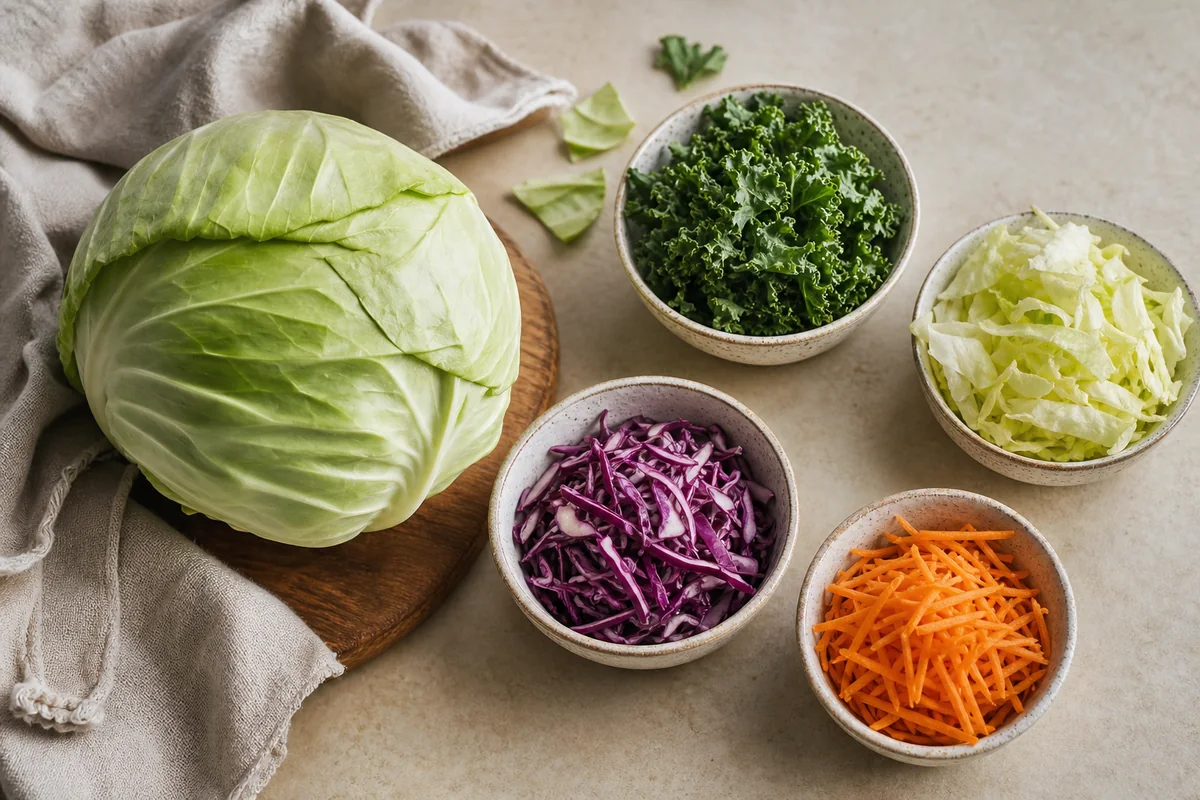
5 Best Green Cabbage Substitutes (Tested Swaps)
Ingredients
Equipment
Method
- Match your dish goal: raw crunch (slaw) vs. tender leaves (stir-fry, soup, braise).
- Choose the closest texture: Napa or red cabbage for cabbage-like bite; shaved Brussels for extra bite; gai lan/broccoli for cooked dishes.
- Use the listed swap ratio, then adjust cook time: tender options (Napa, Savoy) need 1–3 minutes less heat than firmer cabbage.
- Finish for balance: add a small splash of vinegar/lemon or a pinch of sugar to mimic cabbage’s mild tang.
Notes
- For raw uses, prioritize Napa, red, or Savoy to avoid a “watery” texture.
- For cooked uses, prioritize Napa/Savoy and reduce cook time to prevent over-softening.
Tried this recipe?
Let us know how it was!
Carrie is a food writer and editor with more than 15 years of experience. She has worked for some of the biggest names in the food industry, including Bon Appétit, Food & Wine, and Martha Stewart Living.
As the Editor in Chief of EpicureDelight, Carrie oversees all of the content on the site. She also manages the team of contributing writers and editors, who help to create delicious recipes, helpful tips, and informative articles that you’ll find on the site.
A native of the Chicago area, Carrie is passionate about all things food. She loves trying new restaurants and experimenting with new recipes in her kitchen. She’s also a graduate of the Culinary Institute of America, so she knows a thing or two about food!



