
Gai lan has a double job in the wok: thick stems that stay snappy under heat, plus leaves that wilt just enough to pick up sauce without turning soggy. That combination is harder to replicate than it looks, which is why picking the right chinese broccoli substitute matters more than just grabbing any green in the crisper.
The good news is that several vegetables share enough of that stem-and-leaf structure to work well. Match the stem thickness, watch the clock, and your stir-fry won't miss a beat.
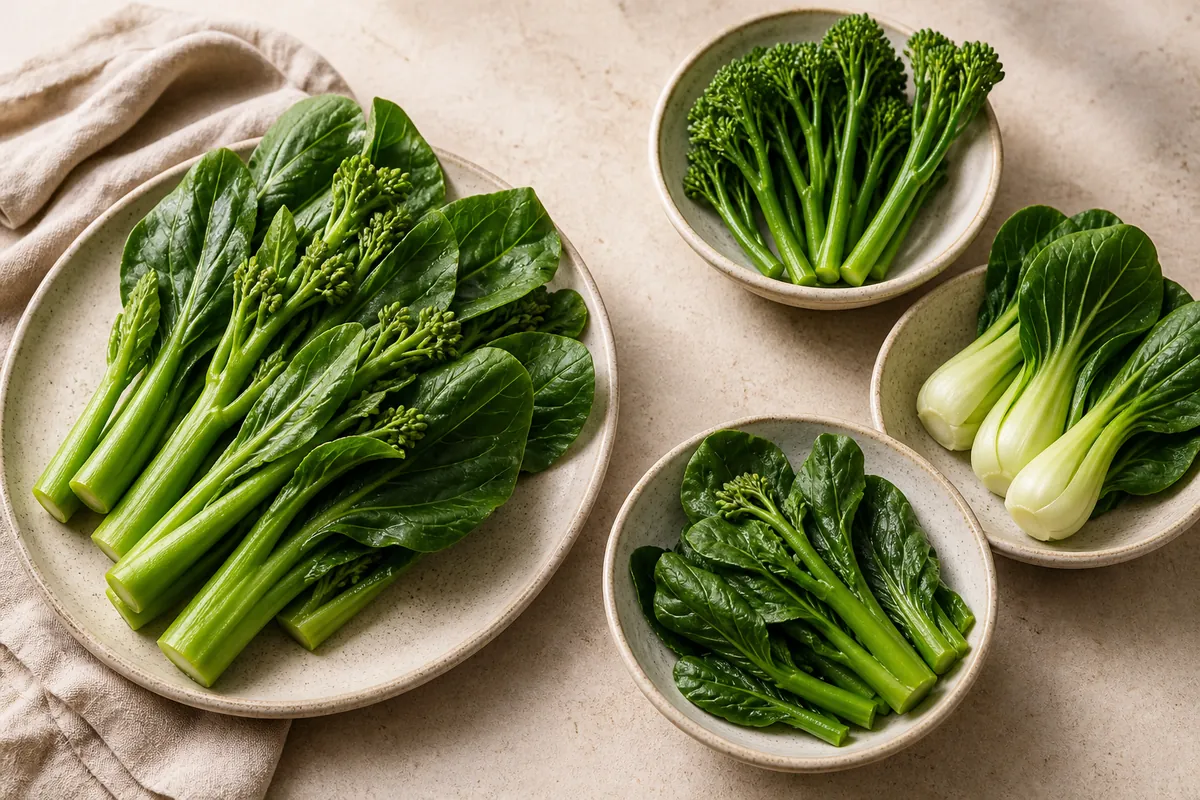
Broccolini is the closest swap, with a matching stem-and-tip profile at a 1:1 ratio. Broccoli raab holds crunch but needs a quick blanch for bitterness. Baby bok choy, kale, and spinach round out the list from mild to fast-wilting, each needing a small timing tweak.
5 Best Chinese Broccoli Substitutes Ranked by Texture
Use this table to pick your swap fast. Ratios are based on raw weight before cutting.
| # | Substitute | Best For | Ratio | Key Note |
|---|---|---|---|---|
| 1 | Broccolini | Both | 1:1 | Closest stem-and-tip match |
| 2 | Broccoli Raab | Both | 1:1 | Blanch first, stays crisp |
| 3 | Baby Bok Choy | Both | 1:1 | Slice stems thin |
| 4 | Kale | Cooked | ¾:1 | Massage oil in first |
| 5 | Spinach | Cooked | 1:1 | Last-add only |
1. Broccolini
Broccolini matches gai lan's texture better than any other vegetable on this list. The stems are slender, the florets are small, and the whole thing cooks in the same quick window.
- Cut length: Keep stems 3-4 inches long so the tips and bases finish together.
- Stir-fry time: 3-4 minutes over high heat, stems into the wok first by about 60 seconds.
- Thickness check: If stems are thicker than a pencil, halve them lengthwise.
If you want to understand what sets tender floret greens apart before swapping, that background helps you adjust seasoning. The flavor is milder and slightly sweeter than gai lan, so add a small splash of soy or oyster sauce to compensate.
Broccolini
Works for: stir-fries, blanched sides, oyster sauce dishes, quick noodle toppings
Skip if: your recipe calls for very thick gai lan stems, because broccolini's thinner stalks can overcook in the same time window
2. Broccoli Raab
Broccoli raab (rapini) keeps a satisfying crunch, but it runs noticeably more bitter than gai lan. A quick blanch pulls that edge back without turning the leaves limp.
- Trim first: Remove the bottom 1-2 inches of tough stem before any cooking.
- Blanch time: 30-60 seconds in salted boiling water, then straight into an ice bath.
- Wok order: Add blanched rapini about halfway through your stir-fry, not at the start.
When you're swapping in a bitter green, choosing a milder stir-fry leaf alongside it can balance the dish if the recipe already leans savory-sweet. Finish with a pinch of sugar or a drizzle of honey to round out any leftover bitterness in the sauce.
Skip this one if your dish relies on a sweet, mild sauce, because the bitterness will fight the flavor rather than complement it.
3. Baby Bok Choy
- Stem thickness: Slice stems into pieces no thicker than ¼ inch so they match gai lan's timing.
- Wok order: Stems go in first; leaves follow 60-90 seconds later.
- Last add: Pull the wok off peak heat before the leaves fully wilt.
Baby bok choy is mild and tender, which is exactly why it works here. The flavor won't dominate the sauce, but the stems give you that satisfying resistance when you bite in.
For a deeper look at mild crucifer flavor profiles, that page breaks down where bok choy sits on the spectrum.
Skip this if your recipe depends on a pronounced crucifer crunch. Bok choy is softer than gai lan, and no amount of high heat changes that baseline.
4. Kale
Kale is sturdier than gai lan and will chew tough if you treat it the same way. The fix is simple: massage and chop before it ever touches the wok.
- Massage: Work 1-2 teaspoon of neutral oil into the leaves for 60 seconds to break down some of the fiber.
- Chop size: Cut leaves into pieces no larger than 1 inch so they wilt evenly.
- Wok order: Stems go in first; add leaves when stems just start to soften.
If you're wondering whether your kale is still good before you start, checking storing leafy greens is worth a minute. Use ¾ of the weight called for in the original recipe, since kale is denser and a full 1:1 swap can overload the pan.
Kale
Works for: longer stir-fries, braised dishes, noodle bowls where some chew is welcome
Skip if: your stir-fry runs under 3 minutes and you haven't massaged the kale in advance
5. Spinach
Spinach is the emergency swap when nothing else is in the fridge. It brings no stem crunch at all, but it does add leafy bulk and picks up sauce beautifully in the final 30 seconds.
- Prep: Pull off any thick stems; leave the leaves whole so they don't turn to pulp.
- Timing: Add spinach in the last 30-45 seconds, after you've pulled the wok off peak heat.
- Watery sauce fix: Toss quickly and drain any released liquid before plating.
For dishes where the leaf texture needs to do more work, picking a sturdier green is usually the smarter call. Spinach turns watery fast, so a quick toss is all it needs.
Skip this if your recipe depends on stem crunch. Spinach simply won't provide it.
Making Chinese Broccoli Substitutes Work
The single biggest mistake when swapping gai lan is ignoring stem thickness. Thinner stems (broccolini, bok choy) finish in 3-4 minutes; thicker or tougher ones (kale) need prep before they hit the wok.
Once you match the stem to the cooking window, the sauce does the rest. For reference, crisp Asian greens have a specific snap that comes from high heat and short time, not from low-and-slow cooking.
Keep that principle and any swap on this list can hold its own.
- Cut to match: Slice stems to the same diameter as the original recipe calls for; diameter controls doneness, not just length.
- Balance bitterness or mildness: Blanch rapini 30-60 seconds for bitterness; add a splash of soy or a pinch of sugar for mild swaps like bok choy or spinach.
- Final toss check: Toss with sauce for no more than 10-30 seconds at the end. If greens look glossy and slightly softened, pull them immediately.
Frequently Asked Questions
Broccolini is the closest match. It shares gai lan's stem-and-tip structure and cooks in the same 3-4 minute window at a 1:1 ratio.
Broccolini needs 3-4 minutes and no prep beyond trimming. Kale needs oil-massage first, then 4-6 minutes in the wok, stems before leaves.
Yes, but add it in the last 30-45 seconds only. Drain any released liquid before plating so the sauce doesn't thin out.
Blanch rapini for 30-60 seconds in salted boiling water, then transfer to an ice bath. This cuts bitterness while keeping a firm bite.
Baby bok choy stems, sliced thick, come closest. Halve larger stems lengthwise so they hold their shape and finish without going soft.
5 Best Chinese Broccoli Substitutes (Quick Swaps)
Ingredients
Method
- Identify your cooking method: quick stir-fry needs stem-and-tip timing; longer braises can forgive leaf-only substitutes.
- Choose the closest texture from the table (stems first vs leafy first) and use the listed ratio.
- Cut stems to similar thickness: thinner stems = faster finish; thicker stems = extend heat by 30–90 seconds.
- Adjust to bitterness/mildness: blanch rapini briefly; massage kale; keep spinach as a last-add.
- Finish with sauce: toss 10–30 seconds at the end so the substitute coats without overcooking.
Notes
- If your dish relies on thick stems, prioritize broccolini or trimmed broccoli raab; leaf-only swaps need last-add timing.
Tried this recipe?
Let us know how it was!
Carrie is a food writer and editor with more than 15 years of experience. She has worked for some of the biggest names in the food industry, including Bon Appétit, Food & Wine, and Martha Stewart Living.
As the Editor in Chief of EpicureDelight, Carrie oversees all of the content on the site. She also manages the team of contributing writers and editors, who help to create delicious recipes, helpful tips, and informative articles that you’ll find on the site.
A native of the Chicago area, Carrie is passionate about all things food. She loves trying new restaurants and experimenting with new recipes in her kitchen. She’s also a graduate of the Culinary Institute of America, so she knows a thing or two about food!



