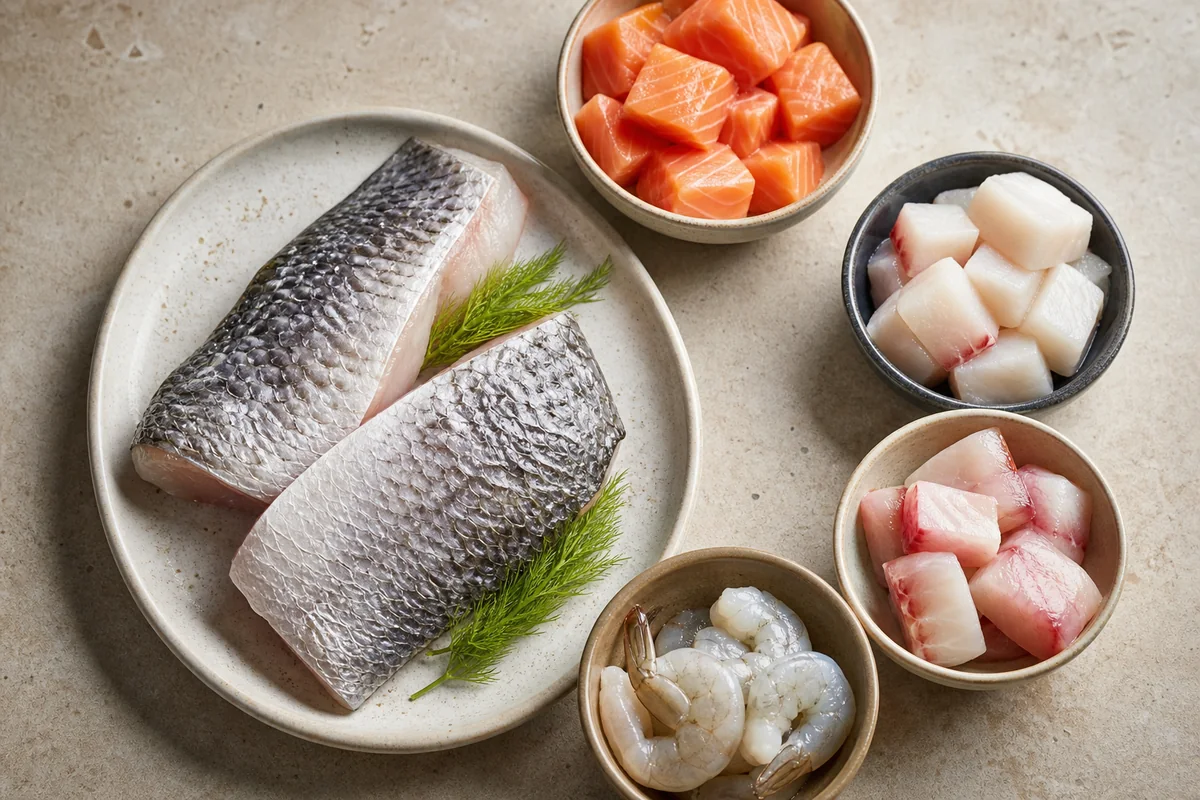
Haddock has a personality that's easy to overlook until it's missing: pale, mild, and prone to pulling apart in clean, satisfying layers. That flaky bite is what you're really after when you reach for a haddock substitute, and the good news is several white fish can reproduce it almost exactly.
The right swap depends on your cooking method, not just the fish itself.
For baked dishes, you want something that holds moisture without turning rubbery. For chowder, you need a fish that stays in pieces.
For pan-searing, you want quick browning without drying out. Each option below comes with a working ratio so you can size your purchase correctly.
The best haddock substitute is cod for most cooking methods, at a 1:1 ratio. Pollock and saithe also work at 1:1. Hake suits gentle baking or poaching. Tilapia is the most affordable swap. Use ¾:1 halibut by weight when nothing else is available.
Best Haddock Swaps and Ratios
Every fish below is a practical haddock alternative you can find at most seafood counters. The table shows what each one is best for and exactly how much to use.
If you're building a soup base and want to understand the chowder vs. bisque difference, knowing your soup style distinctions first helps you pick the right fish texture.
| # | Substitute | Best For | Ratio | Key Note |
|---|---|---|---|---|
| 1 | Cod | Bake / Pan-sear | 1:1 | Mildest, cleanest flake |
| 2 | Pollock | Chowder / Sauced Bake | 1:1 | Brush with oil to prevent dryness |
| 3 | Saithe | Stew / Casserole | 1:1 | Holds shape in long cooks |
| 4 | Hake | Steam / Poach | 1:1 | Delicate; don't rush doneness |
| 5 | Tilapia | Pan-cook / Tacos | 1:1 | Softer flake; shorten cook time |
| 6 | Halibut | Bake / Poach | ¾:1 | Richer; use less by weight |
5 Best Haddock Substitutes Ranked by Cook Style
1. Cod
Cod is the first fish most cooks reach for instead of haddock, and it earns that reputation. The flake is almost identical: white, moist, and clean.
It bakes beautifully and holds its shape in a pan without needing much fuss. If you're curious about storing white fish properly, cod follows the same handling rules as haddock.
- Ratio: 1:1 by weight for all fillet swaps
- Best for: Baking, broiling, and pan-searing
- Texture tip: Pull it at the first sign of flaking; cod dries out faster than it signals doneness
- Flavor note: Cod stays mild and won't compete with your seasoning
Skip if: Your recipe specifically needs a slightly sweet, "fishy" edge that haddock can carry-cod is even more neutral.
2. Pollock
Alaska pollock is lean, affordable, and almost always available frozen. It matches haddock's mild flavor closely but carries less natural fat, which makes it more prone to drying out under high heat.
That one detail is worth planning around.
If you want more options with this fish, the guide on choosing pollock alternatives covers when to step away from it entirely.
- Ratio: 1:1 by weight
- Best for: Chowder, sauced bakes, or quick pan-sears with oil in the pan
- Moisture fix: Brush with oil before baking, or bake covered for the first 8 minutes, then uncover to finish
- Seasoning pairing: Pairs well with lemon butter or a cream-based sauce that adds back some fat
Skip if: You're doing a long, uncovered bake at 400°F or higher-pollock will go dry and slightly soft at the edges.
3. Saithe
Saithe is slightly firmer than haddock, which is exactly what you want when a recipe involves simmering. It holds together in chowder or fish casseroles where a more delicate fish would shred too early.
The flavor is mild enough that it takes on whatever herbs and aromatics surround it. For simmered dishes, understanding thick soup bases helps you time when to add the fish without overcooking it.
- Ratio: 1:1 by weight
- Best for: Chowder, fish stew, and casseroles where pieces need to stay intact
- Flake note: It separates cleanly but in slightly larger chunks than haddock
- Seasoning: Handles black pepper, dill, and bay leaf well; season a little more confidently than you would with haddock
Skip if: The recipe is thin-fillet sautéed fast-saithe's denser texture can feel slightly heavy in very delicate preparations.
4. Hake
Hake is the haddock substitute most suited to gentle heat. Its flake is softer and more fragile than cod, and it responds beautifully to steaming or baking in a covered dish.
It won't survive aggressive heat or a long roast. The mild, ocean-clean profile of hake makes it one of the least intrusive swaps in this list.
Use it at a 1:1 ratio by weight. It is best in gentle baking, steaming, or poaching-style dishes where the liquid or steam keeps it from drying.
Cook only until it turns opaque through the thickest part-hake breaks into finer flakes than haddock and can fall apart if pushed further.
Hake vs. Cod
Works for: poaching, steaming, delicate sauced bakes
Skip if: grilling or broiling-hake's texture won't hold on a grate
Skip if: You need firm chunks for grilling or a coarse flake for fish cakes. Hake is too fragile for that kind of handling.
5. Tilapia
Tilapia is a solid everyday swap when haddock is unavailable and budget matters. It is mild-perhaps even milder than haddock-and its flake is softer rather than layered.
That softness isn't a problem in sauced dishes or fish tacos, but it does mean you need to manage cook time carefully. For dishes where tilapia doesn't quite fit, a look at farmed white fish options can point you toward a firmer alternative.
Tilapia vs. Haddock
Works for: quick pan-cooking, baked fish with cream sauce, tacos where soft flake is fine
Skip if: you need clean sliceable flakes-tilapia is noticeably softer and breaks under a fork
- Ratio: 1:1 by weight for most recipes
- Best for: Pan-searing, baked fish with sauce, tacos
- Texture fix: Shorten cook time by 1-2 minutes and add a knob of butter or cream in the pan to keep it moist
- Seasoning lift: Tilapia benefits from a squeeze of citrus or a bright herb like cilantro to add personality
Skip if: Your recipe relies on haddock's slightly firmer, sliceable flake-tilapia won't replicate that bite.
6. Halibut
Halibut is a step up in texture and flavor from haddock. It is denser, slightly richer, and holds together more firmly when cooked.
That's useful if you want substance, but it means you need to use a little less and season more lightly. If halibut doesn't fit your budget, the page on picking a firm white fish outlines similar-texture options.
| Use | Ratio | Notes |
|---|---|---|
| Baked fillet | ¾:1 | Halibut; reduce weight by 25% vs. haddock |
| Poached in broth | ¾:1 | Halibut; add lemon or herbs to keep it mild |
- Ratio: Use ¾ of the haddock weight called for-halibut is denser and more filling
- Best for: Baked or poached fish dishes with light seasoning
- Flavor balance: Pair with lemon juice and fresh herbs rather than heavy butter sauces
- Doneness tip: Pull it at 130°F internal-halibut tightens and dries quickly if pushed past opaque
Skip if: Your recipe depends on haddock's very neutral, almost sweet profile-halibut has a more pronounced character that will come through.
Making Haddock Substitutes Work
The biggest variable when cooking haddock substitutes is moisture management. Most white fish swaps are leaner than they appear, and cook time is where things go wrong.
Knocking 1-2 minutes off is usually the right call, especially for pollock and tilapia. For any fish going into a long-simmer dish, understanding how to handle white fish before cooking helps you start with the best-quality fillet.
- Check doneness by flake, not time: The fish should separate easily when nudged with a fork and look fully opaque through the thickest point-pull it there, not a minute later
- Protect moisture with fat or liquid: If your substitute is lean (pollock, tilapia), add a light oil brush before baking or a splash of stock or cream in the pan
- Season at the end: Milder fish like hake and tilapia reveal salt more sharply once cooked-taste and adjust after the fish is plated, not before
Frequently Asked Questions
Cod is the closest match for baking. It has nearly identical mild flavor and a clean, layered flake that holds up under oven heat at a 1:1 ratio.
Yes, pollock works well in chowder at a 1:1 ratio. Add it near the end of cooking to prevent it from going dry or soft in the broth.
Yes, check it 1-2 minutes early. Cod can dry out slightly faster than haddock, so pull it as soon as the flesh turns opaque and flakes cleanly.
Use ¾ of the haddock weight called for. Halibut is denser and more filling, so a smaller portion delivers a comparable amount of cooked fish.
Shorten the cook time by 1-2 minutes and add a little butter or sauce to the pan. Tilapia softens quickly, so pull it the moment it turns opaque.
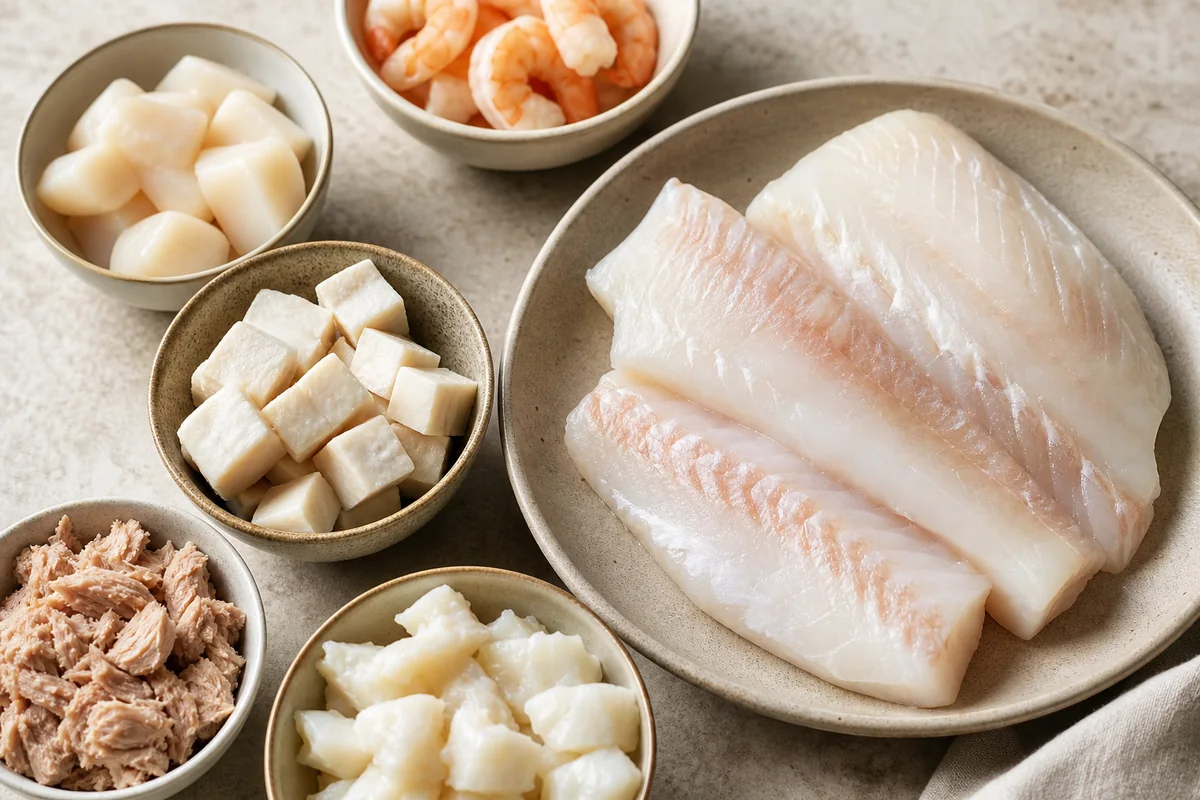
5 Best Haddock Substitutes (with Ratios)
Ingredients
Equipment
Method
- Identify your cooking method: baking/pan-sear for fillets, or simmering for chowder/casseroles.
- Choose the closest texture match first (cod or pollock for most recipes).
- Substitute using the listed ratio, then adjust cook time for the texture: drier fish need shorter time.
- If your substitute is leaner or dryer (often pollock/tilapia), brush lightly with oil or add a little moisture (stock/cream) in the dish.
- Test doneness by flake: the fish should separate easily and look opaque throughout.
Notes
- Flavor is mild across options, but texture and moisture retention vary—choose based on how the recipe cooks the fish.
- If your recipe uses salt content heavily (brining/seasoned sauces), taste after cooking and adjust salt at the end.
Tried this recipe?
Let us know how it was!
Carrie is a food writer and editor with more than 15 years of experience. She has worked for some of the biggest names in the food industry, including Bon Appétit, Food & Wine, and Martha Stewart Living.
As the Editor in Chief of EpicureDelight, Carrie oversees all of the content on the site. She also manages the team of contributing writers and editors, who help to create delicious recipes, helpful tips, and informative articles that you’ll find on the site.
A native of the Chicago area, Carrie is passionate about all things food. She loves trying new restaurants and experimenting with new recipes in her kitchen. She’s also a graduate of the Culinary Institute of America, so she knows a thing or two about food!