
That salty, slightly squeaky crust is what makes halloumi worth the price. It browns on a hot grill without dissolving, holds its shape in a wrap, and adds a briny hit that most cheeses simply can't pull off.
Finding a good halloumi cheese substitute means matching two things at once: texture under heat and salt/brine flavor. Get one right and miss the other, and the dish still falls flat.
This article covers the five best swaps for grilling, sautéing, and baking. Skip it if you need a dairy-free option-all five picks are cheese-based and chosen for how they behave when hot.
Paneer is the closest match for grilling and pan-searing. Feta delivers the brine but needs draining. Queso fresco works on a budget when pressed well. Low-moisture mozzarella browns with some melt. Ricotta salata is a firm, salty backup when nothing else is available.
5 Best Halloumi Cheese Substitutes for Home Cooks
| # | Substitute | Best For | Ratio | Key Note |
|---|---|---|---|---|
| 1 | Paneer (extra-firm) | Grill / Sauté | 1:1 | Mild; add salt or acid |
| 2 | Queso Fresco (pressed) | Grill / Sauté | ¾:1 | Press well before cooking |
| 3 | Feta (brined, drained) | Both | ¾:1 | Salty; pat very dry |
| 4 | Mozzarella (low-moisture) | Baking | 1:1 | Melts more than halloumi |
| 5 | Ricotta Salata | Grill / Bake | 1:1 | Firm, salty, less chewy |
One thing all five share: they need to go into a very hot pan or onto a well-preheated grill. A lukewarm surface means steaming, not browning.
If your dish relies on a brined, springy slab that you can understand more by reading about this squeaky Cyprus cheese, the texture and salt details there will help you pick faster.
Skip if: your recipe depends on a fully melting cheese for a sauce or topping-these picks are chosen for crust-forming, not melt-forward results.
1. Paneer
Paneer is the most reliable stand-in for grilling and pan work. It stays sliceable, holds its shape at high heat, and develops a golden-brown crust in about 2 minutes per side.
The main gap is flavor: paneer is mild where halloumi is briny.
- Prep: Use extra-firm paneer only. Keep it cold until you slice it-warm paneer crumbles more easily.
- Thickness: Cut to about ½ inch. Thinner slices dry out before the surface colors.
- Cooking: No oil needed if the pan is hot enough. 2 minutes per side on high heat is usually right.
- Flavor fix: Add a pinch of flaky salt or a squeeze of lemon over the seared slices.
If you want to go deeper on how paneer stacks up against similar fresh cheeses, the fresh cheese comparison guide breaks it down clearly.
Skip if: your dish needs real briny tang-paneer is bland on its own, so the rest of the recipe needs to carry that flavor.
2. Queso Fresco
Queso fresco is cheaper than halloumi and widely available, but it needs work before it behaves on the grill. Fresh from the package, it holds too much moisture and will steam and fall apart instead of browning.
- Press and drain: Wrap in a clean towel, set a heavy pan on top, and press for at least 20 minutes.
- Pat dry: After pressing, pat the surface with paper towels right before cooking.
- Cut thick: Use pieces no thinner than ½ inch. Thicker slices survive the flip better.
- Cook fast: High heat, 90 seconds per side. Longer and it starts to break down.
If queso fresco is also hard to find, swapping pressed fresh cheese opens up a few more options worth checking.
Skip if: the queso fresco is very fresh and wet. Even with pressing, very high-moisture blocks won't hold together in a hot pan.
3. Feta
Feta is already briny and salty-closer to halloumi's flavor than paneer or queso fresco. The problem is structure.
Halloumi slices cleanly; feta wants to crumble.
Feta vs. Halloumi
Works for: wraps, baked dishes, quick sautés where crumbled pieces are fine; the salt and tang land exactly right
Skip if: you need intact slabs that hold their shape on a grill or in a hot sandwich
The fix is moisture removal. Drain feta out of its brine, then press it between paper towels for 10 minutes.
A block-style feta behaves better than crumbled. Look for brined block cheese options if your store only carries the pre-crumbled kind-a firmer brined variety from the deli section is worth the search.
- Best applications: Baked dishes, warm grain bowls, quick pan-browning for salads.
- Flavor adjustment: Feta may already be saltier than your halloumi-taste before adding more salt.
- Ratio: Use about ¾ of the amount called for, then add more if the dish needs it.
Skip if: you need neat slices that stay intact through cooking-feta will always be more fragile than halloumi.
4. Low-Moisture Mozzarella
Block mozzarella is the pick when you want browning with a bit of melt. It won't behave exactly like halloumi-it softens and spreads rather than holding a firm slab shape-but it colors beautifully in a hot oven or pan.
Cut it to ½-inch thickness and cook it quickly. In a dry pan on high heat, it browns in about 90 seconds before melting takes over.
In baking, it's actually better than halloumi when you want a golden, slightly gooey layer on top of a dish.
The flavor is milder and less salty. Add a pinch of salt and a small splash of white wine vinegar to the dish to compensate.
Skip if: you want the firm, non-melting slice that halloumi is known for. Mozzarella will soften and spread-that's its nature, and no amount of heat management fully changes it.
5. Ricotta Salata
Ricotta salata is aged, pressed, and noticeably salty. It holds together better than fresh ricotta and can take a hot pan for a short time.
It won't develop the same springy chew as halloumi, but it comes closer than most people expect.
- Prep: Pat slices dry before cooking. Grate or crumble it for topping baked dishes if you prefer.
- Best uses: Warm grain bowls, baked vegetable dishes, quick pan sear as a side.
- Grilling: Use a grill pan or foil-ricotta salata is firmer than halloumi but still more fragile than paneer on open grates.
- Flavor: Salty enough to skip extra seasoning in most dishes.
Skip if: you want the full chew and briny soak that halloumi has after grilling. Ricotta salata is firm and salty but lighter in texture and lower in moisture.
Making Halloumi Cheese Substitutes Work
The right substitute matches three things: texture under heat, salt level, and moisture content. A wet cheese steams; a dry, firm one browns.
Get those two aligned, and the swap works in most dishes. Paneer and ricotta salata are the easiest to manage.
Feta and queso fresco take more prep but deliver better flavor.
- Manage moisture first: Drain brine-packed cheese for at least 10 minutes. Press soft blocks for 20 minutes. Pat every surface dry with paper towels right before cooking-this single step makes the biggest difference.
- Match thickness and cook fast: Slice to ½ inch. Use a preheated dry pan or well-oiled grill grate. Cook no more than 2-3 minutes per side. Pulling the cheese early preserves structure; leaving it too long collapses it.
- Fix flavor with salt and acid: Most substitutes are milder than halloumi. A pinch of flaky salt plus a small squeeze of lemon or a splash of white wine vinegar over the finished cheese closes most of the flavor gap.
Frequently Asked Questions
Extra-firm paneer is the top pick. It browns well in a dry hot pan, holds its shape, and slices cleanly-add a squeeze of lemon afterward to compensate for its milder flavor.
Yes, but use block feta and drain it well. It will be softer and may crumble slightly, so press it firmly between paper towels before cooking and handle it gently.
Surface moisture is the cause. Pat the cheese completely dry and make sure the pan is fully preheated before the cheese touches it-steam is what breaks structure.
Add flaky salt directly to the cooked surface, then finish with a small splash of lemon juice or white wine vinegar. That combination mimics halloumi's salty-tangy profile well.
Low-moisture mozzarella is best for baking-it browns evenly and adds a slight melt. Ricotta salata works as a salty topping. Paneer holds shape but stays quite dry in the oven.
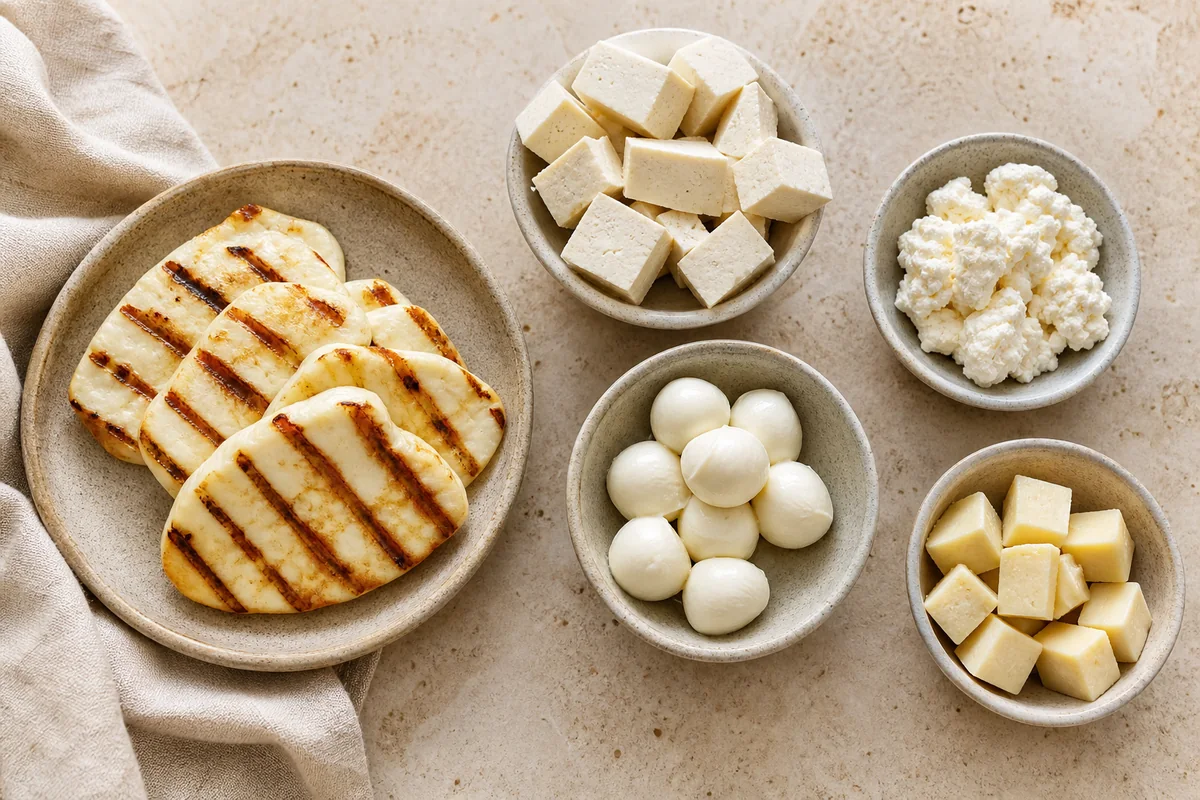
5 Best Halloumi Cheese Substitutes for Home Cooks
Ingredients
Equipment
Method
- Decide your use: grilling/sautéing for a browned crust, or baking for melted texture.
- Pick the substitute that best matches that behavior from the ranked list below.
- Apply the listed ratio. For wetter cheeses, drain/press so the surface browns instead of steaming.
- Cut to halloumi-like thickness (about ½ inch). Cook hot and dry (preheated pan or grill) for 2–3 minutes per side.
- If the substitute tastes blander than halloumi, add a pinch of salt or extra brine-based tang (lemon or vinegar) to your dish.
Notes
- Drain and pat dry any brined or fresh substitutes to prevent steaming and crumbling.
- Thickness matters: thinner slices melt faster and won’t mimic halloumi’s crust.
Tried this recipe?
Let us know how it was!
Carrie is a food writer and editor with more than 15 years of experience. She has worked for some of the biggest names in the food industry, including Bon Appétit, Food & Wine, and Martha Stewart Living.
As the Editor in Chief of EpicureDelight, Carrie oversees all of the content on the site. She also manages the team of contributing writers and editors, who help to create delicious recipes, helpful tips, and informative articles that you’ll find on the site.
A native of the Chicago area, Carrie is passionate about all things food. She loves trying new restaurants and experimenting with new recipes in her kitchen. She’s also a graduate of the Culinary Institute of America, so she knows a thing or two about food!



