
Queso fresco has a specific personality in a dish: mildly salty, dry enough to crumble, and content to sit on top without melting into a puddle. Finding a queso fresco alternative that behaves the same way depends on two things-how the cheese is textured and how salty it tastes.
Get those two factors right, and most swaps land well.
The cheese is almost always used as a finisher or a light baked layer. That changes which substitute makes sense.
A creamy swap like thinned cream cheese solves a different problem than a dry, crumbly swap like cotija.
One quick tip before you dive into the list: if your substitute is noticeably saltier (feta, cotija), start with slightly less than the recipe calls for and taste after cooking. Knowing how queso fresco in cooking actually behaves helps you judge how far off a swap will land.
Queso fresco is mild, salty, and crumbly-it doesn't melt smoothly. The best substitutes match its crumble texture first, then its salt level. Cotija and ricotta salata are the closest for toppings. Feta works for baking. Thinned cream cheese is a creamy emergency-only swap.
5 Queso Fresco Alternatives That Match Texture and Saltiness
The table below maps each substitute by crumble behavior, relative salt level, and where it actually works. Some cheeses are too wet for toppings but fine for baked layers; others are too salty for delicate dishes.
Scan the Key Note column first, then read the section for whichever one fits your recipe.
| # | Substitute | Best For | Ratio | Key Note |
|---|---|---|---|---|
| 1 | Cotija | Both | 1:1 | Saltier; crumbles cleanly |
| 2 | Feta | Cooking | ¾:1 | Tangier; add late |
| 3 | Ricotta Salata | Both | 1:1 | Firm, dry crumbles |
| 4 | Farmer Cheese | Both | 1:1 | Mild; add salt if needed |
| 5 | Cream Cheese | Cooking | ¾:1 | Creamy only; not crumbly |
- For taco toppings: Cotija or ricotta salata-both hold their crumble shape at room temperature and under brief heat.
- For baked casseroles: Feta or farmer cheese-they soften slightly but don't pool liquid as readily as fresh soft cheeses.
- For dips and sauces: Thinned cream cheese or Neufchâtel-texture shifts from crumbly to creamy, so only use these when the recipe can handle it.
- Adjusting salt: Taste your dish after adding any substitute before reaching for the salt shaker.
1. Cotija Cheese
Cotija is the most direct swap here. It crumbles with the same dry snap as queso fresco and holds that shape when you scatter it over tacos, enchiladas, or a warm casserole.
It's made to sit on top, not to melt.
The main difference is salt-cotija runs noticeably saltier than queso fresco, especially aged cotija. If your dish already has bold seasoning, reduce the amount by about a tablespoon per half cup called for and taste before adding more.
- Swap ratio: 1:1 by volume for topping uses; start at ¾ ratio if your dish already has salty elements.
- Flavor impact: Saltier and slightly sharper-works well with lime, salsa, and roasted vegetables where the extra salt reads as seasoning.
- Baking tip: Add cotija in the last 5-8 minutes of baking uncovered so it warms through without softening into a paste.
- Best for: Taco toppings, elote (Mexican corn), enchilada layers, and black bean casseroles.
Skip if: your recipe depends on a very mild, almost bland finish-cotija will push the salt level noticeably higher.
2. Feta
Feta holds a crumble shape well, but it brings two things queso fresco doesn't: tang and a higher salt level. That's actually useful in some dishes-roasted vegetables, grain bowls, or egg bakes where a little sharpness reads as brightness.
For dishes that need neutral flavor, feta is a harder sell. If you're using it in a queso fresco in cooking context where mild dairy is the point, scale back the amount and consider soaking the feta in cold water for 10 minutes to mellow the salt.
Feta as a Finishing Cheese
Works for: taco toppings, grain bowls, egg bakes, roasted veg dishes where salt and tang are a bonus
Skip if: the recipe needs a mild, creamy finish-feta's tang will dominate
Feta in Baked Layers
Works for: casseroles, stuffed peppers, baked eggs where it's mixed in and cooked briefly
Skip if: baking time is long-feta releases moisture and can make the layer dense and wet
- Reducing tang: Soak block feta in cold water for 10 minutes before crumbling-it softens the salt and tang noticeably.
- When to add: For baked dishes, add feta in the final 10 minutes uncovered to limit moisture release.
- Texture expectation: Crumbles are slightly wetter than queso fresco or cotija-pat dry before sprinkling.
- Pair with: Lime juice, fresh salsa, or pickled onions to complement rather than fight the tang.
Skip if: you need the mild, dairy-forward flavor of queso fresco-feta will change the flavor profile clearly.
3. Ricotta Salata
Ricotta salata is what you reach for when the dish absolutely needs a dry, firm crumble that won't soften into a smear. It's pressed and salted, so it holds its shape under brief heat better than almost any other swap on this list.
The flavor is mild and lightly salty-closer to queso fresco's subtlety than cotija or feta. You can find it at most specialty grocery stores, and it's worth keeping on hand if you cook a lot of dishes where ricotta substitutes or similar soft cheeses come up regularly.
- Swap ratio: 1:1 by volume-it's a clean swap for topping-style uses.
- Moisture level: Very low-ricotta salata won't release liquid into warm dishes the way fresh ricotta would.
- Where to use it: Sprinkle over warm tacos, roasted squash, pasta, or grain salads as a finishing cheese.
- Heat behavior: Softens slightly when baked but holds crumble structure far better than fresh soft cheeses.
Skip if: you need a creamy or spreadable component-ricotta salata is firm and will never melt into a sauce.
4. Farmer Cheese
Farmer cheese is the quiet, mild option. It doesn't bring extra salt or tang-what it brings is a soft crumble and a neutral dairy flavor that won't compete with the other seasoning in your dish.
That's useful when queso fresco is supposed to be background texture, not a flavor statement.
Dry curd-style farmer cheese holds its shape reasonably well. It works well in baked egg dishes, casseroles, and stuffed peppers where queso fresco is mixed into layers rather than scattered on top.
Salt Level
Works for: dishes that are already well-seasoned-farmer cheese won't push salt higher
Skip if: you need a salty, sharp finish-farmer cheese is too mild to replicate cotija or feta's punch
Crumb Retention
Works for: brief baking (20-25 min) where a soft crumble integrates cleanly into layers
Skip if: baking time exceeds 35 minutes-farmer cheese softens and can lose its structure
- Salt adjustment: Add a small pinch of flaky salt after plating-season after baking, not before, to avoid over-correcting.
- When to add in baking: Mix into the dish before baking, or scatter on top in the last 10 minutes for a cleaner crumble finish.
- Texture notes: Slightly moister than ricotta salata but drier than fresh ricotta-blends into layers without turning the dish watery quickly.
Skip if: you need a strongly salty, sharp finish-farmer cheese is noticeably milder than queso fresco and may taste flat without a salt adjustment.
5. Neufchâtel or Cream Cheese
This swap is for a specific situation: you need creamy body in a dish and you're completely out of options. Think queso-style dips, creamy enchilada sauces, or layered baked dishes where queso fresco was blending into the texture rather than sitting on top as a topping.
Neufchâtel is lower in fat than regular cream cheese and thins out more easily. For dishes that need something spreadable, neufchatel cheese swaps that work cover other angles if this isn't quite what you need.
For the cream cheese version, keeping cream cheese fresh matters if you're working from a block that's been in the fridge a while.
| Use | Ratio | Notes |
|---|---|---|
| Dips & sauces | ¾:1 | Thin with 2 tablespoon milk per 4 oz; stir until pourable |
| Baked layers | ¾:1 | Add in last 10 min; don't bake from the start or it scorches |
| Stuffed dishes | ½:1 | Mix with a splash of lime juice to add brightness |
- How to thin: Add 1-2 tablespoon of whole milk per 4 oz of cream cheese; mix until spreadable but not runny.
- Ratio behavior: Use ¾ the amount the recipe calls for-cream cheese is richer and will overpower if used at full volume.
- When to add heat: Stir in off-heat or in the final 5 minutes; prolonged heat separates the fat and turns the texture greasy.
Skip if: you want authentic crumbles-this swap is creamy by nature and will not behave like queso fresco's dry scatter.
Making the Swap Work in Real Dishes
The decision always comes down to three things: texture first, salt second, timing third. Choose a crumbly substitute (cotija, ricotta salata, farmer cheese) if the queso fresco was going on top or into a short bake.
Choose a creamy substitute only if the recipe genuinely needs body, not crumble. Then adjust salt after the dish is cooked-never before, because heat concentrates flavors and you'll overshoot.
- For toppings and garnishes: Add the substitute after cooking or in the final 5 minutes uncovered-this keeps the crumble dry and visually distinct.
- For baked layers: Use feta or farmer cheese; add them partway through baking (not from the start) to prevent moisture pooling at the bottom of your dish.
- For salt and tang balance: Taste the finished dish before adding any extra salt-cotija, feta, and even ricotta salata vary batch to batch, and storing feta correctly affects how salty it tastes when you open it.
Frequently Asked Questions
Cotija is the closest match-it crumbles dry and holds its shape on warm tacos. Ricotta salata is a good second choice if cotija is too salty for your taste.
Yes, but add it in the last 10 minutes of baking uncovered-feta releases moisture and can make the layer dense if baked the whole time. Reduce the amount slightly since feta is saltier.
Choose a dry substitute-cotija, ricotta salata, or farmer cheese-and add it near the end of cooking. Soft cheeses added early release liquid into the dish.
Yes-ricotta salata is pressed and dry, so it holds a firm crumble better than most soft cheeses. Use it at a 1:1 ratio for topping-style applications.
Neufchâtel thinned with 1-2 tablespoon of milk is the best option-it blends smoothly without the heaviness of full-fat cream cheese. Use ¾ the amount the recipe calls for.
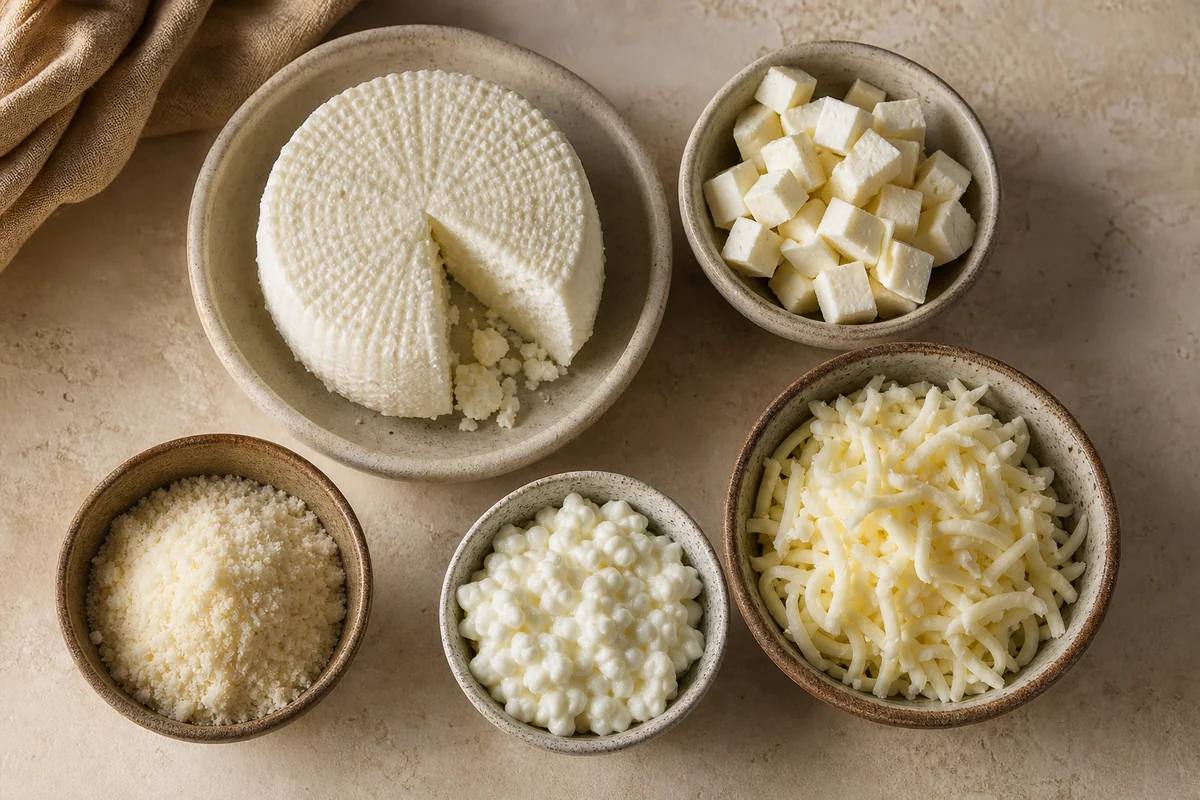
5 Best Queso Fresco Substitutes (Honest Picks)
Ingredients
Equipment
Method
- Identify how you’re using queso fresco: crumbling/topping vs mixing into baked layers vs adding creamy moisture.
- Pick the closest texture match from the list (crumbly cheeses first for toppings; thinned cream cheese only for creamy mixes).
- Swap using the ratio above; for very salty options (feta), start slightly under and adjust after tasting.
- If your dish is hot and you want less melt, add the cheese at the end (or bake uncovered for the last 5 minutes).
- Taste and correct: add salt only if the substitute is milder, or add a squeeze of lime for extra tang.
Notes
- Queso fresco is typically mild, salty, and crumbly; substitutes that are much creamier or saltier will change the dish.
- For toppings, choose a crumbly cheese; for baked layers, choose crumbles that won’t turn gummy.
Tried this recipe?
Let us know how it was!
Carrie is a food writer and editor with more than 15 years of experience. She has worked for some of the biggest names in the food industry, including Bon Appétit, Food & Wine, and Martha Stewart Living.
As the Editor in Chief of EpicureDelight, Carrie oversees all of the content on the site. She also manages the team of contributing writers and editors, who help to create delicious recipes, helpful tips, and informative articles that you’ll find on the site.
A native of the Chicago area, Carrie is passionate about all things food. She loves trying new restaurants and experimenting with new recipes in her kitchen. She’s also a graduate of the Culinary Institute of America, so she knows a thing or two about food!



