Harbison cheese has a way of disappearing fast at any table. That soft, spoonable center and gently earthy rind make it one of those cheeses people scoop straight from the bark wrap before anything else is served.
Finding a good harbison cheese substitute means matching two things at once: its creamy, flowing melt and its bloomy-mild flavor that never crowds a dish.
Harbison is a washed and bloomy-rind style, which means it softens dramatically at room temperature and bakes into something almost custardy. It is not sharp, not aged, and not crumbly.
Any swap needs to stay in that soft, high-moisture lane.
For a harbison cheese substitute, Brie and Camembert are the closest matches for melt and mild bloomy flavor. Crème fraîche works for sauces. Neufchâtel and drained ricotta cover boards and baked layers when rind-style cheese isn't available.
5 Best Harbison Cheese Substitutes Ranked by Texture and Melt
Each substitute below is matched to how Harbison actually behaves in a dish. Use the table first, then read the section for the swap you pick.
| # | Substitute | Best For | Ratio | Key Note |
|---|---|---|---|---|
| 1 | Brie (triple-cream) | Both | 1:1 | Warm before slicing |
| 2 | Camembert (bloomy-rind) | Both | 1:1 | Rest 10 min at room temp |
| 3 | Neufchâtel (creamy) | Board | 1:1 | Less rich than Harbison |
| 4 | Crème fraîche (thick) | Cooking | ¾:1 | Salt-adjust, stir off heat |
| 5 | Ricotta (whole-milk, drained) | Baking | ¾:1 | Drain well or it weeps |
Skip this list if you need a substitute that browns like aged cheddar. Every option here targets mild, creamy melt behavior.
1. Brie (Triple-Cream Style)
Brie is the first cheese most cooks reach for when Harbison isn't available, and it earns that spot. Triple-cream Brie has a fat content close to Harbison's, so it softens at about the same pace and spreads with the same luxurious drag across a cracker.
If you want to understand what sets the bloomy interior apart from sharper options, Brie makes that comparison easy.
- Flavor match: Mild, buttery, and mushroomy - nearly identical to Harbison's profile at room temperature
- Melt behavior: Flows freely when warmed, making it a reliable choice for baked rounds or melted toppings
- Board use: Slice it cold, then let it rest 10 minutes so it reaches that creamy, almost-liquid center Harbison is known for
- Baking caution: Pull it from the oven a few minutes early - Brie can over-brown on top before the center fully warms through
Skip if: you want a more tangy, assertive flavor than Harbison delivers. Brie is typically milder, not sharper.
2. Camembert (Bloomy-Rind)
Camembert sits in the same bloomy-rind family as Harbison and behaves almost identically when warmed. It has a slightly more pronounced earthiness, closer to damp soil than the forest-floor notes some Harbisons carry, but in a sandwich or baked round that difference fades.
Keep an eye on this soft-rind wheel when you buy it - freshness matters more here than with aged cheeses.
Camembert vs. Harbison
Works for: baked rounds, grilled sandwiches, warm cheese boards where the rind melts into the center
Skip if: you're pulling it straight from the fridge - cold Camembert can split unevenly under heat instead of flowing smoothly
- Room temp rule: Rest it 10 minutes before serving or baking for an even, custardy melt
- Sandwiches: Use it whole-wheel-style in a pressed sandwich - the rind softens and the center turns almost sauce-like
- Boards: Score the top and bake at 375°F for 10 minutes to replicate Harbison's scoopable presentation
- Ratio: 1:1 replacement across all uses
3. Neufchâtel (Soft, Creamy)
Neufchâtel is a quieter substitute. It doesn't have a rind, so it won't replicate Harbison's earthy edge, but its soft, spreadable texture covers boards and quick-melt applications without fuss.
If you're already exploring swapping soft cheeses in other recipes, Neufchâtel fits naturally into that set of decisions.
Under heat it stays creamy but can feel slightly grainy if it gets too hot too fast. We use it in open-faced baked dishes where it's covered with other ingredients, not exposed directly to the broiler.
It is lighter than Harbison, noticeably less rich, so it works better in a spread situation than a centerpiece cheese moment.
Skip if: you need that buttery, almost fatty mouthfeel Harbison delivers. Neufchâtel is good, not luxurious.
4. Crème Fraîche (Thick) for Sauces and Spreads
Crème fraîche is not a slice-and-serve cheese, so it only earns a spot here when you need Harbison's creaminess in a sauce, a dip, or a warm finishing drizzle. It has a gentle tang, slightly more pronounced than Harbison, but that tang softens when stirred into a warm dish.
Its container shelf life is shorter than hard cheeses, so check the date before you commit.
- Ratio: Use ¾ the amount of crème fraîche compared to Harbison - it carries more moisture and spreads thinner
- Salt adjustment: Harbison has more natural salt from its rind. Add a small pinch of flaky salt when using crème fraîche in savory dishes
- Best dishes: Warm pasta, baked potato topping, or a whipped spread on toast - anywhere the melt behavior matters more than the cheese form
- What it can't do: It won't layer like a cheese slice or hold shape in a baked stuffed sandwich
Skip if: you need a sliceable or scoopable cheese layer. Crème fraîche is for cooking, not boards.
5. Ricotta (Whole-Milk, Drained)
Ricotta is an emergency move, but it actually works well once you drain it properly. Whole-milk ricotta line-dried through a cheesecloth for 20 to 30 minutes loses enough moisture to become scoopable and creamy without weeping into baked fillings.
It has a mild, milky flavor with no tang and no earthy edge, so it's a blank slate that carries whatever you season it with. When you store leftover portions, knowing how long drained ricotta keeps will save you from a soggy situation later.
- Drain first: Line a colander with cheesecloth, add ricotta, and refrigerate 20-30 minutes - this step is non-negotiable
- Smooth vs. rustic: Blend it for 30 seconds for a whipped, spreadable texture closer to Harbison; leave it as-is for a chunkier baked layer
- Best uses: Baked sandwiches, stuffed pastry rounds, or lasagna-style layers where creamy filling matters more than melt pull
- Flavor boost: Stir in a small amount of cream cheese (1 tablespoon per ½ cup ricotta) to push the richness closer to Harbison's fat level
Skip if: you can't drain it. Wet ricotta loosens fillings and turns baked layers soft and soggy.
Making Harbison Cheese Substitutes Work
Most substitution failures come down to three things: too much moisture, wrong temperature, or skipping the fat adjustment. When you understand the milder cheese tradeoff upfront, you choose a swap that fits the dish instead of forcing one that doesn't.
The good news is that all five options here are forgiving if you handle them gently and adjust for what they lack in richness or salt.
- Choose the right ratio: Use 1:1 for Brie, Camembert, and Neufchâtel; drop to ¾ for crème fraîche and ricotta to avoid loose, watery results
- Warm before serving: Rest any soft substitute 10 to 15 minutes at room temperature before plating - this is how you get the creamy, spreadable texture Harbison is known for
- Manage moisture: Drain ricotta ahead, stir crème fraîche off the heat, and avoid adding liquid to Brie or Camembert before it's fully softened
Frequently Asked Questions
Yes, triple-cream Brie swaps 1:1 for Harbison in baked dishes. Pull it from the oven a few minutes early to prevent the top from over-browning before the center fully melts.
Brie (triple-cream style) melts closest to Harbison. Its fat content and moisture level produce the same flowing, custardy center when warmed gently.
Slightly. Camembert has a more pronounced earthy note, but in a pressed or grilled sandwich that difference is minimal and most people won't notice it.
Drain whole-milk ricotta through cheesecloth for at least 20 minutes before baking. Skipping this step lets excess moisture bleed into your filling during cooking.
Crème fraîche or whipped drained ricotta are both good spread options. Crème fraîche is tangier; blended ricotta is milder and thicker for toast or crackers.
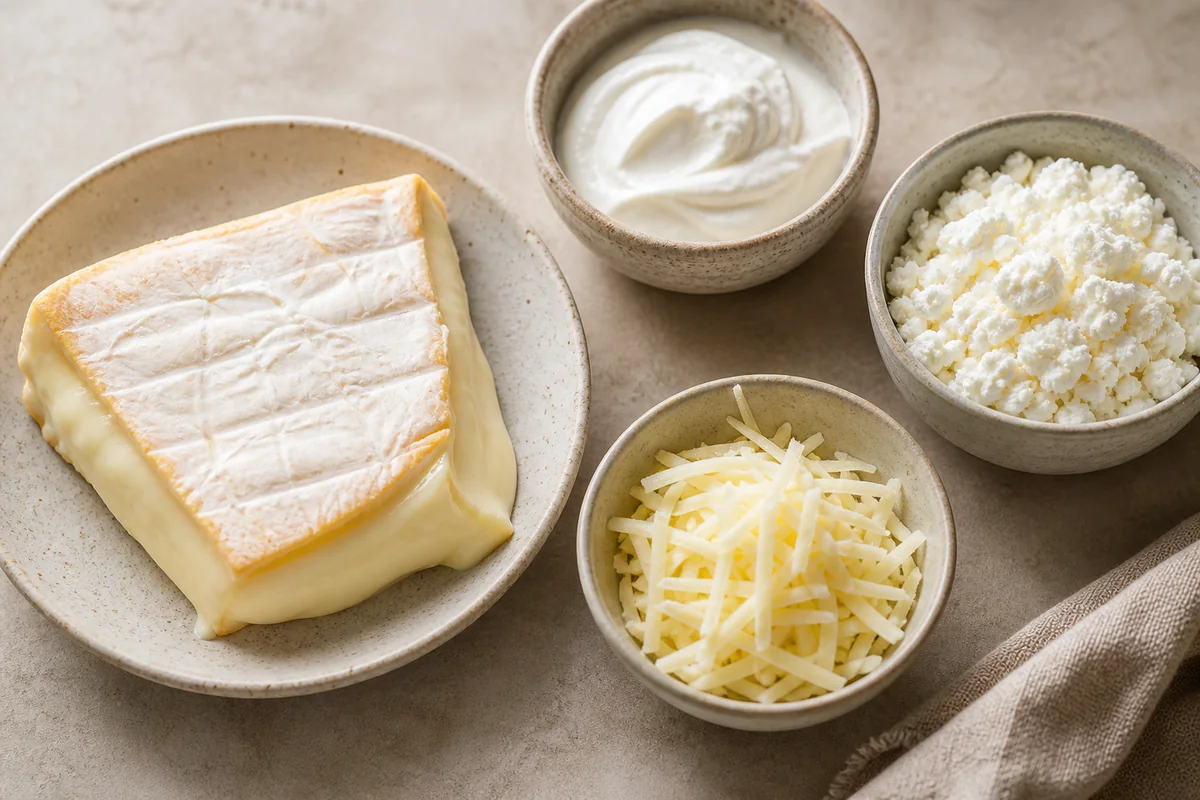
5 Best Harbison Cheese Substitutes You Can Trust
Ingredients
Method
- Decide whether you need Harbison for a cheese board (slice/spread) or cooking (melt/brown).
- Use the table ratios: choose a 1:1 swap for closest texture, or a ¾ ratio when the substitute is softer or watery.
- If your substitute is wetter (like ricotta or crème fraîche), drain or reduce briefly so it doesn’t loosen your dish.
- Warm gently (room temp or low-heat) before serving if you want the same creamy, spreadable result.
Notes
- Choose based on use: bloomy-rind cheeses mimic the melt and mild aroma; fresh creamy dairy mimics the spread but needs moisture control.
Tried this recipe?
Let us know how it was!
Carrie is a food writer and editor with more than 15 years of experience. She has worked for some of the biggest names in the food industry, including Bon Appétit, Food & Wine, and Martha Stewart Living.
As the Editor in Chief of EpicureDelight, Carrie oversees all of the content on the site. She also manages the team of contributing writers and editors, who help to create delicious recipes, helpful tips, and informative articles that you’ll find on the site.
A native of the Chicago area, Carrie is passionate about all things food. She loves trying new restaurants and experimenting with new recipes in her kitchen. She’s also a graduate of the Culinary Institute of America, so she knows a thing or two about food!