
Neufchatel sits in a funny middle ground. It is softer and slightly tangier than full-fat cream cheese, and it has a lower fat content that makes spreads feel lighter without losing their dairy backbone.
That combination is easy to replicate, but only if you pick the right stand-in for the job.
The neufchatel cheese substitute that works for a bagel spread will not always work in a baked cheesecake. Moisture level is the real variable.
Higher-moisture swaps like Greek yogurt or cottage cheese need draining before they behave like neufchatel in a baked dish.
Cream cheese (full-fat) is the closest 1:1 swap for neufchatel in most recipes. For lighter options, use strained Greek yogurt or blended cottage cheese at a ¾:1 ratio. Mascarpone and blended ricotta both work 1:1 but shift richness or texture noticeably.
5 Best Neufchatel Cheese Substitutes, Ranked by Use
Each ratio below assumes you are measuring the neufchatel amount your recipe calls for. Softened block cheese behaves closest to neufchatel, while strained dairy options work well for lighter applications once you reduce excess moisture. If you are already exploring chilled cultured dairy for other recipes, the yogurt swap will feel familiar.
| # | Substitute | Best For | Ratio | Key Note |
|---|---|---|---|---|
| 1 | Cream Cheese (full-fat) | Both | 1:1 | Soften before using |
| 2 | Mascarpone | Both | 1:1 | Richer, reduce sugar |
| 3 | Greek Yogurt (strained) | Both | ¾:1 | Strain 30 min first |
| 4 | Ricotta (blended) | Both | 1:1 | Blend until silky |
| 5 | Cottage Cheese (drained) | Both | ¾:1 | Drain then blend |
1. Cream Cheese (Full-Fat, Softened)
Full-fat cream cheese is the most reliable swap because it matches neufchatel's structure almost exactly. The tang is similar, the set in baking is nearly identical, and the difference in fat only matters if your recipe is specifically formulated for low-fat dairy.
The one practical step is softening. Cold cream cheese clumps and resists blending, which reads as gritty in dips and uneven in cheesecake batters.
Pull it from the fridge 30 minutes early. You can check proper storage for block cream cheese to make sure yours is fresh before you start.
- Ratio: 1:1 for spreads, dips, frosting, and most baked uses
- Texture tip: Beat with a hand mixer until completely smooth before adding other ingredients
- Richness tip: Cream cheese is slightly richer; reduce added sweetener by 1 tablespoon in sweet recipes if you notice a heavier mouthfeel
- Avoid cold use: Never substitute straight from the fridge in a no-bake recipe that needs a smooth spread
Cream Cheese (Full-Fat)
Works for: spreads, dips, cheesecakes, frostings, baked savory dishes
Skip if: the recipe is specifically low-fat and you cannot compensate for the extra richness
2. Mascarpone
Mascarpone is a good substitute when your recipe needs a smooth, almost silky texture. It blends effortlessly and holds its structure in chilled desserts, but this buttery Italian cheese is noticeably richer and rounder in flavor than neufchatel.
The tang is almost absent, which changes the flavor balance in savory dips or tangy cheesecakes.
Use it at a 1:1 ratio. If the recipe is sweet, reduce added sugar by about 1 tablespoon per cup of mascarpone used.
In savory applications, a small squeeze of lemon juice (about 1 teaspoon per cup) brings back some of neufchatel's characteristic brightness.
- Ratio: 1:1 for most uses; no draining needed
- Best for: No-bake cheesecakes, frostings, stuffed pasta fillings, and chilled dips
- Flavor fix: Add 1 teaspoon lemon juice per cup to mimic neufchatel's mild tang in savory recipes
- Skip if: Your recipe depends on the light, low-fat quality of neufchatel and you want a less heavy result
3. Greek Yogurt (Thick, Strained)
For dips, cheesecake batters, and lighter spreads, thick strained Greek yogurt is the best lower-fat option. It has a natural tang that is actually closer to neufchatel's flavor profile than mascarpone.
The catch is moisture. Unstrained yogurt is too loose for most neufchatel applications.
Once strained, this tart fermented dairy firms up and holds its shape well in dips and layered desserts.
- Ratio: ¾:1 (use slightly less than the neufchatel amount, then adjust texture)
- Straining method: Set over a bowl with cheesecloth for 30 minutes minimum; overnight gives the firmest result
- Best for: Dips, cheesecake filling, spread-style applications, and savory tarts
- Skip if: You cannot strain it first. Unstrained yogurt will turn the final dish watery and loose.
4. Ricotta (Blended Smooth)
Blended ricotta is a quieter substitute. It has a gentle dairy tang, a soft body, and it blends into batters and spreads without fighting the other ingredients.
Use it at a 1:1 ratio, but the word "blended" is non-negotiable. Unblended ricotta has a grainy, curd-like texture that stands out in smooth dips and cheesecake fillings.
Run it through a food processor or blender for at least 60 seconds until the texture is completely uniform and creamy. Once smooth, it works well in baked cheesecake, stuffed shell fillings, and spread-style recipes where a mild flavor is preferred.
You can explore fat-level tradeoffs in soft cheeses if you are deciding between this and a lighter cream cheese option. Skip ricotta if you do not have a blender or food processor available; fork-mashing will not get it smooth enough for most neufchatel applications, and the grainy result will be noticeable in the finished dish.
5. Cottage Cheese (Blended, Well-Drained)
Cottage cheese has a lot of moisture, and that moisture is the main thing standing between it and a workable neufchatel substitute. The flavor is mild and the tang is present, but without draining and blending, it will make batters watery and spreads loose.
Start by draining it through a fine mesh strainer for at least 20 minutes, pressing gently to remove as much liquid as possible. Then blend until smooth, which takes 60 to 90 seconds in a food processor.
You can check how long drained curd cheese keeps if you are prepping it ahead.
| Use | Ratio | Notes |
|---|---|---|
| Dips and spreads | ¾:1 | Drain 20 min, blend smooth, use immediately |
| Cheesecake batter | ¾:1 | Drain overnight for firmest set; blend before mixing |
| Baked savory dishes | ¾:1 | Drain well; reduce any added liquid by 2 tbsp |
- Ratio: ¾:1; always drain before measuring
- Blend time: 60-90 seconds in a food processor for a smooth, even texture
- Moisture tip: If the batter still seems thin after adding blended cottage cheese, reduce another liquid in the recipe by 2 tbsp
- Skip if: You need a true 1:1 swap and cannot drain or adjust the recipe's liquid ratio
Making Neufchatel Substitutes Work (Without Texture Issues)
The goal with any swap is to match three things: texture, moisture level, and tang. Cream cheese handles all three with minimal effort.
For the others, moisture is where most recipes go wrong. The soft spreadable character of neufchatel comes partly from its controlled water content, and replicating that means actively managing the moisture in your substitute. If you are using a richer option like mascarpone, the fat-level comparison in soft cheeses can help you decide whether to cut sweetness or fat elsewhere in the recipe.
- Texture: Blend ricotta and cottage cheese until fully smooth; graininess will not cook out in a baked dish
- Moisture: For baked recipes using strained or drained substitutes, reduce any added liquid by 1 to 2 tablespoon to maintain the correct batter consistency
- Tang: If your substitute lacks tang (especially mascarpone), add 1 teaspoon of lemon juice or a small pinch of cream of tartar per cup to bring the flavor closer to neufchatel
Frequently Asked Questions
Full-fat cream cheese is the closest 1:1 swap. Soften it before use to match neufchatel's smooth, spreadable texture in both cold and baked applications.
Yes, but strain it first for at least 30 minutes. Unstrained yogurt adds too much moisture, which can prevent the cheesecake from setting properly.
Unblended ricotta will be grainy. Blend it in a food processor for at least 60 seconds until completely smooth before adding it to any dip or spread.
Press it through a fine mesh strainer for at least 20 minutes, then blend until smooth. For baking, drain overnight for the firmest result.
It works, but add 1 teaspoon of lemon juice per cup to compensate for the missing tang. Mascarpone is richer and much milder than neufchatel in savory dishes.
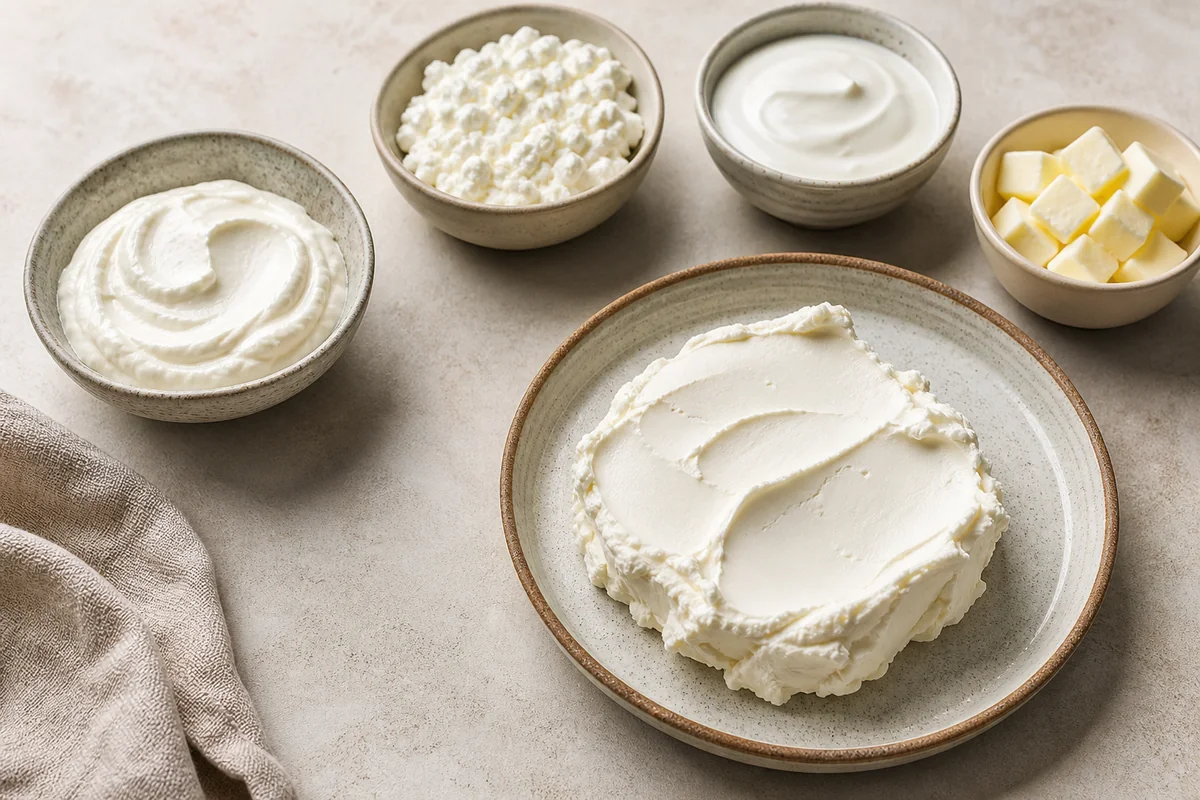
5 Best Neufchatel Cheese Substitutes (with Ratios)
Ingredients
Equipment
Method
- Identify what you’re making: a spread/dip (needs smoothness) or a baked dish (needs structure and reduced moisture).
- Choose the substitute that matches your goal: cream cheese for closest behavior, or strained/thickened dairy for lighter swaps.
- Use the listed ratio. If your substitute is wetter (Greek yogurt, ricotta, cottage cheese), strain/drain first to prevent a loose final texture.
- Mix thoroughly until smooth, especially with ricotta/cottage cheese. Then taste and adjust salt or sweetness to match the original recipe’s balance.
- If baking, reduce extra liquid from the recipe if the batter seems thin. Bake until set, not just “cooked through.”
Notes
- Ratios assume you’re substituting by weight for best consistency when possible.
- For dips and frosting, prioritize smooth blending; for baking, prioritize lower moisture to avoid a soft set.
Tried this recipe?
Let us know how it was!
Carrie is a food writer and editor with more than 15 years of experience. She has worked for some of the biggest names in the food industry, including Bon Appétit, Food & Wine, and Martha Stewart Living.
As the Editor in Chief of EpicureDelight, Carrie oversees all of the content on the site. She also manages the team of contributing writers and editors, who help to create delicious recipes, helpful tips, and informative articles that you’ll find on the site.
A native of the Chicago area, Carrie is passionate about all things food. She loves trying new restaurants and experimenting with new recipes in her kitchen. She’s also a graduate of the Culinary Institute of America, so she knows a thing or two about food!



