
That toasted, faintly sweet smell of hazelnut oil is hard to fake. It sits somewhere between roasted nuts and warm pastry, and it does real work in a salad dressing or a drizzle over roasted carrots.
When the bottle runs dry mid-recipe, the best swap depends on a simple question: do you need that toasted-nut aroma, or do you just need the fat?
If aroma matters, another nut oil is your fastest answer. If you're baking something where fat is the job and flavoring comes from other ingredients, almost any mild oil will hold the dish together.
Hazelnut oil contributes toasted-nut aroma and a mild, slightly sweet fat. For the closest swap, reach for walnut oil or pistachio oil at 1:1. For baking where fat is the main role, browned butter or macadamia oil work well. Use avocado oil when you need heat stability and aroma is less important.
5 Hazelnut Oil Swaps for Cooking and Baking
Every substitute below is a pantry-realistic choice. The table shows each one at a glance before we get into the detail on when and how to use each.
| # | Substitute | Best For | Ratio | Key Note |
|---|---|---|---|---|
| 1 | Walnut Oil | Finishing / Dressing | 1:1 | Closest toasted-nut aroma |
| 2 | Pistachio Oil | Baking / Sauces | 1:1 | Subtly sweet, aromatic |
| 3 | Browned Butter | Baking / Pastry | 1:1 | Cool before mixing in |
| 4 | Olive Oil + Hazelnut Powder | Baking / Dressings | ¾:1 | Blend warm, then cool |
| 5 | Avocado Oil | Sautéing / Baking | 1:1 | Neutral, heat-stable |
Avoid purely neutral oils for finishing or dressing work where nut aroma is the point. If you're in that situation, pair your mild oil with hazelnut powder or pick a nut oil from the list.
1. Walnut Oil
Walnut oil is the nearest neighbor to hazelnut oil in the nut-oil family. It has a genuine toasted quality, not a sharp or green-tasting one, and it behaves almost identically in dressings and light baking.
The one caveat is sharpness. Walnut oil reads a little bolder on the palate, so if you're making something delicate, you can pull back by 10% or blend it with a small amount of mild olive oil.
For most recipes, though, a straight clean 1:1 exchange works without adjustment.
- Ratio: 1:1 for finishing drizzles, vinaigrettes, and most baked goods
- Flavor adjustment: Blend with a small amount of mild olive oil if the sharpness reads too strong
- Storage: Nut oils go rancid faster than neutral oils; keep it refrigerated and use within a few months
- Not for high heat: Low smoke point makes it a poor choice for frying or high-heat sautéing
Walnut Oil
Works for: finishing drizzles, vinaigrettes, light baking, cold sauces
Skip if: your recipe calls for high-heat cooking and you can't moderate temperature
2. Pistachio Oil
Pistachio oil is an underrated swap. It has a subtly sweet, gently green-scented aroma that is close enough to hazelnut oil to work in most baked goods and dressings without anyone noticing the difference.
Its flavor is rounder and less sharp than walnut oil, which makes it friendly in creamy preparations. Think financiers, quick breads, and citrus-dressed salads.
You can also find this warm nuttiness in the oil especially when the pistachio is cold-pressed.
- Ratio: 1:1 in baked goods, sauces, and dressings
- Best for: Madeleines, financiers, soft cakes, and creamy vinaigrettes
- Flavor note: Sweeter than walnut oil; slightly herbal when cold-pressed
- Skip if: Your recipe needs a very specific hazelnut-gianduja note; reach for walnut oil or add hazelnut powder instead
3. Browned Butter
Browned butter doesn't come in a bottle, but it delivers toasted depth that neutral oils simply can't. The milk solids caramelize during cooking and produce that nutty, bakery-warm character you're trying to replace.
It works especially well in cookies, soft cakes, pastry cream, and any filling where the batter gets heated.
Application is simple: brown your butter over medium heat until it smells like toasted nuts, then cool it to lukewarm. Use it at 1:1.
For vinaigrettes, whisk it in slowly while the dressing is slightly warm so it doesn't seize into greasy clumps. The result won't taste like hazelnut exactly, but it carries that baking browned depth that reads close.
Skip if: you're making a cold uncooked dressing that must stay emulsified at fridge temperature.
4. Olive Oil + Toasted Hazelnut Powder
When you have mild olive oil and hazelnut powder, you can build something that works like hazelnut oil in most applications. The oil provides the fat and the powder restores the aroma.
It's not magic, but it's noticeably closer than plain olive oil alone.
Warm the olive oil gently (not hot, around 130°F), whisk in the hazelnut powder, and let the mixture cool before using. This opens up the nut compounds and helps them disperse into the oil rather than just sitting on top.
| Use | Ratio | Notes |
|---|---|---|
| Baking (cakes, muffins) | ¾ cup oil + 2 tablespoon hazelnut powder per 1 cup hazelnut oil | Blend warm; cool fully before mixing into batter |
| Dressings / vinaigrettes | ¾ cup oil + 1.5 tablespoon hazelnut powder per 1 cup hazelnut oil | Strain powder if you want a smooth texture |
| Drizzle / finishing | ¾ cup oil + 1 tablespoon hazelnut powder per 1 cup hazelnut oil | Use immediately; don't store the blended mixture long |
- Blending method: Whisk powder into warm oil for 60 seconds, then let it settle before straining or using as-is
- Texture note: Leave it unstrained for baking; strain it for smooth dressings
- Skip if: You don't have hazelnut powder on hand; no other nut powder replicates the flavor well enough to be worth it
Also worth knowing: if you're swapping the olive oil base here for a different mild oil, canola or light grapeseed work fine in its place.
5. Macadamia Oil
Macadamia oil reads buttery and mild with a gentle sweetness that makes it a natural fit for cakes, custards, and anything where you want fat without strong flavor interference. It's less toasty than hazelnut oil, but the buttery weight is close enough in baking that most people won't notice.
It handles moderate heat decently, which gives it a slight edge over walnut or pistachio oil for sautéed applications. Check how you're storing other nut oils alongside it, since macadamia oil has a similar shelf life and should stay refrigerated after opening.
- Ratio: 1:1 for baking, light sautéing, and dressings
- Flavor expectation: Buttery and creamy, less directly toasted than hazelnut oil
- Best for: Pound cakes, custard bases, soft cookies, and gentle vinaigrettes
- Skip if: Your recipe specifically needs that nutty-toast top note; walnut oil or pistachio oil will be closer
Making Your Hazelnut Oil Substitute Taste Right
Getting the swap right is mostly about matching the role, not just the ratio. For finishing drizzles, only a toasted nut oil will feel right; for baking, almost anything works if you manage your other flavorings.
When you're working with this sharp-edged nut oil as a walnut substitute, taste your dressing before serving and adjust salt or acid. And if your chosen swap is avocado oil or another neutral fat, lean harder on vanilla, citrus zest, or spice to pick up the slack.
- Finishing vs. baking: Use a nut oil (walnut, pistachio) for finishing; use browned butter or macadamia oil when fat is the main role
- Temperature: Cool browned butter to lukewarm before mixing; never blend nut oils into very hot batters or they lose aroma
- Quick fix: If the swap tastes flat, add a pinch of flaky salt or a small squeeze of lemon to brighten the dish
FAQs About Hazelnut Oil Substitutes
Frequently Asked Questions
Yes, walnut oil swaps in at 1:1 with no adjustment needed in most recipes. The flavor is slightly sharper and bolder, but the toasted-nut character is close.
Walnut oil is the closest for finishing drizzles. Pistachio oil is a strong second if you want a sweeter, milder aroma.
Yes, but use a mild or light olive oil and expect a flatter flavor. Add hazelnut powder to the oil to recover some of the nut aroma.
It works well in warm savory dishes like roasted vegetables or pasta. Avoid it in cold emulsified dressings, where it can seize or separate.
Whisk toasted hazelnut powder into warm mild oil at roughly 2 tablespoons per ¾ cup. Let it cool before using in your recipe.
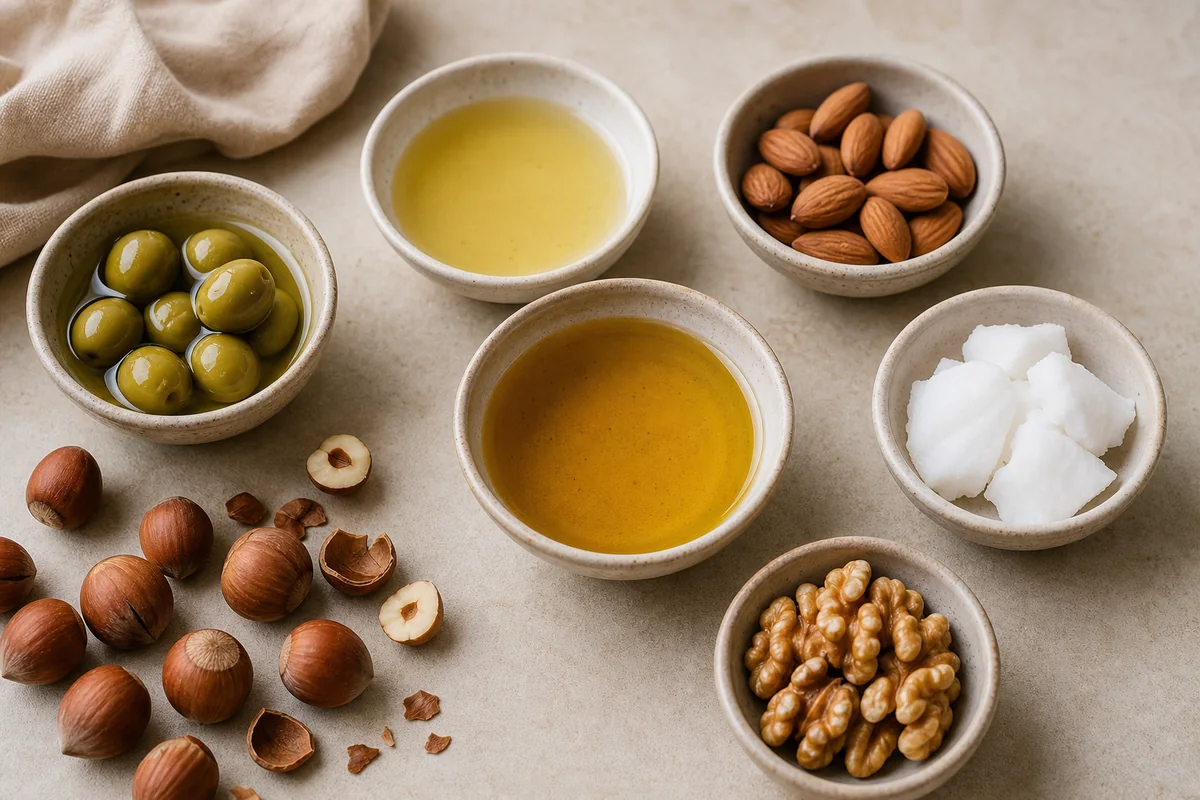
5 Best Hazelnut Oil Substitutes (Pantry Swaps)
Ingredients
Equipment
Method
- Identify the job: finishing drizzle (needs aroma), baking/saute (needs fat), or a sauce/dressing (needs stability).
- Start with the 1:1 swap if your substitute is another nut oil; if you’re using a neutral oil, reduce the amount slightly to keep the flavor from thinning.
- If your recipe relies on hazelnut aroma, choose a toasted-nut option (walnut oil, pistachio oil) or add hazelnut powder to a mild oil.
- For browned butter swaps, cool to lukewarm before mixing into dressings so it blends smoothly.
- Taste and adjust: add a pinch of salt for nutty oils, or a tiny splash of lemon for dull swaps in vinaigrettes.
Notes
- Hazelnut oil is best used gently; for high-heat frying, prioritize oil swaps that can handle heat (e.g., avocado oil).
- If your substitute is less aromatic, compensate with toasted hazelnut powder or a small amount of browned butter for depth.
Tried this recipe?
Let us know how it was!
Carrie is a food writer and editor with more than 15 years of experience. She has worked for some of the biggest names in the food industry, including Bon Appétit, Food & Wine, and Martha Stewart Living.
As the Editor in Chief of EpicureDelight, Carrie oversees all of the content on the site. She also manages the team of contributing writers and editors, who help to create delicious recipes, helpful tips, and informative articles that you’ll find on the site.
A native of the Chicago area, Carrie is passionate about all things food. She loves trying new restaurants and experimenting with new recipes in her kitchen. She’s also a graduate of the Culinary Institute of America, so she knows a thing or two about food!



