
That crisp snap when you bite into a Honeycrisp is almost unfair to other apples. Finding a good honeycrisp apple substitute comes down to one rule: match the texture first, then the sweetness level, and the flavor will follow closely enough.
Honeycrisp is known for a light honey sweetness and almost explosive crunch, not for sharpness. Understanding that flavor profile helps you pick the right swap for fresh eating versus baking.
Both uses need different things. Fresh slices need crunch and slow browning.
Baking needs a firm apple that holds its shape and doesn't turn to mush before the timer goes off.
The best Honeycrisp replacements are Fuji and Gala for fresh eating, and Pink Lady or Braeburn for baking. Use a 1:1 ratio for all crisp varieties. For softer apples like McIntosh or Cortland, drop to a ¾ ratio and expect more breakdown in baked dishes.
5 Honeycrisp Apple Substitutes Ranked by Closest Match
| # | Substitute | Best For | Ratio | Key Note |
|---|---|---|---|---|
| 1 | Fuji Apple | Both | 1:1 | Sweeter, very crisp |
| 2 | Gala Apple | Fresh | 1:1 | Use same day |
| 3 | Pink Lady Apple | Baking | 1:1 | Tart, very firm |
| 4 | Braeburn Apple | Baking | 1:1 | Aromatic, sturdy slices |
| 5 | Cortland Apple | Fresh | ¾:1 | Soft, slow to brown |
1. Fuji Apple
Fuji is the closest all-around swap for Honeycrisp. It has the same satisfying crunch and a similarly sweet, mellow flavor, though it leans a touch sweeter overall.
If you want to understand its character better before buying a bag, Fuji flavor notes break down exactly what you're getting.
Fuji holds its shape in both raw and cooked settings. That makes it one of the few substitutes that works equally well for a fruit plate and a baked crisp.
- Best for: Fresh slicing, cheese boards, apple crisp, pie filling
- Flavor match: Very close, slightly sweeter than Honeycrisp, minimal tartness
- Texture match: Excellent, nearly identical crunch when raw
- Adjustment tip: Reduce added sugar by about 1 teaspoon per cup of apples in sweet baked recipes
Skip if: You need a less-sweet apple. Fuji's flavor runs noticeably sweeter than Honeycrisp, which can tip a dessert over.
2. Gala Apple
Gala is the easiest apple to find year-round, and it delivers a sweet, mild bite close to Honeycrisp. It's not quite as crunchy, but for quick snacking and salads it works well.
For baking without apple texture, Gala can also break down into a smooth base.
- Flavor and texture: Sweet and mild, slightly softer bite than Honeycrisp
- Slice thickness: Cut at least ¼ inch thick to preserve some firmness on the plate
- Browning tip: Toss immediately in lemon juice; Gala oxidizes faster once cut
Skip if: Your recipe needs apples that stay very crunchy for several hours. Gala softens faster than Honeycrisp, especially after cutting.
3. Pink Lady (Cripps Pink) Apple
Honeycrisp is sweet and lightly mellow. Pink Lady is sweet too, but it carries a firmer tartness underneath.
That difference matters in pie, where the extra tang actually works in your favor by balancing sugar in the filling. If you want to explore sweet-tart apple swaps, you'll find several similar firm varieties there.
Honeycrisp
Works for: fresh eating, mild sweet pies, snacking
Skip if: you need a firmer, tartier structure for long baking
Pink Lady
Works for: pies, crisps, tarts, sliced salads with dressing
Skip if: you dislike tang, or need a sweet, mellow apple profile
- Best baking use: Apple pie, tarte tatin, baked cinnamon wedges
- Flavor adjustment: Add a small pinch of sugar (about ½ teaspoon per cup) if the tartness feels sharp
- Slice timing: Pink Lady browns slowly, so you can prep slices 15 minutes ahead without issue
4. Braeburn Apple
Braeburn sits right between sweet and sharp, with an aromatic edge that most apples don't have. It holds its shape under heat better than Gala, and it doesn't release excessive juice in a pie or crisp.
When you're deciding on a firm baking swap, Braeburn is worth putting near the top of the list.
Braeburn
Works for: pies, sautéed apples, autumn crisps, roasted fruit
Skip if: you need the most delicate sweetness, Braeburn tastes more aromatic and slightly sharper
Softer Apples (e.g., McIntosh)
Works for: applesauce, smooth fillings, quick stovetop compotes
Skip if: your recipe needs distinct apple chunks that hold through baking
- Best recipes: Apple pie, baked oatmeal topping, pan-sautéed apples with butter
- Slice thickness: Cut ⅓ inch thick to control how fast slices soften in the oven
- Moisture control: Toss slices with 1 teaspoon cornstarch before adding to pie to absorb extra juice
5. Cortland Apple
Cortland is a backup, not a first choice. It's tender compared to Honeycrisp, so it won't give you that same crack on the first bite.
What it does offer is slow browning, which makes it useful for prepped fruit trays where you need cut apples to stay presentable. If you're also thinking about choosing an apple-forward liquid swap, cider alternatives can round out the same dish.
- Best use case: Applesauce, quick-bake muffins, warm stovetop fruit compotes
- Texture expectations: Softer and more yielding, not suitable for recipes needing firm chunks
- Browning handling: Slower to oxidize than most apples, so it works for fruit salads without heavy lemon treatment
Skip if: You need crisp slices that hold shape. Cortland is too tender for structured baking.
Making Honeycrisp Apple Substitutes Work
The selection rule is simple: pick the crispest available apple first, then check the sweetness level and adjust by a small amount of sugar if needed. For fresh eating, storing Fuji correctly keeps it at peak crunch for up to six weeks.
Browning is the other variable, and a quick lemon toss handles it for most situations. If you're planning a longer bake, storing baked pies properly extends the payoff from whichever apple you used.
- Control browning: Toss cut apple slices in 1 tablespoon lemon juice per 2 cups of fruit and use within 30 minutes for the best color
- Manage softness in baking: If using a tender apple (Cortland, McIntosh), cut slices ½ inch thick and reduce bake time by 5 minutes to prevent full collapse
- Adjust sweetness: For tarter apples like Pink Lady or Braeburn, add ½ teaspoon sugar per cup; for sweeter apples like Fuji, reduce added sugar by the same amount
Frequently Asked Questions
Fuji is the closest match for fresh slicing, with nearly identical crunch and a sweet, mellow flavor. Gala works too but softens faster, so serve it the same day.
Pink Lady and Braeburn both hold their shape under oven heat. Either works well for pie or crisp without turning to mush.
Yes, slightly. Reduce sugar by about 1 teaspoon per cup when using Fuji, and add ½ teaspoon per cup when using Pink Lady to offset its tartness.
McIntosh works for soft bakes and applesauce but not for recipes needing distinct chunks. It breaks down quickly under heat.
Toss slices in 1 tablespoon of lemon juice per 2 cups of fruit and use within 30 minutes. A light pinch of salt also slows oxidation.
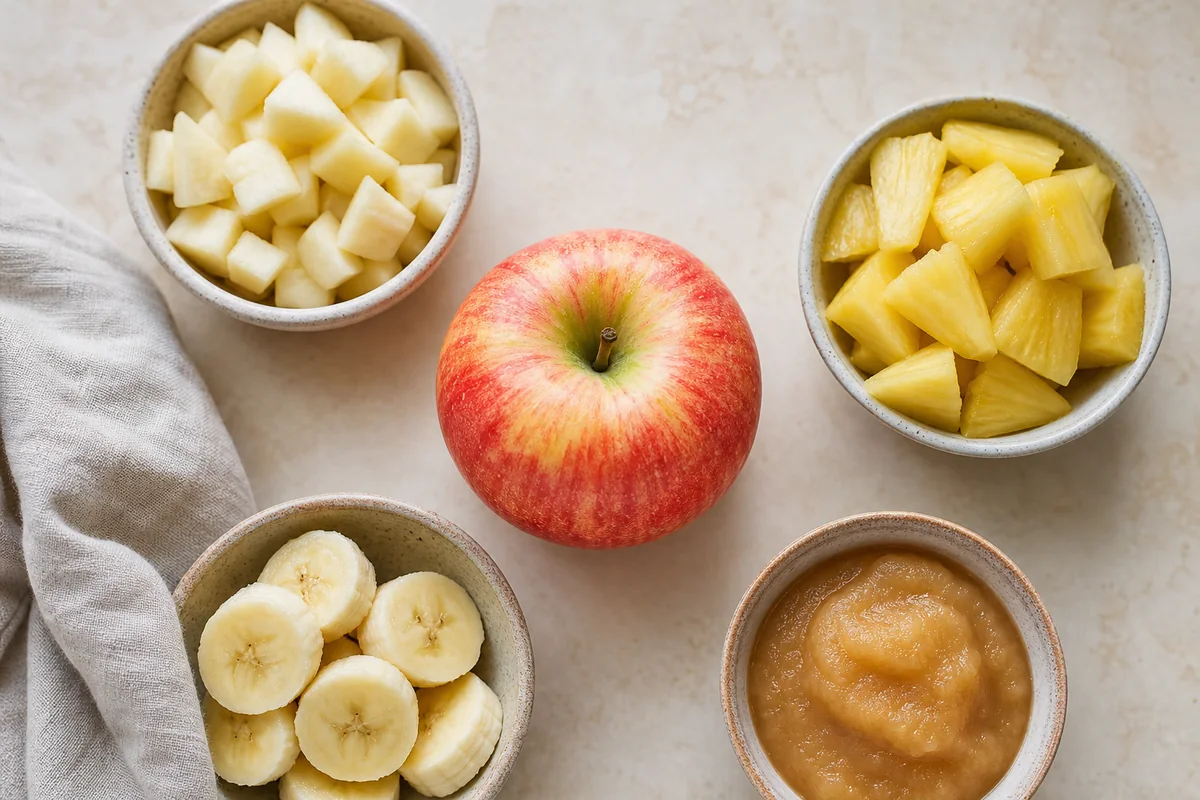
5 Best Honeycrisp Apple Substitutes (Closest Match)
Ingredients
Equipment
Method
- Decide your use: fresh slices/salads vs baking (pie, crisp, roast). Crunch priority wins for fresh; slice-hold priority wins for baking.
- Choose the substitute that matches Honeycrisp’s texture: Fuji and Gala for crisp sweetness; Pink Lady/Braeburn for slice-hold.
- Use the listed ratio. If your substitute is softer (McIntosh/Cortland), use ¾ as much and expect more break-down in baking.
- Prevent browning: toss cut apples with a squeeze of lemon (or a light pinch of salt) and use within 15–30 minutes for best color.
- Taste and adjust: if the replacement is tarter, add a small pinch of sugar; if it’s sweeter than Honeycrisp, reduce added sugar by a small amount.
Notes
- Honeycrisp’s key traits are crisp bite + sweet, “honey” flavor. Match those first, then fine-tune with lemon and sugar.
Tried this recipe?
Let us know how it was!
Carrie is a food writer and editor with more than 15 years of experience. She has worked for some of the biggest names in the food industry, including Bon Appétit, Food & Wine, and Martha Stewart Living.
As the Editor in Chief of EpicureDelight, Carrie oversees all of the content on the site. She also manages the team of contributing writers and editors, who help to create delicious recipes, helpful tips, and informative articles that you’ll find on the site.
A native of the Chicago area, Carrie is passionate about all things food. She loves trying new restaurants and experimenting with new recipes in her kitchen. She’s also a graduate of the Culinary Institute of America, so she knows a thing or two about food!



