
That sharp, nose-clearing bite horseradish delivers is not easy to fake. But with the right horseradish substitute, you can get surprisingly close, whether you need nasal heat for a cocktail sauce or tangy bite for a creamy spread.
Horseradish contributes two things: a volatile, sinus-clearing heat and a clean, acidic tang. Substitutes differ mostly in *how* they deliver heat, not in volume.
Start at the listed ratio, then nudge with lemon juice or vinegar to sharpen the tang.
Wasabi paste is the closest match for nasal heat at a 1:1 ratio. Dijon mustard covers tang-forward recipes well. Black mustard powder + vinegar gives concentrated punch. Garlic + ginger works in savory cooking. Store-bought horseradish sauce is the easiest ready-to-use swap.
5 Best Horseradish Replacements, Ranked
The table below maps each substitute to its best use and ratio. Pick by heat style: wasabi-like sharpness, mustard-like tang, or garlic-ginger warmth.
| # | Substitute | Best For | Ratio | Key Note |
|---|---|---|---|---|
| 1 | Wasabi Paste | Dips & Sauces | 1:1 | Start with half amount |
| 2 | Dijon Mustard | Sandwiches & Sauces | 1:1 | Add lemon for sharpness |
| 3 | Mustard Powder + Vinegar | Concentrated Bite | 1:1 | Rest paste 3-5 min |
| 4 | Garlic + Ginger | Marinades & Sauces | ¾:1 | Warm heat, not nasal |
| 5 | Horseradish Sauce | Spreads & Dressings | 1:1 | Already diluted, taste first |
1. Wasabi Paste
Wasabi and horseradish are botanical cousins, and their heat mechanism is nearly identical. Both release allyl isothiocyanate when crushed or mixed, which is exactly what causes that sharp, nasal sting.
Use wasabi paste at a 1:1 ratio as your starting point. For delicate dishes like deviled eggs or a light cream sauce, begin at half the amount and build up.
Tube wasabi paste is more consistent than powder; if you're using sharp green-paste options, pick one made with real wasabi or a horseradish-wasabi blend.
- Dips and cocktail sauce: Use 1:1, stir well, and taste before adding more.
- Creamy spreads: Cut to ½ teaspoon per 1 teaspoon horseradish, then blend with sour cream.
- Delicate fish dishes: Start at ¼ teaspoon and work up; wasabi can overwhelm mild proteins.
Skip if: your dish is very mild or cream-heavy and you can't control portions carefully.
2. Dijon Mustard
Dijon brings a tangy, peppery bite that sits close to horseradish in creamy sauces and sandwich spreads. It lacks the nasal volatility, but the acidity does a lot of the work.
Use 1:1 as a straight swap. If your recipe leans on horseradish for sharpness, add 1 teaspoon of lemon juice or white wine vinegar per tablespoon of Dijon to lift it.
When choosing a tangier option is a priority, Dijon is consistently the most reliable swap in this list for everyday pantry cooking.
- Sandwich spreads: 1:1, no adjustments needed for most recipes.
- Creamy sauces: Add 1 teaspoon lemon juice per 1 tablespoon Dijon to push it sharper.
- Roast beef condiment: Mix with a small pinch of cayenne if you want more heat.
Skip if: you need that distinct nasal heat. Dijon is tangier and noticeably milder than horseradish.
3. Black Mustard Powder + Vinegar
This is your DIY punch-in-a-paste option. Black mustard powder has more bite than yellow, and vinegar activates the heat compounds that sit dormant in dry powder.
Mix 1 teaspoon mustard powder with 1-2 teaspoon white wine vinegar to form a thick paste. Let it rest for 3 to 5 minutes before using.
That rest time matters. Without it, the paste tastes flat and sulfuric rather than sharp and bright.
Black Mustard Powder + Vinegar
Works for: any recipe needing concentrated, horseradish-style bite with controlled tang
Skip if: you can't measure in small increments, since this paste intensifies quickly and is easy to over-add
- Mixing ratio: 1 teaspoon powder to 1.5 teaspoon vinegar for a medium-heat paste; increase vinegar slightly for smoother texture.
- Rest time: Always rest 3-5 minutes. Skipping this step leaves a raw, bitter bite.
- Diluting it down: Fold in 1 teaspoon mayo or sour cream per paste batch to tame the heat without losing all punch.
4. Garlic + Grated Ginger
This swap does not replicate horseradish precisely. It gives warm, savory heat rather than the sharp nasal sting, but it works well in cooked applications where you need *some* kick without a specific condiment flavor.
Use equal parts fresh garlic (minced) and freshly grated ginger, at about ¾ teaspoon total for every 1 teaspoon of horseradish. The pungent depth from this sharp allium pairs with ginger's warm bite to approximate a rounded, earthy heat.
This combination suits marinades, pan sauces, and savory meat rubs well.
For root-based heat alternatives, ginger alone can also fill in, though it skews sweeter without the garlic to balance it.
Skip if: you're making a classic horseradish condiment or cocktail sauce. The flavor profile here is too different, and no amount of adjustment will deliver nasal heat.
5. Horseradish Sauce
Store-bought horseradish sauce is already diluted with cream or mayo, so it is softer and less sharp than fresh horseradish. That said, it is the fastest ready-to-use swap when you need something close without any prep.
Use it 1:1 as a starting point, but taste immediately. The creamy prepared condiment is milder than fresh root or dried powder, so you may need to use 1.5 tablespoon where the recipe calls for 1 tablespoon of fresh horseradish.
| Use | Ratio | Notes |
|---|---|---|
| Sandwich spread | 1:1 | Use as-is; already the right consistency |
| Creamy dip base | 1.25:1 | Use slightly more; add lemon to sharpen |
| Sharp condiment | 1.5:1 | Increase amount and reduce any added cream |
- For dips: Stir in ½ teaspoon lemon juice per 2 tablespoon of sauce to approximate fresh horseradish brightness.
- For sandwiches: Use straight from the jar; texture and flavor are already well-matched.
Skip if: your recipe specifically needs a dry, sharp horseradish flavor. The creaminess of sauce will change the texture of dry or spice-forward preparations.
Making Your Horseradish Substitute Taste Right
Getting the ratio right is only half the fix. Most horseradish substitutes need a small adjustment to heat or tang before they match the real thing closely enough to work.
If the swap tastes flat, add 1 teaspoon of lemon juice or white wine vinegar per tablespoon to push it sharper. If it tastes too aggressive, fold in a neutral binder.
- Too mild: Add lemon juice or white wine vinegar in 1 teaspoon increments and stir well before tasting again.
- Too sharp: Mix in 1 teaspoon of mayo, sour cream, or a splash of cold water to reduce intensity without losing flavor.
- Flat heat (no punch): A small pinch of cayenne or a drop of white pepper can restore some of the heat dimension that horseradish delivers.
Frequently Asked Questions
Wasabi paste is the closest match at a 1:1 ratio. It delivers the same nasal, sinus-clearing heat because both share allyl isothiocyanate as their active heat compound.
Use Dijon at a 1:1 ratio and add 1 teaspoon of lemon juice or white wine vinegar per tablespoon to sharpen the flavor toward horseradish's tangier bite.
Yes, rest it for 3 to 5 minutes. Skipping the rest leaves a flat, sulfuric flavor instead of the bright, sharp punch you want.
You can, but the result will taste savory and warm rather than sharp. It works in savory cream sauces but won't replicate a true horseradish condiment.
For too strong, fold in 1 teaspoon of mayo or sour cream to dilute without losing flavor. For too mild, add lemon juice or vinegar in 1 teaspoon increments.
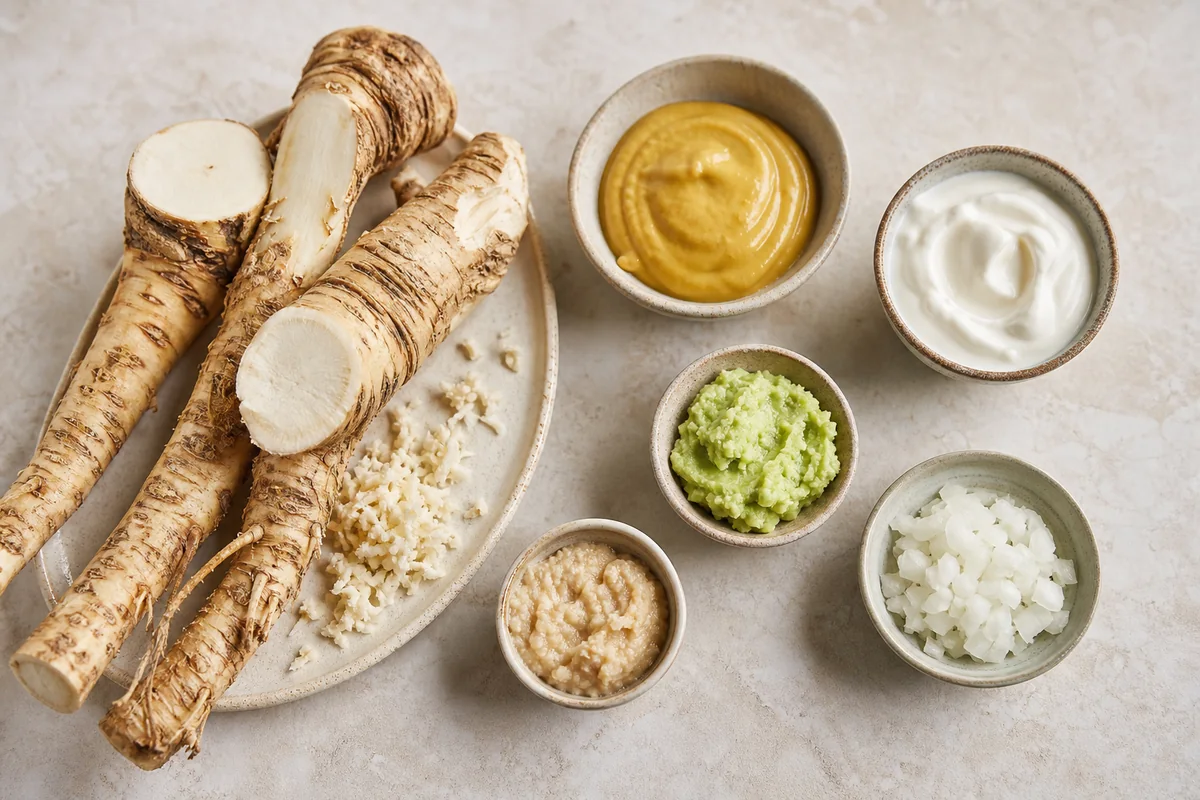
5 Best Horseradish Substitutes (Ranked)
Ingredients
Equipment
Method
- Choose your substitute based on the kind of horseradish bite your recipe needs: sharp/nasal (wasabi), tangy bite (Dijon), or concentrated punch (mustard powder + vinegar).
- Swap using the table ratio (e.g., 1:1) and mix thoroughly so the heat disperses evenly.
- If the substitute is milder than horseradish (most mustards), boost tang with 1–2 teaspoon lemon juice or vinegar per 1 tablespoon swap.
- If it’s too intense (wasabi or mustard paste), reduce the amount by ½ and extend with a neutral binder like mayo, sour cream, or a splash of water.
- Taste after 5 minutes; some mustard-based swaps need a short rest to fully bloom.
Notes
- Horseradish bite changes quickly with time—taste before serving.
- For spreads, bind watery substitutes with mayo/sour cream so they don’t thin the dip.
Tried this recipe?
Let us know how it was!
Carrie is a food writer and editor with more than 15 years of experience. She has worked for some of the biggest names in the food industry, including Bon Appétit, Food & Wine, and Martha Stewart Living.
As the Editor in Chief of EpicureDelight, Carrie oversees all of the content on the site. She also manages the team of contributing writers and editors, who help to create delicious recipes, helpful tips, and informative articles that you’ll find on the site.
A native of the Chicago area, Carrie is passionate about all things food. She loves trying new restaurants and experimenting with new recipes in her kitchen. She’s also a graduate of the Culinary Institute of America, so she knows a thing or two about food!



