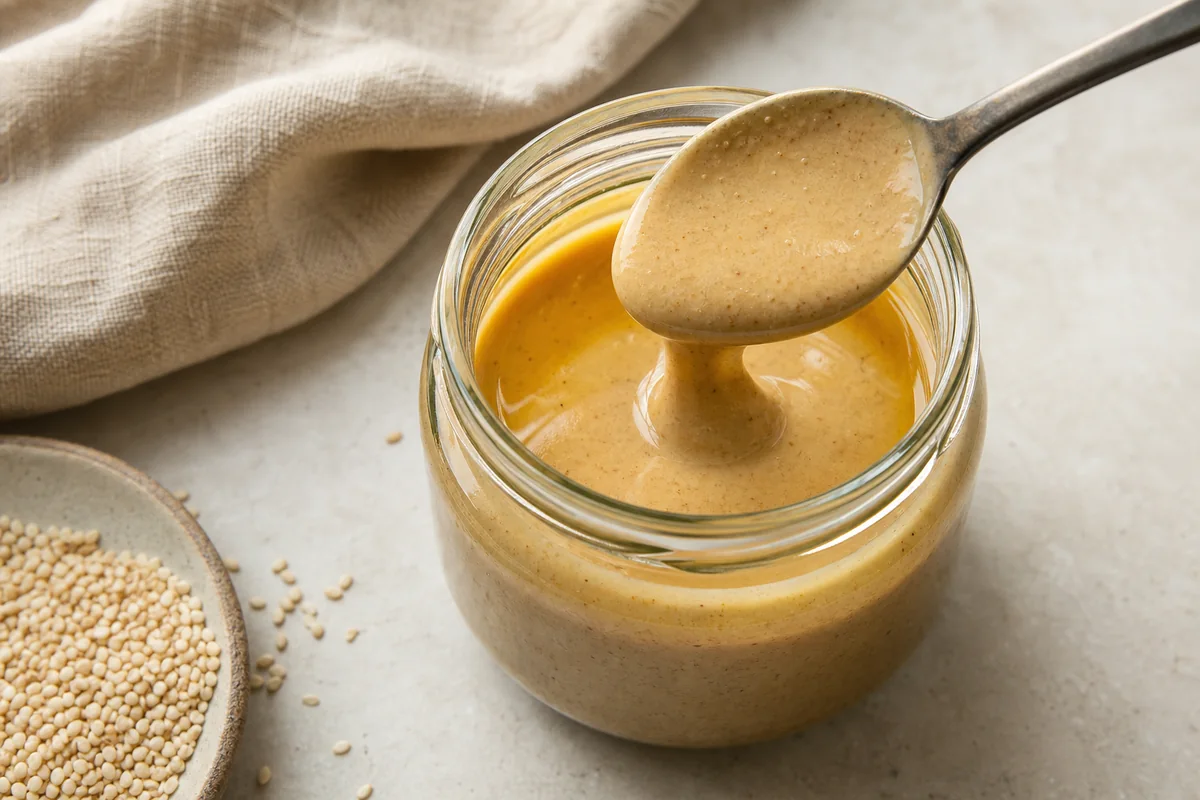
Horseradish sauce tastes sharp, peppery, and tangy, with heat that rises through the nose and fades faster than chili burn. Creamy versions soften that punch with dairy and fat, while prepared horseradish tastes leaner, brighter, and more forceful.
The strongest spoonfuls also carry a cabbage-like root aroma and a little bitterness. Vinegar keeps the flavor bright, while sour cream or mayonnaise makes it rounder and easier to spread.

Horseradish sauce delivers fast nasal heat, vinegar tang, and earthy root flavor. Dairy and mayonnaise soften the punch, while age and air make an opened jar lose strength.
What Does Horseradish Sauce Taste Like?
Horseradish heat comes mainly from volatile isothiocyanates released when the root is cut or grated. The vapor reaches the nose, which is why a strong bite can feel as if it climbs behind your eyes.
A small spoonful can feel more intense than its flavor suggests because the aroma travels before the sauce coats the mouth. Breathe normally and wait before adding more.
Large amounts bring out bitterness and the sulfur-like character of the root. That edge is normal in a strong sauce, but it should not taste rotten or fermented.
Chili heat tends to sit on the tongue and lips. Horseradish rises quickly, clears quickly, and leaves a peppery root flavor once the sharpest sensation fades.
Raw radish uses related plant chemistry but feels milder and crunchier. Radish flavor shows why the two foods share a family resemblance without tasting the same.
How Does the Sauce Base Change the Heat?
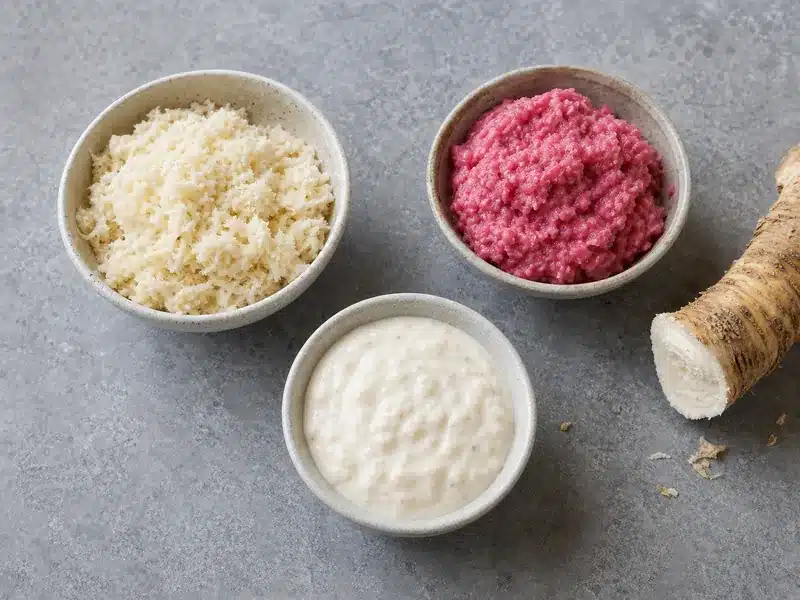
Prepared horseradish is grated root stabilized with vinegar and salt. It tastes bright, lean, and direct because little fat stands between the root and your nose.
Creamy sauce mixes that prepared root with sour cream, cream, or mayonnaise. Fat and dairy spread the pungency across a thicker base, so the heat feels slower and less bare.
| Style | Flavor | Best expectation |
|---|---|---|
| Prepared horseradish | Sharp, vinegary, rooty, and strong | Use a small amount in sauces or sandwiches |
| Sour cream sauce | Cool, tangy, creamy, and moderate | Serve beside roast beef or potatoes |
| Mayonnaise sauce | Rich, smooth, and gently sharp | Spread on sandwiches or burgers |
| Beet horseradish | Earthy, sweet-tart, colorful, and pungent | Pair with beef, fish, or Eastern European dishes |
| Fresh grated root | Most volatile and forceful | Mix promptly and control the dose |
Lemon juice adds fresh acid but can thin a dairy sauce. A lemon juice replacement needs enough acidity to brighten the root without adding a flavor that fights the beef or fish.
Sour cream brings clean dairy tang. When a creamier base is missing, heavy cream alternatives still need extra acid and enough thickness to hold the grated root.
Mayonnaise makes the sauce cling to bread and meat. A thin yogurt version may taste brighter, but it will not carry the same rich finish.
Why Does One Jar Taste Hotter Than Another?
- More root brings faster heat, more aroma, and a greater chance of bitterness.
- More vinegar makes the sauce brighter and can make a mild root feel sharper.
- More dairy or mayonnaise softens the heat and adds body.
- More time after opening usually means a weaker nose and flatter finish.
- Very cold sauce can seem milder until it warms in the mouth.
The percentage and freshness of the root set the starting strength. A sauce with a small amount of horseradish in a large dairy base will never hit like prepared root.
Air and time reduce the volatile punch after opening. Pennsylvania State University Extension notes that fresh prepared horseradish loses pungency over one to two months even under refrigeration.
Vinegar also affects pungency during preparation. Home recipes add it at different points, so two fresh sauces can start with different strength even when they use the same amount of root.
Do not measure quality only by pain. A balanced sauce should still show clean root aroma, acid, salt, and the flavor of its base.
If a recipe needs horseradish character but the root is unavailable, the ranked horseradish swaps explain which replacements copy the heat and which only add sharpness.
Whole-grain and Dijon mustard bring seed texture and different acidity. Their mustard replacement choices should not be treated as exact horseradish copies.
What Foods Pair Best with Horseradish Sauce?
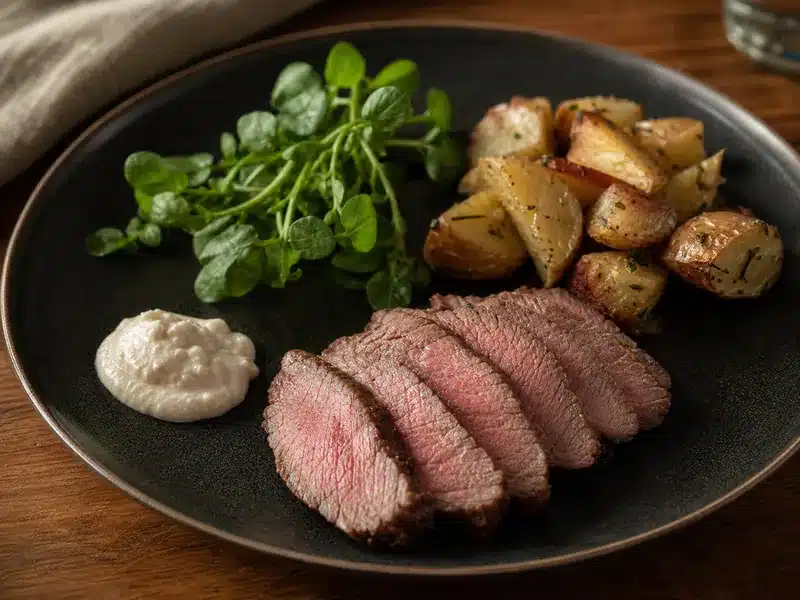
Roast beef is the classic match because fat softens the first impact while the pungency clears the rich coating from your mouth. The next bite tastes meaty again instead of heavy.
A small amount works better than a thick blanket. Too much sauce hides browned beef flavor and turns the whole plate into vinegar and nasal heat.
Roast Beef
Fat and browned meat soften the heat while the sauce refreshes each bite.
Smoked Fish
Smoke, oil, and salt can carry a brighter creamy horseradish sauce.
Potatoes
A mild starchy base spreads the sauce and makes a small dose feel complete.
Choose a creamier sauce for a large beef plate and a sharper prepared style for a sandwich with bread and cheese. The sides in a roast beef meal or an Italian beef sandwich plate can add vegetables and starch that keep the condiment in proportion.
Prime rib carries even more fat, so a cool tangy sauce helps. A prime rib side plan should leave room for that strong condiment instead of adding several competing sauces.
Beef Wellington already includes pastry, mushroom, and rich meat. Pairing advice for Beef Wellington favors cleaner sides, and the same restraint applies to horseradish.
Horseradish can also sharpen a Bloody Mary, but the drink already contains tomato acid and seasoning. A Clamato replacement changes that salty tomato base, so taste the drink before adding another spoon of root.
How Do You Fix Weak, Bitter, or Watery Horseradish Sauce?
Identify the symptom before adding anything. Age, excess root, normal dairy separation, and spoilage need different responses.
If the sauce is weak but smells clean
A weak but clean sauce may simply be old or heavily diluted. Add a small amount of fresh prepared horseradish only when the base still smells fresh and the jar has been stored correctly.
If the sauce is bitter or harsh
A bitter sauce may contain too much root for the dairy base. Add more base, then correct salt and acid in small steps instead of pouring in sugar.
If the sauce tastes harsh rather than hot, add dairy first. If it tastes flat but fresh, a few drops of acid may wake up the root before more horseradish is needed.
If the sauce is watery or smells wrong
A little liquid separation can be normal in sour cream sauce. Stir it once, then inspect the texture and aroma again.
Persistent watery breakdown, gas, mold, or a rotten odor means discard. Heat, fresh root, and extra vinegar do not make a spoiled dairy sauce safe.
Keep the lid clean and refrigerate the jar promptly. Volatile flavor will still fade, so buy a size you can finish while the sauce has the strength you enjoy.
Sources
- Journal of Agricultural and Food Chemistry study of horseradish aroma compounds
- Journal of Food Science study of allyl isothiocyanate sensory effects
- Penn State Extension prepared horseradish guidance
Frequently Asked Questions
Is horseradish sauce very spicy?
It can be strong, but the heat rises through the nose and fades faster than most chili burn. Creamy versions are usually milder.
Does horseradish sauce taste like wasabi?
They share a fast nasal heat, but horseradish sauce adds vinegar and often dairy, while genuine wasabi has its own fresh green flavor.
Is horseradish sauce sweet?
Most versions are tangy and savory. Beet styles or commercial creamy sauces may contain enough sugar to taste mildly sweet.
Why has my horseradish sauce lost its heat?
The volatile pungent compounds fade with air and time. An opened refrigerated jar often becomes milder before it looks spoiled.
What meat goes best with horseradish sauce?
Roast beef and prime rib are strong matches because the sauce cuts fat and refreshes the palate between bites.

Carrie is a food writer and editor with more than 15 years of experience. She has worked for some of the biggest names in the food industry, including Bon Appétit, Food & Wine, and Martha Stewart Living.
As the Editor in Chief of EpicureDelight, Carrie oversees all of the content on the site. She also manages the team of contributing writers and editors, who help to create delicious recipes, helpful tips, and informative articles that you’ll find on the site.
A native of the Chicago area, Carrie is passionate about all things food. She loves trying new restaurants and experimenting with new recipes in her kitchen. She’s also a graduate of the Culinary Institute of America, so she knows a thing or two about food!