
Kashkaval has a specific job in most recipes: it melts smoothly, pulls into a stretch, and brings a salty, slightly tangy edge to whatever it tops. Finding a reliable kashkaval cheese substitute means matching that behavior first, flavor second.
The cheese is semi-hard, so it shreds cleanly and softens fast under heat. A good replacement needs to do the same, or your baked pasta or gratin loses that satisfying pull.
The best kashkaval cheese replacements match its melt-and-stretch behavior. Provolone and whole-milk mozzarella are your closest 1:1 swaps for melting dishes. Havarti and Emmental work well for casseroles and baked tops. Edam is a workable last resort at a slightly reduced ratio.
5 Best Kashkaval Cheese Substitutes (with Ratios)
This table gives you a fast at-a-glance reference before you commit to a swap. If your dish needs browning, lean toward emmental.
If stretch is the goal, stay with provolone or mozzarella. Learn more about this salty, semi-firm cheese before deciding how closely you need to match it.
| # | Substitute | Best For | Ratio | Key Note |
|---|---|---|---|---|
| 1 | Provolone (aged, shredded) | Both | 1:1 | Closest stretch and tang |
| 2 | Mozzarella (whole-milk, shredded) | Both | 1:1 | Best easy melt, mild flavor |
| 3 | Havarti (sliced or shredded) | Both | 1:1 | Creamy, less stretchy |
| 4 | Emmental (grated) | Both | 1:1 | Nutty, browns well |
| 5 | Edam (thinly sliced) | Both | ¾:1 | Mild, less stretch |
1. Provolone (Aged, Shredded)
Aged provolone is the sharpest match on this list. It shreds cleanly, melts into a pull, and carries enough savory tang to land close to kashkaval's flavor without tasting out of place.
Use it at a 1:1 ratio for baked casseroles, gratin tops, and melted sandwich fillings. The key is using the aged version, not the mild deli slabs.
If you only find mild provolone, the swap still works but the flavor gap widens. For anyone curious about broader aged cheese options, there are solid alternatives worth knowing.
Provolone vs Kashkaval
Works for: baked pasta, gratin, pizza-style toppings, hot sandwiches
Skip if: the dish is served cold or at room temperature-provolone tastes stronger when unmelted
- Shred it fine: Smaller shreds melt faster and distribute more evenly across the dish surface.
- Aged over mild: Aged provolone carries the tang; mild provolone is closer to low-moisture mozzarella in flavor.
- Browning: It browns slightly faster than kashkaval, so check the dish 3-4 minutes early.
2. Mozzarella (Whole-Milk, Shredded)
Whole-milk mozzarella is the most available option on this list, and it earns its spot. It melts smoothly, pulls into long strings, and softens quickly even at moderate oven temperatures.
The flavor is milder than kashkaval, so if the recipe depends on a salty punch, add a small pinch of salt after the cheese melts. Knowing how fresh whole-milk mozzarella stores also helps if you're buying ahead.
- Shred finely: Pre-shredded bags work, but freshly shredded whole-milk mozzarella melts with fewer rubbery spots.
- Baked pasta: Use at 1:1; it holds the pull through a full bake without separating.
- Pizza-style dishes: Perfect fit; the stretch is almost identical to what kashkaval delivers.
- Flavor boost: A light dusting of grated parmesan on top adds the salty edge mozzarella lacks on its own.
*Skip if: your recipe needs an aged or sharp flavor-mozzarella reads noticeably milder after melting.*
3. Havarti
Havarti melts into a smooth, creamy layer and is one of the least fussy cheeses to work with in baked dishes. It doesn't require much prep beyond slicing or shredding, and it softens evenly without separating.
Use it at 1:1 for casseroles, baked sandwiches, and gratin-style sides. Shredding gives a more uniform melt than thick slices.
This buttery Danish cheese is milder than kashkaval, so it works best in dishes with other bold flavors already present. A splash of Worcestershire or a pinch of smoked paprika in the recipe can compensate for the lower salt level.
- Casseroles: Havarti coats pasta or vegetables with a creamy, cohesive layer.
- Sandwiches: Melts completely on a hot press or skillet in under 2 minutes.
- Shred over slice: Fine shreds melt more uniformly than quarter-inch slabs.
*Skip if: you need a visible cheese pull or stretch-havarti melts creamy rather than elastic.*
4. Emmental (Grated)
Emmental brings a nutty, slightly sweet melt that works well anywhere browning is part of the goal. It grates cleanly and softens into a golden layer that holds together without going greasy.
Pair it in dishes where the top of the cheese is supposed to color, like baked pasta or a vegetable gratin. Check out this firm, holey Swiss variety if you want to understand its flavor range before committing.
Use it at a 1:1 ratio, grated as fine as possible for the fastest and most even melt.
| Use | Ratio | Notes |
|---|---|---|
| Baked pasta top | 1:1 | Grate fine; browns in 8-10 min at 400°F |
| Vegetable gratin | 1:1 | Mix with a tablespoon of breadcrumbs for extra crust |
| Hot sandwiches | 1:1 | Thin slices melt faster than grated in a press |
The nuttiness is the main trade-off. It reads a little sweeter than kashkaval, so the dish's overall flavor shifts slightly.
That shift is usually a good thing in vegetable-forward bakes, less ideal in recipes where the cheese is supposed to stay neutral.
*Skip if: you need a mild, background melt-emmental's flavor is noticeable and assertive.*
5. Edam
Edam is a genuine emergency swap, not a first choice. It melts reasonably well when cut thin or shredded fine, but it carries less stretch and a noticeably milder flavor than kashkaval.
Start at a ¾:1 ratio (edam to kashkaval called for). From there, taste and add more in small increments if the dish feels under-cheesed.
Edam vs Kashkaval
Works for: casseroles, baked pasta, melted toppings where mild flavor is acceptable
Skip if: the recipe depends on stretch or strong salty flavor-edam is less elastic and less punchy
- Slice thin: Thick edam slabs leave rubbery patches; thin slices or fine shreds melt far more evenly.
- Season up: Edam is mild, so add a small pinch of salt plus a dash of white pepper to compensate.
- Blend it: Mixing edam with a small amount of aged provolone closes the flavor gap quickly.
Making the Swap Work (Ratios + Quick Tricks)
Swapping one melting cheese for another is mostly about surface area and seasoning. The sub you choose matters less than how you prep it.
Nearly every cheese on this list performs better when shredded or grated rather than sliced thick.
- Shred smaller for faster melt: The more surface area, the faster and more evenly the cheese softens. This is especially true for edam and emmental.
- Match to your priority: If stretch matters, use provolone or mozzarella. If browning matters, use emmental. If you just need a creamy melt, havarti delivers.
- Check seasoning last: Kashkaval is salty. Your substitute probably isn't as salty. Taste after the melt and adjust with a small pinch of salt rather than switching cheeses.
Frequently Asked Questions
Aged provolone is the closest match for both melt behavior and stretch. Whole-milk mozzarella is a near tie and is easier to find in most grocery stores.
Yes, at a 1:1 ratio. Use whole-milk mozzarella for the best melt, and add a small pinch of salt if the dish tastes flat after baking.
Start at ¾ the amount called for, then add more after tasting. Edam is milder, so you may need extra seasoning rather than extra cheese.
Yes, significantly. Grated or finely shredded cheese melts faster and more evenly than thick slices, which is especially helpful with firmer options like emmental or edam.
Lower the oven temperature by 25°F and cover the dish with foil for the first half of baking. This lets the cheese soften gradually before the surface dries out.
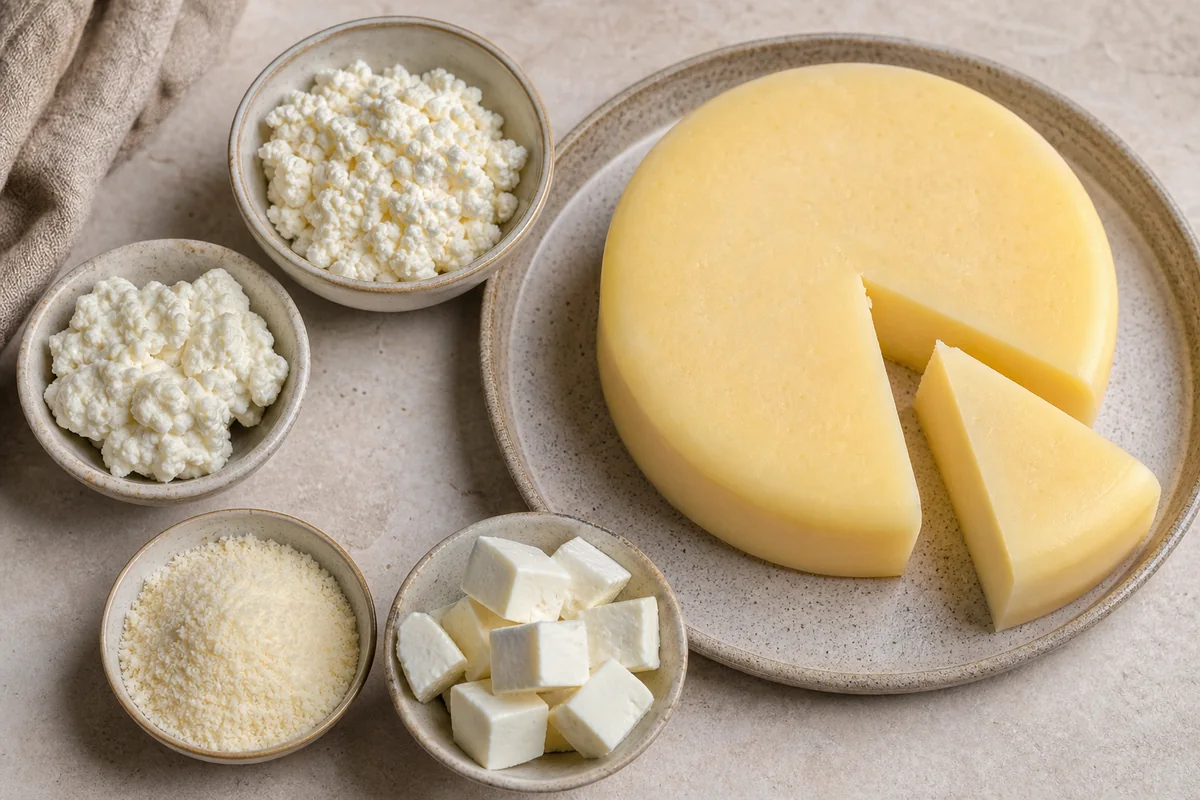
5 Best Kashkaval Cheese Substitutes (with Ratios)
Ingredients
Method
- Choose the substitute based on your goal: maximum stretch (provolone/mozzarella) or creamy melt (havarti).
- Use the table ratio: start with 1:1 for most swaps; if using edam, start at ¾:1 then adjust in small increments.
- For best melt, shred or grate the substitute rather than using large slices—this helps it soften evenly.
- Taste and adjust seasoning: kashkaval can be saltier, so go light with added salt until you confirm the flavor.
Notes
- Ratios assume the substitute is similar in moisture and melting behavior; shred for more reliable melt.
- If the recipe depends on flavor intensity, favor provolone or emmental/gruyère-style options.
Tried this recipe?
Let us know how it was!
Carrie is a food writer and editor with more than 15 years of experience. She has worked for some of the biggest names in the food industry, including Bon Appétit, Food & Wine, and Martha Stewart Living.
As the Editor in Chief of EpicureDelight, Carrie oversees all of the content on the site. She also manages the team of contributing writers and editors, who help to create delicious recipes, helpful tips, and informative articles that you’ll find on the site.
A native of the Chicago area, Carrie is passionate about all things food. She loves trying new restaurants and experimenting with new recipes in her kitchen. She’s also a graduate of the Culinary Institute of America, so she knows a thing or two about food!



