
That sharp hit of lemon in a vinaigrette or a lemon cake isn't just flavor. It's acidity doing structural work, brightening other ingredients and balancing sweetness.
A good lemon juice substitute matches that acidity first, then gets as close to the citrus note as the swap allows.
This article covers five swaps with exact ratios for cooking and baking. If you only need lemon aroma and not acidity, focus on storing lemon zest instead-this guide is for juice-based acidity.
The closest lemon juice substitutes are bottled lemon juice (1:1) and lime juice (1:1). For vinegar-based swaps, start at ¾ the amount and dilute with water. Citric acid dissolved in water gives the most precise acidity for baking-taste and adjust before adding to batter.
5 Lemon Juice Swaps Ranked by Flavor Closeness
The table below is your fast reference. Each swap is ordered from closest lemon flavor to most different, so you can pick and move on.
| # | Substitute | Best For | Ratio | Key Note |
|---|---|---|---|---|
| 1 | Bottled Lemon Juice | Both | 1:1 | Check for added sugar |
| 2 | Lime Juice | Both | 1:1 | Slightly more aromatic |
| 3 | Verjus | Cooking | 1:1 | Softer than vinegar |
| 4 | White Wine Vinegar + Water | Both | ¾:1 | Dilute before using |
| 5 | Citric Acid Solution | Baking | Taste-adjust | Most precise for baking |
1. Bottled Lemon Juice
Bottled lemon juice is the closest swap because it is still lemon-just processed and shelf-stable. The flavor is slightly more muted than fresh, but in a dressing, marinade, or sauce, the difference is minimal.
Properly stored lemon juice in a sealed bottle keeps its acidity well, which is exactly what makes it reliable here. Use it at a 1:1 ratio without any adjustment.
- Check the label: Some brands add sugar or preservatives-reduce other sweeteners if yours does.
- For baking: Works well in cakes and quick breads; just taste the batter before adding more.
- Aroma gap: The "just-squeezed" floral note is mostly gone-add a little zest if presentation matters.
Skip if: your recipe needs fresh-squeezed aroma for a garnish or a delicate glaze finish.
2. Lime Juice
Lime juice is acidic at the same level as lemon and swaps in at 1:1 for almost any cooking or baking use. The difference is aroma-lime smells sharper and slightly more floral, while lemon has a softer citrus edge.
In savory dishes like ceviche or a Thai dressing, lime actually fits well. For citrus-forward swaps, lime is typically the first option most cooks reach for, and rightfully so.
- Use 1:1: No adjustment needed for most cooking and baking recipes.
- In cakes: The lime note comes through gently-fine in most recipes, noticeable in plain lemon cake.
- In ceviche or dressings: Lime fits naturally and often improves the dish.
- Shelf check: When using bottled lime juice, the same label rules apply as with bottled lemon.
Skip if: the recipe depends on lemon's specific floral note-lemon curd and lemon glaze will taste noticeably different.
3. Verjus
Verjus is pressed unfermented grape juice. It is tart without the sharp, fermented bite of vinegar, and it behaves gently in delicate sauces and seafood marinades.
The flavor reads as "bright and slightly sweet-sour," not citrusy. It is the right call when you want acidity without an aggressive edge.
| Use | Ratio | Notes |
|---|---|---|
| Pan sauces | 1:1 | Verjus + a pinch of salt; taste before finishing |
| Seafood marinades | 1:1 | Works cleanly; no dilution needed |
| Salad dressings | 1:1 | Milder result-add more gradually if needed |
| Lemon desserts | Not recommended | Too soft; lemon punch is lost |
Skip if: the dish needs a bold lemon punch, like a lemon tart or a sharp lemon bar filling. Verjus is too mild for those.
4. White Wine Vinegar + Water
Plain white wine vinegar is sharper than lemon juice, so it needs dilution before it tastes clean. Start at ¾ of the lemon amount, then add water by the teaspoon until the acidity softens to a familiar tang.
The flavor is closer to lemon brightness than apple cider vinegar, making it a better choice for light sauces and baked goods where you need acid without fruit notes.
White Wine Vinegar + Water
Works for: light dressings, baked goods needing acid activation, simple marinades
Skip if: recipe is lemon-forward (lemon curd, lemon glaze) and bottled lemon juice is accessible
- Start ratio: Use ¾ the amount of lemon juice, diluted with water to taste.
- In baking: Works to activate baking soda; flavor blends in once baked.
- Add a pinch of sugar: If the result tastes flat or sharp, a small pinch smooths it out.
5. Citric Acid Solution
Citric acid is pure crystallized acidity. You mix it into water, taste, and adjust-which makes it the most controllable swap for baking.
The citric acid vs. fruit-based acidity question comes up often in baking circles, and the honest answer is that citric acid is sharper and more concentrated than lemon juice, so it needs careful measuring.
A starting ratio is ¼ teaspoon of citric acid dissolved in 2 tablespoons of water to approximate 2 tablespoons of lemon juice. Taste before it goes into the batter.
- Mix first: Dissolve citric acid in water completely before adding to any batter or sauce.
- Start small: Add half the solution, taste, then add more-over-acidified batter is hard to fix.
- Add zest: Citric acid has no aroma; a little lemon zest or vanilla restores the "lemon" character.
- Best uses: Cakes, quick breads, lemonade, and any recipe where acidity is structural.
Skip if: you need a fast swap with no prep-citric acid still requires mixing and measuring before use.
Making Lemon Juice Substitutes Work in Any Recipe
Getting the right swap is only half the job. The other half is correcting after the swap goes in.
Start by understanding what lemon's flavor profile actually contributes to your dish-acidity, brightness, or a combination of both-then choose your swap accordingly. For vinegar-based options, dilution is always the first fix, and a pinch of sugar handles residual sharpness in most cases.
- Match to recipe type: Dressings and marinades accept almost any swap; delicate baked goods need bottled lemon juice, lime, or citric acid solution.
- Adjust dilution before adding: Taste the vinegar swap in a spoon before it hits the bowl-vinegar-based swaps can overpower quickly.
- Restore aroma with zest: If the dish tastes flat after swapping, a small amount of lemon or lime zest brings back the citrus signal without adding more liquid.
Frequently Asked Questions
Bottled lemon juice is the best 1:1 swap for cooking. Lime juice also works at 1:1 and keeps the citrus brightness, though the aroma is slightly different.
Yes, use lime juice at a 1:1 ratio. The acidity is the same, so it activates baking soda properly, but the lime aroma will come through in plain lemon cakes.
Start with ¾ of the lemon juice amount, then dilute with water until the sharpness eases. White wine or champagne vinegar are milder and easier to control than white distilled vinegar.
Yes, but mix it into water first and taste before adding. It has no aroma, so pair it with a small amount of zest to restore the lemon character.
Add a small pinch of sugar and a splash of water, then taste again. If it still reads sharp, reduce the substitute by 1 teaspoon and balance with a neutral fat like olive oil.
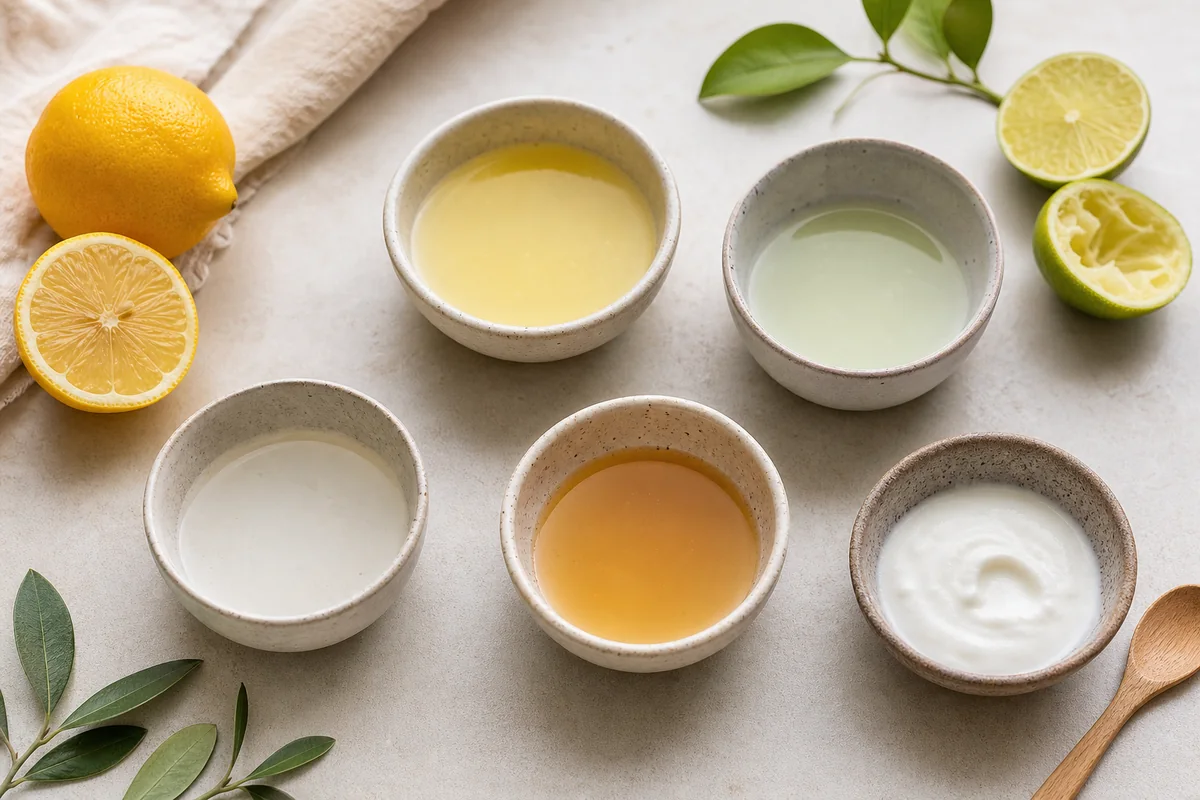
5 Best Lemon Juice Substitutes in Every Recipe
Ingredients
Equipment
Method
- Match the recipe type: for quick brightness (dressings, marinades), start with bottled lemon juice or lime juice; for gentle tang (seafood, sauces), use verjus.
- Swap by ratio: use 1:1 for bottled lemon juice, lime juice, and verjus; for vinegar-based options, start with ¾ of the lemon amount and add water if needed.
- If using citric acid, mix a small amount into water first, then taste and adjust before adding to the full bowl.
- Correct bitterness: add a pinch of sugar or a small splash of water if the substitute tastes too sharp for the dish.
- For baking, avoid over-acidifying: add substitute gradually and rely on zest or vanilla to restore ‘lemon brightness’ without extra sourness.
Notes
- Vinegar swaps are diluted to reduce harshness.
- Taste-correct at the end—lemon is about brightness, not just sourness.
Tried this recipe?
Let us know how it was!
Carrie is a food writer and editor with more than 15 years of experience. She has worked for some of the biggest names in the food industry, including Bon Appétit, Food & Wine, and Martha Stewart Living.
As the Editor in Chief of EpicureDelight, Carrie oversees all of the content on the site. She also manages the team of contributing writers and editors, who help to create delicious recipes, helpful tips, and informative articles that you’ll find on the site.
A native of the Chicago area, Carrie is passionate about all things food. She loves trying new restaurants and experimenting with new recipes in her kitchen. She’s also a graduate of the Culinary Institute of America, so she knows a thing or two about food!



