
That sharp, grassy brightness lime juice adds to a marinade or a bowl of guacamole is genuinely hard to fake. Still, a good lime juice substitute can keep your dish lively if you know what role the lime is actually playing: acidity, aroma, or both.
The right swap depends on that answer.
The best lime juice replacement depends on whether your recipe needs pure acidity or that green-citrus aroma. Lemon juice is the easiest 1:1 swap. Key lime juice is the closest match. Vinegar-based options work in a pinch but need dilution and sometimes a pinch of sugar.
Lime juice has a distinct flavor profile. If you want to understand that tart citrus bite before swapping it out, that context helps you choose more accurately.
5 Best Lime Juice Substitutes Ranked by Flavor Fit
A good swap starts with knowing your recipe's priority. Savory dishes usually need acidity and a little brightness.
Baked goods mostly need the acid for lift and balance. The table below gives you a fast reference before diving into the details.
| # | Substitute | Best For | Ratio | Key Note |
|---|---|---|---|---|
| 1 | Key Lime Juice | Both | 1:1 | Closest lime profile |
| 2 | Lemon Juice (fresh) | Both | 1:1 | Different aroma, same acid |
| 3 | Rice Vinegar | Savory | 1:1 | Add zest to compensate |
| 4 | Apple Cider Vinegar + Water | Savory | ¾:1 | Dilute before tasting |
| 5 | White Vinegar + Sugar | Both | ½:1 | Emergency use only |
Skip this section if your recipe already calls for lemon or key lime directly. Use that citrus as written for the closest possible result.
1. Key Lime Juice
Key limes are smaller and more aromatic than Persian limes. Their juice carries the same green-citrus punch you get from a standard lime, sometimes even more intensely.
- Ratio: Use 1:1. No adjustments needed in most recipes.
- Best uses: Dressings, ceviche, citrus marinades, Key lime pie (obviously), guacamole.
- Fresh vs. bottled: Fresh key lime juice is brighter. Bottled works well in cooked dishes but can taste slightly more bitter straight from the bottle.
- Aroma boost: If using adding citrus peel to your dish is an option, a small pinch of zest alongside the key lime juice brings the aroma even closer to standard lime.
Skip if: you don't actually have key limes and you're tempted to just use generic bottled lime. In that case, fresh lemon juice is a better choice for consistent results.
2. Lemon Juice (Fresh)
Fresh lemon juice is the most practical lime juice substitute for everyday cooking. It has nearly identical acidity and it works at the same volume.
The aroma is different, leaning more floral and yellow-citrus rather than green and grassy. That gap matters more in some dishes than others.
A squeeze over fish tacos will taste slightly different. In a lemon-friendly vinaigrette or baked good, nobody will notice.
Lemon Juice
Works for: savory cooking, baking, dressings, marinades, most sauces
Skip if: the recipe is specifically lime-forward (ceviche, margaritas, Key lime pie)
- Ratio: 1:1 in savory cooking and baking. No dilution needed.
- In baking: The acidity activates baking soda the same way lime does. Flavor brightness is comparable, and it balances sweetness well.
- Aroma gap fix: Add a small amount of lime zest if you have it. Even ¼ teaspoon shifts the aroma noticeably toward lime.
- Freshness tip: Fresh-squeezed lemon juice is worth the effort here. Bottled lemon is more variable in flavor. Check fresh-squeezed citrus storage if you squeeze more than you need.
Skip if: your dish relies on lime's signature grassy note. Lemon will taste citrusy but not lime-like.
3. Rice Vinegar (Unseasoned)
Rice vinegar is mild, slightly sweet, and far less aromatic than any citrus juice. It brings the tang without the green-citrus character.
That makes it a decent backup for savory dishes where acid is doing the work, not aroma.
The trick is compensation. A small amount of lime or lemon zest stirred in bridges the aroma gap enough for most cooked applications.
If you need to swap the rice vinegar itself, other mild vinegar options follow similar logic.
- Ratio: 1:1, but taste first. Some brands are sharper than others.
- Best uses: Dressings, quick pickles, noodle sauces, stir-fry sauces, marinades where spices dominate.
- Compensate: Add ¼ teaspoon citrus zest per tablespoon of rice vinegar to approximate lime's aroma.
- Water it down: If the tang is too sharp, dilute with a teaspoon of water and taste again before adding more.
Skip if: your recipe depends on lime's bright, fresh aroma. Salsas and ceviche need real citrus, not vinegar.
4. Apple Cider Vinegar + Water
Apple cider vinegar has a sharper, slightly fruity bite. It works as a lime juice substitute in cooking, but it needs to be handled carefully.
Use too much and it overwhelms everything else.
- Ratio: Start at ¾ of the lime amount. Mix with a small splash of water before adding.
- Best uses: Marinades, BBQ sauces, cooked grain salads, slaws with strong spices.
- Balance: If your recipe already has a sweet element, hold back slightly. Apple cider vinegar can tip a dish toward too-sour quickly.
- Aroma note: It has a faint apple character that disappears mostly in cooked dishes but stays present in raw ones. When choosing between vinegar options, picking a milder alternative may serve you better for fresh preparations.
Skip if: you're making a bright citrus dessert or anything where apple notes will stand out, like a citrus tart or a fresh mango salsa.
5. White Vinegar + Sugar Pinch
This is an emergency swap. White vinegar is sharper and more aggressive than lime juice, with zero citrus character.
The pinch of sugar softens the harsh edge.
White Vinegar + Sugar
Works for: baked goods needing acid for lift, cooked sauces, dishes with bold spices
Skip if: the dish is served fresh and unheated, or lime aroma is the whole point
- Ratio: Use about half the amount called for in the recipe. Taste before adding more.
- Sugar balance: Add just a small pinch per tablespoon. Too much sugar shifts the flavor away from tangy and toward sweet.
- In baking: White vinegar activates baking soda effectively. Use the half-ratio and mix it into wet ingredients first so it distributes evenly.
- Flavor note: White vinegar has a sharp, clean bite. That sharpness fades somewhat during cooking but stays very present in raw dishes like dressings or dips.
- Storage note: Keep pantry vinegars stored properly so they stay consistent in flavor when you need them as a backup.
Skip if: your dish is served fresh and unheated. Vinegar flavor is more noticeable without heat to soften it.
Making Lime Juice Substitutes Work
The ratio is a starting point, not a final answer. Every substitute here benefits from a taste-and-adjust approach, especially with vinegar-based swaps where the sharpness can sneak up fast.
Start below the recommended amount if you're unsure, then build up. Understanding storing fresh lime juice properly also helps if you're making a batch in advance and want the flavor stable before substituting.
- Match to the recipe's role: If lime is providing acid for balance (baking, marinades), almost any option works at the right ratio. If lime is providing aroma (salsas, ceviche), you need citrus juice or a zest addition.
- Adjust in small steps: Add the substitute in ½ teaspoon increments for raw dishes. Taste after each addition. You can always add more acid; you can't remove it.
- Compensate for missing aroma: When using a vinegar swap, stir in ¼ teaspoon of bright citrus juice or a small amount of zest per tablespoon. It moves the flavor profile closer to lime without adding much volume.
Frequently Asked Questions
Fresh lemon juice is the best 1:1 swap for most cooking applications. Key lime juice is technically closer in aroma, but lemon is more widely available and performs nearly identically for acidity.
Yes, use it at a 1:1 ratio. The acidity level is close enough to activate baking soda and balance sweetness, though the finished flavor will lean slightly more floral than lime.
Start with a 1:1 ratio and taste before adding more. Rice vinegar varies in sharpness by brand, so diluting slightly with water is often a smart first step.
It can taste sharper and slightly fruity rather than bitter. Diluting it to about ¾ of the lime amount and adding a little water keeps it from overpowering the dish.
Stir in a small amount of lime or lemon zest alongside the vinegar. Even ¼ teaspoon of zest per tablespoon of vinegar adds noticeable citrus aroma to the finished dish.
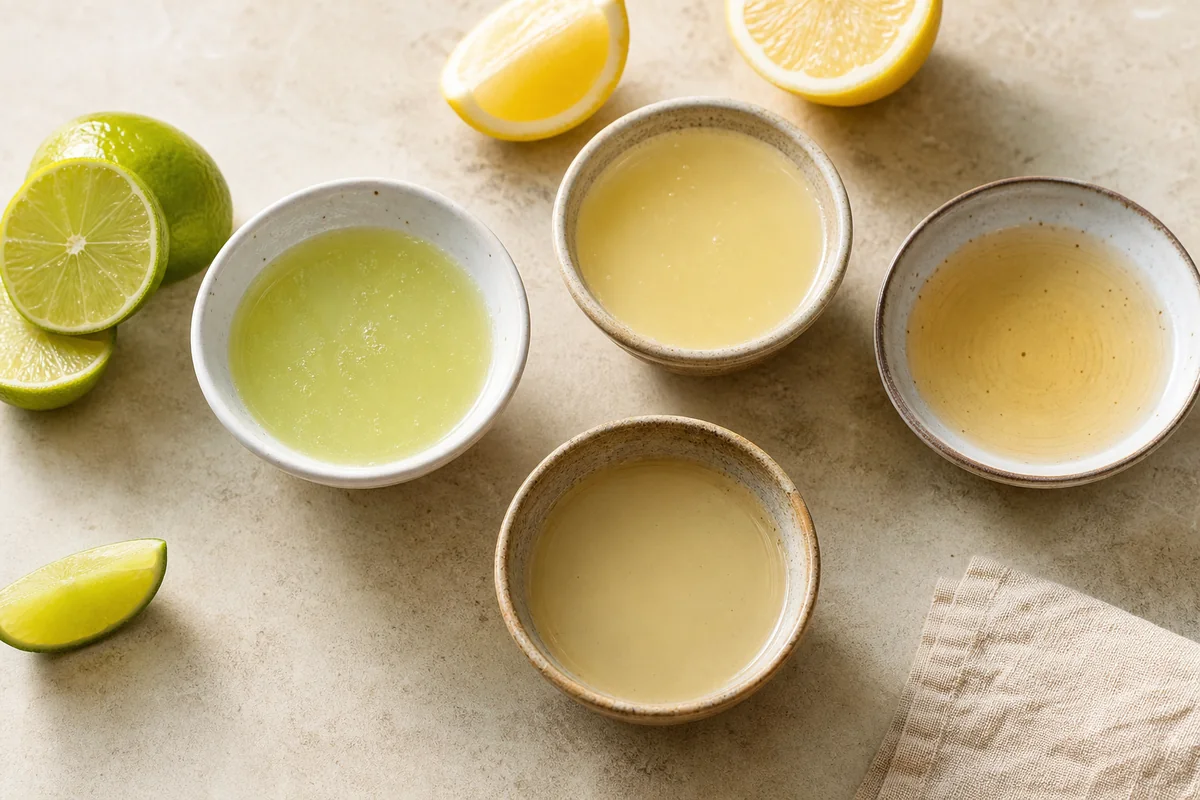
5 Best Lime Juice Substitutes for Better Results
Ingredients
Equipment
Method
- Match the substitute to your recipe goal: bright savory tang or baking acidity for lift/flavor.
- Start with the listed ratio, then taste—especially if your substitute is vinegar-based (you may need a small sweet or water adjustment).
- If you need lime-like aroma (salsas, marinades, dressings), add a little lime zest or adjust with a citrus note from the substitute.
- For baking, mix the substitute into wet ingredients first so it distributes evenly, then proceed with the recipe.
- If your substitute is stronger than lime (vinegar), dilute as noted and re-taste before adding more.
Notes
- For the closest flavor, prioritize citrus (lemon/key lime) over vinegar.
- If using vinegar, consider diluting or balancing to avoid a harsh aftertaste.
Tried this recipe?
Let us know how it was!
Carrie is a food writer and editor with more than 15 years of experience. She has worked for some of the biggest names in the food industry, including Bon Appétit, Food & Wine, and Martha Stewart Living.
As the Editor in Chief of EpicureDelight, Carrie oversees all of the content on the site. She also manages the team of contributing writers and editors, who help to create delicious recipes, helpful tips, and informative articles that you’ll find on the site.
A native of the Chicago area, Carrie is passionate about all things food. She loves trying new restaurants and experimenting with new recipes in her kitchen. She’s also a graduate of the Culinary Institute of America, so she knows a thing or two about food!



