
That salty, nutty bite Locatelli adds to a finished pasta or gratin is hard to replicate exactly. But Locatelli cheese is an aged Pecorino Romano from a specific Italian producer, and that means several aged hard cheeses can step in without ruining your dish.
The two things worth matching are salt level and aged depth. Get those close and your recipe will hold up.
Most swaps below are 1:1 by weight, with notes on when to pull back.
The best Locatelli cheese substitute is Parmigiano-Reggiano or Grana Padano for an all-purpose nutty swap, or Pecorino Romano when you want the same salt punch. Use 1:1 by weight and grate fresh. Adjust salt after tasting, especially with saltier options.
5 Best Locatelli Cheese Substitutes Ranked by Flavor Match
| # | Substitute | Best For | Ratio | Key Note |
|---|---|---|---|---|
| 1 | Parmesan / Grana Padano | Both | 1:1 | Nutty, grates clean |
| 2 | Pecorino Romano | Both | ¾:1 | Saltier, use less |
| 3 | Aged Asiago | Cooked | 1:1 | Browns well, less sharp |
| 4 | Aged Manchego | Cooked | 1:1 | Milder, slight fruit note |
| 5 | Sharp Cheddar | Baking | 1:1 | Tangy, less Italian |
1. Parmesan or Grana Padano
Parmigiano-Reggiano is the single closest swap for Locatelli in almost every situation. Both share the same hard, aged structure and deliver that savory, slightly nutty finish.
Grana Padano is a bit milder and less expensive, so it works when you need subtlety. This sharp, crumbly wheel matches Locatelli's texture almost precisely when grated fresh.
Parmigiano-Reggiano
Works for: pasta topping, gratins, sauces, finishing
Skip if: you need sharper sheep-milk intensity-use Pecorino Romano instead
Grana Padano
Works for: mixed dishes, everyday topping, mild cream sauces
Skip if: the recipe relies on a strong aged bite-Grana's flavor is quieter
- Best use: Grated over pasta, inside gratins, or stirred into risotto
- Swap ratio: 1:1 by weight, grated fresh from a block
- Texture note: Grates clean with no clumping and browns evenly under the broiler
If the dish tastes flat after swapping, add a small pinch of salt rather than more cheese. For anyone exploring creamy cheese options in sauce-based recipes, Grana Padano is worth keeping in rotation.
2. Pecorino Romano
Pecorino Romano is the sheep-milk cousin of Locatelli, and in some regions they are used interchangeably. The flavor is more salt-forward and a little tangier, which means it can overpower a delicate dish if you're not careful.
Start at about three-quarters of the amount called for and taste before adding more.
- Flavor direction: Salt-forward with a tangy, sheepy edge that intensifies when heated
- Swap guidance: Begin at ¾:1 and add more only after tasting the finished dish
- Best moments: Pasta toppings, cacio e pepe, finishing a roasted vegetable dish
For sauces, cut Pecorino Romano with a small amount of Parmesan to smooth the sharpness. If you cannot control salt in the recipe-say it already has cured meats or brined vegetables-reach for Parmesan instead.
3. Aged Asiago
Aged Asiago, sometimes labeled *Asiago d'allevo*, is a good third-tier option when neither Parmesan nor Pecorino is available. It has a dry, crumbly texture that grates reasonably well and delivers a nutty, savory finish.
The flavor is calmer than Locatelli, sitting somewhere between young cheddar and Parmesan. If you want to understand how it compares before buying, choosing aged Asiago covers its limits clearly.
- Best use case: Gratin topping, baked pasta, or finishing a soup
- Swap ratio: 1:1 by weight
- Browning behavior: Browns gently rather than deeply-keep the oven below 425°F to avoid clumping
Add a small pinch of black pepper or a few drops of lemon juice if the dish tastes flat after the swap. Skip aged Asiago if you're after the creamy, fluid-dissolve texture of Parmesan in very smooth sauces-it can turn grainy.
4. Aged Manchego
Manchego (*queso curado* or fully aged) is a Spanish sheep-milk cheese, so it shares some of Locatelli's animal-fat richness. The flavor is milder and carries a slight fruitiness that Italian aged cheeses don't have.
It works well in baked and topped dishes, but expect the result to taste a little softer on the palate.
| Use | Ratio | Notes |
|---|---|---|
| Pasta topping | 1:1 | Grate fine; add a pinch of salt to compensate for mildness |
| Baked gratin | 1:1 | Slice thin for even coverage; it browns slower than Pecorino |
| Table finishing | 1:1 | Shave over salads or soups; flavor holds well cold |
- Grating: Use a microplane for pasta; use a box grater for baked applications
- Slicing: Slice thin when layering in gratins-Manchego doesn't crumble as cleanly as Locatelli
Skip Manchego if you need a very sharp, very salty finish. The flavor is pleasant but can read as muted next to the intensity Locatelli brings to classic Roman dishes.
5. Sharp Aged Cheddar
Sharp cheddar is the emergency call when nothing else is in the fridge. It melts and browns predictably, which makes it useful in baked dishes and gratins.
The flavor shifts toward tang rather than nuttiness, and the profile is decidedly less Italian.
- Mismatch fix: Mix sharp cheddar with Parmesan in a 1:1 blend if you have any Parmesan on hand
- Best use: Baked pasta, gratin toppings, and stuffed vegetables where browning matters more than exact flavor
- Swap ratio: 1:1 by weight; no need to adjust salt since sharp cheddar is reasonably salty
Skip cheddar entirely if the dish is a traditional Italian preparation where the cheese flavor is front and center. The tang can clash with tomato-heavy sauces in a way that Locatelli never would.
Making Locatelli Cheese Substitutes Taste Right
The single most reliable step is to grate fresh from a block rather than using pre-shredded cheese. Pre-shredded options contain anti-caking agents that interfere with melting and browning.
Grating just before use gives you a cleaner melt and a more even crust. When swapping hard cheeses in general, this one change makes more difference than which specific cheese you choose.
- Ratio and salt: Start at 1:1 for most swaps. After your first taste, add salt in small pinches only if the substitute is mild-never add more cheese to compensate for missing salt.
- Grating and heat: For toppings, spread grated cheese in a thin, even layer before broiling. Thick clumps steam rather than brown. For pasta sauces, stir in off the heat to prevent the cheese from seizing.
- Rescuing a sauce: If the sauce breaks or turns grainy after adding the substitute, whisk in 1 teaspoon of warm water or a small splash of pasta cooking water. A half-teaspoon of cornstarch mixed into cold water also stabilizes the emulsion before you add the cheese.
One more rule: taste the substitute on its own before it goes into the dish. If it's noticeably sharper than Locatelli, add a small amount of milder aged options to the blend.
If it's too mild, a few drops of lemon juice brighten the finish without increasing salt.
Frequently Asked Questions
Parmigiano-Reggiano is the closest match for Locatelli's nutty, aged depth. Use it at a 1:1 ratio, grated fresh, and add a small pinch of salt if the dish tastes flat.
Yes. Stir Parmesan in off the heat to prevent graininess. It melts more smoothly than Locatelli in cream-based or pasta sauces.
Start at three-quarters of the amount called for, since Pecorino Romano is saltier. Taste the dish and add more only if the flavor needs it.
It browns and melts well in baked dishes, but the flavor shifts toward tang. Blend it with Parmesan to get closer to Locatelli's nutty profile.
For too salty, reduce the amount and add a splash of pasta water or cream to dilute. For too mild, add a pinch of salt or a few drops of lemon juice.
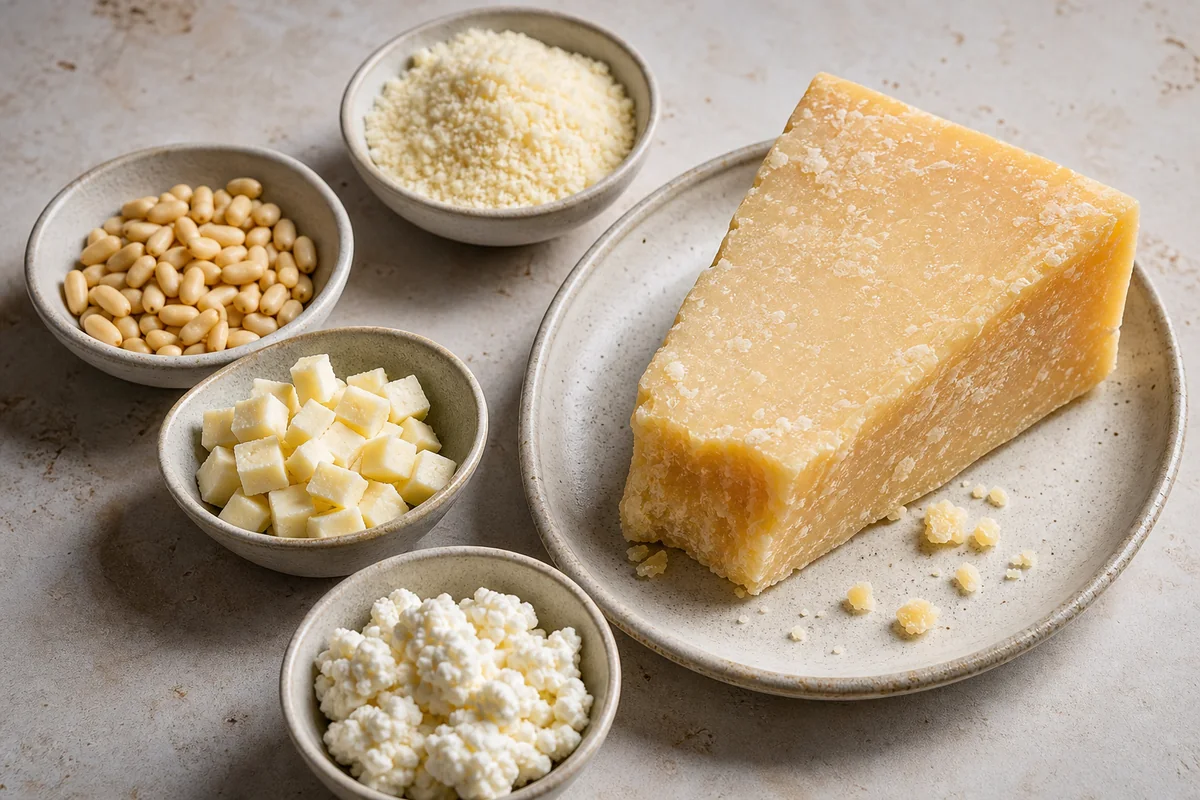
5 Best Locatelli Cheese Substitutes (Quick Swaps)
Ingredients
Equipment
Method
- Identify how you use Locatelli: topping/grating, pasta sauce, or gratin/baking—this determines whether you prioritize crumble vs. melt.
- Pick the closest flavor axis: nutty hard Italian (Parmesan/Grana) or salt-forward aged sheep (Pecorino Romano).
- Swap by the listed ratio (usually 1:1). If the substitute is saltier (Pecorino Romano), start with slightly less and taste.
- For topping/grating, grate fresh; for baked/gratin use, spread evenly so it browns instead of clumping.
- Adjust after the first taste: add a pinch of salt only if the substitute is mild, or add acid/sweet (lemon zest or a tiny pinch of sugar) if it’s too sharp.
Notes
- Locatelli is a hard, aged, salty Italian-style cheese; the best substitutes match age + saltiness rather than only “Italian.”
- For sauces, choose cheeses that dissolve well when warm; for toppings, prioritize sharp/grated texture.
Tried this recipe?
Let us know how it was!
Carrie is a food writer and editor with more than 15 years of experience. She has worked for some of the biggest names in the food industry, including Bon Appétit, Food & Wine, and Martha Stewart Living.
As the Editor in Chief of EpicureDelight, Carrie oversees all of the content on the site. She also manages the team of contributing writers and editors, who help to create delicious recipes, helpful tips, and informative articles that you’ll find on the site.
A native of the Chicago area, Carrie is passionate about all things food. She loves trying new restaurants and experimenting with new recipes in her kitchen. She’s also a graduate of the Culinary Institute of America, so she knows a thing or two about food!



