That earthy, slightly malty powder sitting at the back of your pantry does more work than most people realize. Maca powder substitute searches usually spike when someone is halfway through a smoothie prep and realizes the jar is empty. The right swap depends on what you actually need: earthy flavor, powdery body, or that functional-powder ritual feel.
Cacao and chicory lean into taste. Ashwagandha and ginseng mimic the "adaptogen powder" experience.
Flax and tahini powder fill in the texture gap. Knowing which lane your recipe is in narrows this down fast.
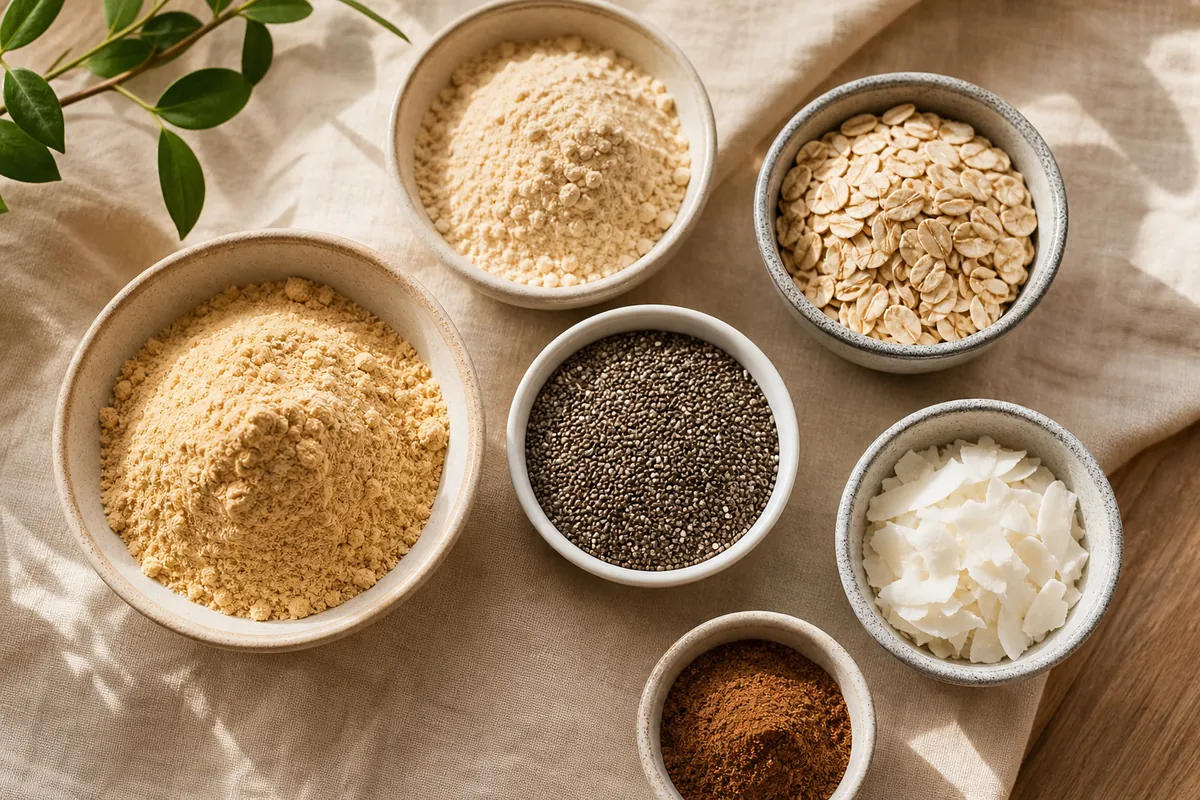
The best maca powder substitute depends on your goal. For earthy flavor in smoothies, use cacao powder 1:1. For a functional-powder feel, ashwagandha 1:1 is closest. For roasty bitterness, try chicory root powder. For thickness and nutty body, tahini powder works well.
5 Maca Powder Alternatives Ranked by Flavor and Mixability
Each substitute below covers a different reason you might reach for maca powder. The table gives you the fast-reference ratios.
The ranked sections tell you which one fits your actual recipe.
| # | Substitute | Best For | Ratio | Key Note |
|---|---|---|---|---|
| 1 | Ashwagandha Powder | Drinks & Baking | 1:1 | Reduce to ¾ if bitter |
| 2 | Ginseng Powder | Drinks | ¾:1 | Warming, use less |
| 3 | Cacao Powder | Drinks & Baking | 1:1 | Adds cocoa direction |
| 4 | Chicory Root Powder | Coffee Drinks | 1:1 | Roasty, needs sweetener |
| 5 | Tahini / Sesame Powder | Drinks & Baking | 1:1 | Nutty body, blend well |
1. Ashwagandha Powder
Ashwagandha is the most direct stand-in when maca is acting as a functional powder in your routine. It dissolves similarly, carries the same fine texture, and blends cleanly into smoothies without clumping.
The flavor is earthy but leans herbal rather than root-sweet. If you've read about maca's flavor profile before, you'll know maca has a mild maltiness that ashwagandha doesn't fully copy.
That gap is smaller in recipes with banana, nut butter, or honey.
Ashwagandha Powder
Works for: smoothies, protein shakes, baked oatmeal, energy balls
Skip if: you need maca's mild root sweetness - ashwagandha reads more bitter and herbal
- Starting ratio: 1:1; drop to ¾ teaspoon per teaspoon of maca if bitterness is noticeable
- Flavor direction: Earthy, slightly bitter, herbal - not sweet or malty like maca
- Texture: Fine and powdery, blends smoothly in 20 seconds of blending
- Best pairing: Banana, almond butter, or dates to soften the herbal edge
2. Ginseng Powder
Ginseng brings a warming, slightly bitter quality that works especially well in hot drinks, chai-style blends, and anything with warming spices already in the mix. It is more pungent than maca, so starting at ¾ of the amount is the right move.
In sweeter recipes, that gap is easy to hide. For a plain oat smoothie, the ginseng note will stand out.
If you also swap cooking fats in the same recipe, swapping out richer oils at the same time can let the powder's flavor come through more clearly.
- Best use: Hot lattes, golden milk, chai blends, baked goods with warming spices
- Starting ratio: ¾ teaspoon ginseng per 1 teaspoon maca; increase only after tasting
- Pairs well with: Cinnamon, cardamom, coconut milk, or honey to mellow the bite
- Flavor direction: Warming, slightly bitter, more assertive than maca
- Skip if: You want a mild, nearly neutral earthy flavor - ginseng is noticeably stronger
3. Cacao Powder
Cacao is the pantry-friendly pick when maca is adding earthy, brownish depth to a smoothie or baked good. It won't replicate maca's root notes, but it matches the dark, slightly bitter earthiness well enough that most people won't miss it.
The tradeoff is obvious: your recipe will taste chocolatey. That is a feature in banana smoothies and brownies, and a problem in savory protein shakes.
For buttery nut swaps paired with cacao in desserts, the earthy direction stays consistent.
- Starting ratio: 1:1; stir in a pinch of sweetener if bitterness spikes
- Best use: Chocolate smoothies, brownie batters, energy balls, cocoa overnight oats
- Mixing tip: Sift cacao before adding to dry mixes - it clumps more than maca does
- Flavor note: Distinctly cocoa, not root-earthy; skip this for savory or neutral recipes
- Skip if: Your recipe can't absorb a chocolate flavor direction
4. Chicory Root Powder
Chicory root powder is the right call when maca is in a coffee-style or dark-blended drink. It brings a roasty, slightly bitter base note that blends well with oat milk, maple syrup, or a splash of espresso.
It is more one-dimensional than maca, and it can dominate quickly. Keep the ratio at 1:1 and add a creamy base before deciding whether to increase.
Chicory Root Powder
Works for: coffee drinks, dark oat lattes, cold brew blends, darker baked goods
Skip if: you're making a light, sweet smoothie - chicory's roasty note will dominate
- Starting ratio: 1:1; sweeten with maple or honey to cut harshness
- Best pairing: Oat milk, cold brew, dates, or a small splash of vanilla
- Texture: Fine and dry, mixes easily into both hot and cold liquids
- Flavor direction: Roasty, bitter, slightly woody - stronger than maca's earthy malt
5. Tahini Powder
Tahini powder is a texture and flavor builder, not an exact maca flavor copy. It adds a creamy, nutty body that mimics maca's thickness in smoothies and dense baked goods.
The sesame flavor is noticeable but mild enough to work in most recipes.
Blend it for at least 25 to 30 seconds in liquid applications. Shorter blending leaves a slightly gritty mouthfeel that pulls the drink in the wrong direction.
| Use | Ratio | Notes |
|---|---|---|
| Smoothies | 1:1 | Blend 25-30 sec; add extra liquid if too thick |
| Baked goods | 1:1 | Whisk into dry mix; slight sesame note in final crumb |
| Energy balls | 1:1 | Works well; press firmly to bind without sticking |
- Flavor direction: Nutty, toasty, mild sesame - not root-earthy like maca
- Best drink bases: Almond milk, oat milk, chocolate smoothies, banana shakes
- Texture tip: Blend longer than you think; grit disappears after a full 30-second blend
- Skip if: You need a neutral-flavored powder - sesame will be clearly detectable
Making Maca Powder Substitutes Work (No Surprise Results)
The fastest way to avoid a bad result is to decide what maca is doing before you swap. If you care about its earthy, malty notes, reach for cacao or chicory.
If you care about powdery body and thickness, tahini powder or ground flaxseed are the structural picks. When bitterness creeps in after swapping, reduce the amount by ¼ teaspoon first, then add a splash of fat or sweetener before adding more powder.
Root and seed powders clump differently than maca, so technique matters as much as ratio.
- Match to recipe goal first: Earthy flavor → cacao or chicory; functional feel → ashwagandha or ginseng; thickness → tahini or flax
- Adjust bitterness before increasing dose: Add sweetener or creamy base, taste, then decide if more powder is needed
- Prevent clumps and grit: Whisk powders into dry mixes; blend liquids for at least 20 to 30 seconds
Frequently Asked Questions
Cacao powder is the closest match for earthy, brown depth in smoothies. Use it 1:1 and add a small sweetener if bitterness shows up in the first sip.
Ashwagandha, cacao, chicory, and tahini powder all start at 1:1. Ginseng is the exception - begin at ¾ teaspoon per 1 teaspoon maca to avoid overpowering the recipe.
Yes, for most baked goods the texture difference is minor. Ashwagandha and tahini powder are the safest swaps since they match maca's dry, fine body most closely.
Both can taste more bitter than maca, especially in plain or lightly sweetened drinks. Start at ¾ of the amount and pair with banana, dates, or nut butter.
Tahini powder at 1:1 and ground flaxseed at 2:1 are the best options. Both add body and thickness; blend for 25 to 30 seconds to avoid any gritty texture.
5 Best Maca Powder Substitutes (Ranked)
Ingredients
Equipment
Method
- Choose your substitute based on what maca does in your recipe: earthy flavor (cacao/chicory), functional-powder feel (ashwagandha/ginseng), or thickness (flax/tahini).
- Apply the listed ratio. If your substitute is known to be stronger or more bitter (like ginseng/chicory), start at the lower end (e.g., ¾) and adjust.
- Mix thoroughly: blend into liquids 20–30 seconds for smoothies, or whisk into dry ingredients to prevent clumps.
- Taste and fine-tune. Add sweetness or a small splash of fat (yogurt, milk, or tahini) to smooth bitterness or harshness.
- If using for capsules/supplements, confirm your recipe goal (flavor vs. functional intent) before substituting at any dose.
Notes
- Ratios are starting points for cooking/mixing; taste adjustments are normal because root powders vary in bitterness and strength.
- For capsules, substitutions may not match the same active compound profile—use common sense and follow any relevant dosing guidance.
Tried this recipe?
Let us know how it was!
Carrie is a food writer and editor with more than 15 years of experience. She has worked for some of the biggest names in the food industry, including Bon Appétit, Food & Wine, and Martha Stewart Living.
As the Editor in Chief of EpicureDelight, Carrie oversees all of the content on the site. She also manages the team of contributing writers and editors, who help to create delicious recipes, helpful tips, and informative articles that you’ll find on the site.
A native of the Chicago area, Carrie is passionate about all things food. She loves trying new restaurants and experimenting with new recipes in her kitchen. She’s also a graduate of the Culinary Institute of America, so she knows a thing or two about food!