
Macadamia oil has a buttery softness that most oils just don't carry. That quality makes it popular in both cooking and skincare, and it also makes finding a good macadamia oil substitute a little more context-dependent than swapping one neutral oil for another.
The key question is what the oil is actually doing in your recipe. For high-heat sautéing, you mainly need heat stability and a clean taste.
For baking, you want fat that contributes some richness. For a skin or hair carrier, mouthfeel and absorption matter more than flavor entirely.
No single swap covers all three uses. Pick based on what you're actually making, and you'll land closer to the original result.
Macadamia oil is mild, buttery, and stable at medium-high heat. For cooking, avocado oil or light olive oil are the closest matches. For baking richness, melted butter or refined coconut oil work well. Use a 1:1 ratio for all five swaps listed here.
5 Best Macadamia Oil Substitutes That Taste Right
Macadamia oil's smoke point sits around 410-425°F for refined versions, and most good swaps land in the same range. The table below gives you a fast reference before the detailed breakdowns.
| # | Substitute | Best For | Ratio | Key Note |
|---|---|---|---|---|
| 1 | Avocado Oil | Both | 1:1 | Neutral, high-heat stable |
| 2 | Light Olive Oil | Both | 1:1 | Mild fruitiness, versatile |
| 3 | Canola Oil | Both | 1:1 | Very neutral, baking-safe |
| 4 | Safflower Oil | Both | 1:1 | High heat, clean taste |
| 5 | Butter (melted) | Baking | 1:1 | Buttery flavor match |
1. Avocado Oil
Refined avocado oil is the closest neutral swap for macadamia oil in everyday cooking. It has almost no detectable flavor of its own, so it won't push your dish in an unexpected direction.
When storing avocado oil for regular use, keep it away from direct light to maintain its clean taste longer.
- Swap ratio: Use 1:1 in any recipe calling for macadamia oil
- Heat range: Works well up to medium-high, around 400°F for refined versions
- Texture note: Slightly lighter body than macadamia oil, but the difference is barely noticeable in finished dishes
- Best uses: Sautéing vegetables, pan sauces, marinades, and light vinaigrettes
Skip if your recipe is specifically flavor-forward and relies on macadamia's buttery nuttiness. Avocado oil won't fake that note.
2. Light Olive Oil
Light-tasting or extra-light olive oil is a stronger swap than extra-virgin for most macadamia oil uses. Extra-virgin carries a peppery bite that can overpower delicate recipes.
For a softer, fruitier oil profile, reach for the light-style bottle instead.
- Swap ratio: 1:1 for sautéing, roasting, and most baking applications
- Roasting tip: Toss vegetables right before they go into the oven, not hours ahead, to keep the flavor clean
- Baking note: Works in savory quick breads and muffins; less ideal in sweet desserts where any fruity note might read as off
- Heat limit: Keep below 375°F for best results with light olive oil
Skip if the recipe is a dairy-forward dessert or a light vinaigrette where even mild fruitiness would compete with other flavors.
3. Canola Oil
Canola oil is the most flavor-neutral option on this list. When your recipe needs the fat and moisture that macadamia oil provides, but the dish isn't built around any nutty character, canola does the job cleanly. It's especially reliable in cakes, muffins, and quick breads where macadamia's aroma is a bonus rather than a requirement.
For baking swaps in general, if you're also considering swapping out canola down the line, avocado oil or light olive oil can step in with similar neutrality. Use canola at a 1:1 ratio across all standard applications.
Skip if you want any trace of macadamia's buttery flavor in the final dish. Canola is completely blank on that front.
4. Safflower Oil
Refined safflower oil handles high heat well and has a nearly tasteless profile, which makes it a practical swap when you're roasting or pan-frying. For more high-heat oil options, safflower ranks among the most stable refined choices available.
Safflower Oil
Works for: high-heat roasting, stir-frying, deep frying, and any application where smoke-point stability matters most
Skip if: your recipe is flavor-forward and benefits from a buttery or nutty character-safflower brings nothing in that direction
- Swap ratio: 1:1 for all cooking applications
- Always buy refined: Unrefined safflower can carry a faint grassy note that refined versions eliminate
- Storage: Keeps well in a cool, dark pantry; once opened, use within 6-8 months for best quality
- Best uses: Roasting proteins, stir-fries, frying, and high-heat sheet-pan dishes
5. Butter (Melted) for Baking
When macadamia oil's buttery quality is the whole point, melted butter is the substitute that actually comes close on flavor. No other swap on this list delivers that same sense of richness in baked goods.
If you're also curious about choosing a butter replacement for other baking needs, those options overlap well with what works here.
- Swap ratio: 1:1 by volume, melted and cooled slightly before adding to batter
- Temperature note: Let melted butter cool to around room temperature so it doesn't scramble eggs in the mix
- Texture impact: Butter can make baked goods slightly denser; this usually reads as richer, not heavy
- Browning watch: Butter browns faster than macadamia oil, so lower your oven by 10-15°F if you notice faster coloring
- Use unsalted: Unsalted butter gives you better control of the final seasoning in sweet recipes
Skip if you need an oil for dressings or high-heat sautéing. Butter burns at lower temperatures and will change the flavor profile of savory dishes quickly.
Making a Macadamia Oil Substitute Work
Getting the swap right comes down to three quick checks: flavor match, heat tolerance, and texture state. If your substitute is more neutral than macadamia oil, add a small pinch of extra salt or a few drops of acid to lift the perceived richness.
When choosing among mild oils, lean toward the one with the closest smoke point to your cooking temperature. For butter or coconut oil, melt and cool to match the liquid state of the original oil before it goes into the batter.
- Flavor gap: If the substitute tastes flat, add ¼ teaspoon toasted sesame oil or a small pat of butter to the finished dish to approximate nuttiness
- Heat adjustment: If your substitute browns faster than expected, reduce heat by 25°F and shorten cook time by 1-2 minutes
- Texture fix: For coconut oil or butter that has solidified, melt completely and let sit for 5 minutes before measuring and adding to a recipe
Frequently Asked Questions
Refined avocado oil or refined safflower oil both handle high heat cleanly and have neutral flavor profiles. Use either at a 1:1 ratio for sautéing, roasting, or stir-frying.
Light-tasting olive oil works in savory baked goods and hearty muffins, but avoid it in delicate sweet recipes where any fruitiness would compete. Use a 1:1 ratio.
Refined coconut oil has most of the coconut aroma removed, so it reads much closer to a neutral fat. Unrefined coconut oil will add a noticeable coconut flavor.
All five substitutes listed here work at a 1:1 ratio. No volume adjustment is needed for cooking or standard baking applications.
Yes, refined avocado oil is one of the best options for dressings because it stays neutral and doesn't solidify in the refrigerator the way coconut oil does.
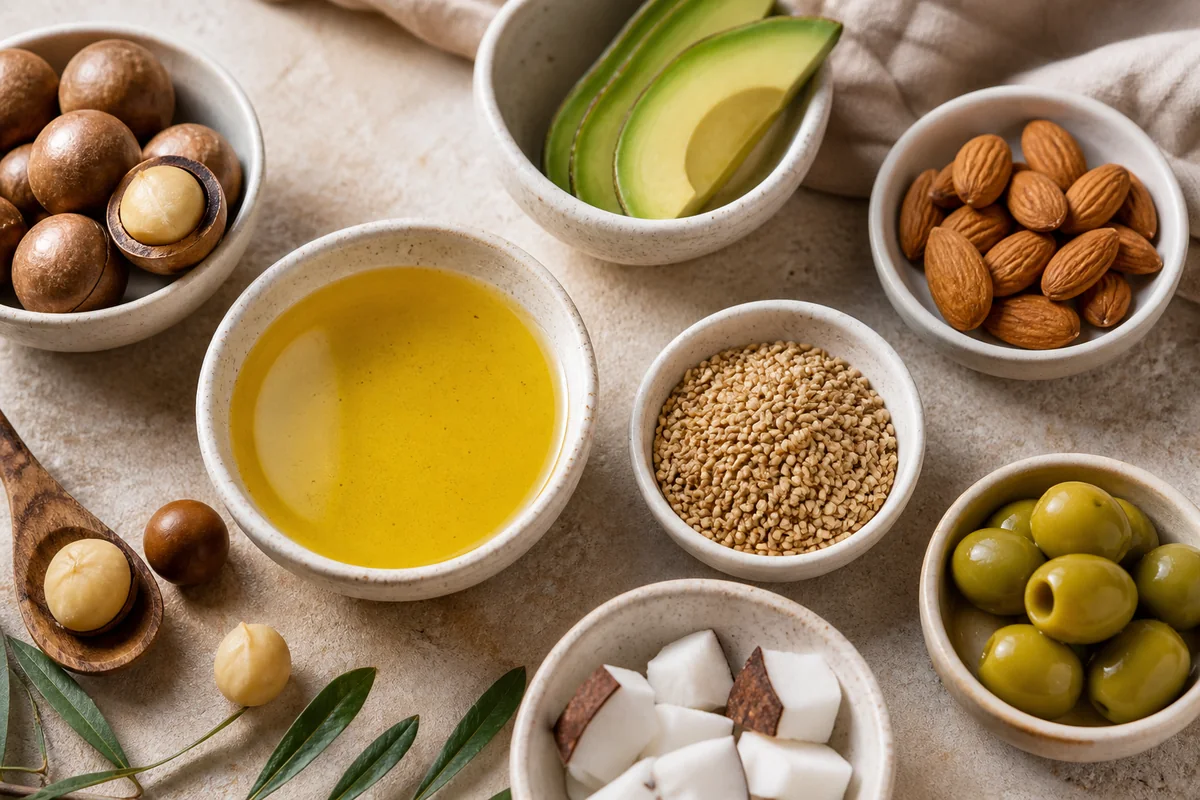
5 Best Macadamia Oil Substitutes That Taste Right
Ingredients
Method
- Decide your use: cooking (heat/neutrality) or baking (buttery richness).
- Match flavor first: if you want closest richness, choose butter or coconut oil; if you want neutrality, choose avocado or canola.
- Use the 1:1 ratio. If your substitute is wetter/thicker in texture (butter/coconut), warm it to match the original recipe’s state (melted vs room temp).
- For high-heat cooking, prefer refined oils (avocado/safflower/olive-light) to avoid smoke and off-flavors.
- Taste-check at the end: add a pinch of salt for savory dishes or a small touch of sweetness if the substitute reads sharper than macadamia oil.
Notes
- All swaps use a 1:1 ratio unless the writer notes a specific texture adjustment.
- For skincare recipes using macadamia oil as a carrier, prioritize substitutions with similar skin-feel (avocado/coconut) and avoid strongly fragranced oils.
Tried this recipe?
Let us know how it was!
Carrie is a food writer and editor with more than 15 years of experience. She has worked for some of the biggest names in the food industry, including Bon Appétit, Food & Wine, and Martha Stewart Living.
As the Editor in Chief of EpicureDelight, Carrie oversees all of the content on the site. She also manages the team of contributing writers and editors, who help to create delicious recipes, helpful tips, and informative articles that you’ll find on the site.
A native of the Chicago area, Carrie is passionate about all things food. She loves trying new restaurants and experimenting with new recipes in her kitchen. She’s also a graduate of the Culinary Institute of America, so she knows a thing or two about food!



