
Maltose syrup sits somewhere between honey and plain sugar in behavior: sticky enough to hold candy together, mild enough not to compete with other flavors, and slow to crystallize in ways that ruin chew. Finding a good maltose syrup substitute means matching at least two of those three things.
The quick reference table below shows swap ratios at a glance, and every section has a "Skip if" note so you know when to walk away from that particular swap.
Maltose syrup adds sticky body, mild malt sweetness, and smooth browning. For chew and anti-crystallization, use light corn syrup or glucose syrup 1:1. For moisture and gloss, honey or golden syrup work well. Use agave or maple at a reduced ratio to avoid over-sweetening.
5 Best Maltose Syrup Substitutes, Ranked by Texture Match
Maltose syrup behaves like a thick, slow-moving glue in recipes. It keeps candy soft, helps glazes cling, and browns gently.
The five substitutes below are ranked by how closely they copy that behavior, so you can pick by what your recipe actually needs.
| # | Substitute | Best For | Ratio | Key Note |
|---|---|---|---|---|
| 1 | Light Corn Syrup | Both | 1:1 | Neutral, anti-crystallization |
| 2 | Glucose Syrup | Both | 1:1 | Best chew, smooth glaze |
| 3 | Honey | Both | 1:1 | Stronger flavor, browns fast |
| 4 | Golden Syrup | Both | 1:1 | Warm caramel tone |
| 5 | Rice Syrup | Both | 1:1 | Mild flavor, less browning |
1. Light Corn Syrup
Light corn syrup is glucose-heavy, which makes it the structurally closest swap. It prevents sugar crystals from forming, keeps candy soft and chewy, and gives glazes that familiar glossy pull.
For a broader picture of its flavor profile, this breakdown of corn syrup's flavor behavior is worth a look before you commit to the swap.
Light Corn Syrup vs. Maltose Syrup
Works for: chew, anti-crystallization, glazing, candy texture, cookie bars
Skip if: your recipe depends on malt's distinct bready note-corn syrup is more neutral
- Swap ratio: 1:1 in all recipes
- For candy: add it at the same stage you would maltose; it behaves nearly identically up to soft-ball temperature
- For glazes: brush on at the same point-shine is comparable and cling is very close
- Flavor note: slightly sweeter upfront but the difference disappears once baked or reduced
2. Glucose Syrup
Glucose syrup is the confectioner's go-to for a reason. It is thick, slow to crystallize, and nearly flavorless, which means it copies maltose syrup's structural role without pulling flavor in any direction.
If you need to choose the right solid-sugar swap instead, that comparison covers the dry-sugar side of things.
- Swap ratio: 1:1 in all candy and baking recipes
- For chewy sweets: warm it briefly (10-15 seconds in the microwave) before measuring-it pours more evenly
- For glazes: it sets firmer than maltose, so pull the glaze off heat 30 seconds early to avoid over-thickening
- Temperature note: it handles high-heat candy work well; use a thermometer and hit the same soft-ball or hard-crack targets your recipe calls for
Skip if: your recipe is already flavored with strong honey or fruit-glucose syrup will feel too bland against those notes.
3. Honey
Honey matches maltose syrup's viscosity closely and adds natural humectant power, meaning baked goods stay softer longer. The trade-off is flavor: honey brings its own floral or earthy notes depending on variety.
If you want to understand how that flavor lands in a finished dish, this look at raw honey's aromatic profile is a quick read.
- Swap ratio: 1:1, but taste the batter before committing
- Sweetness adjustment: if your recipe is already sweet, reduce other sugars by 1-2 tablespoon per ¼ cup of honey used
- Browning: honey darkens faster than maltose; check color 8-10 minutes before the recipe's stated done time
- Best uses: soft cookies, glazed meats, bread glazes, moist quick breads
Skip if: you need a mild, neutral-flavored base-honey's aromatics will come through clearly.
4. Golden Syrup
Golden syrup has a thickness and glaze-cling that mirrors maltose syrup more closely than most pantry syrups. It adds warm caramel undertones rather than a strong individual flavor, so it blends without dominating.
When you are already working with recipes that call for swapping between similar syrups, knowing how swapping grain-based syrups works keeps the logic consistent.
- Swap ratio: 1:1 in glazes, cookie bars, and sticky buns
- Caramel note: expect a slightly darker, warmer color in finished baked goods
- Glaze behavior: it clings well and sets to a soft, non-tacky finish at room temperature
- Best uses: flapjacks, toffee-style cookies, BBQ-style glazes, gingerbread
Skip if: your recipe must stay light-colored-golden syrup adds visible caramel tones to pale batters.
5. Rice Syrup
Rice syrup sits at the mild end of the flavor scale. It is thicker than agave or maple, so it copies maltose syrup's body without introducing caramel or floral notes.
That neutrality is its main advantage. When you want a syrup that stays in the background, this is usually the right call, and learning how malt-forward sweetness actually reads in a recipe helps you decide whether neutrality is what you need.
Rice Syrup: Mild Swap Trade-offs
Works for: glazes, sauces, chewy granola bars, delicate-flavored confections
Skip if: you need strong caramel depth or fast browning-rice syrup will be noticeably lighter in both
- Swap ratio: 1:1 by weight or volume
- Thickness tip: rice syrup can be slightly less sticky than maltose; simmer 2-3 extra minutes in cooked syrups to hit the same gloss
- Best uses: Korean-style glazes, granola bars, mild candy coatings
Making Maltose Syrup Substitutes Work
Swapping syrups is mostly about managing two things: sweetness level and thickness. Most 1:1 swaps work straight out of the jar, but sweeter syrups like agave need a ratio reduction, and thinner syrups may need a short simmer.
If you are also working through options where maple is on the table, a quick scan of liquid sweetener swaps covers the adjustment logic clearly. For candy work specifically, always use a thermometer-these substitutes hit soft-ball and hard-crack temperatures at roughly the same points as maltose, but "roughly" is not good enough when texture is the whole point.
- Sweetness: if using agave or maple at the ¾ ratio, add a pinch of salt to balance and taste before baking; if still too sweet, reduce other added sugars by 1 tbsp
- Thickness: for any substitute that feels thinner than maltose, simmer it gently for 3-5 minutes before adding to the recipe-you want it to coat a spoon slowly
- Browning: honey and maple brown earlier than maltose; start checking color 10 minutes before the recipe's stated end time and tent with foil if needed
Frequently Asked Questions
Yes. Light corn syrup works 1:1 in nearly all baking applications. It is slightly more neutral in flavor but matches maltose syrup's anti-crystallization and sticky-body behavior closely.
Glucose syrup is the strongest option for preventing crystallization. Its high glucose content disrupts crystal formation, keeping chewy candy soft and pliable at room temperature.
Yes, both brown faster. Check color 8-10 minutes early and tent with foil if the surface is darkening before the center is set.
Use ¾ of the maltose syrup amount called for. Agave is sweeter and thinner, so the reduced ratio and a brief simmer bring it closer to maltose syrup's body.
No direct equivalent exists. All functional substitutes are sugar-based syrups. Non-sugar options change texture and browning significantly and cannot replicate maltose syrup's anti-crystallization behavior.
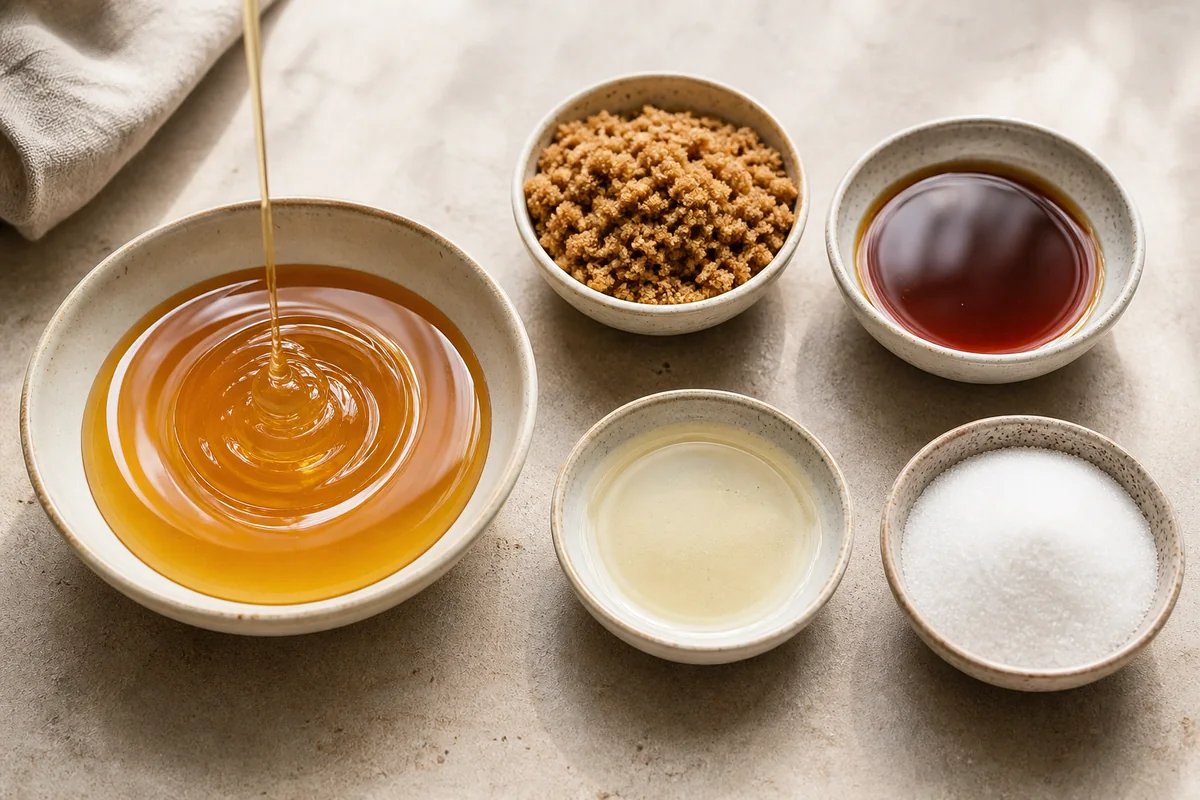
5 Best Maltose Syrup Substitutes in Every Recipe
Ingredients
Equipment
Method
- Identify what maltose syrup is doing in your recipe: chew/structure (chewy candies, cookies) vs. moisture vs. browning/glaze.
- Pick the substitute from the table using the closest match (glucose-heavy syrups for chew, honey/golden syrup for moisture and gloss).
- Use the listed swap ratio. If your substitute is sweeter than maltose (agave/maple), start with the reduced ratio.
- For caramelizing or thick glazes, add the syrup earlier in cooking for browning; for no-cook sweetness or finish gloss, stir in at the end.
- Taste-check: if too sweet, balance with a pinch of salt or add a little extra flour/batter base; if not glossy enough, simmer briefly to thicken.
Notes
- Glucose-heavy syrups track maltose’s stickiness and anti-crystallization best.
- Honey/golden syrup change flavor; reduce slightly if your recipe is already very sweet.
- Maple and agave can brown faster—watch color near the end.
Tried this recipe?
Let us know how it was!
Carrie is a food writer and editor with more than 15 years of experience. She has worked for some of the biggest names in the food industry, including Bon Appétit, Food & Wine, and Martha Stewart Living.
As the Editor in Chief of EpicureDelight, Carrie oversees all of the content on the site. She also manages the team of contributing writers and editors, who help to create delicious recipes, helpful tips, and informative articles that you’ll find on the site.
A native of the Chicago area, Carrie is passionate about all things food. She loves trying new restaurants and experimenting with new recipes in her kitchen. She’s also a graduate of the Culinary Institute of America, so she knows a thing or two about food!



