
Non-alcohol red wine does three things in a recipe: it adds color, brings tannic fruit notes, and tips the acidity balance. A non alcohol red wine substitute must match all three-not just add liquid.
Swaps behave differently depending on the recipe. Sauces and braises often need reduction to build body.
Baking is more forgiving, but acidity still matters.
The best swaps for non-alcohol red wine combine a fruity base (grape juice, pomegranate, cranberry) with a small amount of acid (red wine vinegar, balsamic, or apple cider vinegar). Match the swap to your recipe: deep sauces benefit from pomegranate, while baking works well with grape juice plus vinegar.
5 Best Non Alcohol Red Wine Swaps for Any Recipe
Every option below addresses fruitiness, acidity, and color in a different way. If you want wine-style swaps that go beyond dealcoholized bottles, the five substitutes here cover nearly every cooking situation.
| # | Substitute | Best For | Ratio | Key Note |
|---|---|---|---|---|
| 1 | Grape juice + red wine vinegar | Both | 1:1 | Start with 1 teaspoon vinegar |
| 2 | Pomegranate juice + balsamic | Both | 1:1 | Simmer for body |
| 3 | Cranberry juice + vinegar | Both | 1:1 | Reduce 2-3 min first |
| 4 | Diluted balsamic vinegar | Savory | ¾:1 | Dilute to avoid sweetness |
| 5 | Hibiscus tea + vinegar | Both | 1:1 | Brew strong; adjust acid |
Each substitute works differently at heat. Read each entry below before committing to one.
1. Grape Juice + Red Wine Vinegar
This mix is the most wine-like option in this list. Grape juice handles the fruit body and color, while the vinegar handles acidity and sharpens the flavor so it doesn't read as sweet juice.
Start with 1 teaspoon of tangy acid swaps per half cup of grape juice. Add the vinegar gradually, taste after a minute of simmering, and stop when it tastes balanced.
Grape Juice + Red Wine Vinegar
Works for: braises, pan sauces, marinades, and baked goods needing a mild red wine note
Skip if: your recipe needs heavy tannins-this mix is smooth and won't replicate a bold Cabernet profile
- Best for: Beef stew, tomato-based sauces, quick pan sauces
- Ratio: 1:1 with the original wine measurement
- Too sour? Add a small pinch of sugar or 1 teaspoon more grape juice
- Too sweet? Add vinegar in half-teaspoon increments and taste after each
2. Pomegranate Juice + Balsamic
Pomegranate juice gives a deep ruby color and a jammy, slightly tart fruit note that holds up under heat. It's one of the better options when you need the sauce to look dark and glossy.
You can read more about pomegranate flavor notes before deciding if it suits your dish.
- Ratio: 1 cup pomegranate juice plus 1 tablespoon balsamic per cup of wine called for
- Reduce? Yes-simmer 3-4 minutes before adding other ingredients to deepen the flavor
- Too bitter? Add half a teaspoon of honey or a small splash of extra juice
- Too sweet? Add a few drops of apple cider vinegar and stir well
- Skip if: You're making a delicate cream sauce or a light bake-pomegranate is noticeable
3. Cranberry Juice + Vinegar
Unsweetened cranberry juice has a sharp, clean tartness that works well in savory cooking. It won't taste fruity-sweet; it reads more like a tart wine base once it heats up.
Reduce it first. Simmer 2-3 minutes before adding to your recipe.
That short cook time concentrates the flavor and removes some of the "juice" quality, making it behave more like a wine reduction. For a look at the cranberry juice option versus cocktail blends, stick with the unsweetened version here.
- Ratio: 1:1 with the original wine measurement
- Add acid: 1 teaspoon red wine vinegar per half cup for a sharper edge
- Reduce: 2-3 minutes at medium heat before incorporating into the recipe
- Skip if: Your dish can't handle a tart-fruity note-cranberry is distinct and won't hide
4. Diluted Balsamic Vinegar
Balsamic brings acidity, a dark color, and a slight caramel depth that works well in deglazing and pan sauces. It doesn't replicate the fruity wine flavor, but it handles the color and acid role reliably.
Before adding it undiluted, consider how sharp vinegar flavors behave once they concentrate under heat.
Dilute before using. A too-strong balsamic will make the whole dish taste like a sweet glaze.
| Use | Ratio | Notes |
|---|---|---|
| Light pan sauce | 1 tablespoon balsamic + 3 tablespoon water or broth | Mild acidity, low sweetness |
| Braising liquid | 2 tablespoon balsamic + 6 tablespoon broth | Stronger color, medium body |
| Deglazing | 1 tablespoon balsamic + 2 tablespoon broth | Quick hit of acid and browning |
- Ratio: Use ¾ cup diluted balsamic per 1 cup of wine called for
- Dilute more: When the recipe simmers long or reduces by more than half
- Best uses: Deglazing, quick pan sauces, mushroom dishes, and beef braises
- Skip if: You need fruity wine flavor-balsamic won't replicate the same fruit notes
5. Hibiscus Tea + Vinegar
Brew hibiscus strong and it gives a vivid ruby color and a tartness that's closer to a dry wine than most juice-based swaps. The tart floral character also carries a mild tannic grip that plain juice misses entirely.
It is the best option if color and a dry edge matter more than fruit sweetness. Choosing this jamaica-style brew over a lighter commercial bag makes a difference in intensity.
Hibiscus Tea + Vinegar
Works for: savory braises, red wine reductions, marinades needing color and tang
Skip if: your recipe is sweet or delicate-hibiscus can read as floral and perfumey in mild dishes
- Brew strength: Steep 2 bags or 2 tablespoons of dried hibiscus in 1 cup of hot water for 10 minutes
- Ratio: 1:1 with wine; use the strong brewed tea as the base
- Adjust acidity: Add 1 teaspoon of red wine vinegar per cup for a drier, sharper profile
- Too floral? A 3-minute simmer before adding to the recipe reduces the perfume quality
Making Non Alcohol Red Wine Substitutes Taste Right
Getting a substitute to behave like wine is mostly about heat and balance. A short simmer transforms most juice-based swaps, and a pinch of sugar or a splash of vinegar can fix nearly any flavor drift.
If you want to see how these adjustments also apply to picking spirit-free swaps in general, the same acid-balance logic holds.
- Reduce when needed: Simmer your substitute for 2-5 minutes before adding other ingredients; it thickens the body and removes excess sweetness from juice-based options
- Fine-tune acidity and sweetness: Taste after heating, then add vinegar in half-teaspoon drops to sharpen or a small pinch of sugar to soften-never adjust both at once
- Match to recipe type: In sauces and braises, reduce the substitute first; in baking, use it straight at the called-for ratio since the oven does the work
Frequently Asked Questions
Grape juice plus red wine vinegar is the closest match. Use 1 teaspoon of vinegar per half cup of juice and taste after a short simmer to balance acidity.
Yes, most substitutes work 1:1 in baking. Grape juice plus a small splash of vinegar is the safest swap since it matches both sweetness and acidity.
Add red wine vinegar gradually, starting at 1 teaspoon per half cup. A short 2-minute simmer also reduces the sweetness noticeably.
Diluted balsamic vinegar or strong hibiscus tea both give a deep red color with minimal fruit taste. Balsamic is the more neutral of the two.
Yes, reduction concentrates flavor and removes excess sweetness. It generally improves the result, but taste before adding to the main dish and adjust acid or sugar as needed.
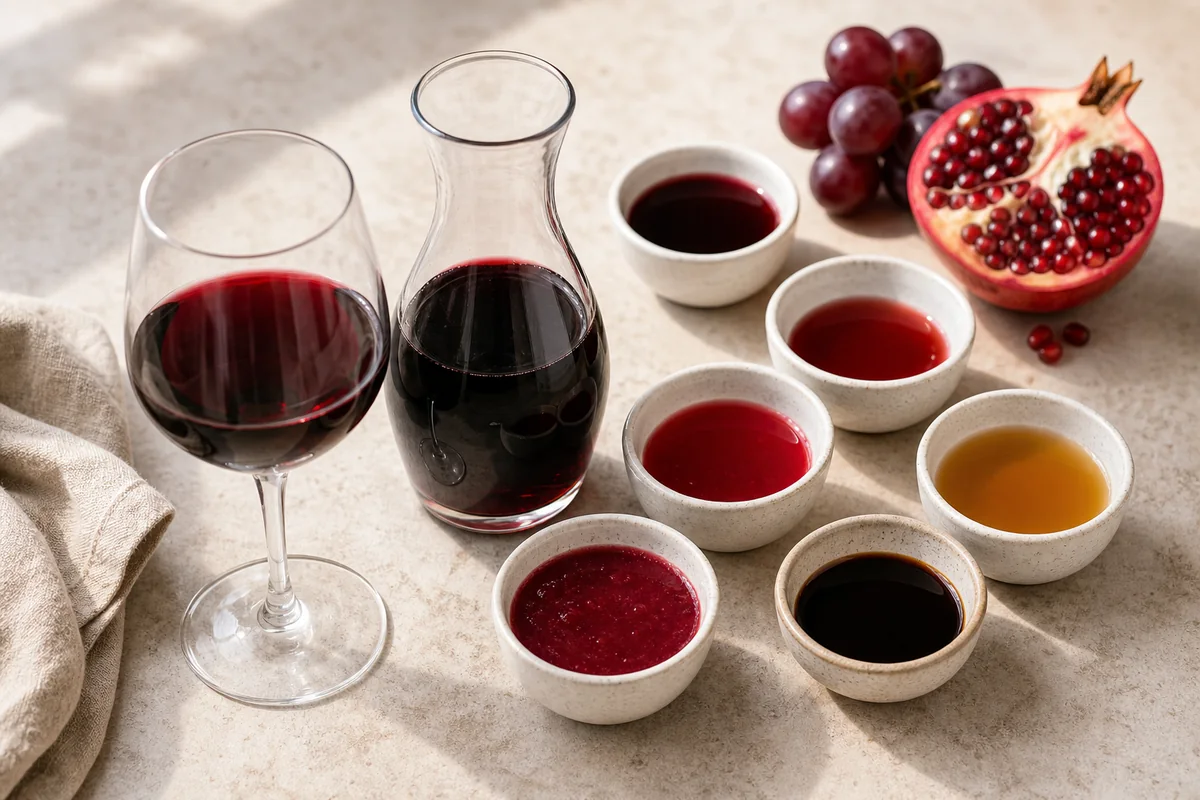
5 Best Non Alcohol Red Wine Substitutes for Any Recipe
Ingredients
Equipment
Method
- Identify why you’re using non-alcohol red wine: color, acidity, fruity sweetness, or deglazing flavor.
- Pick the closest match: use grape juice + vinegar for the most “wine-like” balance or pomegranate juice + balsamic for deeper color and body.
- Use the ratio from the table above; if your substitute is sweeter or thicker, dilute with water/broth and re-check flavor.
- If your recipe needs intensity (sauces, braises, reductions), simmer the substitute 2–5 minutes before adding other ingredients.
- Taste once the sauce heats through, then fine-tune acidity (vinegar/tea) or sweetness (small pinch of sugar/juice).
Notes
- If a recipe relies on tannin-like grip, lean toward hibiscus tea or pomegranate; if it relies on tang, lean toward vinegar-based mixes.
- For baking, reduce overly watery options slightly or accept extra moisture but increase bake time by a few minutes if batter seems loose.
Tried this recipe?
Let us know how it was!
Carrie is a food writer and editor with more than 15 years of experience. She has worked for some of the biggest names in the food industry, including Bon Appétit, Food & Wine, and Martha Stewart Living.
As the Editor in Chief of EpicureDelight, Carrie oversees all of the content on the site. She also manages the team of contributing writers and editors, who help to create delicious recipes, helpful tips, and informative articles that you’ll find on the site.
A native of the Chicago area, Carrie is passionate about all things food. She loves trying new restaurants and experimenting with new recipes in her kitchen. She’s also a graduate of the Culinary Institute of America, so she knows a thing or two about food!



