
That bright, slightly tart pop orange juice adds to a glaze or batter is harder to replace than most people expect. It is doing three jobs at once: adding citrus aroma, contributing sweetness, and delivering acidity that keeps flavors balanced.
The good news is that a solid orange juice substitute is almost always in your pantry. The tricky part is matching the right swap to the right job.
A sweet substitute without enough acidity will make your recipe taste flat, even if the liquid volume is correct.
The best swaps for orange juice match its citrus brightness, sweetness, and acidity. Use tangerine or mandarin juice for the closest flavor. Use apple juice for moisture without citrus. Thin thick swaps like mango puree before measuring, and always taste before baking.
5 Best Orange Juice Substitutes Ranked by Flavor and Acidity
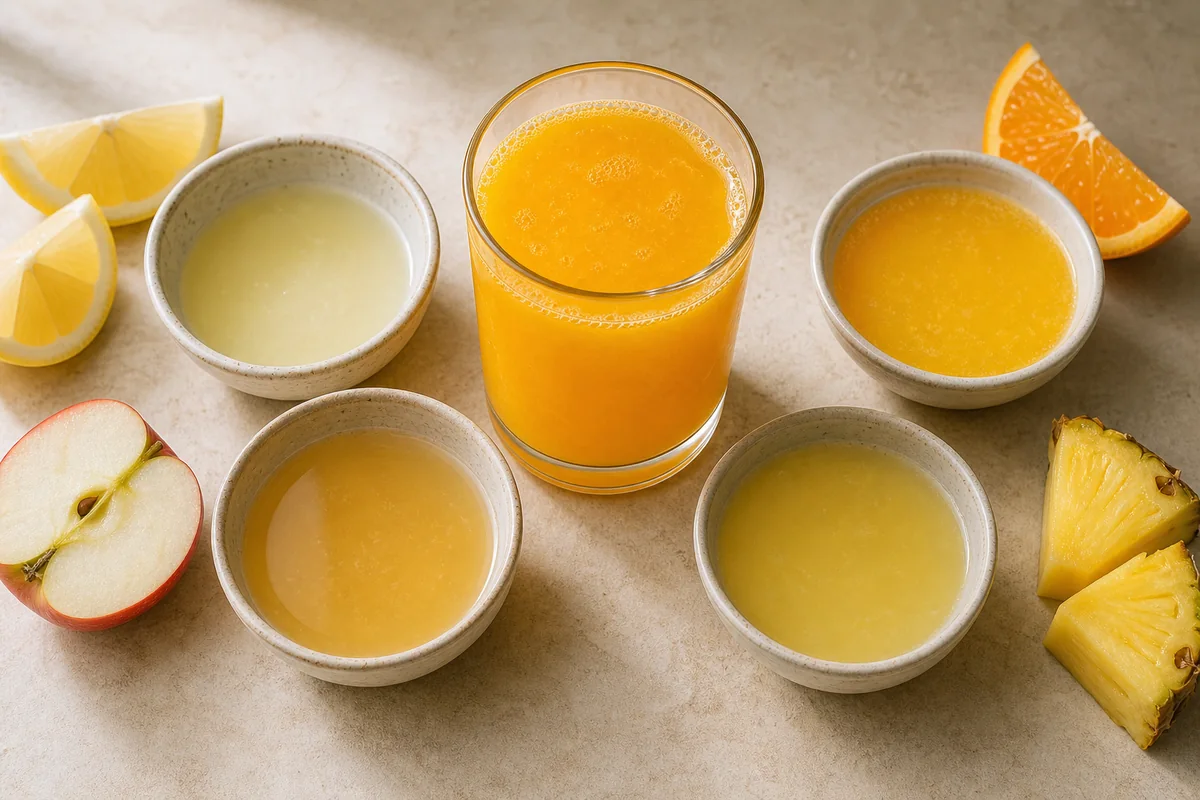
These five swaps are ordered by how close they land to orange juice's flavor profile. The table below gives you a fast overview.
Each section below explains the swap logic and when to skip it.
| # | Substitute | Best For | Ratio | Key Note |
|---|---|---|---|---|
| 1 | Tangerine/Mandarin Juice | Both | 1:1 | Closest citrus brightness |
| 2 | Apple Juice | Both | 1:1 | Add lemon if flat |
| 3 | Pineapple Juice | Both | 1:1 | Tropical tang, watch sweetness |
| 4 | Mango Puree + Water | Baking | ¾:1 | Thin before using |
| 5 | Orange-Flavored Syrup | Baking | ½:1 | Dilute with water first |
1. Tangerine or Mandarin Juice
Tangerine and mandarin juice are the closest citrus match you can find. Both carry the same bright aroma and similar sweetness that orange juice brings to glazes, marinades, and baked goods.
The swap is straightforward in most cases. You can learn more about orange juice flavor profiles to understand exactly what notes you are trying to match.
- Ratio: 1:1 in drinks, glazes, quick breads, and most baking recipes
- Flavor note: Mandarin can run slightly less tart than orange, so the result may taste a touch sweeter
- Aroma: Nearly identical citrus top notes; most people cannot tell the difference in a finished bake
- Adjustment: If your recipe needs sharp tartness, add 1 teaspoon lemon juice per ¼ cup of tangerine juice
Skip if: your recipe is built around a specific tart note, like a sharp curd or a precision-balanced glaze where the tang is the star.
2. Apple Juice
Apple juice is the most common pantry swap, and it works well when you need moisture and sweetness more than citrus identity. It is neutral enough to let other flavors lead, which makes it good for muffins, quick breads, and fruit-forward cakes.
The main thing to watch is acidity. Apple juice sits lower on the acidity scale than orange juice, so baked goods can taste slightly flat if you do not adjust.
If you need ideas for when apple juice itself runs short, these fruit-forward swap options are worth a look.
- Ratio: 1:1 in most recipes
- Acidity fix: Add 1 teaspoon fresh lemon juice per ½ cup apple juice if the mix tastes flat
- Sweetness: Apple juice is naturally sweet; reduce added sugar by 1 teaspoon per ¼ cup if your batter is already sweet
Skip if: orange aroma is the main event. Apple juice will keep the recipe moist, but the citrus identity disappears.
3. Pineapple Juice
Pineapple juice brings real tang to the swap. It is not citrus, but its acidity level is close enough to orange juice that it holds up in glazes and quick breads without making the recipe taste flat.
The flavor direction shifts tropical, which is fine for muffins, fruit cakes, and marinades. If you ever find yourself needing a backup for pineapple juice too, choosing a backup here is a good next step.
Use unsweetened pineapple juice when you can; sweetened versions push the sugar content up fast.
- Ratio: 1:1 for quick breads, muffins, and fruit-forward glazes
- Sweetness check: If it tastes sweeter than expected, balance with a small pinch of salt in the batter
- Best uses: Ham glazes, carrot cake, fruit muffins, and tropical marinades
- Acidity: Holds closer to orange juice than apple juice does; less lemon adjustment needed
Skip if: you need a clean citrus profile. Pineapple will shift the flavor direction noticeably.
4. Mango Puree + Water
Mango puree is thicker than juice, which is the main thing to manage. Used straight from the can or blender, it can make cakes gummy and glazes heavy.
Thinned properly, it adds a sweet, slightly tropical flavor that works in moisture-forward recipes.
| Use | Ratio | Notes |
|---|---|---|
| Quick breads / muffins | ¾ cup puree + ¼ cup water per 1 cup OJ | Thin until it pours like juice; do not skip the water step |
| Glazes | ½ cup puree + ½ cup water per 1 cup OJ | Thinner mix prevents a sticky, overly dense glaze |
| Smoothies / drinks | ¾ cup puree + ¼ cup water per 1 cup OJ | Blend well; mango adds body, which works well here |
The texture check is simple: if it does not flow off a spoon like juice, add water in 1 tablespoon increments until it does. Mango has almost no acidity compared to orange juice, so add a few drops of lemon if the recipe depends on tartness.
Skip if: your recipe needs sharp citrus acidity or a low-fat liquid. Mango puree adds richness that not every recipe wants.
5. Orange-Flavored Syrup
Orange syrup is a real solution in a pinch, but it needs dilution before it goes into anything. Used at full strength, it makes batters taste like candy and can cause faster browning in the oven due to the higher sugar content.
If you want to understand how Japanese pantry swaps handle sweet-to-savory balance, the same logic applies here: control the sugar first, then build flavor.
Orange Juice vs. Orange Syrup
Works for: drinks, glazes, quick sauces where you control the dilution
Skip if: your recipe is already sweet, or has frosting, sugared topping, or a heavily sweetened batter
- Ratio: ½ cup syrup + ½ cup water to replace 1 cup orange juice
- Sweetness fix: Reduce any other added sugar in the recipe by 1-2 teaspoon after diluting
- Browning watch: Check baked goods 5 minutes early; the extra sugar speeds up crust color
- Best uses: Cocktails, quick glazes, salad dressings where you dilute to taste
Skip if: your recipe is already sweet. The syrup will push it over the edge even when diluted.
Making Orange Juice Substitutes Work
Getting the swap right is less about finding a perfect flavor match and more about understanding what orange juice is doing in your specific recipe. A glaze needs acidity and brightness.
A muffin needs moisture and a touch of sweetness. Adjust accordingly.
Understanding storing citrus juice properly also matters if you are working with fresh-squeezed backups, because acidity degrades faster than most people realize.
- Acidity first: If your substitute is low-acid (apple juice, mango puree), add 1 teaspoon lemon juice per ½ cup to keep the balance right and prevent a flat finish
- Sweetness control: Taste the batter or glaze before baking; sweet swaps like syrup or mango puree can push sugar levels up and cause over-browning
- Thickness matters: Thin any puree or syrup until it flows like water before measuring; adding a thick swap at the stated volume will throw off batter consistency
Frequently Asked Questions
Tangerine or mandarin juice is the closest match at a 1:1 ratio. It keeps the citrus aroma and similar acidity, so most baked goods taste nearly identical to the original.
Yes, use it 1:1. Add 1 teaspoon of lemon juice per ½ cup if the batter tastes flat, since apple juice is lower in acidity than orange juice.
Mix ½ cup syrup with ½ cup water to replace 1 cup of orange juice. Also reduce any other sugar in the recipe by 1-2 tsp.
Yes, use it 1:1. The acidity level is close to orange juice, so the glaze stays balanced. Expect a mild tropical shift in flavor.
Combine lemon juice, a pinch of sugar, water, and orange zest if available. The zest is what adds orange aroma; without it, the mix reads as lemon, not orange.
5 Best Orange Juice Substitutes (Pantry Swaps)
Ingredients
Equipment
Method
- Identify what orange juice is doing in your recipe: flavor (citrus), sweetness, or acidity (baking lift and balance).
- Choose the closest match from the list: go 1:1 for tangerine/mandarin and apple juice, or use the adjusted ratios for mango puree and syrup.
- If your substitute is thicker or sweeter, thin with water or dilute before measuring so the batter or glaze texture stays right.
- Taste after mixing: if it feels flat, add a few drops of lemon; if it feels too sharp, add a pinch of sugar.
- Use the swap immediately for drinks, or mix into batter/glaze right before baking to preserve the brightness.
Notes
- For baked goods, acidity can matter—if the substitute is low-acid (like apple juice), add a small squeeze of lemon.
- Avoid flavored syrups without dilution; they can overpower and make glazes sticky.
Tried this recipe?
Let us know how it was!
Carrie is a food writer and editor with more than 15 years of experience. She has worked for some of the biggest names in the food industry, including Bon Appétit, Food & Wine, and Martha Stewart Living.
As the Editor in Chief of EpicureDelight, Carrie oversees all of the content on the site. She also manages the team of contributing writers and editors, who help to create delicious recipes, helpful tips, and informative articles that you’ll find on the site.
A native of the Chicago area, Carrie is passionate about all things food. She loves trying new restaurants and experimenting with new recipes in her kitchen. She’s also a graduate of the Culinary Institute of America, so she knows a thing or two about food!



