
Panela cheese has a particular personality: mild, slightly salty, and firm enough to hold a slice without falling apart. That firmness is exactly what makes finding a panela cheese substitute tricky.
Whether you need it to brown in a skillet, crumble over black beans, or melt into a quesadilla changes everything about which swap will work.
The good news is that several cheeses share enough of panela's behavior to stand in without wrecking the dish. Knowing what your recipe actually asks the cheese to *do* is the only decision you need to make first.
Queso fresco is the closest overall swap for panela, matching its mild salt and firm bite. Feta crumbles just as well but runs saltier. Halloumi is best for browning and grilling. Cotija adds sharper punch and needs a smaller amount. Mozzarella covers melting applications well.
5 Best Panela Cheese Substitutes Ranked by Texture
| # | Substitute | Best For | Ratio | Key Note |
|---|---|---|---|---|
| 1 | Queso Fresco | Both | 1:1 | Closest bite, mild salt |
| 2 | Feta | Crumbling | 1:1 | Rinse to cut saltiness |
| 3 | Halloumi | Grilling | 1:1 | Browns without full melt |
| 4 | Cotija | Crumbling | ¾:1 | Sharper, drier, use less |
| 5 | Mozzarella | Melting | ¾:1 | Melts more than panela |
These five are ranked by how closely they replicate panela's natural behavior. Items 1 and 2 win on crumbling and cold applications.
Items 3 and 4 are better for heat. Item 5 is specifically for dishes where melt is the goal, not firmness.
1. Queso Fresco
Queso fresco is the closest match to panela in everyday use. It is mild, holds a light saltiness, and has the same crumbly-but-sliceable texture that panela brings to skillet dishes and filled tortillas. For a deeper look at this mild Mexican cheese, you can compare flavor profiles before committing to the swap.
- Browning: Pat the block dry before slicing; moisture causes steaming, not browning
- Filling use: Crumble directly in; ratio is 1:1 with no salt adjustment needed
- Texture note: Low-moisture block-style queso fresco holds up better than the wet crumbled bags
Skip if you need a cheese that melts into a smooth pull. Queso fresco stays firm and crumbly even when warm.
2. Feta
Feta matches panela's crumble texture almost exactly, but it runs noticeably saltier and carries a tangy edge that panela lacks. It is a solid panela cheese alternative for salads, roasted vegetable dishes, and stuffed peppers.
If you want to understand how feta compares to other crumbly cheeses before swapping, this soft cheese breakdown covers the key differences.
- Salt fix: Rinse feta briefly under cold water and pat dry to drop sodium by roughly 20%
- Crumble timing: Add it at the end of cooking, not at the start, so it doesn't dissolve
- Best application: Fillings, grain bowls, and any cold topping where panela would crumble on top
- Moisture handling: Buy the block, not pre-crumbled, and pat it dry before use
Skip if your filling is supposed to be mild and delicate. Feta's tang will stand out in dishes built around subtle flavor.
3. Halloumi
Halloumi is a firm, high-heat cheese that slices cleanly and holds its shape under a hot grill or cast-iron pan. It is the best choice when your recipe specifically calls for browned or seared panela slices.
For timing and storage before you cook, storing this grilling cheese properly makes a real difference in texture.
Halloumi
Works for: grilling, searing in cast iron, skewer-style applications, and any dish where you want firm, browned slices with a slight chew
Skip if: your recipe needs a cheese that melts evenly into the dish-halloumi resists full melting and stays rubbery if overcooked
- Heat limit: Pull halloumi off the pan within 2 minutes per side; beyond that it toughens
- Saltiness: Halloumi can be quite salty straight from the package-rinse and pat dry before cooking
- Slice thickness: Cut at ½ inch for best browning without drying through to the center
4. Cotija
Cotija is sharper, drier, and more intense than panela. Think of it as the high-salt, low-moisture version.
Use ¾ of the panela amount when swapping, or blend cotija with a small portion of a milder cheese to even out the sharpness. If you are already working with brined cheeses in the same dish, this salty cheese comparison helps you balance the two.
| Use | Ratio | Notes |
|---|---|---|
| Topping (tacos, elote) | ¾:1 | Cotija alone; intensity works well on strong flavors |
| Filled dishes (enchiladas) | ½:1 + mild cheese | Blend with queso fresco to soften punch |
| Cold crumbles (salads) | ¾:1 | Rinse lightly if dish has other salty elements |
- Moisture: Cotija won't contribute liquid to the dish-account for this in wet fillings
- Blending tip: A 50/50 cotija-to-ricotta mix softens the edge for mild casseroles
Skip if you need a soft, creamy mouthfeel. Cotija is firmly in the dry, crumbly camp.
5. Mozzarella (Low-Moisture)
Low-moisture mozzarella is the right pick when your recipe prioritizes melting over texture. It won't behave like panela in cold applications, but inside a quesadilla or layered bake, keeping this melting cheese fresh and dry before use keeps it from going rubbery.
It melts smoothly and evenly, which is something panela never really does.
- Best use: Quesadillas, enchiladas, stuffed peppers, or any baked dish that needs a gooey pull
- Ratio: Use ¾ of the panela amount; mozzarella spreads more so you need less volume
- Texture warning: Do not use fresh mozzarella packed in water-it releases too much liquid under heat
- Flavor gap: Mozzarella is blander than panela; add a pinch of salt to the dish if the swap feels flat
Skip if you want a firm, sliceable cheese that holds shape after cooking. Mozzarella will soften and spread under heat, not stay in neat slices.
Making the Substitute Work (Quick Ratios & Heat Tips)
The core rule is simple: choose your substitute based on what heat will do to it, not just flavor. A crumbling cheese will steam rather than brown if it is too wet.
A melting cheese will pool rather than slice. Pat any fresh or brined substitute dry with paper towels before it goes into the pan.
If you are working with cotija and the dish already has cured or pickled elements, the briny cheese comparison can help you decide how much salt to pull back.
- Wet cheeses (feta, fresh queso fresco): Rinse briefly, pat thoroughly dry, and let them rest uncovered on a towel for 10 minutes before cooking
- Grilling cheeses (halloumi): Use a very hot, dry pan with no oil added; oil causes sticking and prevents a clean sear
- Melt-priority swaps (mozzarella): Grate instead of slice for faster, more even melt distribution in baked dishes
Frequently Asked Questions
Yes, queso fresco works well at a 1:1 ratio. It won't melt into a smooth pull, but it softens slightly and holds a mild, salty flavor that reads very close to panela.
Halloumi is the best pick. It holds its shape under direct heat and develops a golden crust without melting, which is exactly the behavior panela is known for on a grill.
Rinse the feta block briefly under cold water and pat it fully dry before crumbling. This reduces sodium noticeably without softening the texture too much.
No. Low-moisture mozzarella is a melt-forward cheese. It will not crumble cleanly and will turn soft under heat. Use queso fresco or feta for crumbling applications instead.
Avoid mozzarella and cream cheese for firm slicing. Both soften quickly under heat. Halloumi or a dry block of queso fresco will hold a clean slice far better.
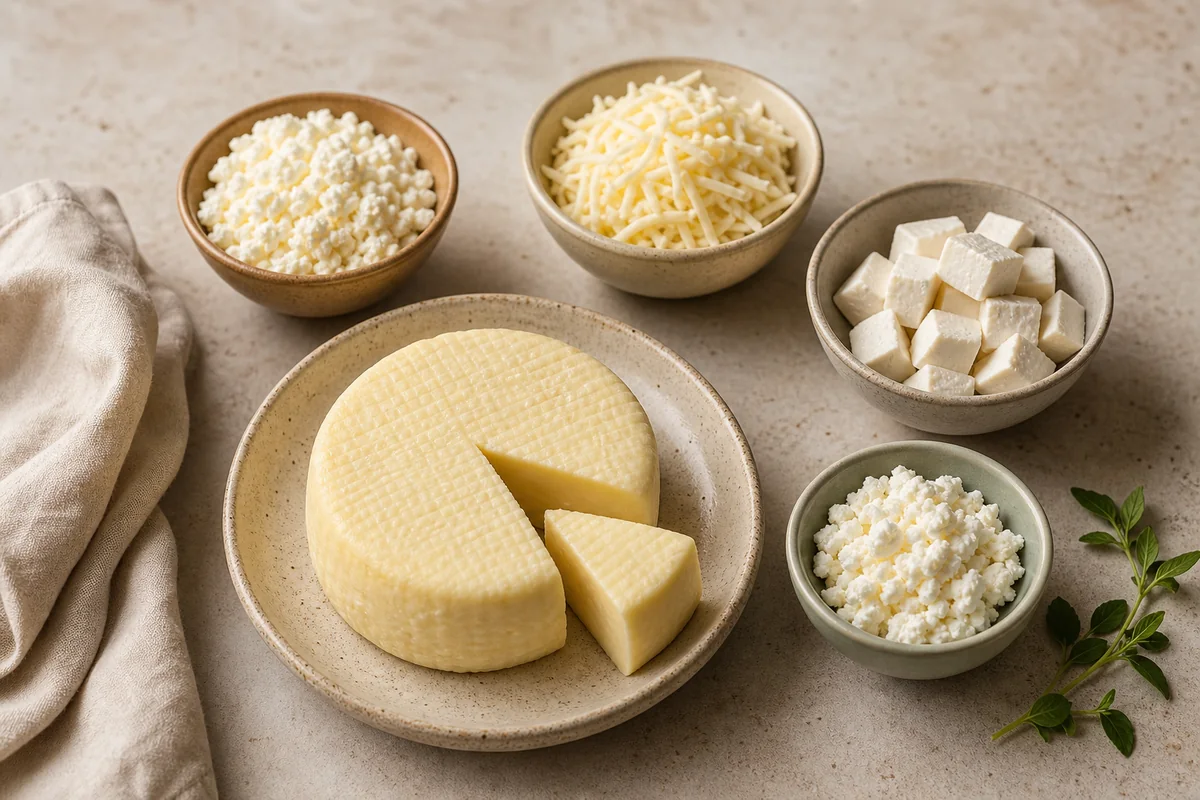
5 Best Panela Cheese Substitutes (Ranked)
Ingredients
Method
- Identify how you’re using panela (crumble, slice for grilling, or melt in hot dishes).
- Choose the closest substitute from the ranked list based on texture behavior (crumbles vs. browns vs. melts).
- Measure by the listed ratio (e.g., ¾:1 means use ¾ of the panela amount).
- If the substitute is wetter (feta or fresh queso), drain/pat dry so it browns instead of steaming.
- Do a quick taste-adjust: add a pinch of salt only if the substitute is unsalted/mild, or counter saltiness with a splash of dairy in fillings.
Notes
- Panela is mild and firm; the best substitute matches how it behaves under heat (browning vs. melting vs. crumbling).
- For grilling or browning: prioritize firm/sliceable cheeses and pat dry.
Tried this recipe?
Let us know how it was!
Carrie is a food writer and editor with more than 15 years of experience. She has worked for some of the biggest names in the food industry, including Bon Appétit, Food & Wine, and Martha Stewart Living.
As the Editor in Chief of EpicureDelight, Carrie oversees all of the content on the site. She also manages the team of contributing writers and editors, who help to create delicious recipes, helpful tips, and informative articles that you’ll find on the site.
A native of the Chicago area, Carrie is passionate about all things food. She loves trying new restaurants and experimenting with new recipes in her kitchen. She’s also a graduate of the Culinary Institute of America, so she knows a thing or two about food!



