
Parsnips have a quiet personality in the kitchen. They're sweet but not loud, earthy but not sharp, and they go soft in the oven in a way that feels almost custard-like at the edges.
Finding a good parsnip substitute means matching that balance, not just grabbing the nearest root vegetable and hoping for the best.
This list covers five swaps that hold up in roasting, mashing, and baking. Each one includes ratio guidance and a "skip if" note so you're not guessing mid-recipe.
The best parsnip substitutes are carrots, rutabaga, turnips, celeriac, and sweet potato. Most swap 1:1 by weight. Carrots are the easiest everyday pick. Celeriac is closest for creamy mash. Rutabaga holds shape best for sheet-pan roasting. Sweet potato works but skews sweeter, so use a bit less.
5 Best Parsnip Alternatives (Swaps That Hold Up)
Every option below works at a 1:1 ratio except sweet potato, which runs sweeter and softer. Use ¾ the called-for amount of sweet potato, then taste and adjust from there.
| # | Substitute | Best For | Ratio | Key Note |
|---|---|---|---|---|
| 1 | Carrots | Both | 1:1 | Mild sweet, roast-tender |
| 2 | Rutabaga | Both | 1:1 | Earthy, needs longer roasting |
| 3 | Turnips | Both | 1:1 | Milder, season well |
| 4 | Celeriac | Both | 1:1 | Creamy mash, celery aroma |
| 5 | Sweet Potato | Both | ¾:1 | Sweeter, reduce amount |
1. Carrots
Carrots are the easiest parsnip swap most cooks already have. They bring mild sweetness and a similarly tender, slightly caramelized finish when roasted.
For a good comparison of orange root options, you'll find carrots consistently outperform in everyday roasting situations. They mash smoothly too, though the flavor is a touch simpler than parsnip.
- Best dish type: Roasting and mashing both work well at a 1:1 swap
- Cut size: Match the cut to parsnip chunks, roughly 1-inch pieces for even browning
- Seasoning tip: Add a pinch of white pepper to bring a little edge that carrots lack
- Doneness cue: Edges should be lightly browned and a fork slides in without resistance
Skip if: your dish depends on that peppery, mildly nutty backbone parsnips carry-carrots are sweeter and won't recreate that bite.
2. Rutabaga
Rutabaga sits closer to parsnip on the flavor scale than most people expect. It's earthy, lightly sweet, and holds its shape through long roasting without turning mushy.
When swapping in a firmer root, rutabaga is the pick that keeps your sheet-pan honest.
Rutabaga vs. Parsnip
Works for: sheet-pan roasting, chunky soups, root vegetable mashes where texture matters
Skip if: you need fast cooking-rutabaga takes 5-10 minutes longer to fully soften than parsnip
- Roasting: Cut thinner than you would parsnip, around ½-inch slabs, to hit the same doneness time
- Mashing: Simmer until very soft before mashing-it needs more time than parsnip to go fully smooth
- Seasoning: A knob of butter and a little thyme brings out its natural sweetness
- Timing: Add 8-10 extra minutes at 400°F compared to parsnip for roasting
3. Turnips
Turnips are a reasonable parsnip stand-in, but they play it neutral. Their flavor is milder, slightly bitter when raw, and they don't carry the same warm sweetness that parsnip does.
The pale, starchy flesh softens well when cooked through, which helps close the gap in mashed preparations.
Season them harder than you would parsnip. A bit of butter, salt, and even a touch of honey or maple can bring them closer to the sweet-earthy zone.
They work best when the parsnip is not the star of a dish.
- Best use: Mashed sides and soups where parsnip is a supporting flavor
- Prep tip: Peel thoroughly-the skin can add bitterness you don't want
- Seasoning fix: Add a pinch of nutmeg and a teaspoon of butter per cup to deepen flavor
- Doneness cue: Fully tender with no resistance to a fork before mashing or plating
Skip if: you want parsnip's distinctive sweet-earthy depth-turnip will read noticeably more neutral in flavor.
4. Celery Root (Celeriac)
Celeriac is one of the best parsnip swaps for mashed and baked dishes. It goes creamy under the masher and has a slightly nutty, earthy flavor that sits close to parsnip's register.
If you're already thinking about choosing a different earthy root, celeriac is worth putting at the top of that list.
- Best use: Mashing, gratins, and baked casseroles where texture is the priority
- Aroma management: Pair with thyme, parsley, or a bay leaf during simmering to soften the celery note
- Roasting: It browns more slowly-roast at 425°F and give it an extra 5 minutes
- Serving pairing: Works alongside roast chicken, white fish, or leek-based dishes
Skip if: a celery-forward aroma will clash with your recipe-celeriac needs balancing herbs to stay background flavor.
5. Sweet Potato
Sweet potato leans sweeter and softer than parsnip, which makes it a solid pick for roasted side dishes and bakes. If the dish already has savory weight from herbs or stock, orange-fleshed swaps like this one can slot in without pulling the whole flavor savory-sweet.
- Ratio: Use ¾ the amount called for in the recipe, then taste before adding more
- Seasoning balance: Add smoked paprika, black pepper, or a splash of apple cider vinegar to anchor savory flavor
- In baking: Reduce any added sugar by 1 teaspoon per serving to avoid over-sweetening
- Doneness cue: Edges caramelize fast-check at 20 minutes when roasting at 400°F
Skip if: your recipe is savory with no sweet element-sweet potato will skew the flavor more than parsnip's natural sweetness does.
Making the Swap Work (Roast, Mash, or Bake)
Choosing the right swap depends on what the parsnip is doing in the dish. For roasting, you want something that caramelizes at the edges and goes tender inside-carrots and rutabaga are the strongest picks there.
For mashed sides, celeriac and turnip both break down smoothly. For bakes and casseroles, any of the five options can work with minor seasoning adjustments.
A useful reference when tuning flavor on roasted roots is understanding how mild sweetness behaves in high heat-it guides seasoning decisions across all these swaps.
- Cut size matters: Smaller pieces (½ to 1 inch) cook more evenly and caramelize better on a hot sheet pan
- Season at two points: Toss with oil and salt before roasting, then taste and re-season right after cooking
- Doneness check: The goal is soft inside and browned outside-a fork should slide in without any push-back
Frequently Asked Questions
Carrots are the easiest pick, and rutabaga is the closest in earthy-sweet flavor. Both swap 1:1 by weight and caramelize well on a hot sheet pan.
Yes, but season more generously. Turnips mash smoothly when fully cooked, though they taste milder and may need butter, salt, and a pinch of nutmeg to compensate.
Use only ¾ the amount and add black pepper, smoked paprika, or a splash of vinegar. These offset the extra sweetness without changing the dish structure.
Yes, it's one of the best options for baked and casserole dishes. Its creamy texture holds up well, though pairing with thyme or parsley keeps the celery aroma in check.
Rutabaga needs 8-10 extra minutes at roasting temperatures. Carrots and turnips are close to parsnip timing. Sweet potato cooks faster and can over-caramelize quickly.
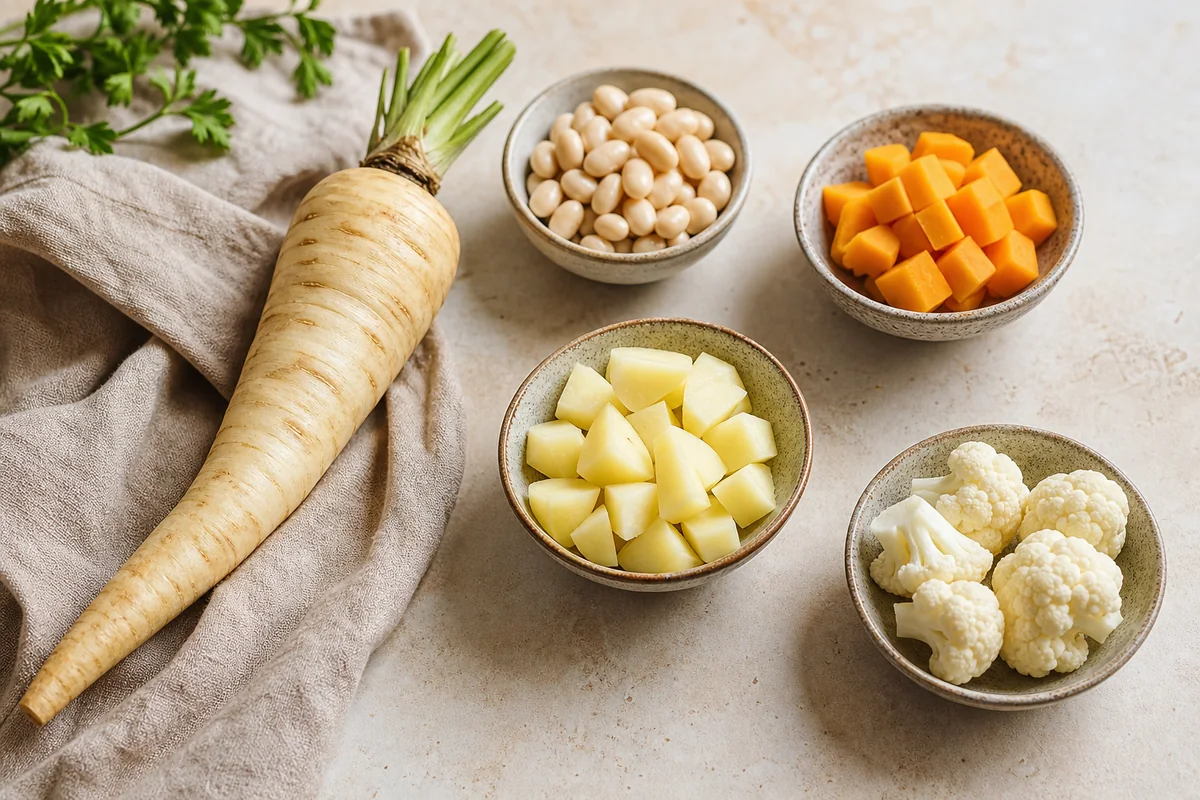
5 Best Parsnip Substitutes (Tested Swaps)
Ingredients
Equipment
Method
- Choose your substitute based on the dish goal: roasting browning, creamy mashing, or baked casseroles.
- Swap by the listed ratio; if the substitute is sweeter (sweet potato), reduce the amount and adjust seasoning.
- Match texture prep: cut root vegetables smaller for faster tenderness and more even caramelization.
- If your substitute is stronger in aroma (celeriac), balance with herbs, butter, or a splash of acid (lemon or vinegar).
- Taste at the end and fine-tune: add salt for depth, black pepper for bite, and a pinch of nutmeg for “parsnip-like” warmth.
Notes
- For roasting: spread in one layer and roast until browned edges, not just tender.
- For mashing: simmer until very soft for the closest creamy parsnip texture.
Tried this recipe?
Let us know how it was!
Carrie is a food writer and editor with more than 15 years of experience. She has worked for some of the biggest names in the food industry, including Bon Appétit, Food & Wine, and Martha Stewart Living.
As the Editor in Chief of EpicureDelight, Carrie oversees all of the content on the site. She also manages the team of contributing writers and editors, who help to create delicious recipes, helpful tips, and informative articles that you’ll find on the site.
A native of the Chicago area, Carrie is passionate about all things food. She loves trying new restaurants and experimenting with new recipes in her kitchen. She’s also a graduate of the Culinary Institute of America, so she knows a thing or two about food!



