
Rutabaga has that particular quality most root vegetables don't: earthy and a little sweet at once, with enough starch to anchor a mash or hold up in a long braise. When your grocery store is out, or your recipe didn't specify amounts and you grabbed the wrong thing, you need a rutabaga substitute in cooking that matches the texture first and then the flavor.
Most swaps perform best after heat. Raw rutabaga has a firm, almost waxy crunch that few vegetables replicate well, so plan around cooked results.
The good news is five vegetables get you close enough that most people won't notice. Each one has a ratio and a target use case below.
Turnip and potatoes are the strongest 1:1 swaps for most cooked rutabaga dishes. Parsnips add sweetness but hold shape well when roasted. Carrots and butternut squash work at a ¾:1 ratio to keep sweetness in check. Season more aggressively with any swap.
5 Best Rutabaga Substitutes Ranked by Cooking Style
These five substitutes cover the most common rutabaga uses: mash, roast, and soup. Ratios here are by weight or volume after peeling and cubing.
Use 1:1 when the vegetable is dense and starchy, and drop to ¾:1 when it runs sweet or soft.
| # | Substitute | Best For | Ratio | Key Note |
|---|---|---|---|---|
| 1 | Turnip | Both | 1:1 | Closest brassica flavor |
| 2 | Potatoes | Both | 1:1 | Best for smooth mash |
| 3 | Parsnips | Both | 1:1 | Sweet, holds shape well |
| 4 | Carrots | Both | ¾:1 | Reduce to limit sweetness |
| 5 | Butternut Squash | Both | ¾:1 | Silky for blended soups |
If you're weighing whether to reach for picking sweet potato instead, know that it works but needs the most seasoning correction of the group.
1. Turnip
Turnip is the closest relative rutabaga has in the vegetable world. Both are brassicas, both have that mild sulfurous earthiness, and both turn soft and mellow with enough heat.
Raw turnip bites sharper than rutabaga, but cook it until fully tender and that edge fades considerably.
Use a 1:1 ratio by weight. For roasting, parboil turnip cubes for 8-10 minutes first so they finish evenly in the oven without the outside burning before the inside softens.
You can read more about turnip flavor profiles before committing if you're unsure.
- Mash: Cook until very soft, then mash with butter and salt. Add a small pinch of sugar if sharpness lingers.
- Roast: Parboil 8-10 minutes, then roast at 400°F until golden at the edges.
- Soup: Add early so it softens fully; it blends smoothly and won't dominate broth.
Skip if: You need a mild-sweet flavor profile. Turnip's edge will stand out unless it's cooked very soft and seasoned with a little sweetener.
2. Potatoes
Potatoes don't have rutabaga's brassica character, but they make up for it with starch. For storing and using potatoes efficiently, Yukon Golds are the best pick here: their natural butteryness bridges toward rutabaga's richness better than russets, which can turn gluey if over-mashed.
Use a 1:1 ratio and add butter or warm broth gradually to match rutabaga's density. Don't rush the liquid in, or the mash will thin out before it sets properly.
- Mash: Boil until fully tender, drain well, then mash with butter added in stages.
- Soup: Cube and simmer until soft; blend for a thick, neutral base that carries seasoning well.
- Roast: Works, but potatoes don't caramelize the same way. Add a little olive oil and high heat (425°F) to compensate.
Skip if: Your recipe depends on rutabaga's brassica earthiness. Potatoes will taste milder unless you add smoked paprika or extra black pepper.
3. Parsnips
Parsnips land between rutabaga and carrot in flavor. They're sweet and nutty, but they still hold a hearty root character that keeps savory dishes grounded.
The question is whether that sweetness works for your recipe. If you're curious about parsnip flavor notes before you decide, the short version is: cook them hot and fast for caramelized edges, low and slow for a silkier result.
Parsnips vs. Rutabaga
Works for: roasted cubes, purées, vegetable stews where some sweetness fits
Skip if: the dish is very savory and you want to avoid pushing flavor toward sweet
- Ratio: 1:1 by cooked volume or weight.
- Seasoning fix: Pair with thyme, black pepper, garlic, or a small splash of white wine vinegar to sharpen the flavor.
- Roast method: Cut into even 1-inch cubes; roast at 400°F for 25-30 minutes, flipping once halfway.
- Purée: Blend with a small amount of broth and a knob of butter for a smooth side dish.
Skip if: You're avoiding sweetness entirely. Parsnips will push the dish in a noticeably sweet direction even with savory seasoning.
4. Carrots
Carrots are the most available fallback, but they need the most managing. They're softer and sweeter than rutabaga, and at a straight 1:1 swap they can tip a savory dish noticeably sweet.
Use a ¾:1 ratio, and when you're choosing a sweeter root option, add extra salt, black pepper, and a pinch of smoked paprika to keep the flavor savory.
Carrots as a Rutabaga Swap
Works for: thick soups, roasted wedges with strong aromatics, blended purees where sweetness is welcome
Skip if: rutabaga is the dominant flavor in the recipe and the dish needs earthiness to feel complete
- Ratio: Use ¾ the amount of carrot called for rutabaga, by weight.
- Soup: Add thyme, bay leaf, and a small amount of smoked paprika to the broth.
- Roast: Cut into larger wedges so they don't collapse; roast at 400°F for 20-25 minutes.
- Flavor balance: A few drops of apple cider vinegar at serving pulls sweetness back into line.
Skip if: The recipe is rutabaga-forward with minimal seasoning. Carrots will taste unmistakably different.
5. Butternut Squash
Butternut squash doesn't pretend to be rutabaga, but it does something useful: it gives blended soups and purées a silky, thick body that holds seasoning well. For dishes where you're already leaning on herbs and aromatics, swapping in squash works without much adjustment.
Use a ¾:1 ratio to prevent the dish from turning dessert-sweet. A splash of lemon juice or white wine vinegar at the end pulls the flavor back toward savory.
- Roast: Peel, cube to 1-inch pieces, toss with olive oil and thyme, roast at 400°F for 25 minutes.
- Blended soup: Simmer until fully soft, then blend with broth and a knob of butter. Finish with black pepper and lemon.
- Gratin: Slice thin, layer with cream and garlic, bake at 375°F for 35-40 minutes until bubbling.
Skip if: You need rutabaga's brassica character. Squash will taste sweeter and softer, which reads as more dessert-like in strongly savory dishes.
Making Rutabaga Substitutes Taste Like the Real Thing
The substitutes above all work, but the gap between "good enough" and "you can't tell" usually comes down to two things: cooking time and seasoning correction. Rutabaga turns mellow when fully tender, so the same standard applies to every swap, especially turnip and celeriac, which can taste sharp or celery-heavy if undercooked.
For earthy root swap ideas that also cover brassica alternatives, the principle is the same: cook past the point where you think they're done, then season. And if you're working with dense root vegetable options, add a touch of butter or broth mid-mash to loosen texture without losing body.
- Cook until fully tender: Most swaps need more time than rutabaga to turn mellow. Test with a knife; if there's any resistance, keep going.
- Balance sweetness early: For carrots, squash, and sweet potatoes, season the cooking water with salt and add acid at the finish. Don't wait until the end to fix a too-sweet result.
- Match texture to method: Mash and soup swaps need to be soft enough to blend or mash smoothly. Roast swaps need even cuts and dry surfaces so they caramelize rather than steam.
Frequently Asked Questions
Turnip is the closest at 1:1, with similar earthiness and starch. Yukon Gold potatoes are the easiest option if you want a guaranteed smooth, creamy mash without any sharpness.
Turnip at 1:1 is the best roasting swap. Parboil it for 8-10 minutes first, then roast at 400°F so it caramelizes without becoming sweet or mushy.
Yes, use carrots at a ¾:1 ratio to keep the broth from turning too sweet. Add smoked paprika, thyme, and extra salt to keep the flavor savory.
For too sweet, add a small splash of apple cider vinegar or lemon juice and more salt. For too sharp, cook longer and add a small pinch of sugar or extra butter.
Cook the substitute until a knife slides in with zero resistance, then add butter or warm broth gradually while mashing. This prevents a gluey or watery result.
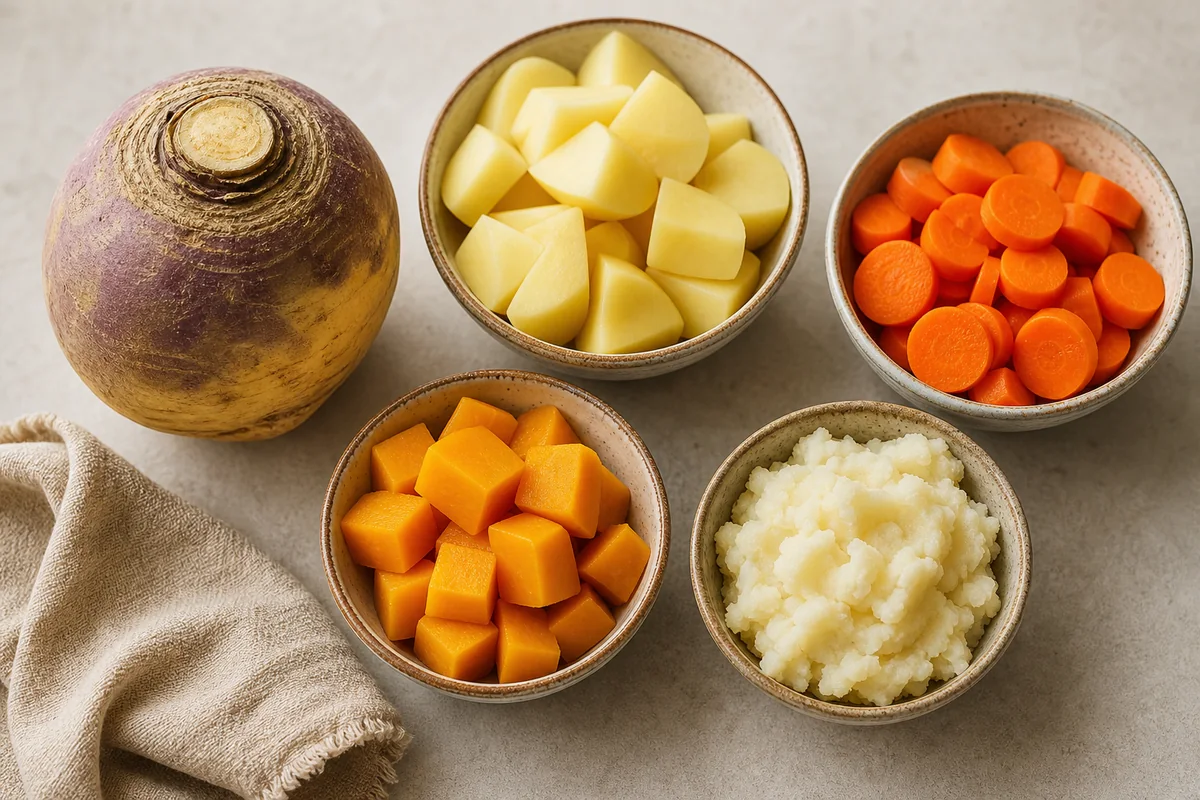
5 Best Rutabaga Substitutes (with Ratios)
Ingredients
Method
- Choose the substitute based on your cooking goal (mash/soup vs roast) and pick the closest texture listed in the table.
- Use the ratio: substitute 1:1 when the veg is similar in density, or ¾:1 when it’s sweeter/softer than rutabaga.
- Prep for the method: cube for roasting/soups, or boil until very tender for smooth mashes.
- Adjust after cooking—add salt and butter/broth to deepen flavor, or a small pinch of sugar/acid to correct sharpness or sweetness.
- Taste and fine-tune texture: thin soups with broth; mash with a splash more fat or liquid for the right thickness.
Notes
- Ratios assume your recipe measures rutabaga by weight/volume; for very different textures, cook until tender then mash/blend to match.
Tried this recipe?
Let us know how it was!
Carrie is a food writer and editor with more than 15 years of experience. She has worked for some of the biggest names in the food industry, including Bon Appétit, Food & Wine, and Martha Stewart Living.
As the Editor in Chief of EpicureDelight, Carrie oversees all of the content on the site. She also manages the team of contributing writers and editors, who help to create delicious recipes, helpful tips, and informative articles that you’ll find on the site.
A native of the Chicago area, Carrie is passionate about all things food. She loves trying new restaurants and experimenting with new recipes in her kitchen. She’s also a graduate of the Culinary Institute of America, so she knows a thing or two about food!



