Pequin pepper bites fast and sharp, with a quick citrusy sting that other dried chiles rarely copy exactly. The pequin pepper substitute you choose should match two things: the heat intensity and the form you're working with-whole or crushed for texture, ground for smooth heat.
For baking, start about 20% lower than you would in a savory dish, since fine-ground chiles can turn bitter under oven heat.
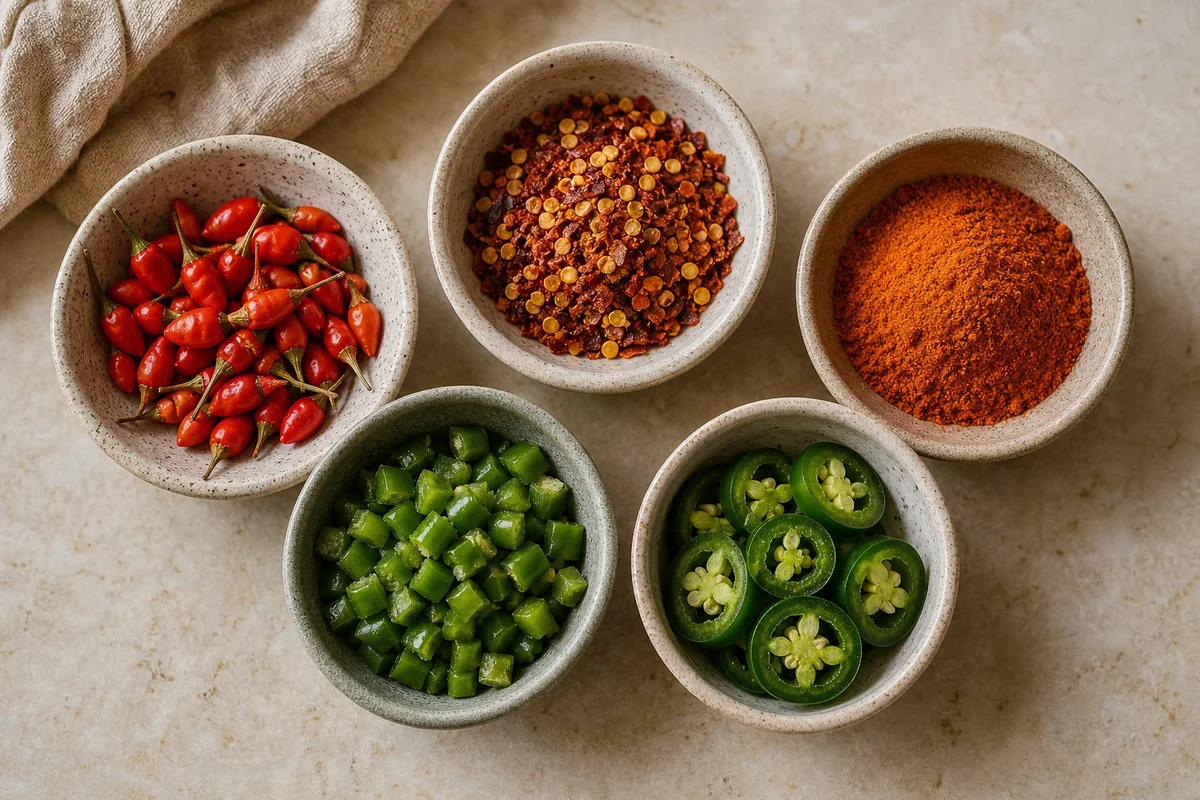
For the closest match, use dried arbol chile (crushed) at a 1:1 ratio. Cayenne pepper works well at ¾:1 when you want reliable heat. For smoky depth, try smoked paprika plus a pinch of cayenne. In baking, always start lower and taste before adding more.
5 Best Pequin Pepper Swaps Ranked by Heat and Flavor
The table below maps each substitute to its heat feel, best form, and ratio. Use it to find your match before reading the sections below.
| # | Substitute | Best For | Ratio | Key Note |
|---|---|---|---|---|
| 1 | Dried Arbol Chile | Closest Match | 1:1 | Sharp, peppery bite |
| 2 | Cayenne Pepper | Both | ¾:1 | Hotter, no texture |
| 3 | Red Pepper Flakes | Savory | 1:1 | Adds crunch, uneven heat |
| 4 | Aleppo-Style Flakes | Milder | 1:1 | Fruity, earthy, gentle |
| 5 | Smoked Paprika + Cayenne | Smoky Depth | 1:1 mix | Smoke mutes sharpness |
Paste-form chile products are not listed here deliberately. They measure inconsistently against dry spices and can waterlog baked goods.
1. Dried Arbol Chile
Crushed arbol chile is the strongest flavor match pequin has. It carries that same sharp, peppery edge with a heat that builds fast but doesn't linger with smoke or sweetness.
Understanding the tangy dried profile of pequin helps you see why arbol lands so close when both are crushed to a similar coarseness.
- Ratio: Use 1:1 for sauces, chili, and marinades; drop to ¾:1 in baked spice mixes
- Texture: Crush to a similar size as your pequin for the most accurate burn distribution
- Bitterness watch: Arbol can turn sharp-bitter in long braises; add it in the last 20 minutes instead
Arbol is often hotter than people expect, especially from a fresh bag.
Dried Arbol Chile
Works for: sauces, chili, spice rubs, dry marinades where sharp pepper heat is the goal
Skip if: you need a gentler heat-choose Aleppo-style flakes for a friendlier burn
2. Cayenne Pepper
Cayenne delivers a straight burn with little of pequin's peppery tang. It is the right call for marinades, dry rubs, and spice blends where you want heat to come through without complexity.
If you're deciding between choosing a hotter ground pepper or something gentler, cayenne sits at the hotter end.
- Use for: Marinades, spice rubs, tomato-based sauces, and any recipe where a smooth heat matters most
- Ratio: Start at ¾:1 to avoid overpowering; taste after simmering before adding more
- Watch for: No texture-cayenne powder blends in completely, so you lose the crunch whole or crushed pequin gives
Skip if the recipe depends on pequin's peppery crunch or a fruity bite. Cayenne is purely heat, and the flavor gap will be noticeable in simple dishes.
3. Crushed Red Pepper Flakes
Crushed red pepper flakes are the easiest pantry option when you simply need chile heat and a little texture. They won't copy pequin's specific tang, but they do give a pleasant crunch on toppings, in stir-fries, and folded into tomato sauces.
Use them at a 1:1 ratio and adjust from there.
For baking, reduce to ¾:1 and mix them thoroughly so the heat spreads evenly through the batter or dough. If you're already familiar with swapping flaked chiles in other recipes, the same logic applies here. Skip if the dish needs a smooth, even heat distribution-some sauces benefit more from cayenne or chipotle powder in those cases.
4. Aleppo-Style Pepper Flakes
Aleppo-style flakes are a softer, more fruit-forward stand-in. They carry an earthy sweetness that pequin doesn't have, so the overall flavor will shift slightly.
That shift is a plus when the recipe already has bold savory notes and you don't want an aggressive burn on top. The warm, dusky spice profile pairs well in similar dishes where Aleppo shines.
Use Aleppo at a 1:1 ratio to start. If the heat feels too soft after tasting, add more in ¼ teaspoon increments rather than doubling all at once.
- Ratio: 1:1 to start; increase by ¼:1 after tasting if heat seems light
- Best for: Eggs, roasted vegetables, dips, and dishes where mild warmth works better than sharp heat
- Texture: Similar flake size to crushed pequin-distribution is good in most applications
Aleppo-Style Flakes
Works for: dishes where you want fruity-earthy chile warmth without a hard, sharp burn
Skip if: you need maximum sharp heat-arbol or cayenne will perform better here
5. Smoked Paprika + Pinch Cayenne
This combo is your best move when smoky depth matters more than an exact peppery sting. The smoked paprika carries the base flavor, and the cayenne restores the sharp bite that paprika alone can't deliver.
If you want to understand smoky pepper alternatives more broadly, that context helps here too.
| Use | Ratio | Notes |
|---|---|---|
| Savory (sauces, rubs) | ¾ paprika + ¼ cayenne : 1 | Add at the start; let heat bloom in oil first |
| Baking (spice mixes) | ¾ paprika + ⅛ cayenne : 1 | Reduce cayenne further; paprika can turn bitter at high heat |
We prefer this mix in slow-cooked dishes where the smoke has time to mellow. In a quick pan sauce, it can taste heavy.
Skip if your recipe depends on a clean, bright peppery heat. The smoke from the paprika will steer the whole dish in a different direction, and no amount of cayenne will fully correct that.
Making Your Pequin Pepper Substitute Work
The key to a reliable swap is matching both the intensity and the grind of what you're replacing. Fine powders like cayenne and chipotle blend into sauces invisibly, while crushed flakes add texture and uneven hot spots-which is sometimes exactly what you want.
Knowing the sharp, direct burn of fine-ground chile helps you decide how much to pull back at the start.
- Bloom it first: Add your substitute to warm oil or liquid for 30 seconds before combining with other ingredients-this softens sharpness and distributes heat more evenly
- Start low in baking: Reduce fine-ground substitutes by 10-25% before mixing; taste the batter if you can, and only add a small finishing pinch after baking if you need more heat
- Fix too-smoky or too-hot results: Stir in a small amount of acid (a squeeze of lime or a splash of vinegar) to brighten and balance an overpowering substitute
Frequently Asked Questions
Dried arbol chile (crushed) is the closest match for both heat level and peppery bite. Use it at a 1:1 ratio in savory dishes, and reduce to ¾:1 in baking.
Yes, but reduce it to about ¾:1 since cayenne is more concentrated and can turn bitter under oven heat. Mix it in early and taste the batter before baking.
Use a 1:1 ratio for savory dishes, and drop to ¾:1 for baking. Stir them in thoroughly so the heat distributes evenly rather than clustering in one spot.
Chipotle is smoked and earthy, while pequin is sharp and peppery-the flavor direction is different. Use chipotle at ¾:1 and add a small pinch of cayenne to restore the bright chile bite.
Add a small amount of acid-lime juice or a splash of vinegar-to brighten the flavor and cut through bitterness or smoke. A pinch of sugar can also balance an overpowering smoky note.
5 Best Pequin Pepper Substitutes (Pantry Swaps)
Ingredients
Method
- Decide whether your recipe needs pepper-like heat (quick burn) or chile-like smokiness (depth) and pick the closest option from the list.
- Use the listed ratio to replace pequin pepper, then start with the lower end for soups, sauces, and baking.
- If your substitute is heatier or finer (cayenne, chipotle powder), reduce further by 10–25% and taste after simmering or mixing.
- Adjust texture: crushed flakes mimic whole-pequin crunch; ground powders blend in more evenly but can clump—stir thoroughly.
- For baking, fold in spices early but avoid overbaking after mixing; taste batter if you can, then bake and correct with a tiny extra pinch only if needed.
Notes
- Pequin is often used crushed or ground—match the form to your recipe for the best results.
- For hot sauces and marinades, simmer or rest for 5–10 minutes so the spice blooms and the flavor evens out.
Tried this recipe?
Let us know how it was!
Carrie is a food writer and editor with more than 15 years of experience. She has worked for some of the biggest names in the food industry, including Bon Appétit, Food & Wine, and Martha Stewart Living.
As the Editor in Chief of EpicureDelight, Carrie oversees all of the content on the site. She also manages the team of contributing writers and editors, who help to create delicious recipes, helpful tips, and informative articles that you’ll find on the site.
A native of the Chicago area, Carrie is passionate about all things food. She loves trying new restaurants and experimenting with new recipes in her kitchen. She’s also a graduate of the Culinary Institute of America, so she knows a thing or two about food!