
That bright hit of tropical sweetness and tang is hard to fake. Pineapple juice pulls double duty in a recipe: it sweetens, and it adds enough acidity to tenderize meat, balance a glaze, or lift a cocktail.
Finding the right pineapple juice substitute means matching both jobs at once.
The good news is that several pantry staples come close. Some nail the sweetness first, others lead with acid.
Knowing which direction your substitute leans tells you exactly what to adjust.
Pineapple juice brings tropical sweetness and bright acidity to drinks, marinades, and baked goods. Your best swap is canned unsweetened pineapple juice (1:1, no changes). For something different, orange juice works at 1:1, while apple juice needs a squeeze of lemon to match the tang.
5 Best Pineapple Juice Replacements (Ranked by Flavor Match)
| # | Substitute | Best For | Ratio | Key Note |
|---|---|---|---|---|
| 1 | Canned pineapple juice | Both | 1:1 | Closest flavor match |
| 2 | Blended crushed pineapple | Both | 1:1 | Strain well before use |
| 3 | Orange juice | Both | 1:1 | Less tropical; adjust sweet |
| 4 | Apple juice | Cooking | ¾:1 | Add lemon for acidity |
| 5 | Mango nectar | Both | 1:1 | Thin with water if thick |
Each substitute below gets a specific use-case verdict and a "skip if" rule so you can choose fast.
1. Canned Pineapple Juice
Canned unsweetened pineapple juice is the most direct swap here. It has the same sugar-to-acid ratio as fresh, and most recipes won't register the difference.
The one catch is that canning rounds off the sharpest top notes. If you regularly store pineapple juice at home, you already know that even fresh juice mellows fast in the fridge, so the gap between fresh and canned is smaller than you'd think.
- Ratio: Use 1:1 with no other changes needed
- Best for: Marinades, glazes, smoothies, and baked goods
- Tip: Add a tiny squeeze of lemon if you want the brighter, fresher edge back
- Skip if: Your recipe needs extra-bright tang; canned juice tastes slightly rounder than fresh-squeezed
2. Blended Crushed Pineapple
Open a can of crushed pineapple, blend it smooth, and push it through a fine-mesh strainer. What comes out is almost identical to juice, with real pineapple flavor intact.
The straining step matters more than the blending. Even one pass through a strainer removes enough pulp to keep glazes glossy and drinks clean.
- Ratio: 1:1 after straining
- Yield tip: One 20 oz can of crushed pineapple gives roughly ¾ cup of strained juice
- Texture check: Press pulp firmly against the strainer to extract every drop
- Skip if: You're making a clear cocktail or thin sauce; any remaining pulp will cloud the liquid
3. Orange Juice
Orange juice is the pantry workhorse here. It has real citrus acidity and sweetness, and it swaps in at 1:1 without overthinking.
The flavor you get with freshly squeezed citrus is noticeably brighter than bottled, so reach for fresh when you can.
The main difference from pineapple juice is that orange lacks the tropical note. For cooking and baking, that gap mostly disappears into the dish.
For a pineapple-forward glaze or tropical cocktail, it's more obvious.
- Ratio: 1:1 straight swap
- For drinks: Add a small splash of coconut water to nudge it tropics-ward
- For glazes: Stir in 1 teaspoon honey if the glaze needs a fuller sweetness
- Skip if: You need the distinct tropical flavor to carry the dish and don't want to add sweetener
4. Apple Juice
Apple juice is mild, which is both its strength and its weakness. It won't compete with any other flavor in your recipe, and it handles heat well in braises and slow-cooked dishes.
The pale, clean character of a clear, unsweetened apple juice is what makes it useful here: it fills the liquid volume and adds gentle sweetness without pulling attention.
The problem is acidity. Apple juice is noticeably flatter than pineapple juice on its own.
Add lemon juice, about 1 teaspoon per ½ cup of apple juice, and you get most of the tartness back. Without that correction, the swap can make a marinade taste dull or a glaze taste one-dimensional.
Skip if you need pineapple's tartness to do real work, like tenderizing meat in a marinade. Apple juice alone won't carry that load, even with lemon added.
5. Mango Nectar
Mango nectar sits closer to pineapple juice than orange or apple on the tropical flavor scale. Both fruits share a thick, honeyed sweetness and a mild floral note.
If your recipe leans into fruit-forward flavor, mango nectar feels like a natural fit. For a comparison of other sweet-fruity swaps, mild juice alternatives are worth a look too.
Mango Nectar
Works for: tropical smoothies, fruit glazes, marinades where tropical sweetness matters
Skip if: your recipe needs a light, thin liquid; mango nectar is thicker and will change sauce consistency
- Ratio: Start at 1:1; thin with water if the recipe needs it pourable
- Thinning guide: Mix 3 parts mango nectar with 1 part water to approximate pineapple juice's body
- Acidity fix: Add 1 teaspoon lemon juice per ½ cup nectar to restore some brightness
- Best for: Tropical marinades, fruit punches, and smoothie bowls
6. Lemon-Lime Soda or Ginger Ale
Carbonated drinks are a shortcut for cocktails and mocktails only. Lemon-lime soda brings sweetness and a citrus edge; ginger ale adds a warm, slightly spiced note that pairs well with rum or whiskey-based drinks.
If you're already exploring swapping in fizzy mixers for cocktails, both options follow similar logic.
| Use | Ratio | Notes |
|---|---|---|
| Cocktails / mocktails | ¾:1 | Ginger ale or lemon-lime soda; reduce other sweet ingredients slightly |
| Punch bowl drinks | 1:1 | Lemon-lime soda works well; add ice last to slow fizz loss |
| Glazes / marinades | Not recommended | Carbonation breaks down under heat and changes texture |
- Stir gently: Aggressive mixing kills the carbonation fast, which is why soda works in drinks but fails in cooked sauces
- Add at the end: Pour soda into drinks last so the fizz stays lively through serving
- Skip if: You're baking or simmering anything; the carbonation evaporates and takes flavor with it
Making Pineapple Juice Substitutes Taste Right
Getting the flavor right comes down to two adjustments: acidity and sweetness. Most substitutes land on one side or the other.
When you understand where your swap is weak, using lemon juice as your acid corrector is the fastest fix in most cases.
- Fix flat flavor: Add lemon juice 1 teaspoon at a time, tasting as you go; stop when the brightness matches what pineapple juice would bring
- Fix a too-tart swap: Stir in honey or simple syrup, starting with ½ teaspoon per cup; dissolve fully before tasting again
- Handle pulp: Strain blended fruit through a fine-mesh sieve, then press firmly with a spoon; one pass is usually enough for glazes, two passes for clear cocktails
Taste every adjustment before adding it to a hot pan or batter. Heat dulls your ability to gauge acidity accurately, and you want the balance locked in while the liquid is still cool.
Frequently Asked Questions
Yes, orange juice or mango nectar both work at 1:1 in most cocktail recipes. Ginger ale or lemon-lime soda also works, but use ¾ of the amount to avoid over-sweetening.
Canned unsweetened pineapple juice is the best match in baking. Orange juice at 1:1 is a reliable second option with minimal flavor change in most baked goods.
Add fresh lemon juice 1 teaspoon at a time until the brightness matches. Taste at room temperature, not over heat, so you can judge the acidity accurately.
Yes, but thin it first: mix 3 parts mango nectar with 1 part water, then add 1 teaspoon lemon juice per ½ cup to restore acidity. It works well on chicken and pork.
No. Carbonation breaks down under heat and the flavor falls flat in sauces, glazes, or baked goods. Reserve soda swaps for cold drinks only.
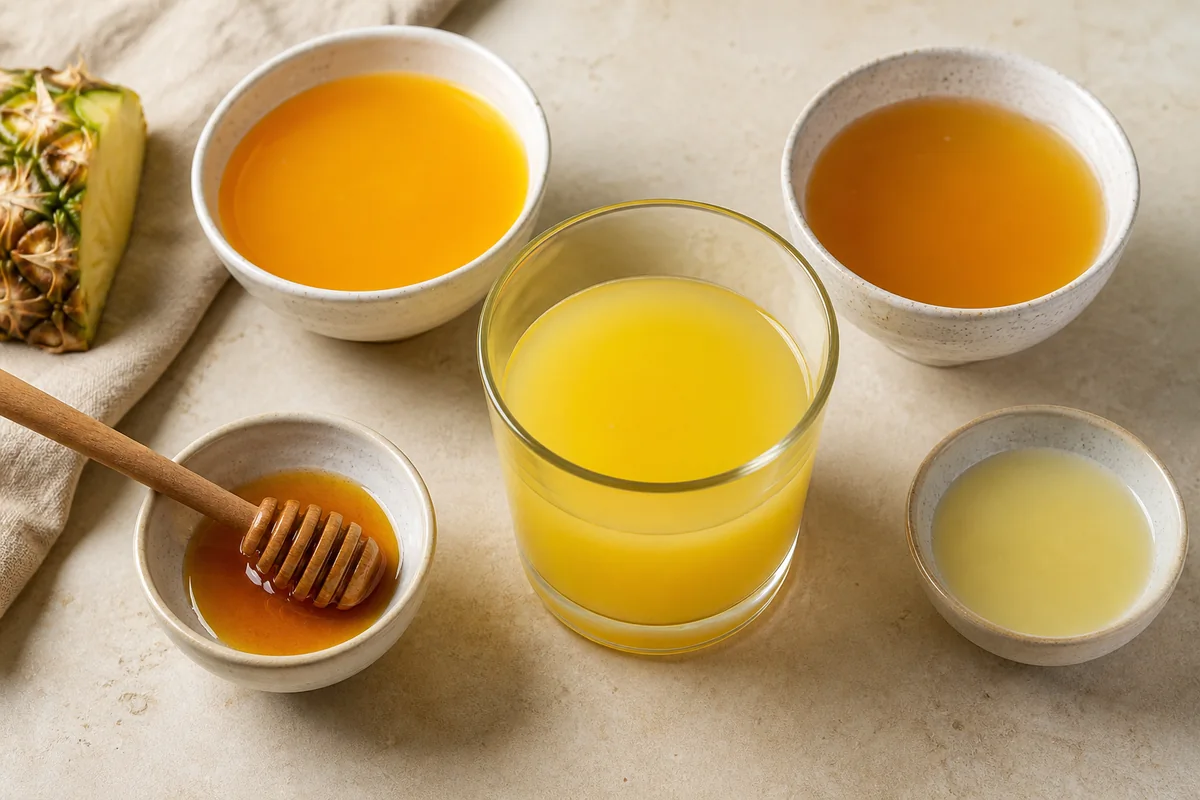
5 Best Pineapple Juice Substitutes (Easy Swaps)
Ingredients
Equipment
Method
- Choose the substitute that best matches your recipe goal (smooth drink vs. cooking vs. baking).
- Start with the listed ratio; measure by volume so the recipe balance stays consistent.
- If the substitute is less tangy, add lemon juice a little at a time; if it’s less sweet, add a small amount of honey or sugar.
- For pulp-heavy swaps (blended pineapple), strain before using in glazes or beverages.
- Taste after mixing adjustments and before adding to a hot mixture, so you can correct sweetness/acidity early.
Notes
- For best results, treat pineapple juice as a sweetness + acidity ratio problem, not just a single flavor.
- In baking and sauces, let the mixture simmer briefly so flavors harmonize after you adjust.
Tried this recipe?
Let us know how it was!
Carrie is a food writer and editor with more than 15 years of experience. She has worked for some of the biggest names in the food industry, including Bon Appétit, Food & Wine, and Martha Stewart Living.
As the Editor in Chief of EpicureDelight, Carrie oversees all of the content on the site. She also manages the team of contributing writers and editors, who help to create delicious recipes, helpful tips, and informative articles that you’ll find on the site.
A native of the Chicago area, Carrie is passionate about all things food. She loves trying new restaurants and experimenting with new recipes in her kitchen. She’s also a graduate of the Culinary Institute of America, so she knows a thing or two about food!



