
Pomegranate has a flavor that's hard to fake. That sharp-sweet tang, faintly floral, is what makes it show up in everything from cocktail syrups to lamb glazes.
But you can work around it if you know what job the pomegranate is actually doing in the dish.
The best pomegranate substitute depends on three things: whether the recipe needs juice (liquid, thin, bright), a thick syrup (like molasses or reduction), or whole arils (texture and color in a salad or grain bowl). Nail the job first, then pick the swap.
Your best options are pomegranate juice for liquid calls, pomegranate molasses for thick glazes, cranberry juice for similar tartness, tart cherry juice for reductions, and an apple cider vinegar + sugar blend for pantry-only emergencies. Match the function first, then adjust sweetness and acidity to taste.
5 Pomegranate Substitutes Ranked by Function
Every substitute below is picked for a specific job. The table gives you a fast scan before you commit to one option.
| # | Substitute | Best For | Ratio | Key Note |
|---|---|---|---|---|
| 1 | Pomegranate Juice (unsweetened) | Both | 1:1 | Reduce for glaze thickness |
| 2 | Pomegranate Molasses | Glazes | ¾:1 | Thin with water first |
| 3 | Cranberry Juice (unsweetened) | Drinks | 1:1 | Add pinch of sugar |
| 4 | Tart Cherry Juice (unsweetened) | Sauces | 1:1 | Simmer 5-8 min for glaze |
| 5 | Apple Cider Vinegar + Sugar | Dressings | ¾:1 | Dissolve sugar fully first |
One thing the table won't show you: when balancing added sweetness matters, use small increments-a half-teaspoon at a time-rather than dumping in sugar all at once.
1. Pomegranate Juice (Unsweetened)
This is the closest you'll get. Unsweetened pomegranate juice carries the same tart-fruit acidity as the whole fruit, minus the seed crunch. It works straight out of the bottle for most liquid applications, and it reduces into a glaze-friendly syrup with just a few extra minutes on the stove.
For drinks, dressings, and marinades, use it 1:1. The tart, jewel-toned liquid behaves exactly as the recipe expects, no adjustment needed.
Direct Use (as-is)
Works for: drinks, dressings, marinades, sauces
Skip if: recipe needs syrupy thickness-too thin for a proper glaze
Reduced Use (simmered down)
Works for: glazes, finishing sauces, meat coatings
Skip if: you're short on time-reduction takes 5-10 minutes of active attention
- Drinks and mocktails: Use 1:1, straight from the bottle, no alteration needed
- Dressings and sauces: Use as-is, but taste for sweetness and add a tiny pinch of sugar if your batch runs sharp
- Glazes and reductions: Simmer over medium heat for 5-10 minutes until it coats the back of a spoon
Skip if your recipe needs whole arils. Juice gives zero texture.
2. Pomegranate Molasses
Think of pomegranate molasses as pomegranate juice that already did the simmering for you. It is thick, intensely tangy, and slightly more bitter than fresh juice, which means a little goes far.
The syrupy, concentrated reduction is made for glazes, marinades, and finishing drizzles. Start at ¾ of what the recipe calls for, then taste before adding more.
- Glazes and marinades: Use ¾ of the called amount; thin with 1-2 teaspoon water per tablespoon if the recipe is liquid-heavy
- Finishing drizzle: Use straight, no thinning needed-the thickness is an asset here
- Liquid-based recipes: Dissolve in warm water first (1 tablespoon molasses to 3 tablespoon water) to approximate juice consistency
- Simmered sauces: Add in the last 1-3 minutes only to avoid over-reducing and burning the sugars
Skip if your recipe expects pomegranate to behave as a straight liquid with no added sweetness or thickness.
3. Cranberry Juice (Unsweetened)
Cranberry juice is the easiest grocery-store grab when pomegranate juice is out of stock. Its tartness reads closely to pomegranate, and the deep red color holds up in drinks and sauces. It won't give you the floral edge, but most cooked applications won't miss it.
Before you buy, know the difference between juice and cocktail-you want 100% juice, not the sweetened cocktail blend, which is much less tart.
- Cocktails and mocktails: Use 1:1; add a small pinch of sugar or a tiny splash of grenadine to round the flavor
- Sauces and pan reductions: Use 1:1 and simmer as you normally would-it reduces cleanly
- Dressings: Use 1:1 but taste first; cranberry can run sharper than pomegranate, so a half-teaspoon of honey helps
Skip if the recipe is a delicate uncooked application, like a light vinaigrette, where pomegranate's floral note is front and center.
4. Tart Cherry Juice (Unsweetened)
Tart cherry juice is a solid middle ground. It has real fruit acidity, a deep red hue, and enough body to reduce into a sauce or glaze without falling apart. It is slightly rounder in flavor than pomegranate but it works well in cooked recipes where the heat mellows everything anyway.
For acid-forward cooking applications, tart cherry juice holds its own better than many people expect.
- Sauces and braises: Use 1:1; the fruit acidity holds up through cooking
- Glazes: Simmer 5-8 minutes over medium heat until the juice coats a spoon
- Marinades: Use 1:1; pair with a splash of balsamic or a pinch of sumac to sharpen the edge
Skip if you need pomegranate's crisp, high-bright acidity in an uncooked dish. Cherry juice tastes rounder after reduction, not brighter.
5. Apple Cider Vinegar + Sugar
This is the pantry emergency swap. It won't taste like pomegranate, but it nails the tart-sweet balance well enough for dressings, marinades, and quick sauces where the other ingredients do a lot of the flavor work.
The key is using a mellow acid base and dissolving the sugar completely before you use the mix-undissolved sugar makes the blend uneven.
| Use | Ratio | Notes |
|---|---|---|
| Light dressing | 1 teaspoon ACV + ½ teaspoon sugar | Whisk with oil; taste before tossing |
| Marinade | 2 teaspoon ACV + 1 teaspoon sugar | Add 1 teaspoon water to soften sharpness |
| Sauce or glaze | 1 tablespoon ACV + 1.5 teaspoon sugar | Simmer 3-5 min to reduce harshness |
- Dressings: Mix ¾ teaspoon ACV with ½ teaspoon sugar per teaspoon of pomegranate juice called; taste and adjust
- Marinades: Same ratio, plus a small splash of water to prevent the vinegar from overpowering the protein
- Glazes: Simmer for 3-5 minutes after mixing; this rounds out the sharp vinegar note considerably
Skip if the recipe depends on pomegranate's actual fruit character. Vinegar reads more sharp-acid than sweet-fruit, especially in raw or barely-cooked applications.
Making a Pomegranate Substitute Taste Right
Getting the swap right is mostly about knowing which direction to pull. If the dish tastes too sharp, add sweetness in half-teaspoon increments.
If it's too flat, a few drops of lemon juice or a pinch of sumac sharpens the acidity fast. When you're storing opened molasses or working through a reduction, keep tasting at every stage because concentrated substitutes shift flavor quickly as they cook down.
- Match the job: Use thin juice for drinks and dressings, reduce it for sauces, and use molasses when the recipe calls for syrup-level thickness
- Adjust in small steps: Add sugar by the half-teaspoon and acid by the quarter-teaspoon-large additions are hard to walk back
- Finish and taste: Always taste off-heat before serving; heat can mask sharpness and make a sauce seem more balanced than it actually is
Frequently Asked Questions
Unsweetened cranberry juice is the easiest 1:1 swap for cocktails. Add a small pinch of sugar to soften the edge and match pomegranate's slightly sweeter finish.
No. Molasses is far more concentrated, so start at ¾ of the called amount and thin it with water until you reach the right consistency.
Pomegranate molasses is the top pick for glazes-it already has syrupy body. Tart cherry juice is a close second and reduces cleanly into a usable glaze.
No juice or vinegar swap replicates arils. Use fresh or frozen red grapes halved, dried cranberries, or small cubed watermelon for a similar visual effect.
Too sour: add sugar in half-teaspoon increments until balanced. Too sweet: add a small squeeze of lemon or a drop of unsweetened vinegar to restore sharpness.
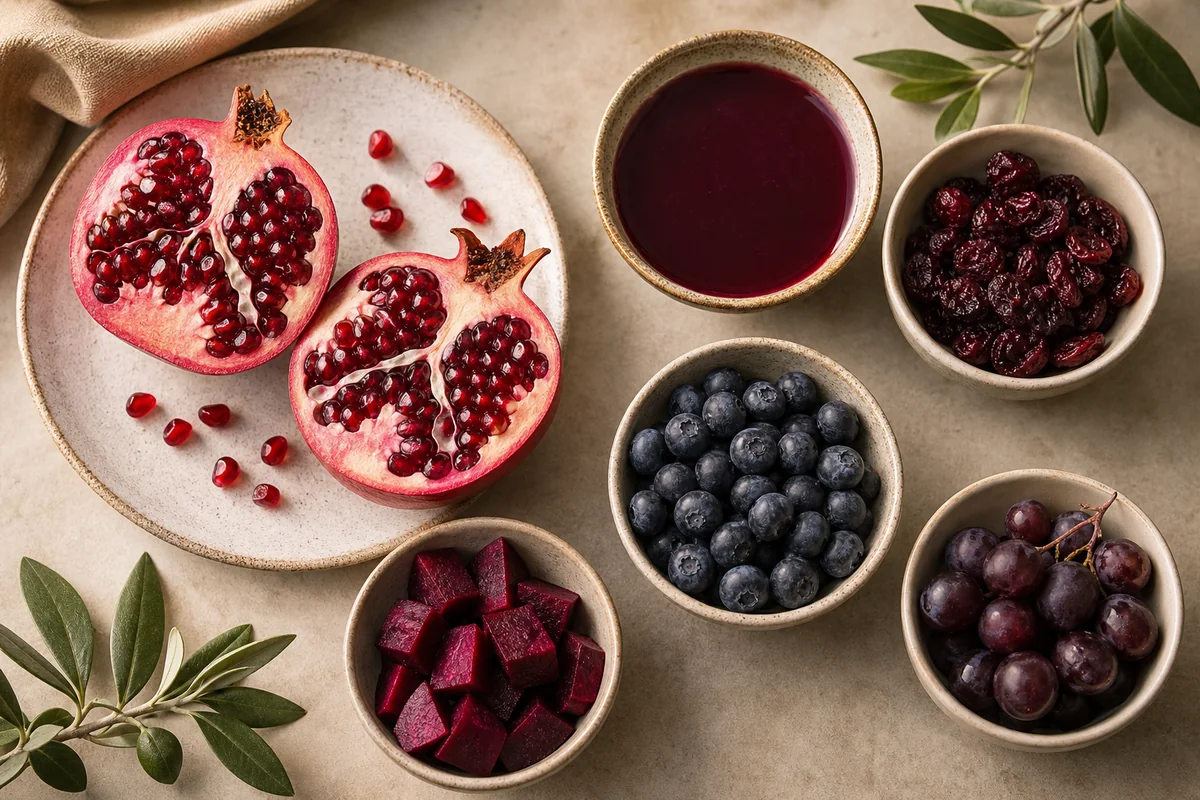
5 Best Pomegranate Substitutes You Can Trust
Ingredients
Equipment
Method
- Identify what your recipe needs: juice for drinks/sauces, a thick syrup for glazes, or arils/texture for salads.
- Choose the closest match from the list: pomegranate juice for flavor, pomegranate molasses for thickness, or cranberry/tart cherry for similar tang.
- If your substitute is more concentrated (like molasses or vinegar-based), start with the listed ratio, then add in small increments after tasting.
- For glaze/sauce calls, simmer the substitute 3–10 minutes to concentrate and mimic pomegranate’s syrupy body.
- Taste and fine-tune: add a small pinch of sugar for missing fruit sweetness, or a splash of water to reduce sharpness.
Notes
- If your recipe needs visible arils, these options work best blended into sauces, or top salads with a similar fruit for texture.
Tried this recipe?
Let us know how it was!
Carrie is a food writer and editor with more than 15 years of experience. She has worked for some of the biggest names in the food industry, including Bon Appétit, Food & Wine, and Martha Stewart Living.
As the Editor in Chief of EpicureDelight, Carrie oversees all of the content on the site. She also manages the team of contributing writers and editors, who help to create delicious recipes, helpful tips, and informative articles that you’ll find on the site.
A native of the Chicago area, Carrie is passionate about all things food. She loves trying new restaurants and experimenting with new recipes in her kitchen. She’s also a graduate of the Culinary Institute of America, so she knows a thing or two about food!



