
That sharp, faintly sweet smell when you open a bottle of apple cider vinegar is doing two things in your recipe: adding acid and leaving a ghost of fruit behind.
When you run out, the substitute you reach for should match whichever of those two jobs matters most in your dish.
Apple cider vinegar substitute options range from nearly identical (white wine vinegar) to workable-but-different (lemon juice).
Most of them cover the acidity fine. The fruity note is harder to replicate, so we'll flag where it matters.
Apple cider vinegar adds tang and a mild fruit note. For most dishes, white wine vinegar is the closest 1:1 swap. Rice vinegar works when you need a gentler bite. Distilled white vinegar covers sharp-acid needs but may require diluting. Lemon juice is the best emergency option when no vinegar is available.
5 Apple Cider Vinegar Substitutes (What to Use Instead)
For most cooking uses, matching acidity first and then adjusting sweetness is the fastest path to a balanced dish. The table below gives you the quick picture; each section after it goes deeper.
| # | Substitute | Best For | Ratio | Key Note |
|---|---|---|---|---|
| 1 | White Wine Vinegar | Both | 1:1 | Cleanest flavor match |
| 2 | Distilled White Vinegar | Cooking | 1:1 | Dilute for mild dishes |
| 3 | Rice Vinegar | Both | 1:1 | Reduce sugar if seasoned |
| 4 | Sherry Vinegar | Cooking | 1:1 | Warm note, not neutral |
| 5 | Lemon Juice + Water | Both | ¾:1 | Emergency only, citrus note |
1. White Wine Vinegar
White wine vinegar is the closest working substitute most home cooks will find in their pantry. It is milder and cleaner than distilled white vinegar, and it carries just enough acidity to fill in for ACV without announcing itself.
If you're already thinking about the best apple cider alternatives for other purposes, white wine vinegar covers the vinegar side of that conversation well.
- Best uses: Salad dressings, vinaigrettes, quick pan sauces, light marinades
- Ratio: 1:1, no adjustment needed to start
- Adjustment tip: If the dish needs a touch more warmth, add a small pinch of sugar or a few drops of honey to approximate ACV's faint sweetness
- Skip if: Your marinade depends on a deeper, apple-forward fruit note - white wine vinegar reads cleaner and won't replicate that
2. Distilled White Vinegar
Distilled white vinegar is sharper than ACV and has no fruit character at all. It works well when acidity is the only thing you need - think a splash into braising liquid or a quick sauce where the vinegar will be cooked down.
If you're regularly swapping white vinegar in and out of recipes, knowing when to dilute it is the key skill.
Diluted (1 part vinegar : 1 part water)
Works for: delicate dressings, light coleslaw, anything where sharpness would dominate
Skip if: you need full acidity for deglazing or a bold marinade
Undiluted (1:1 with ACV)
Works for: pickling brine, hearty sauces, recipes cooked over heat that mellows the edge
Skip if: the dish is delicate or uncooked - raw sharpness can overwhelm quickly
- Ratio: Use 1:1 for robust cooked dishes; dilute to ½ strength for raw or mild applications
- Adjustment tip: Add a small pinch of sugar to soften the harshness if you're using it straight in a dressing
- Skip if: Your recipe depends on a round, slightly fruity tang - distilled white vinegar will taste noticeably thinner and sharper
3. Rice Vinegar
Rice vinegar is the gentlest option on this list. It has lower acidity than ACV and often tastes slightly sweet, which makes it easy to use in dressings, slaws, and dipping sauces without overpowering them.
Understanding rice vinegar in cooking helps you predict when that mild sweetness is an asset and when it falls flat.
- Ratio: 1:1, but taste before adding any sugar the recipe calls for
- Seasoned vs. unseasoned: Seasoned rice vinegar already has sugar and salt added - reduce both in your recipe to compensate
- Best pairings: Coleslaw, cucumber salads, light vinaigrettes, quick pickled vegetables
- Skip if: You need a pronounced apple-cider fruitiness - rice vinegar reads flatter and won't bring that note
If you find yourself frequently swapping rice vinegar in various recipes, it's worth keeping both the seasoned and unseasoned versions on hand.
4. Sherry Vinegar
Sherry vinegar has a warm, slightly nutty fruit note that makes it more interesting than a straight acid swap. It's particularly good in marinades for chicken or beef, roasted vegetable dishes, and pan sauces where you want the vinegar to add a layer of flavor rather than just brightness.
Best for: hearty cooked dishes, roasted root vegetables, red meat marinades, and reduction sauces.
Not for: light salads or anything where you want a clean, invisible tang - the warm note sherry vinegar carries will be noticeable. Use it 1:1 in place of ACV, but taste early since the flavor lands differently depending on what surrounds it.
You can explore white wine substitutes too if your recipe uses sherry for both the vinegar and the wine component. Skip it if you're aiming for a neutral or purely sharp acid - this one always adds character.
5. Champagne Vinegar
Champagne vinegar is bright and delicate, which makes it a natural fit for recipes where you don't want the acid to dominate. It's lighter than white wine vinegar and barely assertive, so it works best in quick vinaigrettes, raw preparations, and anything finished at the table rather than cooked hard over heat.
For dishes where you're already thinking about swapping champagne vinegar more broadly, the same delicacy applies here.
Light dishes (salads, quick sauces)
Works for: vinaigrettes, ceviche-style preparations, herb-forward sauces, finishing drizzles
Skip if: you want pronounced acid punch - champagne vinegar's softness can get lost
Heavy or smoky flavors
Works for: cutting through rich meats when used at full volume (no dilution)
Skip if: you need the apple-like fruitiness - champagne vinegar is more purely acidic with little fruit character
- Ratio: 1:1 for most applications; no dilution required
- Adjustment tip: Add a small drop of honey (under ¼ tsp) if the dish needs the mild sweetness ACV normally brings
- Skip if: The dish is heavy, smoky, or braised for a long time - champagne vinegar's delicacy is wasted in those contexts
Making Any Apple Cider Vinegar Substitute Work
The method is simpler than it sounds: match the acidity first, then taste and adjust sweetness or salt. Every substitute on this list covers acidity reliably at a 1:1 ratio (except lemon juice, which needs a reduction to ¾ of the original amount).
When you're using any acid swap in a dressing, let it sit for at least 10 minutes before final tasting - acids mellow as they rest and coat the other ingredients. Similarly, knowing how to handle lemon alternatives helps when you're working across different acid types in the same recipe.
- Step 1 - Match acidity: Start at the listed ratio; only adjust after tasting, not before
- Step 2 - Balance sweetness: Add a small pinch of sugar if the substitute tastes sharper than expected, or reduce any sugar in the recipe if using seasoned rice vinegar
- Step 3 - Taste at temperature: Cold dishes (dressings, slaws) taste sharper than warm ones - always taste the dish at the temperature it will be served before finalizing the acid level
Frequently Asked Questions
White wine vinegar is the closest 1:1 swap. It matches ACV's acidity and has a mild, clean tang without adding a strong competing flavor.
Yes, use it 1:1. Rice vinegar is milder and slightly sweet, so reduce any sugar the recipe calls for, especially if using the seasoned variety.
For delicate dishes like light dressings, yes - dilute it 1:1 with water. For cooked or bold-flavored recipes, use it straight at a 1:1 ratio.
Not reliably. Lemon juice lacks the fermented depth pickling recipes need, and the citrus flavor will be noticeable in the finished brine.
Fresh-squeezed lemon juice lasts up to 4 days refrigerated. For tips on keeping lemon juice fresh longer, store it in a sealed glass container away from light.
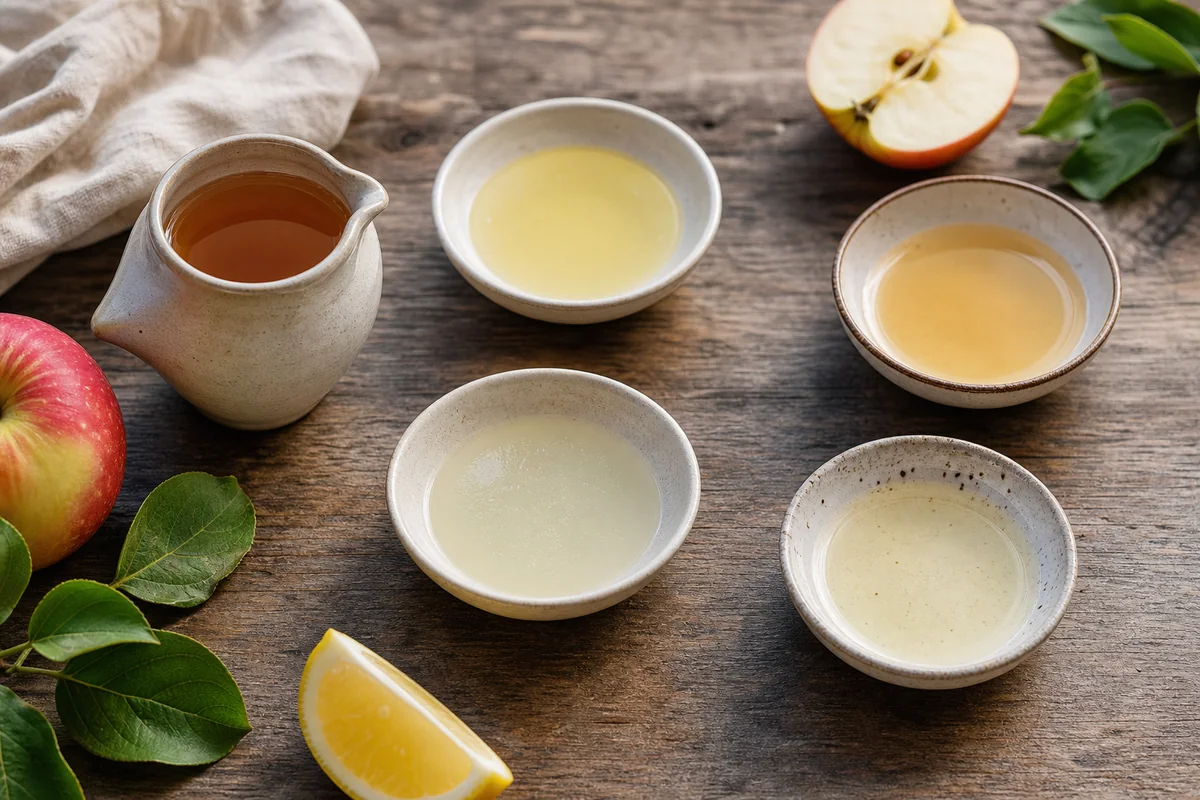
5 Best Apple Cider Vinegar Substitutes (Tested)
Ingredients
Equipment
Method
- Identify your use: salad dressing, marinade, pickling shortcut, or deglazing/sauce.
- Choose the substitute from the closest-match options and use the listed ratio (1:1 unless adjusted).
- If using a sharper option (like distilled white vinegar), dilute with equal water before adding to your dish.
- Taste after 5 minutes (or after the dressing rests 10 minutes) and adjust: add a pinch of sugar for bite balance or salt for depth.
- For rice vinegar or lemon juice swaps, reduce any extra sweetness in the recipe so the final flavor stays balanced.
Notes
- Taste is affected by vinegar strength and fermentation-always do a quick taste-adjust.
Tried this recipe?
Let us know how it was!
Carrie is a food writer and editor with more than 15 years of experience. She has worked for some of the biggest names in the food industry, including Bon Appétit, Food & Wine, and Martha Stewart Living.
As the Editor in Chief of EpicureDelight, Carrie oversees all of the content on the site. She also manages the team of contributing writers and editors, who help to create delicious recipes, helpful tips, and informative articles that you’ll find on the site.
A native of the Chicago area, Carrie is passionate about all things food. She loves trying new restaurants and experimenting with new recipes in her kitchen. She’s also a graduate of the Culinary Institute of America, so she knows a thing or two about food!



