
That delicate, almost paper-thin flake you get from a fresh rainbow trout fillet is hard to replicate exactly. But the right rainbow trout substitute gets you close enough that most diners won't notice the swap.
The key variable is fat content. Trout sits in the middle, not as lean as cod, not as oily as salmon, and your seasoning balance should shift to match whichever direction your substitute leans.
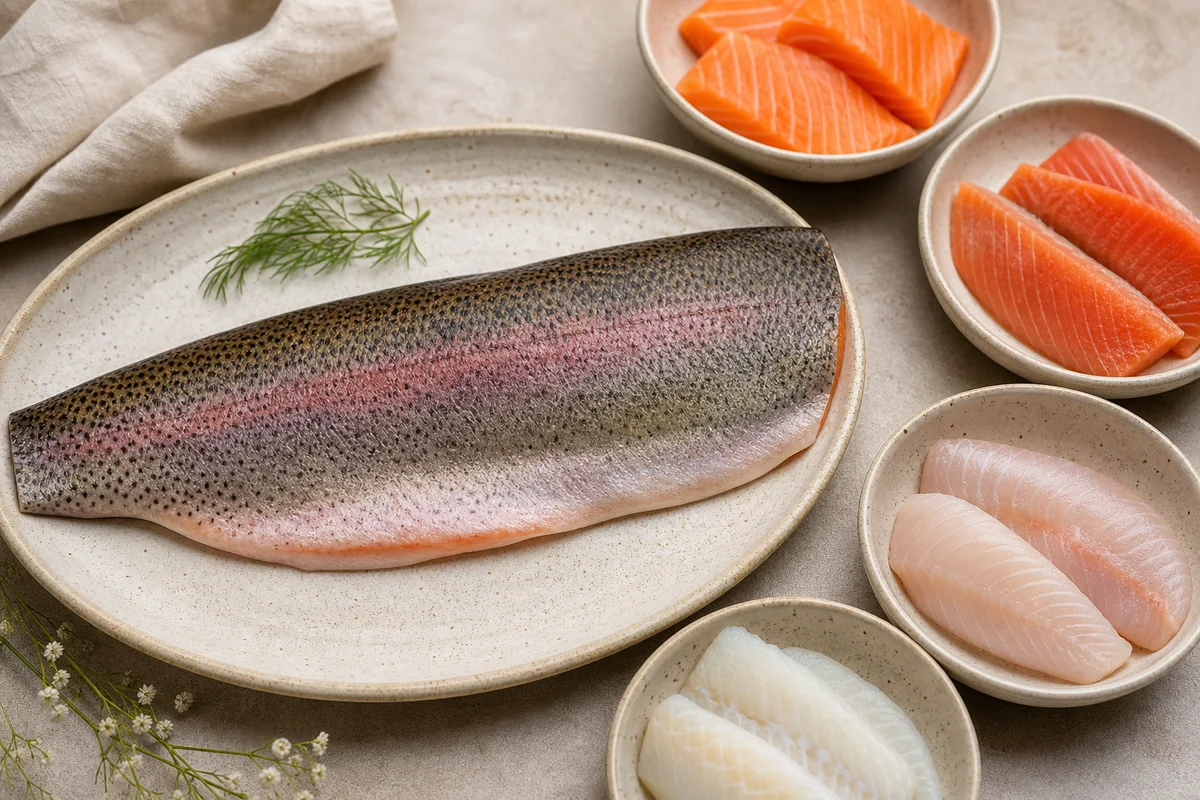
Arctic char is the closest match for texture and flake. Steelhead trout is a near-identical label swap. Salmon works when you want more body. Cod fills in for mild white-fish recipes. Halibut is best when you need a fillet that holds its shape.
5 Best Rainbow Trout Substitutes Ranked by Texture Match
The table below is ordered closest-to-trout first. Use it to pick your swap at a glance, then read the H3 sections below for handling tips specific to each fish.
| # | Substitute | Best For | Ratio | Key Note |
|---|---|---|---|---|
| 1 | Arctic Char | Both | 1:1 | Slightly richer than trout |
| 2 | Steelhead Trout | Both | 1:1 | Near-identical cook rate |
| 3 | Salmon | Bake | 1:1 | Oilier; cut added fats |
| 4 | Cod | Bake | 1:1 | Pull early to avoid dryness |
| 5 | Halibut | Both | 1:1 | Firmer bite, holds shape |
1. Arctic Char
Arctic char is the substitute we reach for first. It has the same tender, pull-apart flake as rainbow trout, and it takes lemon-dill seasoning just as well.
The flavor is slightly more buttery and can read a touch richer on the palate. That difference barely registers in a pan-sear or a foil bake, where the heat and acid balance things out.
If you're familiar with that mild, freshwater finish, char lands in the same zone with just a hint more depth.
Arctic Char
Works for: pan-searing, baking, foil packets, lemon-herb preparations
Skip if: you need a very lean, low-fat flavor - char's richness will come through in delicate poaching
- Cook method: Pan-sear skin-side down first, 3-4 minutes, then flip for 2 minutes - same as trout.
- Seasoning: Keep it light. Olive oil, lemon zest, and fresh dill are all you need.
- Doneness check: Pull it the moment it flakes at the thickest part, not when it looks fully opaque.
2. Steelhead Trout
Steelhead is the easiest swap on this list. It is biologically the same species as rainbow trout, just one that has migrated to saltwater, so the flake rate and flavor profile are nearly identical.
Season it the same way, cook it at the same temperature, and stop when it flakes easily. That is genuinely all the adjustment needed.
The mild, clean flesh of steelhead holds up to both quick pan-sears and slower oven bakes without any recipe changes.
Skip if: your recipe is for a smoked or cured preparation. The label swap works for fresh cooking, but curing ratios are developed for a specific fish's fat content, and steelhead may cure unevenly if the cure was calibrated for a different batch.
3. Salmon
Salmon is the most available substitute, and it works well when the recipe leans toward a baked or roasted preparation. The catch is fat content: salmon is noticeably oilier than rainbow trout, so anything you add in the way of butter or oil should be reduced by about half.
Bright acid helps. A squeeze of lemon or a splash of white wine at the end pulls the richness back toward the mild, clean finish that trout delivers.
If you want ideas for cooking salmon with that kind of balance, roasting with lemon garlic is a method that works well here.
- Fat adjustment: Cut butter or oil by 50% in any sauce or marinade.
- Acid balance: Add lemon juice or a small splash of white wine right at the end of cooking.
- Thickness matters: Match the salmon fillet thickness to your original trout fillet to keep cook times similar.
| Use | Ratio | Notes |
|---|---|---|
| Baked dishes | 1:1 | Salmon; reduce added fats by half |
| Pan-sear | 1:1 | Salmon; add lemon squeeze at finish |
| Poaching | Skip | Salmon too oily for delicate poach recipes |
Skip if: the recipe depends on a very delicate, low-oil result. Salmon changes the dish's flavor direction in a way that's pleasant but unmistakably different from trout.
4. Cod
Cod is a solid white-fish stand-in when neither char nor steelhead is available. It has a mild, clean flavor that pairs well with the same herb-lemon profiles you'd use for trout, and it flakes into large, satisfying pieces.
The one real risk is dryness. Cod has less fat than trout, so it goes from perfect to chalky fast.
Choose the thickest fillet you can find, and pull it off heat the moment it starts to yield at the center. If you want to see how cod performs with bright seasoning, cooking it with lemon and dill is a natural match here.
Cod
Works for: baked recipes, foil packets, lemon-herb preparations, gentle oven roasting
Skip if: your recipe needs a rich, fatty finish - cod will read noticeably leaner than trout
- Thickness: Use fillets at least 1 inch thick to avoid overcooking before the outside sets.
- Moisture: A foil packet with a tablespoon of broth or white wine keeps it from drying out.
- Timing: Check doneness 2 minutes earlier than your recipe suggests - cod finishes faster than you expect.
5. Halibut
Halibut is the right call when you want a fillet that stays together on the plate. It is firmer than trout and takes to roasting and foil cooking especially well, holding its shape where a more delicate fish might fall apart.
The flavor is mild and clean, which makes it a good canvas for the same seasonings you'd use on trout. For a full picture of how it behaves on the palate, halibut's flavor profile is worth a quick read before you cook.
The texture leans more "meaty" than trout's delicate pull.
Skip if: you specifically want that tender, soft flake that trout is known for. Halibut holds firm even when perfectly cooked, and that quality is either a feature or a problem depending on what your recipe needs.
Making Rainbow Trout Substitutes Work
The single biggest mistake is treating all these fish the same way on the clock. Doneness timing shifts with fat content and fillet thickness, and the flake test is more reliable than any timer. Most trout-like fillets are ready the moment they yield at the thickest part; waiting until they look fully opaque throughout means they are already overdone.
Understanding how fresh trout holds up over time also matters here. The same freshness logic applies to your substitute: the fresher the fillet, the more forgiving it is to slight timing errors.
- Oilier substitutes (char, salmon): Add more acid at the finish, lemon juice or a splash of vinegar, and skip extra butter in the pan.
- Leaner substitutes (cod, halibut): Add moisture with a foil packet, a spoon of broth, or a quick pan sauce right before serving.
- Herb match: fresh herb notes from dill or flat-leaf parsley bring any of these substitutes closer to trout's classic flavor.
Frequently Asked Questions
Arctic char is the closest match. It sears skin-side down in the same 3-4 minutes, flakes at the same rate, and takes lemon-dill seasoning well.
Yes, but use a thick fillet and bake it in a foil packet with a tablespoon of broth. Pull it the moment it flakes; cod dries out faster than trout.
Slightly. A salmon fillet of equal thickness may take 1-2 minutes longer due to its higher fat content. Always use the flake test, not the timer.
Match the thickness of your original trout fillet as closely as possible. A fillet that is too thin will overcook before seasoning has time to develop.
Fresh dill, lemon zest, and a light hand with salt are the core profile. A small amount of capers or white wine in the pan reinforces that mild, clean finish.
5 Best Rainbow Trout Substitutes (Pantry Swaps)
Ingredients
Equipment
Method
- Identify your cook method (pan-sear, bake, poach, or roast) and choose the closest substitute from the table that matches your desired flake vs firmness.
- Use the listed 1:1 ratio for portion size; if your substitute is oilier (salmon), use lighter seasoning/fats.
- Cook gently and stop when the fish flakes easily; trout and char often cook faster than firm white fish—check early.
- If the substitute seems dry (cod), add moisture with a foil packet, splash of broth, or a quick sauce at the end.
- Taste and adjust: trout/char flavors take well to lemon and herbs, while salmon benefits from salt balance and bright acids.
Notes
- For the best texture, use fillets of similar thickness and don’t overcook.
- If your substitute is darker or richer (salmon/char), lean on lemon, dill, and simple seasoning to keep it trout-like.
Tried this recipe?
Let us know how it was!
Carrie is a food writer and editor with more than 15 years of experience. She has worked for some of the biggest names in the food industry, including Bon Appétit, Food & Wine, and Martha Stewart Living.
As the Editor in Chief of EpicureDelight, Carrie oversees all of the content on the site. She also manages the team of contributing writers and editors, who help to create delicious recipes, helpful tips, and informative articles that you’ll find on the site.
A native of the Chicago area, Carrie is passionate about all things food. She loves trying new restaurants and experimenting with new recipes in her kitchen. She’s also a graduate of the Culinary Institute of America, so she knows a thing or two about food!



