
That sharp, tangy bite red wine vinegar adds to a vinaigrette or braise is hard to miss when it's gone. The good news: most pantry staples hit that same acidity mark with minor adjustments.
The best red wine vinegar substitute depends on two things: how much acid the recipe needs, and whether flavor notes matter. Baking needs acid for leavening, so the ratio has to be right.
Dressings and marinades are more forgiving.
Every swap below includes a ratio and a note on where it performs best. Ratios are provided so you don't have to guess.
For most recipes, white wine vinegar (1:1) is the cleanest swap. Apple cider vinegar (1:1) works when you want a little fruit. Balsamic vinegar (¾:1) needs diluting. Sherry vinegar (1:1) is best for dressings. Lemon juice (¾:1 with water) is the acid-only fallback.
5 Best Red Wine Vinegar Substitutes Ranked by Flavor
| # | Substitute | Best For | Ratio | Key Note |
|---|---|---|---|---|
| 1 | White Wine Vinegar | Both | 1:1 | Cleanest acidity match |
| 2 | Apple Cider Vinegar | Both | 1:1 | Subtle fruity aroma |
| 3 | Sherry Vinegar | Dressings | 1:1 | Richer, nuttier tang |
| 4 | Balsamic Vinegar | Marinades | ¾:1 | Dilute to cut sweetness |
| 5 | Lemon Juice + Water | Dressings | ¾:1 | Bright acid, no depth |
Acidity balance shifts when you use a sweeter or weaker substitute. Skip any of these swaps if you cannot taste-test the dish at the end.
1. White Wine Vinegar
White wine vinegar is the sharpest acidity match here. It has a clean, slightly floral bite that sits close to red wine vinegar without adding fruit or sweetness.
It works at a straight 1:1 ratio in almost every situation. If the final flavor tastes thin, a small pinch of salt lifts it back.
- Baking: Add at the same stage as the original; it activates baking soda reliably
- Dressings: Works cold and at room temp without turning sharp
- Color: Noticeably paler, which suits light cream sauces and light vinaigrettes
- Taste check: Stir in, wait 2 minutes, then taste before adjusting
When storing white wine vinegar, keep it sealed away from heat to preserve that clean bite you're counting on.
White Wine Vinegar
Works for: baking, dressings, marinades, light sauces
Skip if: you want fruity or earthy red-wine flavor notes in the dish
2. Apple Cider Vinegar
Apple cider vinegar is the easiest pantry find that still delivers real tang. It has a mild fruitiness that reads more apple than grape, but in cooked dishes that distinction mostly disappears.
Use it at 1:1 and taste after mixing. Unfiltered versions have a slightly rounder flavor.
- Baking performance: Activates baking soda cleanly; add it at the wet-ingredient stage
- Dressings: The apple note is faint when paired with olive oil and herbs
- No-cook dishes: The fruit flavor is more noticeable cold, so taste first
- Adjustment: If it reads too sweet, cut ¼ teaspoon and add a drop of lemon juice
Taste the finished dish before serving. A no-cook dressing may need a small extra splash of something sharper to balance the apple note.
Skip if: you need a completely neutral acid with zero fruit character.
3. Sherry Vinegar
Sherry vinegar has a nutty, slightly round tang that sits between red wine vinegar and balsamic. It is not as sharp as white wine vinegar, and it is not as sweet as balsamic.
It is especially good in warm vinaigrettes, pan sauces, and marinades where you want depth. Cold dressings work too, but a small pinch of salt helps pull the flavor forward.
- Flavor match: Closest to red wine vinegar's earthy complexity
- Ratio: 1:1 in most uses; reduce to ¾:1 if your bottle is older and more concentrated
- Balancing tip: If it reads rich or slightly sweet, add a small pinch of salt and taste again
- Avoid: Bright, punchy applications like quick pickles where sharp tang is the point
Sherry Vinegar
Works for: warm dressings, marinades, braises, pan sauces
Skip if: you need a sharp, clean tang rather than a richer, rounder one
4. Balsamic Vinegar
Balsamic vinegar sweetens and darkens whatever it touches. That is worth knowing before you measure.
Use ¾ teaspoon for every 1 teaspoon of red wine vinegar the recipe calls for, and dilute that with an equal amount of water before adding.
- Dilution step: Mix ¾ teaspoon balsamic with ¾ teaspoon water, then use that as your 1 teaspoon substitute
- Flavor impact: Adds fruity sweetness; reduce any added sugar in the recipe by a small amount
- Baking caution: The extra sugar can over-brown baked goods; check 5 minutes early
- Color note: Will darken sauces and dressings noticeably; skip in pale or cream-based dishes
Skip if: the recipe is a light-colored sauce or calls for a clean sharp tang without sweetness.
5. Lemon Juice
Lemon juice is the acid-only fallback when no vinegar is in the house. It is brighter and more citrus-forward, but it delivers the acidity that a recipe needs.
Mix ¾ teaspoon lemon juice with ¼ teaspoon water to mellow the sharpness before adding it.
| Use | Ratio | Notes |
|---|---|---|
| Baking | ¾ teaspoon juice + ¼ teaspoon water per 1 teaspoon vinegar | Adds lift; citrus note fades when baked |
| Dressing | ¾ teaspoon juice + ¼ teaspoon water per 1 teaspoon vinegar | Taste first; add a pinch of salt to round it |
| Marinade | ¾ teaspoon juice straight per 1 teaspoon vinegar | Citrus note stays, works well with herbs |
- Sharpness fix: Add a pinch of salt to balance the citrus edge
- Baking timing: Add at the same wet-ingredient stage as the original vinegar
- When it falls short: Lemon won't replicate red-wine depth in slow-cooked braises
Skip if: the recipe needs vinegar's fermented complexity, not just brightness.
Making Red Wine Vinegar Substitutes Work
Picking the right swap is only half the job. Acidity level and flavor style both shift depending on which substitute you use, and a quick taste before serving catches most problems early.
- Pick the right ratio first: Use 1:1 for white wine or apple cider vinegar; reduce to ¾:1 for balsamic and lemon juice, then adjust up if the dish needs more acid
- Control sweetness and dilution: If your substitute is sweeter (balsamic) or sharper (lemon), dilute with water before adding and reduce any sugar in the recipe by a small amount
- Time it correctly for baking: Always add acid at the wet-ingredient stage, before dry ingredients are fully incorporated, so leavening activates on schedule
Frequently Asked Questions
Yes. Apple cider vinegar works at a straight 1:1 ratio and activates baking soda reliably. The mild apple note fades significantly once the batter bakes.
White wine vinegar is the cleanest option; it gives sharp tang without extra sweetness or color. Sherry vinegar works if you want more depth.
It works in marinades and braises but needs diluting. Mix ¾ teaspoon balsamic with ¾ teaspoon water to replace 1 teaspoon red wine vinegar.
It provides the acid needed to tenderize proteins but tastes noticeably citrusy. Use ¾ teaspoon lemon juice per 1 teaspoon vinegar and pair with herbs.
Too sharp: add a pinch of salt and a small splash of water. Too sweet: add a few extra drops of the same vinegar or a touch of lemon juice.
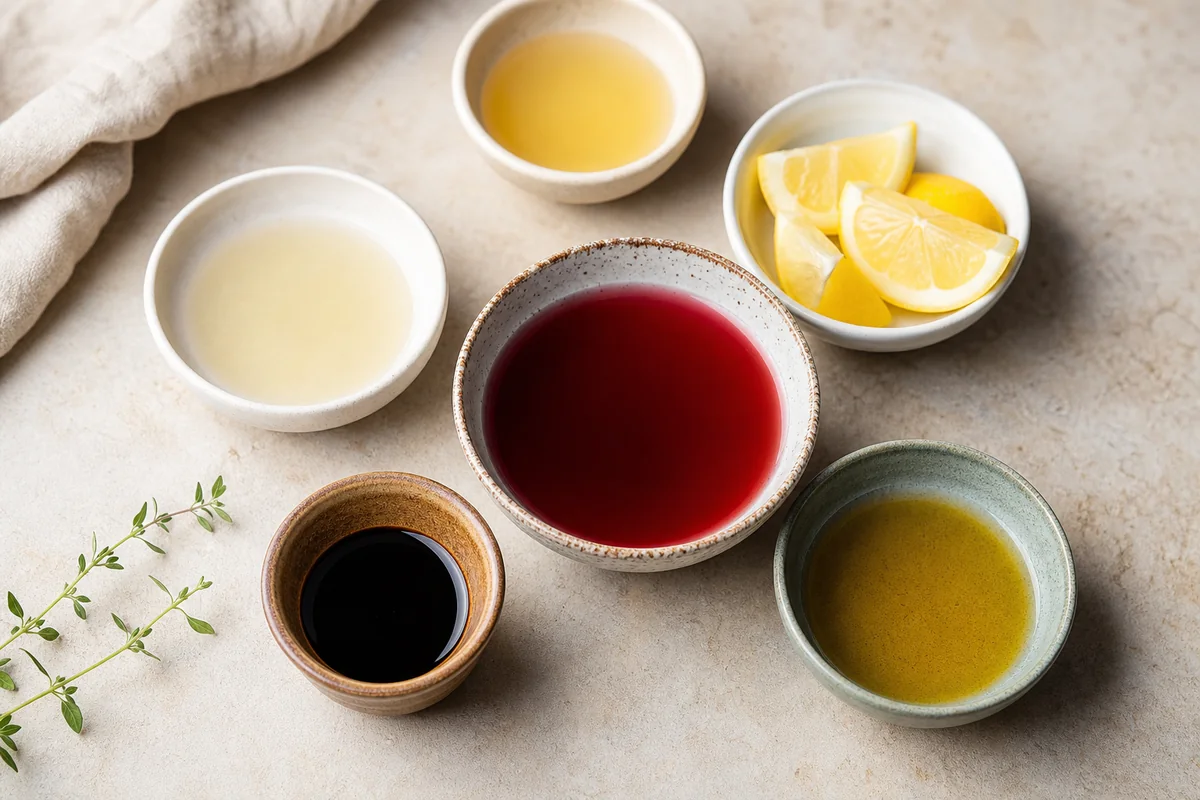
5 Best Red Wine Vinegar Substitutes (Pantry Swaps)
Ingredients
Equipment
Method
- Identify your use: baking (acid + leavening), dressing/marinade (flavor + bite), or quick deglaze (brightness).
- Choose the closest match from the table, and measure using the listed ratio (for diluted swaps, start with less).
- If the substitute is sweeter/darker (like balsamic), dilute with an equal amount of water first to prevent overpowering.
- Stir into your recipe and taste; adjust with a pinch of salt for balance or a tiny splash more acid for extra tang.
- For baking, add the vinegar at the same stage as the original (do not swap after mixing dry ingredients if your batter is already set).
Notes
- Use 1:1 for most vinegar swaps; reduce a bit for sweeter vinegars (balsamic) to avoid a sugary aftertaste.
- If color matters (lighter sauces/dressings), choose a lighter vinegar first (white wine vinegar or sherry vinegar).
Tried this recipe?
Let us know how it was!
Carrie is a food writer and editor with more than 15 years of experience. She has worked for some of the biggest names in the food industry, including Bon Appétit, Food & Wine, and Martha Stewart Living.
As the Editor in Chief of EpicureDelight, Carrie oversees all of the content on the site. She also manages the team of contributing writers and editors, who help to create delicious recipes, helpful tips, and informative articles that you’ll find on the site.
A native of the Chicago area, Carrie is passionate about all things food. She loves trying new restaurants and experimenting with new recipes in her kitchen. She’s also a graduate of the Culinary Institute of America, so she knows a thing or two about food!



