Crisp, cool, and just sturdy enough to hold a generous spoonful of dressing, romaine is the default leaf for good reason. But it runs out, gets forgotten, or just isn't available.
Knowing a solid romaine lettuce substitute means your salad, wrap, or grain bowl still comes together without a second trip to the store.
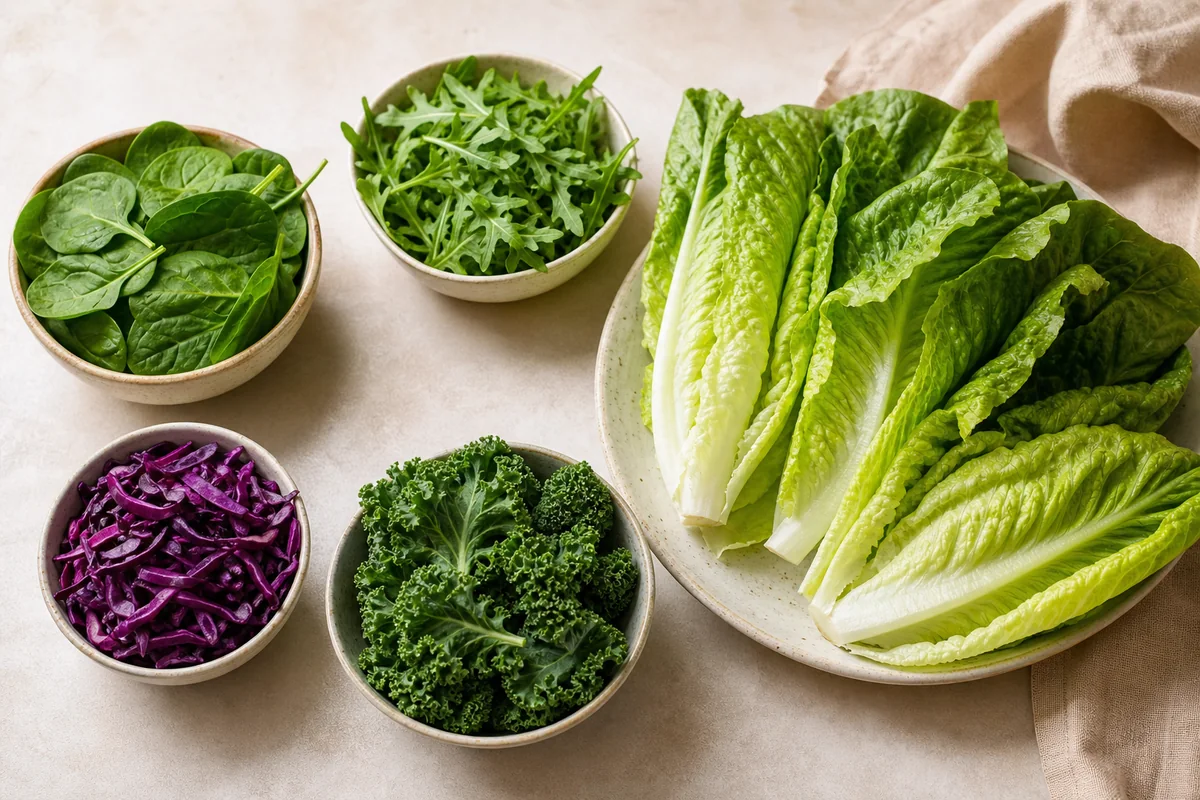
The swaps below match romaine by texture first, then flavor. Some are crisper, some more tender, and one is noticeably bolder.
Each H3 section notes the best use case so you can pick quickly.
Iceberg is the top crunch match at 1:1. Butter lettuce is the best tender-crisp swap for wraps and sandwiches. Baby kale adds chew but needs 30-60 seconds of massaging. Spinach works for quick salads, while arugula brings a peppery punch at a ¾:1 ratio.
5 Best Romaine Lettuce Substitutes Ranked by Texture
Use the table below to pick your swap fast. Then read the matching H3 for the prep details that make each one behave like romaine.
| # | Substitute | Best For | Ratio | Key Note |
|---|---|---|---|---|
| 1 | Iceberg Lettuce | Both | 1:1 | Highest crunch match |
| 2 | Butter Lettuce | Both | 1:1 | Tender-crisp, larger pieces |
| 3 | Baby Kale | Salad | 1:1 | Massage before using |
| 4 | Spinach | Both | 1:1 | Dress at last minute |
| 5 | Arugula | Salad | ¾:1 | Peppery, use less |
1. Iceberg Lettuce
Iceberg is the closest crunch match you'll find for romaine. It has a similarly neutral flavor, and it holds its snap well once torn or chopped, especially in a dressing-heavy salad.
The main watch point is moisture. Unlike crisp pale lettuce, romaine leaves cup and hold toppings.
Cut iceberg into 1-2 inch pieces (not shreds) to mimic that structure.
Iceberg Lettuce
Works for: Green salads, Caesar-style bowls, deli wraps, and anywhere romaine's crunch is the point
Skip if: Your salad sits dressed for more than 20 minutes - iceberg releases water and softens faster than romaine
- Cut size: Use 1-2 inch chunks, not thin shreds, so each piece has enough body to hold dressing
- Washing: Spin dry thoroughly - any extra water speeds up softening
- Caesar swaps: Stack 2-3 leaves and chop crosswise for the thick, chop-friendly pieces romaine gives
2. Butter Lettuce
Butter lettuce is softer than romaine but still holds its shape well enough for sandwiches and light salads. The leaves are larger and more cup-shaped, which actually works in its favor for wraps.
If you're choosing a tender leaf swap, butter lettuce is the most intuitive move.
- Piece size: Keep leaves large or tear into halves - smaller pieces lose the tender-crisp texture that makes it work
- Dress timing: Add dressing at the very last moment; butter lettuce wilts noticeably faster than romaine once dressed
- Caesar-style: Roughly chop into wide pieces, then toss lightly - it won't hold a heavy dressing, so use less
Skip if: You need real crunch, like for a thick Caesar or grain bowl - butter lettuce is too delicate for heavy toppings.
3. Baby Kale (Massaged)
Raw baby kale has real structure, and massaging it for 30-60 seconds with a pinch of salt changes everything. The leaves soften just enough to lose that papery toughness while keeping their chew.
If you're already prepping a kale base ahead, it actually holds better in the fridge than romaine after dressing.
- Massaging time: 30-45 seconds for baby kale is enough; full kale may need up to 90 seconds
- Salt amount: A small pinch (about ⅛ teaspoon per 2 cups) is all you need - too much makes it limp
- Acid balance: Kale is earthy, so pair it with a bright lemony or vinegar-forward dressing to mimic romaine's clean taste
- Fat balance: A little olive oil in the massage step helps replicate the way romaine absorbs dressing evenly
| Use | Ratio | Notes |
|---|---|---|
| Salad base | 1:1 | Massage first, dress with lemon vinaigrette |
| Grain bowl | 1:1 | Holds up under warm toppings, no wilting |
| Wrap filling | ¾:1 | Use slightly less; kale is denser than romaine |
Skip if: You don't have time to massage. Unmassaged kale is tougher than romaine and can make a salad feel like a chore to eat.
4. Spinach (Raw, Chopped)
Spinach is tender where romaine is sturdy, which matters. It works best in wraps and quick-toss salads where you're eating immediately.
For anything with bold flavors, it's a smart last-minute swap, and if you ever need to go further, swapping tender greens follows similar timing rules.
Spinach (Raw, Chopped)
Works for: Wrap fillings, quick-toss salads, and any dish where you're eating within 10 minutes of dressing
Skip if: Your salad will sit for more than 15-20 minutes after dressing - spinach wilts significantly faster than romaine
- Cut size: Chop into 1-inch pieces so it distributes evenly rather than clumping
- Dress timing: Toss spinach with dressing at the absolute last second - even 5 minutes early shows visible wilting
- Best use case: Works well in chicken wraps and grain bowls where other ingredients add structure
- Flavor note: Baby spinach is milder and closer to romaine than mature spinach, which has a stronger green taste
5. Arugula
Arugula works as a romaine swap when you want a more assertive, peppery salad. The flavor is distinctly different, but the leaf is light and fresh enough to fill the same role in a bowl.
Understanding peppery bitter greens helps here - arugula's bite softens considerably with a creamy or slightly sweet dressing.
Start with a ¾:1 ratio. A full 1:1 swap can make the dish taste more like an arugula salad than a romaine replacement.
- Dressing pairing: Use a creamy Caesar, honey-mustard, or balsamic glaze to soften the pepper notes
- Sweet add-ins: Sliced pear, dried cranberries, or shaved parmesan balance the sharpness well
- Cut size: Leave leaves whole or roughly torn - arugula bruises if chopped too fine
Skip if: Your recipe depends on romaine's mild, neutral taste (like a classic undressed Caesar) - arugula is too strong for those builds.
Making a Romaine Lettuce Substitute Work
The single biggest lever is matching texture to the job, not just swapping one leaf for another at equal volume. Choose crispier swaps (iceberg) for salads that sit, and tender swaps (spinach, butter lettuce) only when you're eating right away.
Knowing mild crisp leaves by their character helps you judge whether your substitute needs more dressing, less acid, or a different cut. Check how bottled tangy dressings interact with each green, since creamier dressings coat softer leaves faster and can cause early wilting.
- Cut size: Cut substitutes into 1-2 inch pieces to replicate the structural bite romaine gives; smaller pieces collapse under dressing
- Dress timing: Dress iceberg and kale up to 5 minutes early; dress spinach and butter lettuce only right before serving
- Seasoning balance: If your substitute tastes flatter than romaine, add a small pinch of salt and a squeeze of lemon before tossing - it wakes up the leaf
Frequently Asked Questions
Iceberg lettuce is the closest match for crunch at a 1:1 ratio. Cut it into 1-2 inch chunks rather than shreds so each piece holds its snap under dressing.
Yes. Stack and chop iceberg into thick pieces to mimic romaine's chop-friendly texture. Serve immediately, since iceberg releases water faster than romaine once dressed.
Add dressing only seconds before serving. Even 5-10 minutes of contact causes noticeable wilting, so keep the spinach dry until the last moment.
Yes, especially for raw salads. A 30-60 second massage with a small pinch of salt softens the texture so it chews more like romaine and less like raw roughage.
It works if you use a ¾:1 ratio and pair it with a creamy or slightly sweet filling. The peppery flavor is strong, so it's not ideal for mild-tasting wraps.
5 Best Romaine Lettuce Substitutes (Easy Swaps)
Ingredients
Equipment
Method
- Decide your use case: salad needs crisp bite, wraps need sturdy leaves, and Caesar-style needs thick, chop-friendly texture.
- Pick the substitute from the list by texture: iceberg for maximum crunch, butter lettuce for tender-crisp, kale for chewy structure, spinach for tender volume, arugula for peppery punch.
- Use the listed ratio; for kale and arugula, cut smaller than you would romaine so the texture spreads evenly.
- If the substitute is tougher (kale), massage with a pinch of salt for 30–60 seconds; if it’s tender (spinach), chop small and dress at the last moment.
- Taste and adjust: add a little extra salt/acid if your substitute tastes flatter than romaine, or use a creamy dressing to tame arugula pepper.
Notes
- For maximum romaine-like bite, aim for romaine-sized cuts (about 1–2 inches).
- Avoid heavy dressing soak time with spinach and butter lettuce; add dressing right before eating.
Tried this recipe?
Let us know how it was!
Carrie is a food writer and editor with more than 15 years of experience. She has worked for some of the biggest names in the food industry, including Bon Appétit, Food & Wine, and Martha Stewart Living.
As the Editor in Chief of EpicureDelight, Carrie oversees all of the content on the site. She also manages the team of contributing writers and editors, who help to create delicious recipes, helpful tips, and informative articles that you’ll find on the site.
A native of the Chicago area, Carrie is passionate about all things food. She loves trying new restaurants and experimenting with new recipes in her kitchen. She’s also a graduate of the Culinary Institute of America, so she knows a thing or two about food!