
Spinach disappears fast. One moment you have a full bag, and the next your pasta sauce or frittata is short a cup of greens.
The right spinach substitute keeps cooking on track without forcing you to rebuild the dish around a new ingredient.
The best swap depends on the job spinach is doing. Quick sauté dishes need a leaf that wilts in under 3 minutes.
Creamy blends need something that turns silky without adding bitterness. Hearty soups can handle tougher greens that need more time.
For most cooked dishes, baby kale or Swiss chard leaves are the closest matches to spinach. Frozen spinach (thawed and squeezed dry) is the most convenient. Arugula and bok choy work well when you want mild, fast-wilting greens with a little personality.
7 Spinach Substitute Options (Pick by Texture)
The table below maps each substitute to its cooking behavior so you can pick the right one at a glance. Skip this section if your recipe needs raw, crunchy greens.
These swaps are built for cooked applications.
| # | Substitute | Best For | Ratio | Key Note |
|---|---|---|---|---|
| 1 | Baby Kale | Both | 1:1 | Chop small; sauté briefly |
| 2 | Swiss Chard (leaves) | Both | 1:1 | Leaves only; skip stems |
| 3 | Frozen Spinach | Cooked | 1:1 | Thaw and squeeze dry |
| 4 | Bok Choy (baby) | Both | 1:1 | Separate stems from leaves |
| 5 | Arugula | Cooked | ¾:1 | Use less; peppery punch |
| 6 | Broccoli Rabe | Cooked | ¾:1 | Blanch first; strong flavor |
| 7 | Collard Greens | Cooked | ¾:1 | Simmer longer; tough leaf |
5 Best Spinach Substitutes Ranked by Cooking Fit
1. Baby Kale
Baby kale is the closest all-purpose swap. It wilts faster than standard kale and has a mild, slightly earthy flavor that doesn't fight other ingredients.
Chop it small before adding it to the pan. This one step closes most of the texture gap between kale and spinach. For hearty-leaf ideas beyond kale, southern green options are worth a look when you want something sturdier.
Baby Kale vs. Spinach
Works for: sautés, pasta, frittatas, warm grain bowls, stuffed dishes
Skip if: your recipe needs a delicate wilt in under 90 seconds
- Ratio: 1:1 by volume
- Texture fix: Chop into 1-inch pieces and massage with a pinch of salt before cooking
- Cook time: Sauté 2 to 3 minutes over medium-high heat until fully wilted
- Flavor note: Slightly more mineral than spinach; seasoning covers this easily
Skip if your dish needs the silky, almost-instant collapse of fresh spinach leaves.
2. Swiss Chard (Leaves Only)
Swiss chard leaves wilt fast and turn silky in a hot pan. The flavor is slightly earthier than spinach but close enough that most dishes won't read as different.
Strip the leaves from the stems. The leafy part behaves like spinach. The stems cook 4 to 5 minutes slower and belong in a separate part of the dish. If you want to learn more about how this green tastes before committing, this mild leafy green has a useful breakdown.
- Ratio: 1:1 by volume (leaves only)
- Best for: Sautés, soups, egg dishes, pasta fillings
- Color note: Red chard can bleed color into light sauces; use green chard if this matters
- Stem tip: Save stems and sauté separately with olive oil as a side
Skip if you can't take the time to separate leaves and stems before cooking.
3. Frozen Spinach (Thawed and Squeezed)
This is the easiest swap and the one that tastes most like spinach, because it is spinach. The problem is water.
Frozen spinach holds an enormous amount of liquid after thawing, and dumping it straight into a sauce thins everything out immediately.
Thaw completely, then squeeze hard. Wrap it in a clean kitchen towel and wring out as much moisture as possible. For dishes where you need mild, tender greens but want to explore other options beyond the freezer, chard-based alternatives are a practical next step.
- Ratio: 1:1 by weight after squeezing
- Squeeze method: Towel-squeeze until no more water drips, then fluff before adding
- Best for: Dips, lasagna, stuffed shells, creamy pasta, casseroles
- Watch the salt: Frozen spinach is sometimes salted; taste before adding extra
Skip if you're short on time and can't fully thaw and squeeze. Half-squeezed frozen spinach will water down your sauce noticeably.
4. Bok Choy (Baby), Chopped
Baby bok choy is mild, slightly sweet, and very close to neutral in flavor. It won't push the dish in a new direction, which makes it useful when you need greens volume without changing the taste profile.
Understanding its crisp tender quality helps you decide if it fits your recipe before you commit.
Separate the leafy tops from the thicker white stems before cooking. The leaves wilt in about 2 minutes.
The stems need a 3 to 4 minute head start.
| Part | Cook Time | Notes |
|---|---|---|
| Stems (white base) | 3-4 min | Add to pan first; soften before adding leaves |
| Leaves (green tops) | 1-2 min | Add last; wilt quickly like spinach leaves |
| Full baby bok choy | 4-5 min | Works in soups where timing pressure is lower |
Skip if your dish has a flavor profile that doesn't work with bok choy's slightly different, lightly sweet character.
5. Arugula (Use Less)
Arugula wilts in seconds and adds greens volume quickly, but it is noticeably more peppery than spinach. That flavor can be an asset in pasta, pizza, or egg dishes.
It becomes a liability in anything delicate or cream-heavy. The peppery bitter notes are what set it apart from most mild cooking greens.
Use about three-quarters of the amount spinach calls for and add it right at the end of cooking.
Arugula vs. Spinach
Works for: pasta, flatbreads, egg scrambles, warm salads, risotto finish
Skip if: the dish is a mild cream sauce, a delicate soup, or needs a neutral green
- Ratio: Use ¾ the amount called for in the recipe
- Timing: Add off the heat or in the last 30 seconds to keep flavor from turning harsh
- Pairing tip: Lemon juice or Parmesan softens arugula's pepper edge in warm dishes
Making Any Spinach Substitute Taste Like Spinach
The first thing to nail is texture, not flavor. If the substitute wilts unevenly or stays chewy when spinach would be silky, the dish feels off before anyone has thought about seasoning.
Pick the substitute based on wilt speed first, then adjust flavor from there. For bolder greens like rapini, it helps to know what you're dealing with.
Choosing the right bold leafy option means picking a milder rapini swap when the dish can't handle intensity.
Once texture is settled, two more things close the gap fast.
- Match the wilt speed: High heat and a short cook time work for tender leaves; lower heat and more time work for collards or chopped kale
- Season at the end: Add a pinch of salt and a small squeeze of lemon after cooking to bring forward the green, fresh flavor spinach usually provides
- Control liquid: Squeeze frozen options dry, and for any wetter greens, cook off excess moisture in a dry pan for 1 minute before adding other ingredients
Frequently Asked Questions
Baby kale works at a 1:1 ratio when chopped small and sautéed. It tastes slightly more mineral than spinach, but seasoning covers that difference in most cooked dishes.
Thaw fully, then wrap in a kitchen towel and squeeze firmly until no more liquid drips out. This step removes most of the excess water before the spinach enters the pan.
Collards need 8 to 12 minutes of sautéing or simmering to reach the tenderness spinach hits in 2 minutes. Chop them thin and taste for chew before pulling from heat.
Arugula's pepper notes can clash with mild cream sauces, so it is not ideal there. If you use it anyway, start with half the amount and add it off the heat.
Frozen spinach (squeezed) or baby bok choy leaves are the fastest options. Both go straight into hot liquid and are fully tender within 2 minutes.
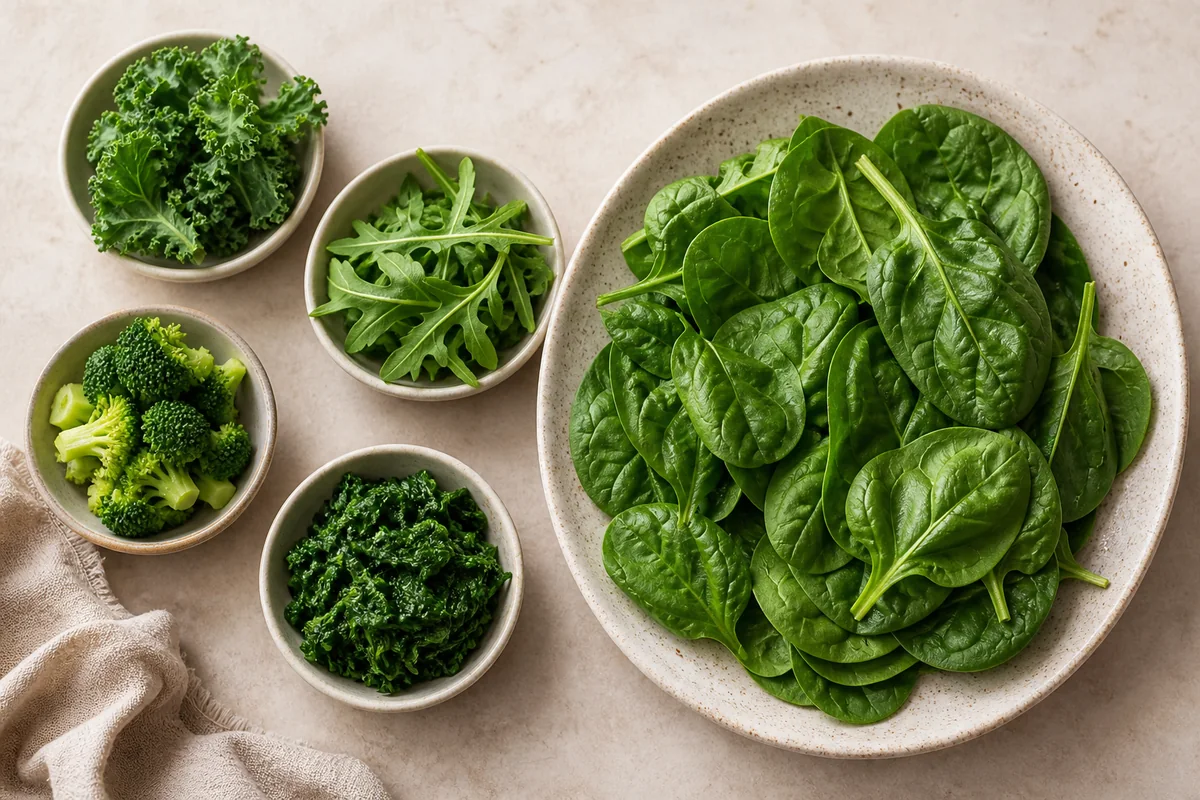
5 Best Spinach Substitutes (Flavor-Matched)
Ingredients
Equipment
Method
- Identify your spinach job: wilting for quick sauté, blending into sauce, or adding bulk to soups/stews.
- Choose the closest match from the list: for fast-wilt dishes, pick kale (baby) or Swiss chard; for convenience, pick thawed frozen spinach.
- Match quantity using the listed ratio, then adjust for intensity: if your substitute is stronger (arugula/broccoli rabe), start with less.
- Cook the substitute according to leaf toughness: sauté fast for tender greens, and simmer/long-sauté collards or rapini until tender.
- Taste and correct texture: if watery, squeeze or cook longer; if bland, add salt and a splash of acid (lemon/vinegar) near the end.
Notes
- For creamy dishes (lasagna filling, dips), drain and squeeze watery greens before mixing.
- For quick sautés, chop smaller so the substitute wilts at the same pace.
Tried this recipe?
Let us know how it was!
Carrie is a food writer and editor with more than 15 years of experience. She has worked for some of the biggest names in the food industry, including Bon Appétit, Food & Wine, and Martha Stewart Living.
As the Editor in Chief of EpicureDelight, Carrie oversees all of the content on the site. She also manages the team of contributing writers and editors, who help to create delicious recipes, helpful tips, and informative articles that you’ll find on the site.
A native of the Chicago area, Carrie is passionate about all things food. She loves trying new restaurants and experimenting with new recipes in her kitchen. She’s also a graduate of the Culinary Institute of America, so she knows a thing or two about food!



