
Shiitake mushrooms bring two things to a dish that are hard to replace separately: a firm, meaty texture that holds up to high heat, and a deep savory punch that comes from natural glutamates. Lose one of those and the dish falls flat.
A good shiitake mushroom substitute targets both. For stir-fries and sautés, texture comes first.
For soups and braises, flavor depth matters more.
Portobello and cremini are the closest everyday swap for shiitake's meaty texture. Oyster mushrooms bring savory depth fast. Dried porcini adds the most umami power in soups. Button mushrooms work in a pinch with heavy browning. Canned mushrooms are a last resort, drained and reduced well.
5 Best Shiitake Mushroom Substitutes Ranked by Use
The table below maps each substitute to its strongest use case and the ratio to start with. Use it as a quick reference before reading the full guidance below.
| # | Substitute | Best For | Ratio | Key Note |
|---|---|---|---|---|
| 1 | Portobello / Cremini | Both | 1:1 | Brown hard, don't steam |
| 2 | Oyster Mushrooms | Sauté | 1:1 | Keep pieces large |
| 3 | Dried Porcini | Soup | 1:1 | Use the soak liquid |
| 4 | Button Mushrooms | Both | 1:1 | Season up, brown deep |
| 5 | Canned / Jarred | Soup | ¾:1 | Drain well, reduce longer |
Pick based on cooking style. Browning dishes need texture.
Broth-based dishes need flavor depth.
1. Portobello or Cremini Mushrooms
Portobello and cremini are the most reliable swaps in everyday cooking. They are firm enough to slice thick, hold their shape in a hot pan, and develop a savory crust when cooked properly.
The key word there is properly. If you crowd the pan or cook them over medium heat, they steam and go soft.
Use a wide pan, a single layer, and high heat. Let them sit without stirring for 2 minutes so they actually brown.
That browning is what closes the gap between these and meaty umami caps.
- Ratio: 1:1 by volume or weight
- Slice thickness: Match the shiitake slices your recipe uses, usually ¼ to ½ inch
- Heat tip: Start with a dry, hot pan for 60 seconds before adding oil
- Cremini note: Smaller and slightly more tender than portobello; both work equally well
Portobello / Cremini
Works for: stir-fry, sauté, grain bowls, pasta, ramen toppings
Skip if: your dish depends on the intense aroma of dried shiitake broth, where dried porcini is a better fit
2. Oyster Mushrooms
Oyster mushrooms are a strong candidate for any dish that moves fast. They have good savory flavor and cook in under 4 minutes over high heat.
The keeping quality of oysters is shorter than most mushrooms, so use them quickly.
The only real danger is overcooking. Oyster mushrooms go silky-soft fast, which is fine in some dishes but wrong in a stir-fry where you want something with chew.
- Ratio: 1:1 by weight
- Tear, don't slice: Larger torn pieces hold up better than thin slices
- Timing: Add to the pan last; 2 to 3 minutes at high heat is enough
- Flavor note: Mild but savory; pair with soy or garlic to boost depth
Skip if: your dish relies on neat, thick slices that hold shape through long cooking. Use portobello or cremini instead.
3. Dried Porcini (Reconstituted)
When the goal is umami depth in a soup, stew, or braise, dried porcini is the best substitute in this list. The earthy forest flavor profile of porcini is different from shiitake, but both deliver that same savory backbone that makes a broth taste complete.
Soak dried porcini in just-boiled water for 20 minutes. Squeeze them gently, chop them to match your original recipe's pieces, and pour the soak liquid through a fine strainer to remove grit.
- Ratio: 1:1 by the mushroom amount after rehydrating; start with about ¼ of the dry weight
- Best uses: Soups, risottos, braises, gravies, and any sauce that simmers
- Soak liquid: Add 2 to 3 tablespoons at a time; taste as you go, as it is concentrated
- Texture note: Softer than fresh shiitake; chop small if the dish has a uniform texture
Skip if: you don't have 20 minutes to rehydrate. Use fresh portobello or cremini instead.
4. Button Mushrooms (Brown Hard)
Button mushrooms are mild. That is the honest starting point.
They share the same basic shape as cremini but have less flavor, so you have to work harder to get them to taste like anything close to shiitake.
The method that matters most is browning. Cook sliced button mushrooms in a single layer over high heat without touching them.
You want a dark, golden edge on each slice. Add a pinch of salt and a splash of soy halfway through for extra depth.
Understanding subtle mushroom flavor differences helps you know how much seasoning to add.
Button Mushrooms
Works for: everyday stir-fries, fried rice, pasta, and dishes with bold sauces that carry the flavor
Skip if: your recipe features mushroom as the main flavor event; choose dried porcini for that role
Ratio: 1:1 by volume. Expect some shrinkage, so start with a generous amount.
5. Canned or Jarred Mushrooms (Drained)
Canned mushrooms are the emergency option. They are pre-cooked, often softer than you want, and sometimes carry a faint brine flavor.
But they work when nothing else is available.
Drain them thoroughly in a colander, then press gently with a paper towel. If the can has added salt or seasoning, rinse briefly and adjust the dish's salt level at the end.
- Ratio: ¾:1 to account for their softer texture and lower flavor yield
- First step: Dry-cook in a hot pan for 2 to 3 minutes to drive off moisture before adding oil or sauce
- Chop them: Smaller pieces integrate better and hide the softer texture
- Seasoning check: Taste the dish before adding any extra salt; canned mushrooms often carry sodium
Skip if: your dish needs a firm, sautéed mushroom texture where the pieces need to hold shape. Use fresh mushrooms instead.
Making Your Shiitake Substitute Taste Right
The two steps that matter most are browning and moisture control. Most mushroom substitutes fail because they're cooked too gently, releasing liquid instead of developing flavor.
The earthy savory notes that these woody fungi are known for come from the Maillard reaction, and that only happens above steaming temperature.
Once the mushrooms have color, taste the dish. If it needs more depth, a small splash of soy sauce or a spoonful of stock closes the gap fast.
You can also explore salt-based umami swaps if soy is off the table.
- Browning timing: Let mushrooms sit undisturbed for at least 90 seconds per side before stirring; color means flavor
- Moisture control: Never cover the pan while cooking mushrooms; steam is the enemy of texture and crust
- Final seasoning: Add salt, soy, or a few drops of stock at the end and taste before serving, not before
Frequently Asked Questions
Portobello or cremini mushrooms are the best match. Slice them ¼ inch thick and brown over high heat to get a firm, savory result similar to shiitake.
Yes. Rehydrate them in hot water, chop the softened pieces, and add the strained soak liquid to your broth. The flavor is different but equally deep.
Not on their own. Button mushrooms are much milder, but deep browning and a splash of soy bring them closer to shiitake's savory profile.
Tear them into larger pieces and cook over high heat for no more than 3 minutes. Adding them last in a stir-fry prevents overcooking.
Hold back on added salt until the end. Canned mushrooms often carry sodium from the brine, so taste the finished dish before seasoning.
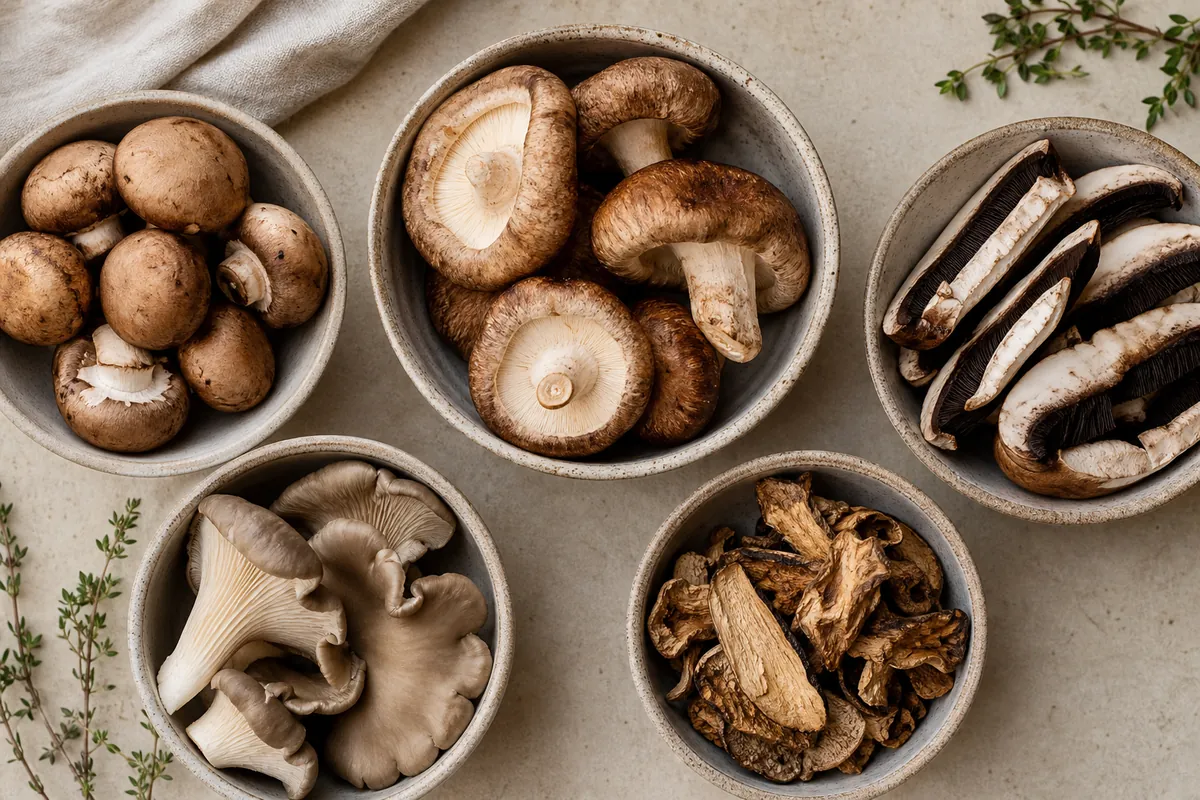
5 Best Shiitake Mushroom Substitutes (That Actually Work)
Ingredients
Method
- Choose the substitute based on cooking style: browning (portobello/cremini), quick sauté (oyster), or maximum umami (dried porcini).
- Measure using the listed ratio; for dried mushrooms, reconstitute first and chop the softened pieces.
- Brown or sauté until you see color (not steaming) so the flavor concentrates like shiitake.
- If the substitute is milder (button) or watery (canned), add salt carefully and extend cooking to reduce excess moisture.
- Taste at the end and adjust the rest of the dish’s seasoning to account for the substitute’s saltiness/strength.
Notes
- For maximum “shiitake-like” results, cook at high heat to drive off moisture and build browning.
- If your recipe needs shiitake for strong aroma, prioritize dried porcini or brown the substitute longer.
Tried this recipe?
Let us know how it was!
Carrie is a food writer and editor with more than 15 years of experience. She has worked for some of the biggest names in the food industry, including Bon Appétit, Food & Wine, and Martha Stewart Living.
As the Editor in Chief of EpicureDelight, Carrie oversees all of the content on the site. She also manages the team of contributing writers and editors, who help to create delicious recipes, helpful tips, and informative articles that you’ll find on the site.
A native of the Chicago area, Carrie is passionate about all things food. She loves trying new restaurants and experimenting with new recipes in her kitchen. She’s also a graduate of the Culinary Institute of America, so she knows a thing or two about food!



