
That custardy, pourable texture silken tofu gives a chocolate mousse or a creamy pasta sauce is genuinely hard to replicate. It blends into near-silk, adds body without fat, and holds moisture without making batters soggy.
The right silken tofu substitute depends on two things: whether your recipe needs smooth blending or baked structure. A sauce or pudding forgives more than a cheesecake filling does.
Silken tofu is soft, high-moisture, and blends into a custardy consistency that works in sauces, baked goods, and desserts. The best swap depends on whether you need smooth blending or baked structure. Greek yogurt and blended regular tofu are closest. Use cream cheese at ¾ the amount and thin with milk.
5 Best Silken Tofu Substitutes for Any Recipe
Each substitute below targets creaminess, not firmness. Start by matching your recipe goal to the "Best For" column, then apply the ratio directly.
For most blendable swaps, the 1:1 ratio holds well, but always check moisture before adding to batter.
Dairy-based swaps carry tang. If your finished dish tastes flat, a small pinch of salt or a few drops of lemon juice usually fixes it.
If you want to go fully plant-based, going dairy-free with a blended regular tofu is your cleanest path.
| # | Substitute | Best For | Ratio | Key Note |
|---|---|---|---|---|
| 1 | Greek Yogurt (Full-Fat) | Both | 1:1 | Stir smooth before using |
| 2 | Regular Tofu (Blended) | Both | 1:1 | Blend longer for silkiness |
| 3 | Ricotta (Blended) | Baking | 1:1 | Blend until fully smooth |
| 4 | Cottage Cheese (Blended) | Both | 1:1 | Drain if watery first |
| 5 | Cream Cheese (Thinned) | Baking | ¾:1 | Thin with milk or water |
1. Greek Yogurt
Full-fat plain Greek yogurt is the easiest swap most home cooks already have. It blends into a smooth, spoonable consistency that works in creamy sauces, dips, and most baked batters.
The tang is noticeable, especially in neutral desserts. Stir it well first, let it sit for 5 minutes, then beat or blend before adding it to your recipe.
That step removes most lumps.
Greek Yogurt (Full-Fat, Plain)
Works for: creamy dressings, baked goods like muffins or quick breads, dips, and smooth savory sauces
Skip if: your recipe needs a neutral, dairy-free base-the tang changes the flavor noticeably in delicate desserts
- Ratio: 1:1 by volume; no adjustment needed for most recipes
- Texture fix: Beat with a fork or blend 20 seconds before folding into batter
- Flavor balance: Add a pinch of salt if the yogurt tang reads as sour in savory dishes
- Best uses: Cheesecake-style dips, banana bread, creamy pasta sauce, smoothies
2. Regular Tofu (Blended Smooth)
Soft or medium-firm regular tofu is the most reliable tofu-to-tofu swap. It keeps the recipe dairy-free and holds the moisture level close to what silken tofu delivers.
The difference between various tofu types matters here: soft tofu blends faster, medium-firm needs 60-90 seconds in a blender to go fully smooth.
Blend it alone first, before any other ingredients. Graininess in the final dish almost always means you stopped blending too early.
- Ratio: 1:1; no moisture adjustment needed for most recipes
- Blending time: Blend 60-90 seconds minimum; scrape sides halfway through
- Moisture check: Press out a little water first if the block seems very wet
- Best uses: Smoothies, no-bake puddings, creamy pasta sauces, vegan mousses
Skip if: your recipe relies on silken tofu's ultra-delicate set. Blended medium-firm tofu is smooth but slightly denser and won't produce the same wobble in a baked custard.
3. Ricotta (Blended Smooth)
Ricotta is a surprisingly strong swap when you need body and a creamy baked texture. Think cheesecake-style fillings, certain muffin batters, and thick savory sauces.
It blends smoother than you'd expect, once you give it enough time in the blender.
When storing opened ricotta, use it within 5 days and blend just before adding to any recipe so it doesn't separate.
- Ratio: 1:1; no reduction needed unless the recipe is already very rich
- Blending step: Blend alone for 30-45 seconds until no grainy bits remain
- Flavor note: Whole-milk ricotta has a mild dairy sweetness that works in desserts
- Best uses: Cheesecake fillings, creamy baked pasta, dense muffin batters
Skip if: you're making a super-neutral pudding or mousse. Ricotta's sweetness and mild tang will come through in lighter desserts.
4. Cottage Cheese (Blended, Drained)
Cottage cheese is the emergency-pantry option. It works, but it needs two things before you add it to anything: drain it if it's watery, and blend it until curds disappear completely.
Skip either step and the texture will be grainy.
| Use | Ratio | Notes |
|---|---|---|
| Creamy sauces | 1:1 | Blend 60 sec; skip draining if it's already thick |
| Baked batters | 1:1 | Drain first if brand is watery; blend 90 sec minimum |
| Dips and spreads | 1:1 | Blend smooth; add a pinch of salt to round the flavor |
- Draining: Set in a fine-mesh strainer for 10 minutes if the cottage cheese pools liquid
- Blending time: 60-90 seconds; stop and check, then blend again if any curds remain
- Flavor: Milder than Greek yogurt; closer to a neutral base after blending
Skip if: you cannot blend. Unblended cottage cheese curds have a completely different texture and will not work as a silken tofu stand-in.
5. Cream Cheese (Softened, Thinned)
Cream cheese delivers real smoothness and a rich set. It is noticeably thicker than silken tofu though, so thinning is not optional.
Add milk or water 1 tablespoon at a time, blending after each addition, until the texture pours easily.
Cream Cheese (Softened, Thinned)
Works for: cheesecake-style batters, dense baked goods, creamy frosting bases, and thick savory dips
Skip if: you need a neutral or dairy-free swap-cream cheese has a strong, recognizable flavor
Soften it at room temperature for 20 minutes before blending. Cold cream cheese doesn't thin evenly and may leave streaks in batter.
- Ratio: Start at ¾ the amount called for, then add thinned cream cheese to reach consistency
- Thinning method: Add 1 tablespoon milk or water at a time; blend between additions
- Flavor note: Tangy and rich-works best in recipes that can carry that profile
- Best uses: Cheesecake batter, creamy baked dips, dense muffin or brownie bases
Making Silken Tofu Substitutes Work in Any Recipe
The core decision is simple: match the swap to your texture goal, check moisture, and blend long enough. Most failures come from two mistakes-not blending until fully smooth, or skipping the drain step with watery swaps like cottage cheese.
If you are ever unsure which substitute matches a specific recipe format, understanding the soft, custard-like quality of silken tofu helps you judge which swap will behave closest to it. Adjust salt or add a small touch of acid after mixing to keep the flavor from falling flat.
- Blend or drain first: Always blend grainy swaps (ricotta, tofu, cottage cheese) alone before adding to the recipe; drain watery cottage cheese for 10 minutes first
- Stay consistent with ratios: Use 1:1 for most swaps; drop to ¾ for cream cheese and thin to match pourable silken tofu consistency
- Balance the flavor: A small pinch of salt or a few drops of lemon juice corrects the tang and prevents the swap from tasting heavy or flat
Frequently Asked Questions
Yes, full-fat Greek yogurt works 1:1 in most baked recipes. Stir it smooth before adding, and expect a mild tang in the finished result.
Blended soft or medium-firm tofu is the closest match for ultra-smooth sauces. Blend it alone for 60-90 seconds before adding it to your recipe.
Yes, if you blend it long enough. Process whole-milk ricotta alone for 30-45 seconds until completely smooth before folding it into mousse or pudding.
Add milk or water 1 tablespoon at a time and blend after each addition. Stop when the texture pours freely, similar to thick cream.
Yes, always blend it. Unblended cottage cheese leaves visible curds that change the texture completely in sauces, batters, and dips.
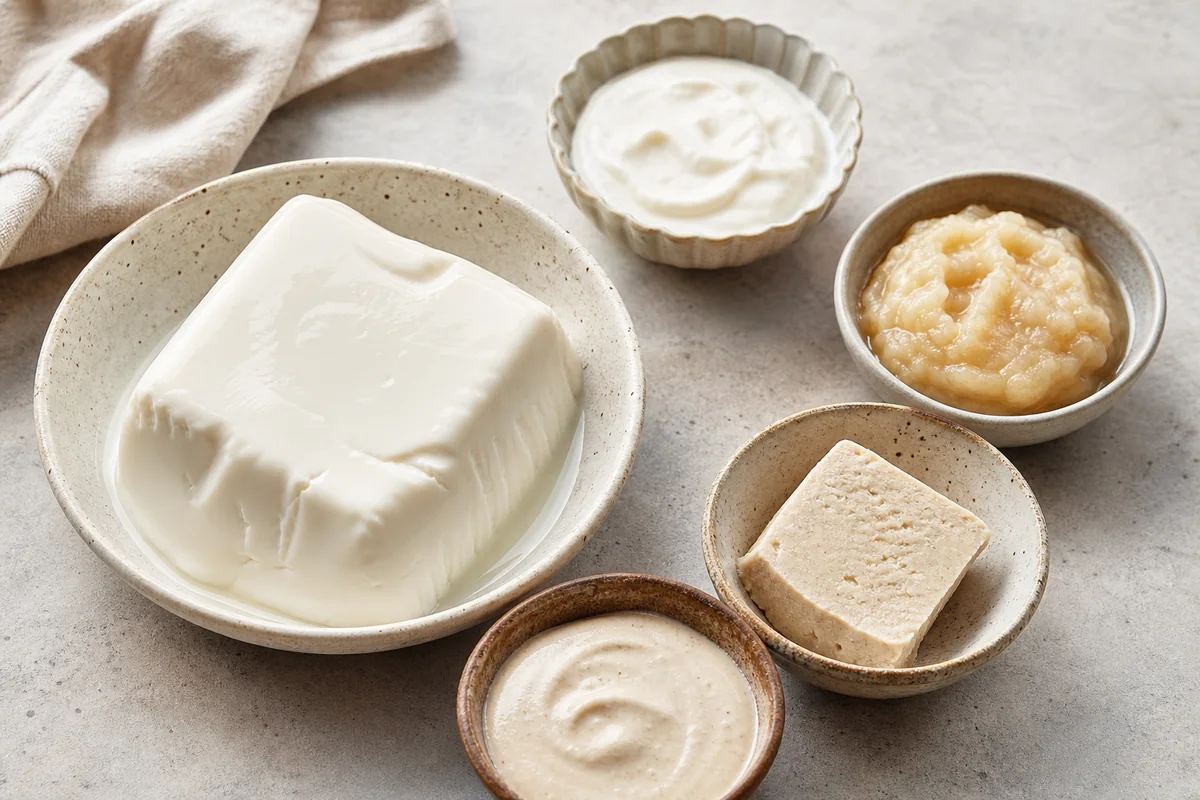
5 Best Silken Tofu Substitutes for Any Recipe
Ingredients
Equipment
Method
- Identify your recipe goal: silky blending (sauces/mousses) or baking set (cakes/brownies/puddings).
- Choose the closest substitute from the list and apply the listed substitution ratio.
- If your substitute is grainy or lumpy (tofu, ricotta, cottage cheese), blend or beat until fully smooth before adding to your recipe.
- Adjust consistency: if it’s thicker than silken tofu, thin with a small splash of water or milk; if it’s too loose, reduce or drain.
- Taste and balance: add a small pinch of salt or a tiny touch of lemon/vinegar to prevent the swap from tasting flat.
Notes
- For the smoothest results, blend substitutes that contain curds (ricotta/cottage cheese).
- When substituting dairy for tofu, reduce cook time slightly if your batter threatens to split or curdle.
Tried this recipe?
Let us know how it was!
Carrie is a food writer and editor with more than 15 years of experience. She has worked for some of the biggest names in the food industry, including Bon Appétit, Food & Wine, and Martha Stewart Living.
As the Editor in Chief of EpicureDelight, Carrie oversees all of the content on the site. She also manages the team of contributing writers and editors, who help to create delicious recipes, helpful tips, and informative articles that you’ll find on the site.
A native of the Chicago area, Carrie is passionate about all things food. She loves trying new restaurants and experimenting with new recipes in her kitchen. She’s also a graduate of the Culinary Institute of America, so she knows a thing or two about food!



