
Sole is unforgiving when you pick the wrong swap. Its texture is paper-thin and flakes at the gentlest fork pressure, so dropping in a thick, meaty fillet just does not work.
A good sole fish substitute matches that delicate build before anything else.
The best substitutes for sole are flounder, halibut (sliced thin), cod, pollock, and tilapia. All five are mild and flaky enough to stand in for sole in pan-frying, baking, or light sauces. Match thickness first, pull from heat the moment the fillet turns opaque, and finish with butter or lemon.
Sole's flavor profile is worth understanding before you shop. The sole flavor profile is genuinely neutral, which means any substitute with a stronger taste will stick out.
Keep that in mind as you read below.
5 Best Sole Fish Substitutes (And What to Expect)
Three things matter when picking a swap: how easily the fillet flakes, how mild it tastes, and how fast it cooks through. Thin, white-fleshed fish score best on all three.
The table below ranks each option by those factors so you can choose before reading every detail.
| # | Substitute | Best For | Ratio | Key Note |
|---|---|---|---|---|
| 1 | Flounder | Both | 1:1 | Closest flake and flavor |
| 2 | Halibut (thin) | Both | ¾:1 | Slice thinner for best result |
| 3 | Cod | Both | 1:1 | Keep heat moderate |
| 4 | Pollock | Both | 1:1 | Add sauce to prevent dryness |
| 5 | Tilapia | Both | 1:1 | Needs seasoning lift |
Pick by flakiness first. A thin, flaky fillet is always easier to rescue than a thick, dense one.
1. Flounder Fillets
Flounder is the answer most cooks land on, and for good reason. Its mild taste and fine flake size sit close enough to sole that most diners won't notice the difference, especially in a pan sauce or light lemon butter.
Flounder vs. Sole
Works for: pan-frying, baking, steaming, any preparation that calls for whole flat fillets
Skip if: your flounder fillets are noticeably thicker than your sole-thicker cuts take longer and feel less delicate on the plate
If you want to go deeper on this option, the flat-fish swap options page covers related picks that behave the same way.
- Ratio: 1:1 by weight; no adjustment needed for standard fillets
- Cook time: Pull it as soon as the edges turn white and the center is just opaque
- Sauce pairing: White wine, lemon butter, or capers all work without overwhelming the fillet
- Watch thickness: If the flounder fillet is over ½ inch thick, reduce heat and add 90 seconds to cooking time
2. Halibut (Thin Cut)
Halibut is denser and slightly firmer than sole, so the swap requires one small adjustment. Buy the thinnest portion available, or ask your fishmonger to slice it down to about ¼ inch.
- Ratio: Use about ¾ the weight you'd use for sole, or slice the fillet thinner
- Cook time: Reduce heat by 10-15% and check doneness 1 minute earlier than the recipe states
- Texture note: Halibut will have a slightly firmer bite; it works best in baked dishes where that firmness is less obvious
- Moisture tip: A drizzle of olive oil or butter before baking keeps it from drying at the edges
For dishes where halibut itself is the starting point, swapping firm white fish gives you a broader set of options to consider.
Skip if: you cannot slice the halibut thinner. A full-thickness halibut steak will stay too firm and won't mimic sole's gentle flake no matter how carefully you cook it.
3. Cod Fillets
Cod is probably in your freezer already, and it handles both pan and oven well. It flakes cleanly and its flavor stays neutral, which is exactly what a sole-style dish needs.
The cod flavor breakdown explains why it stays neutral even with bold sauces, which matters for dishes where sole is the quiet background note.
- Pan-frying: Medium heat, 2-3 minutes per side for a ½-inch fillet; done when it separates cleanly at the thickest point
- Baking: 375°F for 12-15 minutes; internal temperature should reach 145°F
- Thick pieces: Cut center-cut cod into thinner portions to match sole's cook speed
- Doneness check: Press lightly with a fork; it should flake in large, clean pieces, not paste
Skip if: your cod is very thick and you plan to cook at high heat. The surface overbrowns before the center gets flaky, which is the opposite of what sole-style cooking wants.
4. Pollock Fillets
Pollock is leaner than sole, and that leanness is both its strength and its one liability. It cooks fast, tastes clean, and pairs well with almost any sauce.
For best results with pollock, choosing a citrus-forward method keeps the flavor bright without relying on fat to carry the dish.
- Fat buffer: Finish with a tablespoon of butter or a splash of white wine during the last 60 seconds; this prevents the dry, cottony texture lean fish can develop
- Seasoning: A small pinch of onion powder and fresh dill pulls pollock closer to sole's clean profile
- Heat level: Gentle to medium only; high heat for more than 3 minutes pulls moisture out fast
- Sauce timing: Add any cream or butter sauce while the fish is still in the pan, not after plating
Skip if: you're cooking pollock over very high heat for a long time. Its lean texture turns dry and slightly tough, which is the opposite of the tender bite sole delivers.
5. Tilapia
Tilapia is the budget-friendly fallback, and it works better than its reputation suggests. It is thin, mild, and widely available, which checks the three boxes that matter most when you need a sole fish substitute in a hurry.
The catch is that tilapia's neutral flavor can come across as flat without help. A squeeze of acid at the end, or a quick sauce, corrects that fast.
If you want to see what else sits in this flavor category, mild freshwater fish picks covers several options in the same lane.
- Cook time: 2-3 minutes per side over medium heat; pull it the moment it's opaque all the way through
- Brightness fix: Finish with lemon juice, a splash of white wine vinegar, or capers
- Texture risk: Overcooked tilapia gets stringy; set a timer and don't walk away
| Use | Ratio | Notes |
|---|---|---|
| Pan-fry | 1:1 | Medium heat; finish with 1 teaspoon lemon juice in pan |
| Bake | 1:1 | 375°F, 10-12 min; brush with butter before going in |
| Light sauce | 1:1 | Add sauce in last 2 min; don't let tilapia sit in liquid |
Skip if: you dislike neutral or mildly sweet fish notes. Tilapia needs seasoning lift to feel like sole, and if you're not willing to add that, the result will taste flat.
Making Any Sole Fish Substitute Work
The single biggest mistake cooks make is treating a substitute like it behaves exactly like sole without adjusting thickness or time. Most thin white fish follow the same rule: pull it from heat the moment the fillet turns fully opaque, let carryover heat finish the center for 30 seconds off heat, and add moisture if the fish is leaner than sole.
If you are ever uncertain about freshness before cooking, checking storing white fish properly is worth a quick read. For the brightness that sole naturally carries, picking the right acidic finish gives you several options beyond standard lemon.
- Thickness first: Slice or request thin-cut fillets; anything over ¾ inch will cook unevenly at sole's standard heat and time
- Lean fish = add fat: Pollock and tilapia need a small butter drizzle or pan sauce in the last 60 seconds to match sole's tender, moist bite
- Doneness is visual: Opaque flesh that separates cleanly at the fork is done; translucent center means 30 more seconds, not 3 more minutes
Frequently Asked Questions
Flounder is the closest match. It has nearly the same thin build, mild taste, and fine flake size as sole, making it a straight 1:1 swap in almost any preparation.
Yes, cod works well baked at 375°F for 12-15 minutes. Use center-cut portions and keep the pieces thin to match sole's cook time and texture.
Add a tablespoon of butter or a splash of stock in the last 60 seconds of cooking. Lean fish dries quickly, so a small fat or liquid buffer makes a real difference.
It works if you cook it quickly over medium heat and finish with lemon or a light pan sauce. Without that brightness boost, tilapia tastes flatter than sole.
Lower the heat by about 10-15% and add 1-2 minutes to your cook time per extra ¼ inch of thickness. Check doneness by flaking the thickest point with a fork.
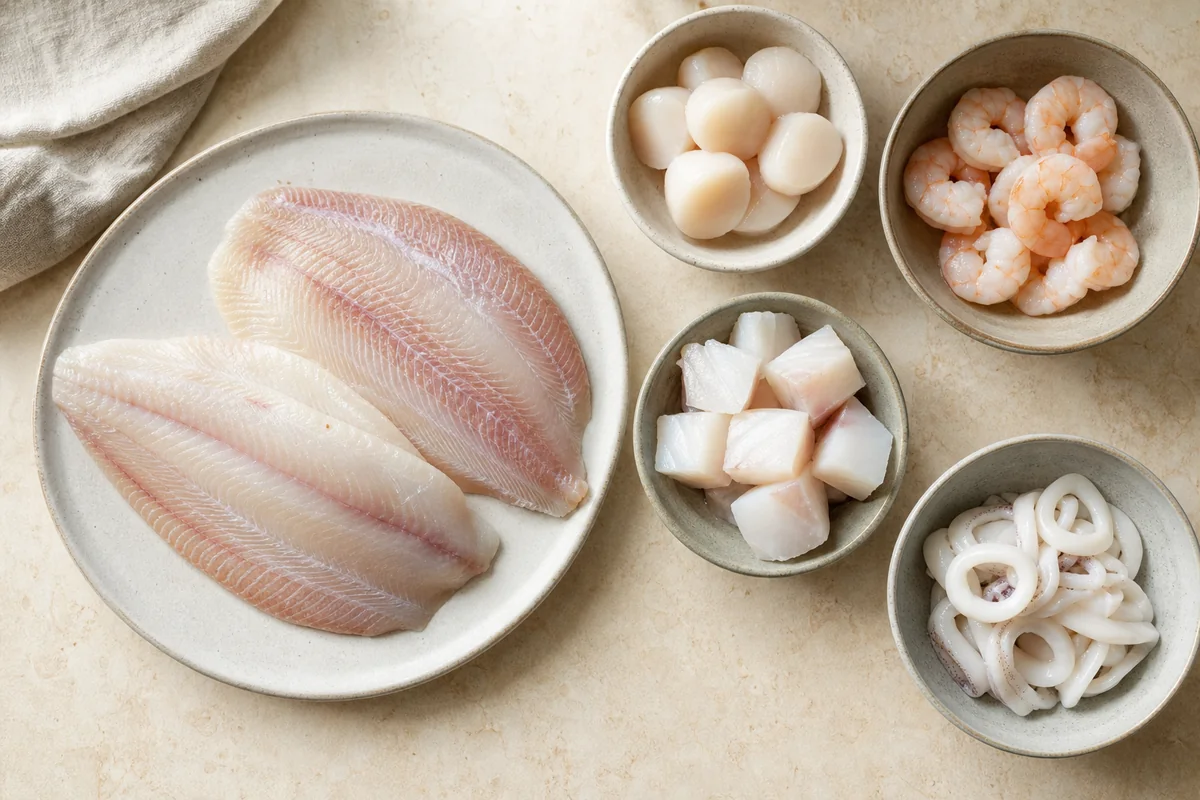
5 Best Sole Fish Substitutes (Tested)
Ingredients
Equipment
Method
- Start with the cooking method you planned (pan-fry, bake, or poach) and match the substitute’s flake behavior: thin, flaky fillets are easiest.
- Use the table ratio: for 1:1 swaps, replace sole directly; for denser options, use the reduced ratio and slice thinner if possible.
- Keep cooking time conservative—pull the fish as soon as it turns opaque and flakes gently with a fork.
- If the substitute is leaner than sole, add a small moisture buffer (butter drizzle, splash of stock, or a light sauce) during the last minutes.
- Taste and adjust seasoning at the end (salt + a squeeze of lemon or light vinegar) to restore sole’s clean, mild finish.
Notes
- For best texture, choose fillets closest in thickness to your sole; adjust cooking time more than ingredient volume.
Tried this recipe?
Let us know how it was!
Carrie is a food writer and editor with more than 15 years of experience. She has worked for some of the biggest names in the food industry, including Bon Appétit, Food & Wine, and Martha Stewart Living.
As the Editor in Chief of EpicureDelight, Carrie oversees all of the content on the site. She also manages the team of contributing writers and editors, who help to create delicious recipes, helpful tips, and informative articles that you’ll find on the site.
A native of the Chicago area, Carrie is passionate about all things food. She loves trying new restaurants and experimenting with new recipes in her kitchen. She’s also a graduate of the Culinary Institute of America, so she knows a thing or two about food!



