
That sharp, salty bite of Stilton is hard to fake. It's blue-veined, crumbly, and has a tang that lingers-and no single stilton cheese substitute is going to be identical.
But six come very close, depending on whether you're crumbling it over a salad, stirring it into a sauce, or melting it over a burger.
Stilton's flavor builds from two things: blue mold cultures and extended aging. Most swaps lean on one or the other.
Understanding what blue mold does to flavor helps you pick the right match before you start cooking.
For a stilton cheese substitute, Roquefort is the closest match for bold blue tang, while Gorgonzola dolce works better for melting. Wensleydale with blue and Maytag blue both crumble well. Cream cheese blended with blue cheese powder is the best emergency option when nothing else is available.
5 Best Stilton Cheese Substitutes Ranked by Use Case
Each of these swaps works for a specific situation. The table below maps them fast.
| # | Substitute | Best For | Ratio | Key Note |
|---|---|---|---|---|
| 1 | Roquefort | Boards & Crumbles | 1:1 | Saltier than Stilton |
| 2 | Gorgonzola dolce | Sauces & Spreads | 1:1 | Creamier, milder tang |
| 3 | Wensleydale with blue | Salads & Toppings | 1:1 | Gentler blue flavor |
| 4 | Maytag blue | Crumbles & Burgers | 1:1 | Firm, punchy blue bite |
| 5 | Cream cheese + blue powder | Dips & Sauces | 1:1 | Dial tang gradually |
Start with a 1:1 swap across the board, then adjust saltiness and tang from there. If you're storing leftover blue cheese, wrap it tightly in foil to slow the mold from spreading.
1. Roquefort
Roquefort is the sharpest match for Stilton's blue punch. It's briny, slightly sheepy, and crumbles into similar-sized pieces-so it works on a cheese board or folded into a warm dressing almost without adjustment.
The one difference worth noting is salt. This cave-aged French cheese tends to run saltier than Stilton, so taste before you season anything else.
Reduce added salt by about half a teaspoon when using it in sauces.
- Boards and crumbles: Use a 1:1 swap, crumbled into chunks similar in size to Stilton
- Warm sauces: Add off-heat and stir gently to avoid a grainy split
- Salads: Works directly from the fridge; no prep change needed
- Intensity cue: Expect a sharper, saltier finish than Stilton-dial back other sharp ingredients
Skip if: you want a mild, creamy result. Roquefort reads noticeably sharper than Stilton and won't soften in cooking the way a younger blue does.
2. Gorgonzola Dolce
Gorgonzola dolce is the smoothest option here. It's younger and wetter than Stilton, with a buttery base and a gentler blue flavor that melts into sauces without separating.
If choosing a safer blue for hot dishes is your priority, this is the one to reach for.
- Melting: Keep heat low-medium-low or off-heat stirring prevents graininess
- Spreads and dips: Use straight as a 1:1 swap; texture will be slightly softer
- Preventing graininess: Add a tablespoon of cream to the pan before stirring in the cheese
- Boards: It's spreadable, not crumbly-serve with a knife, not a fork
Skip if: you need a dry, crumbly Stilton texture. Gorgonzola dolce is too soft to crumble onto salads or hold its shape on a board.
3. Wensleydale with Blue
Wensleydale with blue sits closer to Stilton in texture than almost anything else on this list. It crumbles cleanly, holds its shape at room temperature, and has a mild-to-medium blue character that works in salads and cold toppings.
The tang is gentler than Stilton's. Think of it as Stilton with the volume turned down by about 30 percent.
Stilton vs. Wensleydale with Blue
Works for: salad crumbles, cheese boards, cold toppings, baked pastry fillings
Skip if: you need a very briny, intense blue punch-Wensleydale blue feels noticeably gentler
For those who want to explore what makes Stilton's bite distinct before swapping, the aged-rind character it develops is what Wensleydale with blue partially replicates.
- Salads: Crumble directly over greens at a 1:1 ratio
- Hot dishes: Add at the end of cooking only-it can turn grainy under direct heat
- Boards: Serve in larger chunks; it holds its form well at room temperature
4. Maytag Blue
Maytag blue is an American-made firm blue that crumbles easily and brings a strong, slightly sweet blue bite. It's the best option when you need something that holds its shape in a crumble and delivers enough flavor to stand up to bold ingredients-think burgers, steak toppings, and grain salads.
When picking the right blue for a savory dish, Maytag blue is the one to choose when Stilton's intensity matters more than its creaminess.
- Burgers and steaks: Crumble 2 tablespoons per serving directly on top in the last 2 minutes of cooking
- Grain salads: Use a 1:1 swap, crumbled coarsely
- Portioning: Start with 75% of the amount called for-Maytag blue can dominate; add more to taste
- Dressings: Works well stirred into a cream base over low heat
Skip if: your recipe needs a mild cheese flavor. Maytag blue is punchy and will overpower delicate dishes like light soufflés or mild cream sauces.
5. Cream Cheese + Blue Cheese Powder
This is the emergency option, and it works better than most people expect. Cream cheese provides the body and creaminess; blue cheese powder adds the tang.
You control exactly how sharp the result gets by adjusting the powder one teaspoon at a time.
When working with a soft cheese base, starting at a lower powder ratio and building up prevents the flavor from going too sharp too fast.
| Use | Ratio | Notes |
|---|---|---|
| Dips | 4 oz cream cheese + 1 teaspoon powder | Smooth; add ½ teaspoon more if tang is weak |
| Sauces | 3 oz cream cheese + 1½ teaspoon powder | Loosen with 2 tablespoon cream over low heat |
| Spreads | 4 oz cream cheese + 2 teaspoon powder | Stir well; rest 10 min before serving |
- Mix order: Soften cream cheese first, then fold in powder-don't reverse this
- Adjust gradually: Add powder in ½ teaspoon increments and taste between each addition
- Finish: A small squeeze of lemon (about 1 tsp) sharpens the tang without making it sour
Skip if: you need true crumbles. This blend is smooth and spreadable-it won't replicate the dry, granular texture of crumbled Stilton.
Making a Stilton Cheese Substitute Taste Like the Real Thing
The difference between a passable swap and a good one usually comes down to technique, not the cheese itself. Most blue-cheese substitutes behave well when treated gently-low heat, off-heat finishing, and a final seasoning pass at the end.
For anyone building a sauce, the principle is simple: add the cheese last.
Two things consistently improve any blue substitute: a small knob of butter stirred in at the end, and a touch more acid than you think you need.
- Heat control: Remove the pan from the burner before adding the cheese-residual heat is enough to melt it without causing graininess
- Timing: For crumbly substitutes like Roquefort or Maytag blue, add them in the final 60 seconds of any hot preparation
- Final seasoning: Taste after the cheese melts, then add salt, a squeeze of lemon, or a teaspoon of cream to balance tang and texture
If you want to get the full picture on how blue-style flavors hold up under heat, the science behind why blues taste sharp explains why off-heat finishing works so well. And if you're working with a yogurt-based substitute instead, choosing the right yogurt base matters just as much as the cheese you pair it with.
Frequently Asked Questions
Roquefort is the closest match for Stilton's bold, briny blue tang. Use it at a 1:1 ratio but reduce added salt in the recipe, since Roquefort runs saltier than Stilton.
Yes, and it actually melts more smoothly than Stilton. Add it off-heat and stir gently to prevent graininess.
Remove the pan from heat before adding the cheese, then stir constantly. Adding a tablespoon of cream to the pan first also helps keep the texture smooth.
Yes. It crumbles cleanly and holds shape well at room temperature. The blue flavor is gentler than Stilton, so use a little more if you want stronger tang.
Gorgonzola dolce is the mildest option that still keeps a blue-cheese character. For something even gentler, cream cheese blended with a small amount of blue cheese powder gives you full control over intensity.
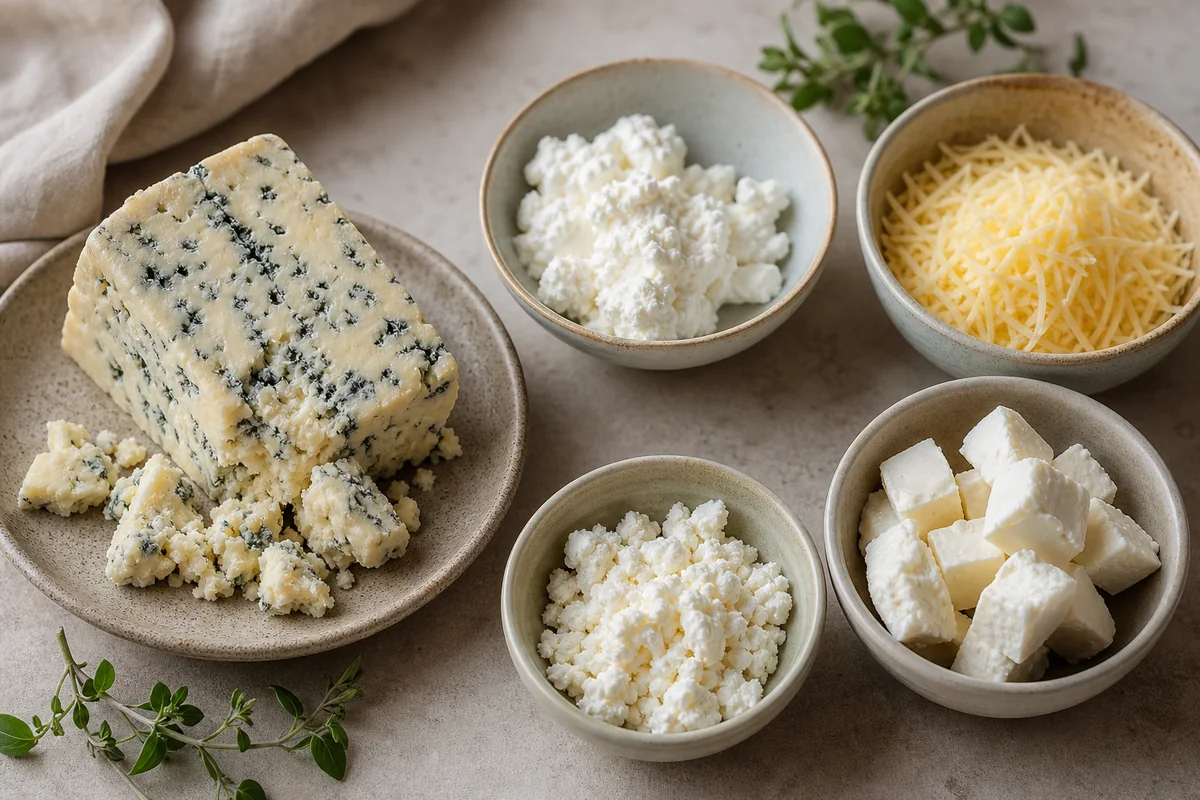
5 Best Stilton Cheese Substitutes (Honest Picks)
Ingredients
Equipment
Method
- Decide how you’re using the cheese: crumble (salads, cheese boards) vs. stir-melt (sauces, pasta, burgers).
- Start with a 1:1 amount, then adjust intensity: add a little more blue cheese if flavor is muted or add creamier base if it’s too sharp.
- For crumbly substitutions (Roquefort, Wensleydale blue, Maytag blue), crumble finer than you think so it blends into sauces.
- For softer substitutions (Gorgonzola dolce, cream cheese blends), warm gently or stir off-heat to avoid graininess.
- Taste at the end and rebalance: a pinch of salt and a tiny squeeze of lemon can sharpen, while a spoon of butter/cream smooths.
Notes
- Use 1:1 as a starting point, then adjust because blue cheeses vary in saltiness and age.
- When in doubt for sauces, choose a creamier blue (Gorgonzola dolce) and add tang back if needed.
Tried this recipe?
Let us know how it was!
Carrie is a food writer and editor with more than 15 years of experience. She has worked for some of the biggest names in the food industry, including Bon Appétit, Food & Wine, and Martha Stewart Living.
As the Editor in Chief of EpicureDelight, Carrie oversees all of the content on the site. She also manages the team of contributing writers and editors, who help to create delicious recipes, helpful tips, and informative articles that you’ll find on the site.
A native of the Chicago area, Carrie is passionate about all things food. She loves trying new restaurants and experimenting with new recipes in her kitchen. She’s also a graduate of the Culinary Institute of America, so she knows a thing or two about food!



