
Sumac has a personality that's hard to fake: tart like lemon, faintly astringent, with a dried-berry aroma that lingers on roasted meats and salads. It's a finishing spice as much as a seasoning.
Most substitutes can cover the sour part well. Fewer match the perfume.
A good sumac substitute depends on how the spice is being used. Dusted over fattoush or grilled chicken, it needs aroma.
Worked into a marinade or sauce, pure acidity does most of the job.
The five options below are ranked by how closely they mirror both qualities. None is a perfect replica, but each works when you know which dishes to use it in.
Sumac brings tart lemon-like brightness and a subtle dried-fruit aroma to food. For finishing, lemon zest plus a small splash of juice is the closest match. For baking and sauces, citric acid gives the most consistent and measurable sourness without adding moisture.
5 Best Sumac Substitutes, Ranked by Flavor Match
These five swaps cover the main situations where sumac goes missing: finishing a salad, building a marinade, saucing a grain bowl, or baking something that needs a sour edge. They're ordered by how closely each one mirrors sumac's two-part job of tang plus aroma.
| # | Substitute | Best For | Ratio | Key Note |
|---|---|---|---|---|
| 1 | Lemon zest + juice | Both | 1:1 | Closest aroma match |
| 2 | Citric acid (food-grade) | Both | 1:1 | Pure, dry sourness |
| 3 | Rice vinegar | Savory | ¾:1 | Mellow, gentle tang |
| 4 | Pomegranate molasses | Savory | ¾:1 | Dilute before using |
| 5 | Sherry or white wine vinegar | Savory | ½:1 | Use sparingly, winey |
1. Lemon Zest + Juice
Lemon zest carries the aromatic oils that make sumac smell the way it does: citrusy, slightly floral, and dry. Juice adds the actual sour punch.
Together, they're the closest you'll get to sumac's two-part character without sourcing a specialty spice.
Use the zest generously. For storing fresh zest, a sealed container in the fridge keeps it bright for up to a week.
A light splash of juice alongside pulls the finish into sharper territory.
- Finishing on salads: Zest 1 lemon over the bowl, then squeeze in about 1 teaspoon juice per 1 teaspoon sumac called for.
- Roasted meats: Scatter zest over the protein right before serving for the most aroma.
- Marinades: Add juice to the liquid base; save zest for after cooking.
- Dressings: Start with zest first, taste, then add juice in small additions.
Skip if: your recipe needs a fully dry powder finish. Zest adds slight moisture and juice adds significant liquid, which can soften a crust or dilute a spice rub.
2. Citric Acid (Food-Grade)
Citric acid is essentially pure sourness in powder form. It's available at most grocery stores near the canning supplies.
In baking or sauces, it lets you dial in tartness without adding any liquid at all.
The main limitation is aroma. Citric acid has none of sumac's dried-fruit perfume.
If you want that quality, add a pinch of finely grated zest alongside. For the acid-vs-preservative tradeoff, the sourness intensity of citric acid is notably stronger per gram than most alternatives.
- Baking: Start with ¼ teaspoon per 1 teaspoon sumac, mixed directly into dry ingredients.
- Sauces and dressings: Dissolve in a small spoon of warm water first to avoid clumping.
- Spice rubs: Combine with a pinch of zest powder (or dried lemon peel) to approximate sumac's aroma.
- Tasting adjustment: If the dish tastes flat rather than tart, add a second small pinch before increasing quantity.
Skip if: you're after the aromatic side of sumac and aren't adding anything else with citrus notes. Citric acid alone reads as clean acid, not fruity spice.
3. Rice Vinegar
Rice vinegar is the gentlest option on this list. Its tang is mild and faintly sweet, which means it won't hijack a dish the way a sharp red wine vinegar would.
It's best when sumac is mixed into a dressing or marinade, not dusted over the top.
When swapping out mild vinegar in any recipe, the same rule applies: go low, taste, and build. Add rice vinegar in small amounts, then bring in a pinch of salt and a scrap of aromatics (garlic, dried herbs) to round the sharpness into something more layered.
A ratio of ¾ teaspoon rice vinegar for every 1 teaspoon sumac is a fair starting point. Reduce by half if the dressing is already acidic from another source like mustard or yogurt.
Skip if: the recipe needs sumac as a dry finish or sprinkle. Vinegar adds liquid and will wet a surface where powder should sit.
4. Pomegranate Molasses (Diluted)
Pomegranate molasses has tangy, fruity depth that lands surprisingly close to sumac in grain bowls and roasted vegetable dishes. The catch is sweetness: undiluted, it can overpower rather than brighten.
Understanding this syrup's layered tartness helps here. Dilute 1 part molasses with 1 part water before adding it in place of sumac.
That cuts the stickiness and lets the tang come through without the sweetness dominating. For savory dishes, add a small pinch of salt after mixing.
Sumac-Like Tang
Works for: grain bowls, roasted vegetables, sauces, Middle Eastern-style dishes
Skip if: you need a dry, spice-rub finish or want purely tart with no fruit sweetness
Sweetness Risk
Works for: dishes with salt, fat, or bitter elements that balance the sugar
Skip if: the recipe is already sweet, or you can't tolerate a syrupy texture change
- Dilution ratio: Mix 1 teaspoon molasses with 1 teaspoon water to approximate ¾ teaspoon sumac.
- Salads: Whisk into the dressing base; don't drizzle raw molasses directly on leaves.
- Roasted vegetables: Add during the last 5 minutes of roasting, not at the start.
- Correction: Too sweet? Add a small squeeze of choosing a different tart swap may be easier than over-acidifying.
Skip if: you're baking or need a powder-like result. Molasses is syrupy and changes texture in a way that's hard to correct.
5. Sherry or White Wine Vinegar
Both dry sherry vinegar and white wine vinegar give a quick acidic kick when sumac isn't available. They're emergency swaps, not first-choice options, because both carry a wine-like undertone that can be noticeable in lighter dishes.
White wine vinegar is the subtler of the two. This pale tangy vinegar tends to stay sharper longer than sherry vinegar once opened, making it the more reliable pantry staple. Use no more than half the amount of sumac called for, then taste before adding more.
Fast Acid Kick
Works for: marinades, pan sauces, quick pickles, hearty grain dishes
Skip if: the dish is delicate (light seafood, soft yogurt sauce) and you can't afford a wine note
Wine Flavor Risk
Works for: dishes with bold spices, garlic, or fat that absorb the vinegar's character
Skip if: sumac is the primary flavor in the recipe, since vinegar's own character will show
Skip if: you're making a spice rub or anything where dry texture is required. A splash of vinegar will darken and wet any dry ingredient it contacts.
Making Sumac Substitutes Work
The fastest way to choose is to ask one question: is the sumac finishing the dish or cooking inside it? For finishing, reach for something aromatic like lemon zest.
For mixing in, pure acidity options like citric acid or rice vinegar handle the job cleanly. When bright citrus-based swaps go into dressings or sauces, they work without much fuss.
For baked goods, always mix your substitute into wet ingredients first and check tartness before adding the full amount.
- Dish tastes flat: Add a small pinch of salt before reaching for more acid. Salt amplifies sourness without sharpening it further.
- Substitute too sharp: Stir in a tiny amount of honey or a splash of water or stock to mellow the acid edge.
- Substitute too wet: Reduce the other liquid in the recipe by the same amount, or let the dish cook uncovered for 2 to 3 minutes longer.
Frequently Asked Questions
Lemon zest is the closest match for a finishing sprinkle. It carries the aromatic, dried-citrus quality sumac has, and a tiny squeeze of juice alongside it adds the sour punch.
Yes, but use it carefully. Lemon juice adds moisture, so reduce another liquid in the recipe by the same amount to keep texture consistent.
Start with ¼ teaspoon of citric acid for every 1 teaspoon of sumac, then taste before adding more. Citric acid is significantly sharper per gram than sumac.
Rice vinegar or lemon juice both work well. Rice vinegar is gentler and won't dominate; lemon juice is brighter and pairs better with herb-heavy dressings.
For too sharp: add a pinch of salt first, then a drop of honey if needed. For too sweet: add a small squeeze of lemon juice to restore the tart edge.
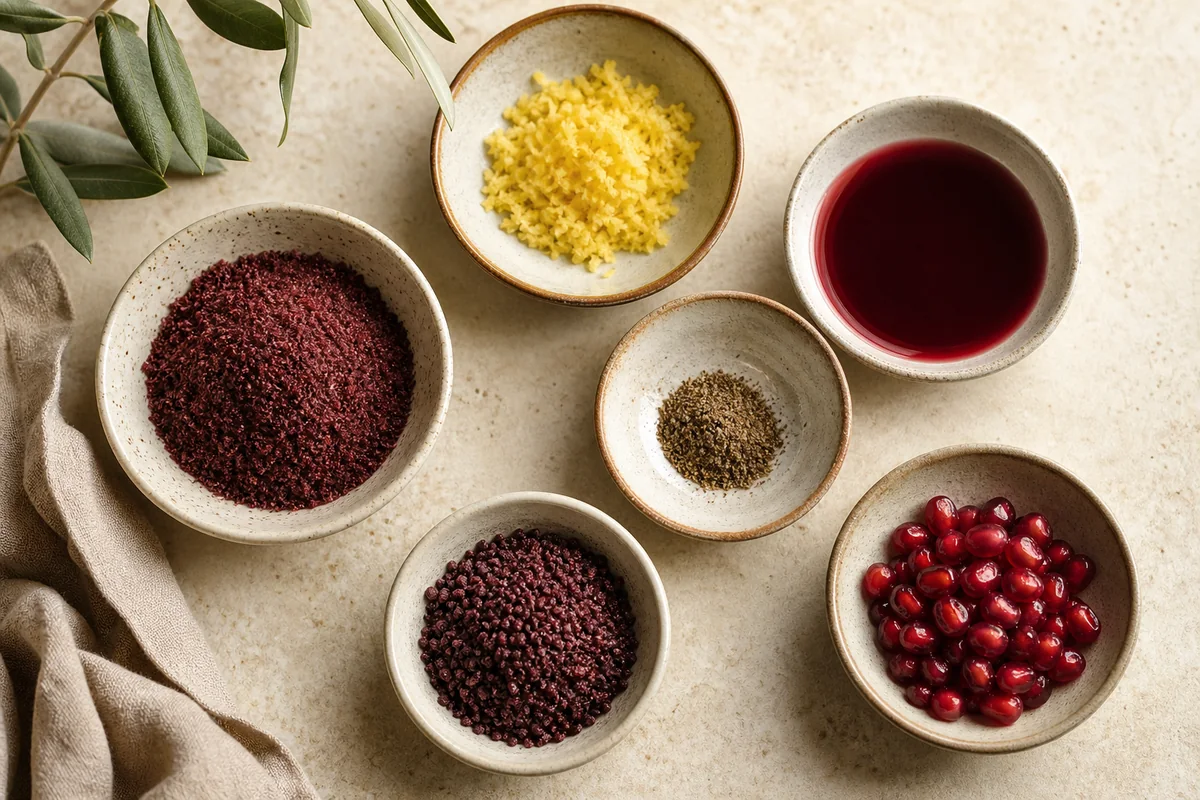
5 Best Sumac Substitutes (Ranked)
Ingredients
Equipment
Method
- Identify how you’re using sumac: sprinkle for finishing, mix into dressing/marinade, or bake for tang.
- Pick the closest substitute from the list: lemon zest+juice for aroma, citric acid for the strongest control, vinegar for mellow sourness.
- Apply using the listed ratio (or start at half the amount if you’re unsure), then taste and adjust for salt and sweetness.
- If your substitute is wetter (juice/molasses/vinegar), reduce spillover by mixing into a sauce first or draining excess liquid before baking.
- For baking, add the acidic substitute to wet ingredients and increase by ¼ ratio only if the tang is still missing.
Notes
- Use zest to mimic sumac’s dried-fruit aroma, not just acidity.
- Start lower with citric acid and wine vinegars; they can dominate quickly.
Tried this recipe?
Let us know how it was!
Carrie is a food writer and editor with more than 15 years of experience. She has worked for some of the biggest names in the food industry, including Bon Appétit, Food & Wine, and Martha Stewart Living.
As the Editor in Chief of EpicureDelight, Carrie oversees all of the content on the site. She also manages the team of contributing writers and editors, who help to create delicious recipes, helpful tips, and informative articles that you’ll find on the site.
A native of the Chicago area, Carrie is passionate about all things food. She loves trying new restaurants and experimenting with new recipes in her kitchen. She’s also a graduate of the Culinary Institute of America, so she knows a thing or two about food!



