
That sticky, tart-sweet pull of pomegranate molasses is surprisingly hard to fake. It's not just sweet, and it's not just sour.
It's both at once, with a body thick enough to cling to a glaze or sink into a marinade.
The good news is that the best pomegranate molasses substitute is usually something you already own. The trick is matching two things at once: the tartness and the syrupy weight.
The closest swaps are reduced pomegranate juice and balsamic glaze, both syrupy and tangy enough to hold up in glazes or marinades. For baking, grenadine reduced slightly works well. Date syrup plus lemon and cranberry reduction round out the list for pantry-only situations.
5 Pomegranate Molasses Alternatives That Deliver the Same Sweet-Tart Punch
The key when picking a swap is to think in two columns: thickness and tang. A thin, lightly sweet substitute will fall flat in a glaze.
An overly sweet one will throw off a savory dish entirely. The five options below are ranked by how closely they match both qualities, with specific ratios for each.
| # | Substitute | Best For | Ratio | Key Note |
|---|---|---|---|---|
| 1 | Reduced Pomegranate Juice | Both | 1:1 | Simmer to spoon-coat |
| 2 | Grenadine (reduced) | Both | ¾:1 | Reduce if too thin |
| 3 | Balsamic Glaze | Savory | 1:1 | Add pinch of sugar |
| 4 | Cranberry Reduction | Both | ¾:1 | Sharper; reduce slowly |
| 5 | Date Syrup + Lemon | Both | ¾:1 | Add lemon by drops |
1. Reduced Pomegranate Juice
This is the closest thing to the real product you can make at home. Start with pure pomegranate juice, the kind with no added sugar, and learn what this tart, dark fruit actually tastes like before you reduce it.
Use a 1:1 ratio, but only once the juice has thickened to spoon-coating consistency. It firms up more as it cools, so pull it off the heat a little early.
- How to reduce: Simmer on medium-low, stirring occasionally, until it coats the back of a spoon.
- In baking: It works well wherever pomegranate molasses adds moisture and tang; use at full 1:1 and don't add extra liquid.
- Storage: Cool completely, jar it, and keep in the fridge for up to two weeks.
Skip if: You're in a hurry. This takes 20-30 minutes of active stovetop time and can't be rushed.
2. Grenadine (Reduced)
Grenadine is sweeter and milder than pomegranate molasses, but it lands in the same flavor territory. The best grenadine for this swap is a full-bodied, pomegranate-forward syrup, not the bright-red candy-flavored bar variety.
If you want more detail on choosing a grenadine alternative when this one also runs out, that's worth reading separately.
- Ratio for glazes and marinades: Start at 1:1 after reducing; the thickness will be closer to molasses.
- Ratio for baking: Use ½-3/4:1 if your batter already has added sweeteners.
- Thickness fix: Reduce in a small pan for 2-5 minutes before adding to your recipe.
Skip if: Your grenadine tastes more like candy than fruit. That sweetness will overpower any savory dish.
3. Balsamic Glaze
Balsamic glaze is dark, tangy, and already syrupy enough to use without reduction. It's not a fruity swap, but the vinegary depth reads close enough in roasted meats, grain salads, and dipping sauces.
If you want to test it in a savory context first, our crispy glazed drumsticks are a good proving ground.
Balsamic Glaze
Works for: dark sauces, roasted meats, grain bowls, vinaigrette-style dressings
Skip if: the recipe depends on a fruity pomegranate note or a lighter, brighter flavor
- Ratio for sauces: 1:1 with no reduction needed if your balsamic glaze is already thick.
- Ratio for baking: Start at ¾:1; balsamic can taste sharper in a baked good than in a glaze.
- Sweetness fix: Add a small pinch of sugar or a few drops of honey if it tastes more vinegary than tart-sweet.
Skip if: You need a true pomegranate flavor. Balsamic is wine-dark and acidic in a different way.
4. Cranberry Juice Reduction
Cranberry juice reduced to syrup is sharp, fruit-forward, and surprisingly close in body to pomegranate molasses. Understanding the difference between juice versus cocktail varieties matters here.
Use 100% cranberry juice, not the sweetened cocktail blend.
- Ratio: Use ¾:1. Cranberry reduction is sharper than pomegranate molasses, so slightly less goes further.
- Thickness: Reduce on medium heat until it coats a spoon, then cool to confirm viscosity before adding to your recipe.
- Baking adjustment: If the batter already has citrus or vinegar, reduce the cranberry substitution to ½:1 and taste before scaling.
- Sweetness balance: A small pinch of sugar can smooth the sharper edges without dulling the tartness.
Skip if: Your dish depends on pomegranate's distinct fruit depth. Cranberry reads more citrusy-berry and will shift the flavor profile noticeably.
5. Date Syrup + Lemon
Date syrup alone is too sweet and too flat to stand in for pomegranate molasses. The lemon is not optional here.
It does the job of lifting the whole thing from "dark caramel-adjacent" to something closer to tart-fruit territory.
For anything beyond a simple swap, it helps to know about caramel-like date sweetness before you start adjusting. Add lemon a few drops at a time, tasting after each addition.
Stop when the syrup has a bright back-note without tasting overtly citrusy.
| Use | Ratio | Notes |
|---|---|---|
| Glazes | ¾:1 | Date syrup + 4-5 drops lemon per tablespoon |
| Marinades | ¾:1 | Add lemon to taste; thin slightly with water if too thick |
| Baking | ½:1 | Date syrup is dense; reduce other sweeteners by 10% |
Skip if: You can't use lemon or want to avoid any citrus brightness. Without the acid, date syrup won't mimic pomegranate molasses at all.
Making Any Pomegranate Molasses Substitute Work (Without a Flavor Ditch)
The single most common mistake is adding the substitute straight to the pot without adjusting for thickness or tang. Every swap above starts at a target ratio, but your final result still depends on tasting and correcting.
If you're working with fresh citrus for brightness, check the juice isn't too old before using it to balance a sweet substitute. And if you're storing a sticky syrup-based swap, check the label since shelf life varies more than most people expect.
- Thickness: If your substitute is thinner than molasses, reduce it for 2-3 minutes or add 1-2 teaspoon less liquid elsewhere in the recipe to compensate.
- Tang and sweetness: Let the mixture sit 2-3 minutes before tasting. Sweetness and acidity settle after stirring. Add acid (a few drops of lemon or vinegar) if flat, or a pinch of sugar if too sharp.
- Baking vs. savory: In baking, lean toward less substitute and adjust for sweetness first. In savory applications like glazes and marinades, match thickness first and tune tang second.
Frequently Asked Questions
Reduced pomegranate juice is the closest match. Simmer pure pomegranate juice to spoon-coating thickness and use it at a 1:1 ratio for the same tart, syrupy result.
Most grenadine is thinner than pomegranate molasses, so reducing it 2-3 minutes first gives better results. Skip this step only if your grenadine is already thick and not overly sweet.
Use a ¾:1 ratio for sweeter substitutes like grenadine or date syrup, and reduce any other sweetener in the recipe by about 10%. Taste the batter before baking.
Too sharp means add a pinch of sugar or honey. Too flat means add a few drops of lemon juice or a small splash of vinegar. Always re-taste after 2 minutes.
Store it in a sealed jar in the refrigerator for up to two weeks. The syrup thickens further when cold, so let it sit at room temperature for a few minutes before measuring.
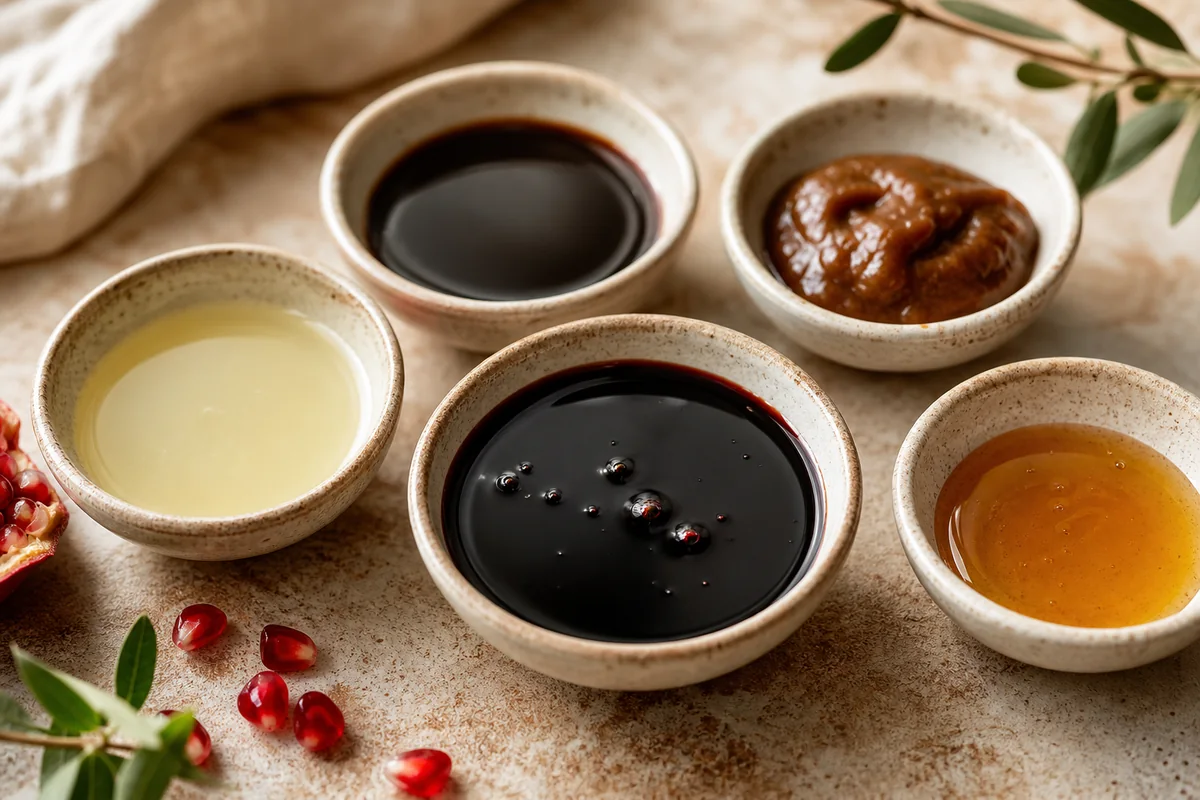
5 Best Pomegranate Molasses Substitutes for Better Results
Ingredients
Equipment
Method
- Match your use case: glaze/marinade needs syrupy body; baking needs tang + moisture without making batter runny.
- Start with the listed ratio. If your substitute is thinner than molasses, simmer/reduce or use 1 to 2 teaspoon more per tablespoon.
- Adjust tang: add a few drops of lemon juice or a tiny splash of vinegar if it tastes flat after mixing.
- Adjust sweetness: if the substitute tastes sharper than pomegranate molasses, add a pinch of sugar or honey.
- Taste-test: stir into a spoonful of sauce or a small bit of batter before scaling up.
Notes
- “1:1” ratios assume your substitute is syrup-like. If it’s watery, reduce or use a slightly higher amount.
- If you’re replacing pomegranate molasses in baking, focus on tang first (acid level), then sweetness, then thickness.
Tried this recipe?
Let us know how it was!
Carrie is a food writer and editor with more than 15 years of experience. She has worked for some of the biggest names in the food industry, including Bon Appétit, Food & Wine, and Martha Stewart Living.
As the Editor in Chief of EpicureDelight, Carrie oversees all of the content on the site. She also manages the team of contributing writers and editors, who help to create delicious recipes, helpful tips, and informative articles that you’ll find on the site.
A native of the Chicago area, Carrie is passionate about all things food. She loves trying new restaurants and experimenting with new recipes in her kitchen. She’s also a graduate of the Culinary Institute of America, so she knows a thing or two about food!



