
Out of sweet potatoes mid-recipe? You don't have to run to the store.
The right sweet potato substitute can get you most of the way there, as long as you match texture first and season to taste after.
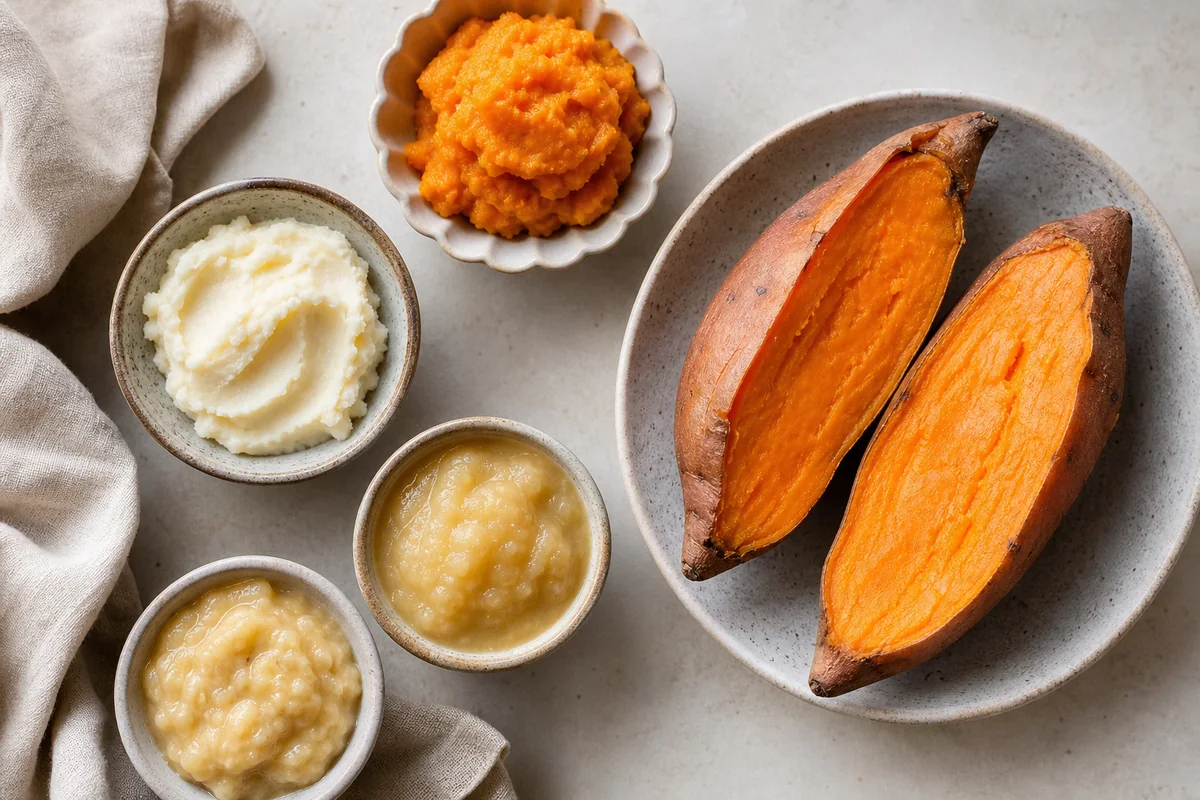
Sweet potatoes do two things: they hold a starchy, tender body and they carry a mild sweetness that deepens with heat. The best swaps copy one of those qualities well.
Matching both at once is harder, but the five options below cover every common scenario.
The best sweet potato alternatives are yam, butternut squash, pumpkin, carrots, and russet potatoes. Yam is the closest texture match. Butternut squash wins for creamy roasting. Pumpkin works in mashes and fillings but needs moisture control. Carrots add sweetness with a softer bite. Russets are your starchy pantry backup.
5 Best Sweet Potato Swaps Ranked by Texture
Each option below targets a specific cooking job. The table gives you ratios at a glance, and the H3 sections tell you exactly how to adjust prep, seasoning, and moisture.
| # | Substitute | Best For | Ratio | Key Note |
|---|---|---|---|---|
| 1 | Yam | Both | 1:1 | Less sweet, very starchy |
| 2 | Butternut Squash | Both | 1:1 | Roast until fully tender |
| 3 | Pumpkin | Mash/Fill | ¾:1 | Reduce liquid in recipe |
| 4 | Carrots | Mash/Roast | 1:1 | Cook longer for softness |
| 5 | Russet Potato | Both | 1:1 | Add sweetener and spice |
1. Yam
Yam is the most reliable sweet potato replacement for mashing and roasting. It has the same starchy interior, holds its shape when cubed, and softens to a creamy texture under heat.
If you want to explore other gold potato swaps, that page covers options with similar starchy builds.
Yam vs. Sweet Potato
Works for: mashing, roasting, casseroles, and any dish needing a starchy, tender interior
Skip if: your recipe depends on that specific orange-sweet flavor without extra seasoning
- Ratio: Use 1:1 by weight, no adjustments needed
- Sweetness gap: Add 1 teaspoon maple syrup or honey per cup to match sweet potato's natural sugar
- Prep: Peel thickly, yam skin is tougher than sweet potato skin
- Texture fix: If your variety is drier, add 1 tablespoon butter or oil before mashing
2. Butternut Squash
Butternut squash is the top pick for roasting, giving you a creamy, orange-fleshed result that reads almost identical to sweet potato on the plate. For this swap, naturally sweet flesh matters, so choose a squash that feels heavy for its size.
- Ratio: 1:1 by weight for roasting, cubing, and casseroles
- Sweetness: Squash is slightly less sweet; a drizzle of maple syrup before roasting closes the gap
- Moisture: Lower water content than pumpkin, so no liquid reduction needed
- Skip if: You need a very sweet, bright flavor without any seasoning adjustment
3. Pumpkin
Pumpkin is wetter than sweet potato, which is its main challenge. Fresh pumpkin and canned pumpkin puree both work in mashes and fillings, but you need to cook off excess moisture or the result turns watery.
Canned pumpkin is the faster route. Drain or cook it in a dry pan for 3 to 4 minutes before using, and cut any added liquid in the recipe by 2 tablespoon per cup.
If you have leftover canned pumpkin, smooth puree storage tips will help you use it before it turns.
| Use | Ratio | Notes |
|---|---|---|
| Mash | ¾:1 | Cook dry in pan first; add butter to finish |
| Filling (pie, casserole) | ¾:1 | Reduce other liquids by 2 tablespoon per cup |
| Soup base | 1:1 | Extra moisture is fine; adjust salt at end |
- Texture: Pumpkin collapses more than sweet potato; expect a softer, smoother result
- Sweetness: Add 1 teaspoon brown sugar or honey per cup to match sweet potato's depth
- Skip if: You need firm cubes; pumpkin softens too fast and will not hold its shape
4. Carrots
Carrots are naturally sweet and roast beautifully, making them a solid sweet potato alternative in dishes where sweetness matters more than starch. They are less dense than sweet potato, so cook them a few minutes longer to avoid a firm center.
For mash, starchy orange roots like sweet potato get their creaminess from structure; carrots need blending to compensate.
- Ratio: 1:1 by weight, but expect a lighter, less starchy result
- For mash: Boil until very soft, then blend with butter and a splash of cream for body
- For roasting: Cut smaller than you would sweet potato; carrots take longer at high heat
- Seasoning: Add a pinch of cinnamon and a small drizzle of honey to pull the flavor closer
- Skip if: Your dish relies on starch-driven creaminess; carrots are sweeter but less thick
5. Russet Potatoes
Russets are the starchy backup most kitchens already have. They mash fluffy rather than creamy, but the right seasoning gets them close to sweet potato territory.
If you want to nail picking the right ricer tool, that can make a real difference in texture when working with russets.
- Ratio: 1:1 by weight for mashing, roasting, and casseroles
- Sweetness: Russets have almost no natural sweetness; a small sweetener is non-negotiable
- Texture: Fluffy and dry rather than creamy; add an extra tablespoon of butter or cream
- Roasting: Russets brown faster; check at the 25-minute mark and reduce heat if needed
Skip if your dish needs the sweet orange flavor without adding sweetener or spices.
Making Your Sweet Potato Substitute Work
Texture matching is the most important step: choose a starchy option like yam or russet for fluffy mashes, and a creamy option like butternut squash for roasting. If you want to understand what makes sweet potato itself tick before swapping, reading about its natural flavor profile can sharpen your seasoning instincts.
For dishes that rely on a thickened, spoonable texture, also consider thickening with flaked potato as a finishing move.
- Moisture first: If your swap is wetter than sweet potato (pumpkin, cooked squash), reduce added liquid by 2 tablespoon per cup before mixing
- Sweetness last: Taste before adding sugar; yam and squash often need less than you think, russet always needs more
- Even cooking: Cut all substitutes into 1-inch cubes so everything finishes at the same time in the oven or pot
Frequently Asked Questions
Butternut squash is the closest match for roasting. Use it 1:1 by weight and roast at 400°F until the edges brown and the interior is fully tender.
Use a ¾:1 ratio instead. Pumpkin holds more moisture, so reduce other liquids in the casserole by 2 tablespoon per cup to avoid a watery result.
Add a pinch of cinnamon and a small drizzle of honey or maple syrup after cooking. Blending the carrots smooth also helps replicate the creamy body of sweet potato mash.
Yes. Cut everything into 1-inch cubes so the pieces finish cooking at the same time. Uneven cuts lead to mushy edges and undercooked centers.
Return the mash to a dry pan over medium heat and stir for 2 to 3 minutes to cook off excess moisture. Adding a tablespoon of butter also helps bind the texture.
5 Best Sweet Potato Substitutes (Easy Swaps)
Ingredients
Equipment
Method
- Match your dish to a texture goal: mash needs creamy-dry, roast needs tender-starchy, casserole needs hold.
- Use the ratio from the list: yam and squash are closest at 1:1, pumpkin often needs ¾:1 to avoid extra moisture.
- Prep for even cooking: cut into 1-inch chunks (or thinner if roasting fast) so everything finishes at once.
- Adjust sweetness and moisture: if the substitute is wetter (pumpkin), reduce added liquids; if it’s less sweet (russet/carrot), add a small sweetener and spices.
- Taste and finish: for mashes, blend until smooth; for roasts, salt well and roast until browned edges develop.
Notes
- Measure by weight for the most reliable swap, especially for casseroles and baked mashes.
- If your recipe depends on thickness (like mash or pie filling), prioritize cooked-and-drained pumpkin for the right body.
Tried this recipe?
Let us know how it was!
Carrie is a food writer and editor with more than 15 years of experience. She has worked for some of the biggest names in the food industry, including Bon Appétit, Food & Wine, and Martha Stewart Living.
As the Editor in Chief of EpicureDelight, Carrie oversees all of the content on the site. She also manages the team of contributing writers and editors, who help to create delicious recipes, helpful tips, and informative articles that you’ll find on the site.
A native of the Chicago area, Carrie is passionate about all things food. She loves trying new restaurants and experimenting with new recipes in her kitchen. She’s also a graduate of the Culinary Institute of America, so she knows a thing or two about food!



