
That deep red color on a piece of grilled chicken, the smoky warmth that lingers after the first bite - that's what a good tandoori masala does. When the jar is empty and dinner is an hour away, you need a real fix, not a shrug.
Tandoori masala flavor works in two layers. The first is warm spice depth: cumin, coriander, garam masala, garlic.
The second is the smoky, red-chili note from paprika or Kashmiri chili, often boosted by the tang of yogurt or lemon in the marinade itself. The best tandoori masala substitute has to cover both layers, or the dish falls flat.
This guide covers five swaps ranked by how well they cover those two layers. For each one, we flag when to skip it and exactly how much to use.
Tandoori masala has two flavor layers: warm spices (cumin, coriander, garam masala) and a smoky red-chili note (paprika, Kashmiri chili). The best swaps match both. Use a 1:1 ratio for most options, then fix missing tang with lemon juice and missing color with a pinch of Kashmiri chili or extra paprika.
5 Best Tandoori Masala Substitutes for Home Cooks
The table below gives you the quick-reference view. Each H3 below it digs into the exact adjustment you'll need.
| # | Substitute | Best For | Ratio | Key Note |
|---|---|---|---|---|
| 1 | Store-bought tandoori spice blend | ★ Both | 1:1 | Closest overall swap |
| 2 | Garam masala + smoked paprika | ★ Both | 1:1 | Add paprika for smoke |
| 3 | Curry powder + paprika | ★ Both | 1:1 | Watch turmeric levels |
| 4 | Paprika + cumin + garlic powder | ★ Both | 1:1 | Add lemon for tang |
| 5 | Paprika + garam masala (minimal) | ★ Both | 1:1 | Simple fallback only |
1. Store-Bought Tandoori Spice Blend
A pre-made tandoori spice blend is the most direct swap because it's built on the same spice logic. It already has cumin, coriander, chili, and some version of the char-forward spice base your recipe needs.
The main variable is brand quality - some blends lean sweet, some lean smoky, and a few are genuinely mild. If yours comes out flat, stir in a pinch of smoked paprika.
Store-Bought Tandoori Spice Blend
Works for: yogurt marinades, dry rubs, grilled meats, roasted vegetables
Skip if: you want a pantry-only solution with no pre-made blends
- Ratio: Use 1:1 - one tablespoon of the blend for every tablespoon of tandoori masala called for.
- Best use: Stir into yogurt for a marinade, or press directly into chicken as a dry rub before grilling or marinating tandoori chicken.
- Taste adjustment: If the blend seems flat, add ½ teaspoon of smoked paprika and a squeeze of lemon to sharpen it.
2. Garam Masala + Smoked Paprika
Garam masala handles the warm, layered spice base - think cinnamon, cardamom, clove, and pepper - while this deeply earthy spice fills the smoky, red-chili gap that plain garam masala leaves behind. Together they cover most of what tandoori masala does in a marinade or rub.
The proportion matters: aim for roughly two parts garam masala to one part smoked paprika so the smoke doesn't overpower.
- Ratio: Use 1:1 total (2 teaspoon garam masala + 1 teaspoon smoked paprika per tablespoon needed).
- Best use: Grilling or high-heat roasting, where the paprika chars slightly and mimics the tandoor effect.
- Color fix: For deeper red color, add a pinch of Kashmiri chili or standard red chili powder alongside the paprika.
- Tang fix: Squeeze half a lemon into the marinade - garam masala has no acidic note on its own.
Skip if: your garam masala blend is already sweet-dominant and you need a savory, heat-forward profile.
3. Curry Powder + Paprika
Curry powder brings spice complexity - turmeric, cumin, fenugreek, coriander - and paprika (or Kashmiri chili) adds the red color and mild heat. When thinking about mild red chili options, Kashmiri chili powder is the better color booster here because it gives the vivid orange-red hue without raising the heat level.
The risk with curry powder is turmeric: too much makes the dish taste more curry than tandoori.
Curry Powder + Paprika
Works for: yogurt marinades, sheet-pan dishes, rice-based sides where color matters
Skip if: you need very mild heat - curry powder can be pepper-forward and sharp
- Ratio: 1:1 total (2 teaspoon curry powder + 1 teaspoon paprika per tablespoon called for).
- Turmeric control: If your curry powder is very yellow and turmeric-heavy, reduce by 1 teaspoon and compensate with extra paprika.
- Best pairing: Works especially well in a yogurt marinade - the dairy rounds off any bitterness from the curry powder and blends the colors evenly.
4. DIY Pantry Blend: Paprika, Cumin, Garlic
This three-spice mix takes two minutes to assemble and covers the three main dimensions of tandoori masala: smoke from paprika, warmth from cumin, and savoriness from garlic powder. It's missing some complexity - no coriander, no garam masala warmth - but it's a genuinely solid rub, especially when you add a yogurt-lemon base.
Check that your paprika is still pungent before mixing; stale paprika will make the whole blend taste dusty.
| Use | Ratio | Notes |
|---|---|---|
| 1 tablespoon needed | 1½ teaspoon paprika + ½ teaspoon cumin + ½ teaspoon garlic powder | Starting point; adjust to taste |
| 2 tablespoons needed | 1 tablespoon paprika + 1 teaspoon cumin + 1 teaspoon garlic powder | Scale up evenly; add ½ teaspoon salt |
| Dry rub only | As above + ¼ teaspoon cayenne | Skip yogurt; press into meat directly |
- Ratio: Replaces tandoori masala 1:1 by volume - the proportions above are per tablespoon of the original.
- Yogurt and lemon finish: Stir the blend into 3 tablespoons of plain yogurt and 1 teaspoon of lemon juice per tablespoon of mix. This is where the tang comes back.
- Rest time: Let the coated protein sit for at least 20 minutes. An hour is better for deeper spice penetration on bone-in pieces.
Skip if: you're out of cumin or garlic powder - without those two, the blend is just paprika and the savory base collapses.
5. Paprika + Garam Masala Only
When the spice shelf is bare and you have exactly two ingredients, this is your move. Mix equal parts paprika and garam masala, use them 1:1 in place of tandoori masala, and accept that the result is simplified but still warm and red.
What you'll miss is the cumin-garlic savory depth and the sharper chili note.
The fastest correction is salt and lemon. Add a pinch of extra salt to bring everything forward, squeeze half a lemon into the marinade, and if you have any chili flakes at all, add a small pinch for heat.
- Ratio: 1 part paprika to 1 part garam masala, used 1:1 against the called-for amount of tandoori masala.
- What's missing: Cumin earthiness, garlic savoriness, and the sharper chili punch most tandoori masala blends carry.
- Quick fix: Stir in lemon juice (1 teaspoon per tablespoon of blend), a pinch of chili flakes, and extra salt. That recovers most of the missing dimension.
- Works for: Grilled chicken and roasted vegetables both respond well - anything going into high heat where the paprika can char slightly.
Skip if: you need anything close to authentic tandoori depth. This is a fallback for speed, not a full reconstruction.
Making Your Tandoori Masala Substitute Taste Right
Getting the spice right is half the job. The other half is how you apply it.
Mix your chosen substitute into warm-spiced marinade bases - yogurt or oil both work - and let the blend bloom before the protein hits heat. Garam masala, which you can check against this older warm spice guide, loses potency faster than you might expect, so confirm it still smells sharp before using.
- Mix into yogurt or oil: Combine 1 tablespoon of your substitute blend with 3 tablespoons of plain yogurt (or 1 tablespoon of neutral oil for a dry-rub approach). Yogurt softens sharp edges; oil amplifies smokiness from paprika at high heat.
- Bloom and rest: Coat the protein and rest it for 20-60 minutes before cooking. If time is short, coat and go straight to high heat - the crust forms faster and compensates. You can store marinated chicken for up to 24 hours in the fridge if you're prepping ahead.
- Taste-adjust before cooking: Too flat? Add ½ teaspoon of smoked paprika. Too sharp? Add a pinch of sugar or an extra spoon of yogurt. Not red enough? Stir in 1-2 pinches of Kashmiri chili powder or standard red chili powder right before marinating. Then check for salt last.
Frequently Asked Questions
A store-bought tandoori spice blend is the closest match at a 1:1 ratio. If unavailable, use garam masala plus smoked paprika in equal parts - the yogurt rounds out any rough edges.
Add 1-2 pinches of Kashmiri chili powder or standard red chili to any blend. It delivers the vivid orange-red color without adding significant heat.
Stir in a pinch of sugar or an extra spoonful of plain yogurt. Both soften bitterness quickly without diluting the spice level too much.
Yes, but you'll lose the smoky note and the red color entirely. The result tastes warm and aromatic but won't read as tandoori.
Use 2 tablespoons of any substitute listed here - all ratios are 1:1. Taste first, then add ½ teaspoon more if the flavor seems thin.
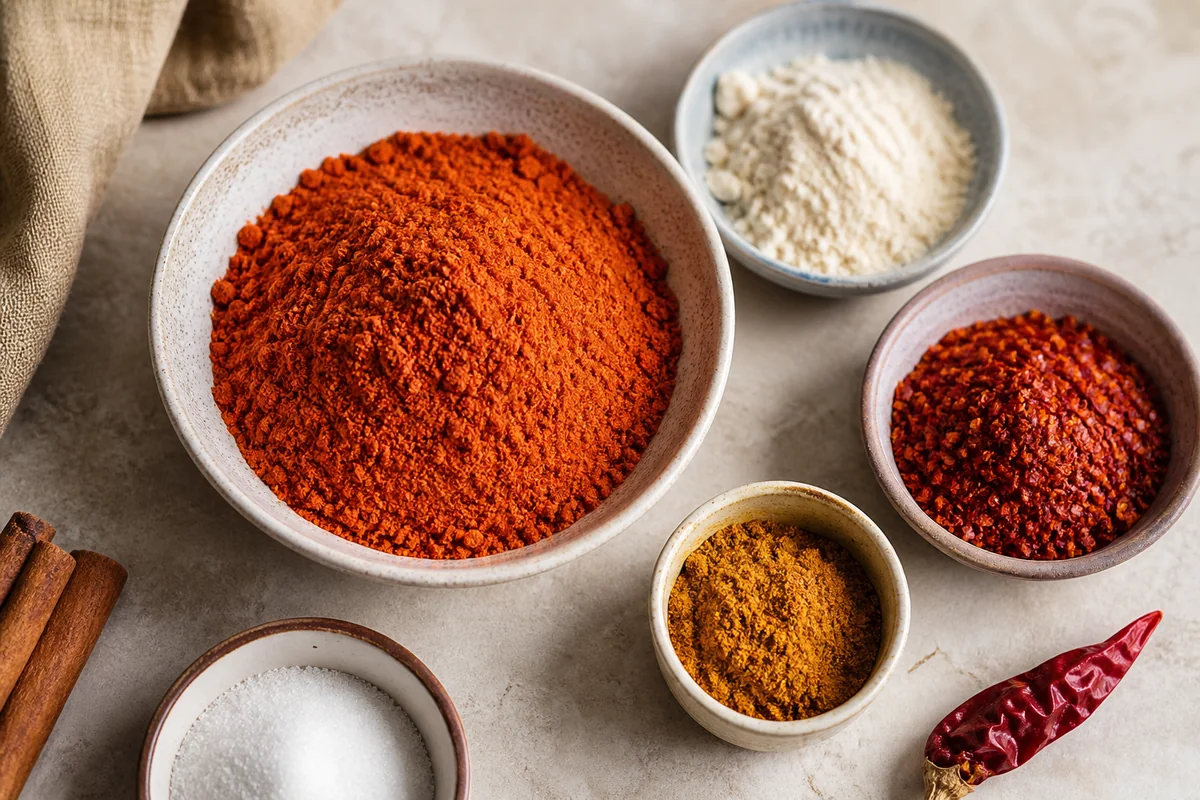
5 Best Tandoori Masala Substitutes for Home Cooks
Ingredients
Equipment
Method
- Choose the closest substitute from the list based on what you have: smoky/deep (paprika), warm/steely (garam masala), or curry-like (curry powder).
- Use the ratio shown for your recipe’s amount of tandoori masala, then mix into your marinade base (yogurt) or into a small amount of oil.
- Rest your protein or vegetables for 20–60 minutes so spices bloom; if you’re short on time, coat and proceed with high heat right away.
- Taste and adjust: add salt for lift, lemon juice for tang, and a pinch of sugar if the swap tastes too sharp.
- For extra “tandoori” color, add 1–2 pinches of Kashmiri chili powder (or another red chili) on top.
Notes
- Most swaps depend on the smoky + warm-spice profile; if you miss smoke, add paprika.
- If your dish needs tang (common in yogurt marinades), finish with lemon juice regardless of the spice blend.
Tried this recipe?
Let us know how it was!
Carrie is a food writer and editor with more than 15 years of experience. She has worked for some of the biggest names in the food industry, including Bon Appétit, Food & Wine, and Martha Stewart Living.
As the Editor in Chief of EpicureDelight, Carrie oversees all of the content on the site. She also manages the team of contributing writers and editors, who help to create delicious recipes, helpful tips, and informative articles that you’ll find on the site.
A native of the Chicago area, Carrie is passionate about all things food. She loves trying new restaurants and experimenting with new recipes in her kitchen. She’s also a graduate of the Culinary Institute of America, so she knows a thing or two about food!



