
No tuna in the pantry, but you still want that satisfying flake and salt? A good tuna substitute is closer than you think.
The key is knowing which swaps hold up cold (tuna salad, sandwiches) and which survive heat (casseroles, bakes).
All ratios here assume drained solids. Start at the listed ratio, then taste and correct for salt, acid, or moisture before you add mayo or mix-ins.
The best tuna substitutes are canned salmon and sardines for seafood flavor and flake. For non-seafood swaps, shredded chicken works in bakes, artichoke hearts work in cold salads, and chickpeas or crab cover budget and mild-flavor needs. Use 1:1 drained solids for most swaps.
5 Best Tuna Substitutes (and the Ratios That Actually Work)
Finding the right tuna replacement comes down to two things: how close you need the flavor, and whether the dish is hot or cold. The table below lays out every swap at a glance.
| # | Substitute | Best For | Ratio | Key Note |
|---|---|---|---|---|
| 1 | Canned Salmon | Both | 1:1 | Closest flaky bite |
| 2 | Sardines | Both | 1:1 | Rinse for milder taste |
| 3 | Shredded Chicken | Both | 1:1 | Add salt and acid |
| 4 | Artichoke Hearts | Cold | ¾:1 | Needs briny add-ins |
| 5 | Crab (canned/imitation) | Cold | 1:1 | Milder, slightly sweet |
Skip this section if you only want plant-based swaps. Go straight to artichoke hearts or chickpeas below.
1. Canned Salmon
Canned salmon is the most natural tuna replacement you can reach for. The flake texture is nearly identical to chunk-light tuna, and both are packed in water or oil.
Use it cold in tuna salad or hot in a noodle bake. If your recipe is already oily (lots of mayo or olive oil), drain and pat the salmon dry before mixing.
For more on what affects the flavor of flaked pink fish, see our breakdown on how processing changes its taste.
- Ratio: 1:1 drained solids, no adjustment needed at the start
- Salt: Salmon is slightly saltier, so hold back on added salt until you taste
- Acid: A small squeeze of lemon (about 1 teaspoon per can) keeps the flavor from reading too rich
- Bakes: Add salmon at the last 10 minutes to avoid it drying out in a casserole
Skip if your dish needs a very neutral seafood flavor. Salmon is richer than tuna and will show through in lightly dressed recipes.
2. Sardines
Sardines have a stronger, brinier flavor than tuna. The flakes are smaller and softer, which changes the texture slightly in a thick sandwich filling.
Sardines vs. Tuna
Works for: Bold-flavored sandwiches, warm pasta dishes, toasts with pickled toppings
Skip if: You dislike strong briny fish flavors or are serving people who are new to fish
A quick rinse under cold water cuts intensity by roughly half. If you're storing sardines for later, keep them in an airtight container for up to 2 days after opening.
- Rinse: Drain and rinse in a fine sieve to reduce fishiness before mixing
- Chop: Roughly chop the fillets so they resemble tuna chunks rather than whole pieces
- Acid balance: Add a splash of lemon juice or a few capers before tasting for salt
- Pairing: Pickled onion or cornichons help normalize the flavor in a cold salad
3. Shredded Chicken
Chicken is the most accessible non-seafood option for tuna salad and casseroles. It takes mayo, mustard, and pickle brine just as well as canned tuna does.
The trick is seasoning it right. Add a pinch of salt, a squeeze of lemon juice, and a teaspoon of pickle brine per cup of shredded chicken.
That combination gets close to the savory, slightly acidic taste of tuna in mayo.
Shred it fine so the texture is consistent throughout the salad or casserole. Watery chicken (boiled without seasoning) needs extra patting dry before you mix it in.
For a deeper look at mild protein flavor profiles, our chicken guide covers the differences in cooking method and seasoning impact.
Skip if you need a seafood-only substitute for dietary or allergy reasons.
4. Artichoke Hearts
Artichoke hearts give you soft, pull-apart chunks that work well in a cold tuna-style salad. They lack any fishy quality, so the flavor-building work falls entirely on your add-ins.
If you're curious about other vegetable-based options, artichoke-based swaps go deeper on texture-matching produce.
- Drain well: Press canned artichokes in a clean towel to remove excess moisture before chopping
- Brine first: Stir in 1 teaspoon capers or 1 tablespoon finely chopped pickles before adding mayo
- Acid layer: Add lemon juice and a small splash of white wine vinegar for depth
- Mayo balance: Greek yogurt cut with mayo (half and half) keeps it from going too heavy without seafood fat
Skip if you need a true seafood flavor. Artichokes are a texture match, not a flavor match.
5. Crab (Imitation or Canned)
Crab is mild and slightly sweet, which makes it an easy match for light sandwiches and quick cold salads. It needs almost no prep beyond draining and a rough flake with a fork.
Crab as Tuna Swap
Works for: Mayo-dressed sandwiches, light salads, quick wraps with lemon
Skip if: Your recipe needs strong fishiness or a briny punch - crab reads sweet and mild
Use it at a straightforward 1:1 swap by weight, then taste before adding sweet mix-ins like relish. Crab already leans sweet, so avoid sweet pickles and stick to dill pickles or capers instead.
- Salt correction: Taste first; crab is often less salty than tuna, so add a small pinch before mixing
- Acid: A squeeze of lemon (about 1 teaspoon per cup) cuts the sweetness effectively
- Avoid: Sweet relish, honey mustard, or any other sweet-leaning mix-ins with crab
Now, chickpeas. They are not in the table above because they function differently from flaked fish.
But they are among the best budget options for tuna salad texture.
Chickpeas
Chickpeas work best for tuna salad-style dishes where you want a spreadable, mayo-bound scoop. They don't flake, but mashed to the right texture they hold together well on bread.
If you're also thinking about storing a batch of mashed chickpea salad, it keeps well for up to 4 days in the fridge.
- Mash level: Use a fork to mash until 70% smooth, leaving some chunks for texture contrast
- Brine: Stir in 1 tablespoon capers or finely minced dill pickles per cup of mashed chickpeas
- Acid: Add 2 teaspoon lemon juice plus 1 teaspoon apple cider vinegar before tasting for salt
- Mayo: Start with 2 tablespoon mayo per cup of chickpeas and add more if needed for creaminess
Skip if you want actual flakes. Chickpeas won't form the pull-apart texture of canned tuna.
Making a Tuna Substitute Taste Right
The three variables that separate a good tuna swap from a flat one are saltiness, oiliness, and texture. Get those right and the dish reads close to tuna regardless of what protein you're using.
The shelf life of prepared tuna salad also applies to most of these swaps, so the same 3-day fridge rule holds.
- Drain first, always: Pat your substitute dry before mixing to prevent a watery salad or soggy sandwich
- Add brine in steps: Stir in pickle juice, capers, or lemon juice in 1 teaspoon increments and taste between each addition
- Heat gently: If using your substitute in a bake or casserole, fold it in during the last 10 minutes and keep the temperature below 375°F to preserve texture
If your substitute is still reading bland after seasoning, a small pinch of Old Bay or celery salt works faster than adding more pickle brine. Also, if you notice off-putting metallic notes in canned salmon or sardines, a brief cold-water rinse before mixing usually resolves it.
Frequently Asked Questions
Use 1:1 drained solids for salmon, sardines, chicken, crab, and chickpeas. Use ¾:1 for artichoke hearts, then add extra seasoning to compensate for the lower intensity.
Yes, always drain and pat dry. Excess liquid from canned fish or artichokes makes mayo-based salads watery and weakens the overall flavor concentration.
Shredded chicken and canned salmon both hold up well under heat. Fold either in during the last 10 minutes of baking to avoid dryness.
Add capers, finely chopped dill pickles, or a splash of pickle brine. Start with 1 teaspoon at a time and taste before adding more.
Yes. Thaw overnight in the fridge, then drain and press out moisture before using. Avoid microwave thawing, which can turn the texture mushy and uneven.
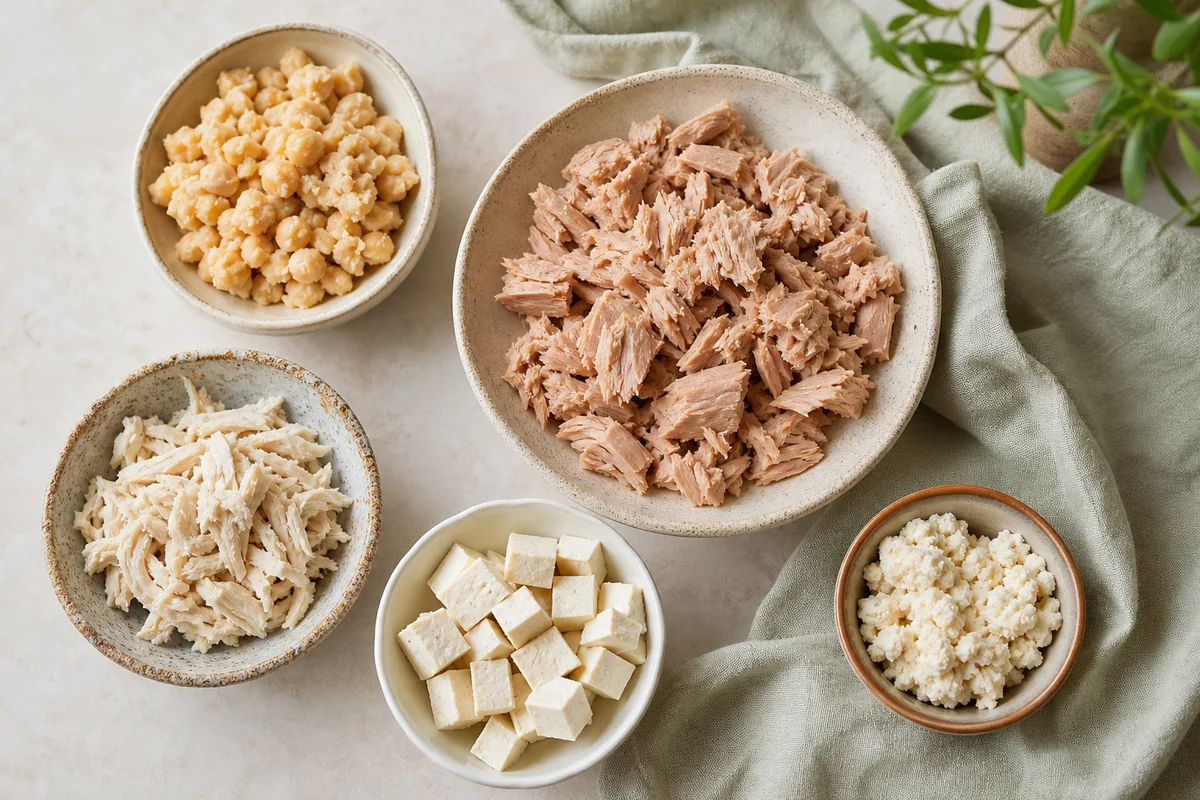
5 Best Tuna Substitutes (with Ratios)
Ingredients
Equipment
Method
- Decide your use: tuna salad/sandwich (no-cook texture) or tuna bake/casserole (can handle cooking).
- Start with the ratio from the table (use 1:1 for the closest match; use ¾:1 for less intense/less salty substitutes).
- If your substitute is very oily, drain and pat it dry; if it’s mild, add salt/acid (lemon juice or vinegar) in small steps.
- Mix and taste before assembling—adjust with a briny ingredient (pickles, capers, or a splash of pickle juice) if needed.
- For cooked dishes, gently heat just until combined to keep flake texture (avoid overcooking quick proteins).
Notes
- Ratios assume drained solids; if your substitute is packed in oil, drain first.
- If your recipe already uses salty add-ins (soy sauce, pickles, olives), reduce added salt when swapping.
Tried this recipe?
Let us know how it was!
Carrie is a food writer and editor with more than 15 years of experience. She has worked for some of the biggest names in the food industry, including Bon Appétit, Food & Wine, and Martha Stewart Living.
As the Editor in Chief of EpicureDelight, Carrie oversees all of the content on the site. She also manages the team of contributing writers and editors, who help to create delicious recipes, helpful tips, and informative articles that you’ll find on the site.
A native of the Chicago area, Carrie is passionate about all things food. She loves trying new restaurants and experimenting with new recipes in her kitchen. She’s also a graduate of the Culinary Institute of America, so she knows a thing or two about food!



