
Butter is the one ingredient home cooks tend to grab without reading the label. Then the recipe calls for unsalted butter substitute and the block in your fridge turns out to be salted.
The difference matters more in baking than in cooking, because salt affects gluten, sweetness balance, and even how a frosting sets.
Unsalted butter gives you two things: pure fat behavior and total salt control. Lose either one and the recipe may still work, but you need to know which variable changed.
The best unsalted butter substitutes are salted butter (with a salt reduction), cultured unsalted butter, ghee, vegetable shortening, and stick-style baking margarine. For sautéing, an olive oil blend works well. For moist baked goods, full-fat Greek yogurt at a ¾:1 ratio is a solid backup.
5 Best Unsalted Butter Substitutes Ranked by Use
Every substitute below is mapped to what butter actually does in that recipe. Some swap in cleanly at 1:1.
Others need a small tweak to salt, flour, or heat. The table below gives you the fast version.
The sections after it walk through each swap in detail.
| # | Substitute | Best For | Ratio | Key Note |
|---|---|---|---|---|
| 1 | Salted Butter | Both | 1:1 | Reduce added salt |
| 2 | Cultured Unsalted Butter | Baking | 1:1 | Slight tang possible |
| 3 | Ghee | Cooking | 1:1 | Browns faster, nuttier |
| 4 | Vegetable Shortening | Baking | 1:1 | Neutral flavor, firm |
| 5 | Baking Margarine (stick) | Both | 1:1 | Chill before creaming |
1. Salted Butter
Salted butter is the fastest swap because the fat, water content, and creaming behavior are identical to unsalted. The only real job is managing the extra sodium.
- Best uses: Cookies, quick breads, pan sauces, sautéed vegetables, everyday baking
- Swap ratio: 1:1 by weight or volume
- Salt adjustment: Reduce any added salt in the recipe by ¼ teaspoon per ½ cup (1 stick) of butter used
- Watch: If the recipe calls for no added salt at all, taste as you go-salted butter varies by brand (some run higher)
Understanding the flavor profile of butter helps you decide how much that salt bump will actually matter in your dish.
Salted Butter vs. Shortening
Works for: any recipe where you can reduce salt-cookies, pan cooking, sauces, most cakes
Skip if: frosting where salt balance is critical, or a recipe already high in sodium
2. Cultured Unsalted Butter
Cultured butter is made from cream that ferments slightly before churning. The melt point, fat percentage, and creaming behavior are all the same as standard unsalted butter, so it swaps directly.
Some bakers notice a faint tang in delicate recipes like vanilla buttercream. In most cookies, scones, and pound cakes, that tang disappears completely during baking.
- Best uses: Buttercream frosting, shortbread, croissant dough, delicate layer cakes
- Swap ratio: 1:1 by weight
- Check the label: Some cultured butters are salted-confirm "unsalted" before swapping without adjustment
- Skip if: You need a completely neutral dairy flavor and the tang will be detectable (plain white glaze, for example)
If you're storing butter for future batches, cultured unsalted butter keeps similarly to standard unsalted in both fridge and freezer.
3. Ghee
Ghee has butter's fat without the water or milk solids. That means it browns faster and hits a higher smoke point, which is exactly what you want for searing, sautéing, or finishing a pan sauce.
- Best uses: Sautéing vegetables, pan sauces, basting roasted meats, simple flatbreads
- Swap ratio: 1:1 by weight for cooking; use the same for simple baked goods like banana bread
- Flavor shift: Adds a mild nutty note-noticeable in frostings and neutral cakes, barely detectable in savory dishes
- Skip if: Making a delicate frosting or a white cake where butter's clean dairy flavor is the point
The ghee vs. oil tradeoff is worth reading before you pick between these two for stovetop work.
4. Vegetable Shortening
Shortening stays solid at room temperature longer than butter does. That extra firmness is an advantage in cookies-it keeps the dough from spreading too fast-and in pie crusts, where flakiness depends on fat staying cold between layers.
For more ideas on what works when shortening itself runs low, the solid fat swap options page covers the alternatives well.
- Swap ratio: 1:1 by volume
- Texture: Cookies stay slightly taller and more tender; pie crust stays flaky but less golden
- Flavor: Completely neutral-no butter taste at all, which matters in shortbread
- Handling tip: Keep it chilled until mixing; shortening softens quickly in a warm kitchen and can over-incorporate
- Skip if: Butter flavor is the main event-shortbread, browned-butter pasta sauces, or anything where dairy taste matters
5. Baking Margarine (Stick-Style)
Stick margarine has a similar fat content to butter but also contains emulsifiers and slightly more water. Those emulsifiers actually help batters stay smooth, but the extra water can make doughs a touch softer than expected.
Always buy stick-style, not tub. Tub margarine contains too much water and air to function as a direct butter replacement in baking.
It will make cookies spread flat and batters turn greasy.
- Swap ratio: 1:1 by volume or weight
- Best uses: Drop cookies, quick breads, muffins, simple layer cakes
- Handling step: Chill the margarine for 15 minutes before creaming-it firms up and beats more like cold butter
- Flavor: Mild and slightly artificial compared to butter; more noticeable in plain or lightly flavored recipes
- Skip if: Making buttercream, custards, or any recipe where real dairy flavor is the point
Making Your Unsalted Butter Substitute Work
The three variables that determine whether a swap succeeds are salt level, fat behavior, and water content. Salted butter is the easiest fix because it changes only one variable.
Oil-based swaps change all three. Knowing which one your recipe is sensitive to tells you how much adjusting you actually need to do.
For most baked goods, choosing a fat-based swap comes down to whether the recipe needs creaming or just moisture.
- Salt first: If using salted butter or margarine, reduce any added salt by ¼ teaspoon per stick before you change anything else.
- Texture second: If the batter looks wetter than expected (yogurt swaps, oil blends), add flour 1 tablespoon at a time until it reaches the right consistency.
- Heat last: If using ghee or oil, lower the burner slightly at the start-they reach browning temperature faster than butter and can scorch before you notice.
Frequently Asked Questions
Yes, swap 1:1 by volume. Reduce any added salt in the recipe by ¼ teaspoon per ½ cup of butter to keep the salt balance in check.
Salted butter at 1:1 is the easiest. Vegetable shortening is the best option when you need cookies to hold their shape and spread less.
It works in dense cakes like banana bread. Avoid it in frostings and delicate white cakes-ghee's nutty flavor and missing milk solids change the result noticeably.
Add flour 1 tablespoon at a time until the batter reaches the original consistency. This happens most often with yogurt or oil-based swaps.
Only in recipes that don't require creaming-like quick breads or simple muffins. Olive oil can't create the aeration that creamed butter gives cookies and layer cakes.
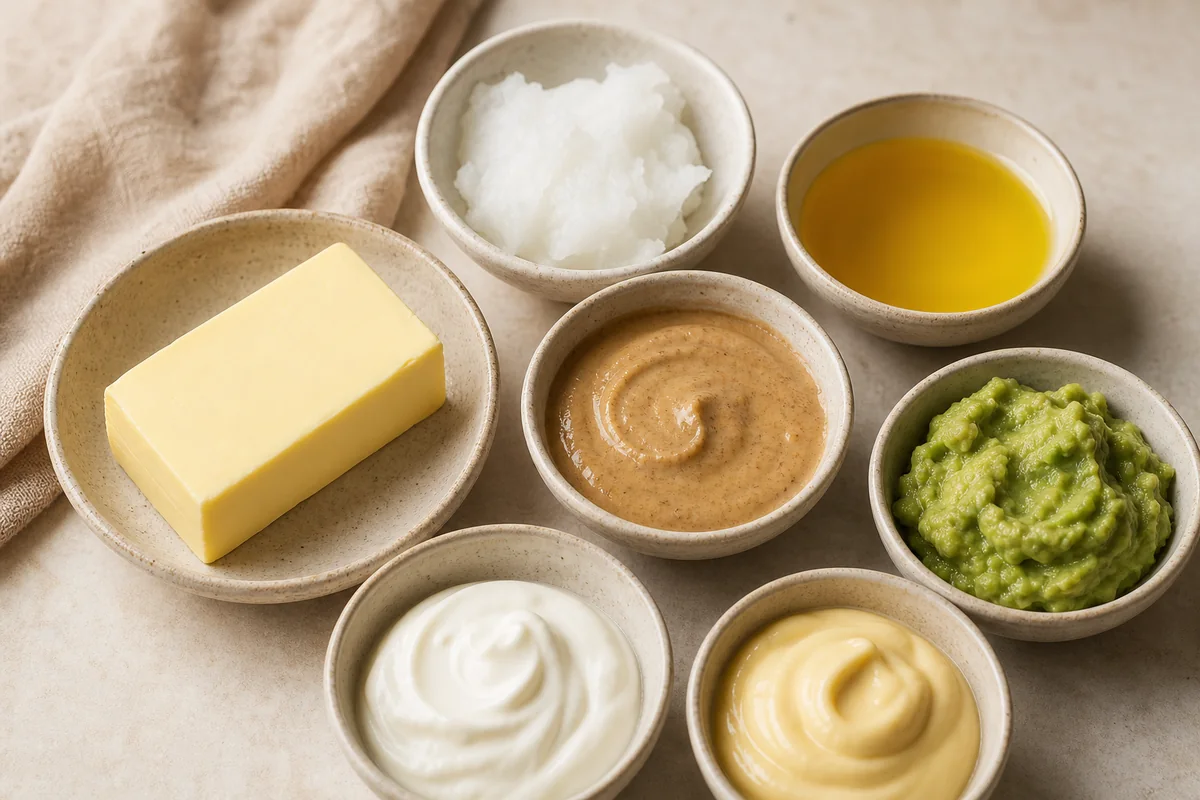
5 Best Unsalted Butter Substitutes for Home Cooks
Ingredients
Equipment
Method
- Choose a substitute based on the recipe’s job for butter: structure (cookies/scones), flavor (sauces), or browning (pan cooking).
- Match fat behavior: for most baking, start with 1:1 swaps that melt and cream like butter (salted butter, cultured unsalted butter, shortening, margarine-sticks).
- Control salt: if using salted butter, reduce any added salt in the recipe (especially for bread dough, frostings, and simple batter recipes).
- If the substitute is wetter or softer (yogurt, oil blend), adjust by chilling (for margarine) or thickening (add flour in small increments for batters).
- Taste-and-test: cook a small portion first (or do a quick bake test) to confirm browning and flavor before committing to the full batch.
Notes
- When substituting for baking, the biggest variable is salt and water content; match those first, then texture.
- Clarified butter (ghee) and neutral fats behave differently in browning—use them when the recipe tolerates a flavor shift.
Tried this recipe?
Let us know how it was!
Carrie is a food writer and editor with more than 15 years of experience. She has worked for some of the biggest names in the food industry, including Bon Appétit, Food & Wine, and Martha Stewart Living.
As the Editor in Chief of EpicureDelight, Carrie oversees all of the content on the site. She also manages the team of contributing writers and editors, who help to create delicious recipes, helpful tips, and informative articles that you’ll find on the site.
A native of the Chicago area, Carrie is passionate about all things food. She loves trying new restaurants and experimenting with new recipes in her kitchen. She’s also a graduate of the Culinary Institute of America, so she knows a thing or two about food!



