
Xanthan gum is one of those ingredients that does three different jobs at once-thickening a liquid, suspending solids so they don't sink, and gelling a mixture into a soft set. A good xanthan gum substitute has to match at least one of those jobs, and the right pick depends on what texture you're chasing.
Most swaps fall into two camps. Gum-like options (guar gum, psyllium) work without heat and hydrate into stable networks.
Starch and gel options (cornstarch, gelatin, agar) need either heat or time to do their job.
The ratios vary a lot too. Gums typically replace xanthan close to 1:1, while starches often need 6-8 times the mass to hit the same thickness.
Xanthan gum thickens, binds, and gels. The best stand-in depends on the job: guar gum for viscosity, psyllium for gluten-free binding, gelatin or agar for a firm set, and cornstarch for hot sauces only.
5 Best Xanthan Gum Substitutes (By Job)
| # | Substitute | Best For | Ratio | Key Note |
|---|---|---|---|---|
| 1 | Guar Gum | Both | 1:1 | Cold or hot, smooth finish |
| 2 | Psyllium Husk Powder | Baking | 1:2 | Hydrate before using |
| 3 | Gelatin (unflavored) | Cooking | 1:4 | Bloom first, needs chilling |
| 4 | Agar-Agar | Both | 1:3 | Boil to dissolve, sets firm |
| 5 | Chia Gel | Cooking | 1:6 | Cold/room-temp only |
Pick based on whether your recipe needs viscosity without setting (guar, psyllium), a firm set (gelatin, agar), or a spoonable cold thickener (chia). Each behaves differently under heat, so the wrong pick for the wrong recipe will either thin out or stay too stiff.
1. Guar Gum
Guar gum is the closest structural match to xanthan. It produces similar viscosity and suspension, and it works in both cold and warm mixtures without needing long rest times.
If you're choosing between gum options, picking the right gum matters more than most people expect-guar has a slightly different slip and finish than xanthan, but in most recipes you won't notice.
- Best recipes: Gluten-free batters, cream-based smoothies, salad dressings, and sauce thickening
- Mixing method: Whisk into dry ingredients first, or disperse into oil before adding to liquid to avoid clumping
- Hydration time: Give it 2-5 minutes after mixing for full viscosity to develop
- Texture note: Very slightly more slippery in low-dose recipes; increases with overuse
Skip if: your recipe needs a completely neutral mouthfeel at very low doses (under 0.1% by weight), where guar's extra slip can be noticeable.
2. Psyllium Husk Powder
Psyllium doesn't just thicken-it forms a fiber gel network that traps air and holds structure. That behavior makes it especially useful in gluten-free binding situations where xanthan normally provides dough elasticity and lift.
Use about half the weight you'd use for xanthan. Psyllium is stronger than it looks on paper, and over-adding turns batters gummy.
- Hydration time: Mix into liquid thoroughly, then rest 5-15 minutes before baking or adding to a sauce
- Best recipes: Gluten-free breads, pancake batters, muffins, and casserole binders
- Texture outcome: Adds light chew and structural hold; slightly denser crumb than xanthan in breads
- Flavor note: Mild and mostly neutral; husk flavor notes are barely detectable in baked goods
Skip if: you need a clear, silky sauce finish. Psyllium makes sauces look opaque and slightly gelled, which works in stews but not in pan sauces meant to coat glossily.
3. Gelatin (Unflavored)
Gelatin is a temperature-set gel, not a viscosity thickener. It doesn't make a sauce silkier at room temp-it firms the whole mixture on cooling.
For set-texture applications like panna cotta or firm fillings, gel-based swap options are worth understanding before you commit.
Bloom your gelatin in cool water first (about 5 minutes), then warm it gently until dissolved before stirring into your recipe.
Gelatin (Set Texture)
Works for: panna cotta, firm pie fillings, chilled cheesecakes, set fruit gels
Skip if: the dish must stay pourable or spoonable at fridge temperature
- Ratio: Start at 1:4 by weight (gelatin to xanthan equivalent); adjust for firmer or softer set
- Blooming: Sprinkle over cold water, wait 5 minutes, then heat just until liquid and clear
- Chill time: Plan for at least 2 hours of refrigeration to confirm full set before serving
4. Agar-Agar
Agar sets firmer and faster than gelatin, and it's fully plant-based. It's the right pick when you want a clean sliceable gel from a vegan recipe.
Before committing, it helps to understand agar's flavor profile-it's mostly neutral, but the firm mouthfeel is distinct and can feel rubbery if you overdose.
- Ratio: Start at 1:3 by weight (agar to xanthan equivalent) for a firm gel
- Method: Whisk into liquid, bring to a full boil, simmer 1-2 minutes, then pour into molds or mixtures to cool
- Best recipes: Fruit jellies, vegan set desserts, agar cups, firm-set pudding layers
Skip if: your recipe needs a delicate, spoonable, slightly wobbly texture. Agar sets too brisk and firm for applications like mousse or soft panna cotta.
5. Chia Gel
Chia seeds absorb water and swell into a gel that spoons and pours without any heat. That makes them useful in cold applications where cornstarch won't work and gelatin is overkill.
If you want a seed-free alternative with similar spoonable behavior, plant-based gel swaps are worth a look alongside chia.
Ground chia gives a smoother result than whole seeds. For very texture-sensitive recipes, pre-make the gel, strain it, and use the liquid portion only.
- Ratio: 1 part chia to 6 parts water by weight; stir well and rest 15-20 minutes
- For smooth results: Use pre-ground chia or blend the finished gel before adding to your recipe
- Best recipes: Puddings, smoothie thickening, cold pie fillings, no-bake energy bars
- Texture note: Gel is speckled and slightly opaque even after grinding; clear sauces won't stay clear
Skip if: you need a totally clear or glossy texture. Chia gel looks speckled and matte even at its smoothest.
Making Xanthan Gum Substitutes Work
The most common mistake is adding too much too fast. Every substitute here behaves differently: gums build viscosity almost instantly, while fiber gels (psyllium, chia) need rest time to fully hydrate before you can judge thickness.
Start at the lower end of your ratio, check after the recommended rest or simmer, and add incrementally. If you're working with a stored gum and aren't sure about its condition, understanding storing your gum correctly can prevent unexpected thinning mid-recipe.
- Cold applications: Use guar gum, psyllium, or chia gel-give each at least 5-15 minutes of hydration before evaluating thickness
- Hot sauces and glazes: Cornstarch slurry works best here; simmer until the sauce turns glossy (about 1-3 minutes), then stop or it can thin again
- Incremental dosing: Add your substitute in 25% increments rather than the full amount at once-this prevents over-thickening, which is much harder to fix than under-thickening
Frequently Asked Questions
Yes, start at a 1:1 ratio by weight. Guar gum may produce a slightly slipperier texture at low doses, so reduce by 10-25% if the result feels too thick or stringy.
Use about half the weight of xanthan gum called for, then hydrate in liquid for 5-15 minutes before baking. Psyllium binds strongly, so over-adding makes batters gummy.
Only partially. Both set the sauce rather than keeping it pourable, so they work for chilled or firm-set applications but not for fluid sauces meant to stay liquid.
Gritty texture means the seeds weren't ground fine enough or didn't hydrate fully. Use pre-ground versions and allow the full 15-20 minute rest before adding to your recipe.
Guar gum is the most reliable option for cold applications, followed by chia gel. Cornstarch and gelatin both require heat to activate and won't thicken cold liquids effectively.
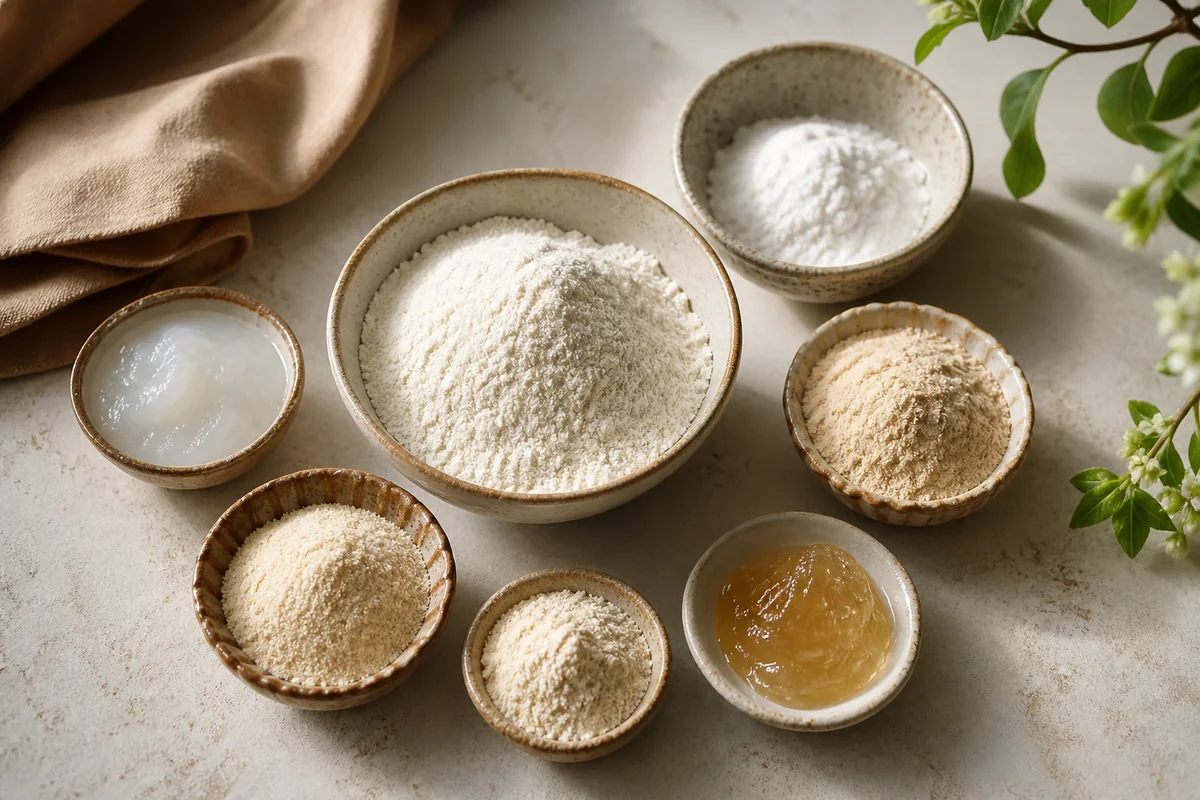
5 Best Xanthan Gum Substitutes (Tested)
Ingredients
Method
- Identify the role xanthan gum played in your recipe: thickening (sauce/batter), suspension (keeping things blended), or gelling (set texture).
- Choose the closest option from the list based on heat use and final texture: guar gum (viscosity), psyllium (binding), gelatin (firm set), chia (gel), cornstarch (heat-thickened).
- Use the listed ratio as a starting point, then mix in small increments until the texture matches your target.
- If your substitute needs hydration (psyllium, chia), let it sit 5–15 minutes, then re-check thickness before adding more.
- Do a quick final consistency test: simmer sauces until glossy, and chill gels briefly to confirm set before you commit.
Notes
- Start low: most substitutes thicken as they hydrate or heat, so you can always add more.
- Taste impact varies—seed-based swaps can add nutty notes and visible specks unless you grind or strain.
Tried this recipe?
Let us know how it was!
Carrie is a food writer and editor with more than 15 years of experience. She has worked for some of the biggest names in the food industry, including Bon Appétit, Food & Wine, and Martha Stewart Living.
As the Editor in Chief of EpicureDelight, Carrie oversees all of the content on the site. She also manages the team of contributing writers and editors, who help to create delicious recipes, helpful tips, and informative articles that you’ll find on the site.
A native of the Chicago area, Carrie is passionate about all things food. She loves trying new restaurants and experimenting with new recipes in her kitchen. She’s also a graduate of the Culinary Institute of America, so she knows a thing or two about food!



