
Boursin has a very specific personality: cool, creamy, garlicky, and just tangy enough to cut through richer dishes. That combination is what makes it so hard to replace off the cuff.
The good news is that the right boursin cheese substitute does not need to be exotic. You are mostly matching three things: spreadable texture, herb-garlic flavor, and a gentle lactic tang.
Nail those three and your dish holds up.
Boursin is creamy, herbed, and lightly tangy. The closest all-around swap is cream cheese blended with garlic powder and dried herbs. For dips, blended cottage cheese works well. For warm sauces, strained Greek yogurt holds up if you keep the heat low. Ricotta and Neufchâtel round out the list for milder needs.
5 Best Boursin Cheese Substitutes for Dips, Spreads, and Sauces
Use this table to pick your swap fast. The columns cover texture match, tang level, and herb-garlic ease so you can decide in one glance.
If your dish is cold, prioritize spreadability. If it goes into a warm sauce, lean on the melt and curdle notes.
| # | Substitute | Best For | Ratio | Key Note |
|---|---|---|---|---|
| 1 | Cream Cheese + Herbs | Both | 1:1 | Add lemon zest for tang |
| 2 | Blended Cottage Cheese | Cold | 1:1 | Must blend until silky |
| 3 | Ricotta (drained) | Warm | ¾:1 | Drain or sauce goes watery |
| 4 | Greek Yogurt (strained) | Both | 1:1 | Low heat only, stir off flame |
| 5 | Neufchâtel / Soft Cream Cheese | Both | 1:1 | Add herbs and garlic powder |
If you want to understand what the herbed tangy spread brings to a dish before you swap it out, that context helps you decide how much seasoning to add to your substitute.
1. Cream Cheese + Garlic + Herbs
Full-fat cream cheese is the most reliable stand-in for boursin in both cold spreads and gentle warm cooking. It has the same dense, scoopable body and takes on herb-garlic seasoning without fighting you.
When choosing cream cheese here, go full-fat rather than reduced-fat. Reduced-fat versions tend to turn grainy when warmed.
- Herbs: Add 1 tablespoon chopped fresh chives or parsley, plus ½ teaspoon dried thyme or Italian blend per 8 oz of cream cheese.
- Garlic: Use ¼ teaspoon garlic powder; fresh minced garlic works too but needs a short rest to mellow.
- Tang: Finish with a small pinch of lemon zest or ½ teaspoon of lemon juice to lift the flavor closer to boursin's brightness.
- Uses: Toast, stuffed mushrooms, pasta mix-in, bagel spread, and stuffed chicken.
Skip if: you want the tang without adding any citrus or extra seasoning. Plain cream cheese tastes flat by comparison.
2. Blended Cottage Cheese
Cottage cheese sounds like a long way from boursin, but the gap closes fast once you blend it smooth. The key step is a full blitz in a food processor or blender until no curds remain.
When swapping blended dairy for a spreadable cheese, the texture window is narrow. Blend until it is truly silky, then season immediately.
- Blend: Process for 60-90 seconds on high; scrape sides once midway through.
- Season: Stir in ½ teaspoon lemon zest, a pinch of salt, and 1 tablespoon chopped chives or dried Italian herbs.
- Serve cold: Best used straight from the fridge; if warming, keep heat very low and stir constantly.
- Storage: Know that blended fresh cheese loses texture faster than whole-curd, so use within 2 days.
Skip if: you do not have a blender or food processor. Mashing by hand leaves a grainy texture that does not behave like boursin.
3. Ricotta (Drained)
Ricotta is milder than boursin, but draining it first removes the excess water that would thin your sauce or dip. Line a fine mesh strainer with cheesecloth, add the ricotta, and let it drain for at least 30 minutes.
After draining, stir in lemon zest, not just lemon juice. Zest carries the aromatic oils that give boursin its brightness. Using drained ricotta quickly is smart; once the whey is removed, it spoils a bit faster.
For warm dishes, ricotta blends gently into pasta without breaking, which makes it a good fit for quick weeknight sauces. Add herbs and garlic powder at the end so they stay fresh.
Skip if: you need strong herb-garlic flavor immediately without adding your own seasonings. Ricotta on its own is too mild to stand in for boursin's assertiveness.
4. Greek Yogurt (Strained)
Greek yogurt has the sharpest tang of any option on this list, and it gets close to boursin's brightness faster than any other substitute. Strain it through cheesecloth for 2 hours and it reaches a scoopable, spreadable consistency.
Cold Spread
Works for: thick dips, crudités, toast toppings, herbed schmears
Skip if: you need it to hold a shape without refrigeration
Warm Sauce
Works for: pasta finishing, light cream sauces, stirred-in toppings
Skip if: your sauce simmers hard or holds heat for more than 5 minutes
Understanding yogurt-based swap options helps you decide when straining is worth the time versus when another substitute is easier.
- Strain timing: 2 hours for a dip consistency; overnight for a thicker, cream-cheese-like texture.
- Prevent curdling: Always add to sauces off the heat. Stir in quickly and serve immediately.
- Season: Add ¼ teaspoon garlic powder and 1 tablespoon fresh herbs; a pinch of salt ties everything together.
Skip if: you need a spread that holds its shape at room temperature without any straining prep.
5. Neufchâtel or Soft Cream Cheese
Neufchâtel is the lowest-effort swap here. It is softer than full-fat cream cheese and slightly less rich, which means it already has a lighter body that is easier to spread cold or stir warm.
The storing soft cream cheese advice applies here too: check the date and keep it refrigerated until the last minute for best texture.
- Ratio: Use 1:1. No reduction needed; the lower fat content roughly compensates for boursin's lighter density.
- Flavor boost: Add ¼ teaspoon garlic powder, 1 tablespoon mixed dried herbs, and a few gratings of lemon zest to close the flavor gap.
- Uses: Spreads on crackers or bread, quick dips with added herbs, topping for baked potatoes, or stirred into warm pasta.
Skip if: you want strong herb intensity without mixing in any extra seasonings. Plain Neufchâtel tastes noticeably milder than boursin.
Making Your Boursin Substitute Taste Right Every Time
Three levers control how close your substitute gets to boursin: texture, tang, and herb load. Texture is the first thing to fix because it affects everything else.
If your base is too wet, drain or strain before adding any flavoring. Tang comes second.
Understanding the sharp dairy flavor profile of options like yogurt helps you calibrate how much lemon zest to add before you overdo it.
- Texture: Strain or drain any wet substitute first; reduce excess moisture by 2 tablespoon before adding herbs.
- Tang: Add lemon zest in small increments, ¼ teaspoon at a time, tasting after each addition. Zest behaves closer to boursin's tang than extra salt does.
- Herbs: Start with half the herbs you think you need, then re-taste and add more. Over-herbing a mild base is hard to reverse.
Frequently Asked Questions
Full-fat cream cheese mixed with garlic powder, dried herbs, and a little lemon zest is the closest match. It spreads easily and holds its shape at room temperature for a few minutes.
Yes, but add it off the heat and stir quickly. High heat or a long simmer will cause it to curdle and separate in the sauce.
Start with a pinch of salt and a small amount of lemon zest. Those two together restore most of boursin's savory brightness before you reach for more herbs or garlic.
It can if you use high heat. Blend it smooth first, then warm it very gently over low heat while stirring constantly to keep the texture together.
Use garlic powder rather than raw garlic for a milder, more integrated flavor. Add dried thyme or Italian herbs plus a little fresh chive for the layered herb note boursin carries.
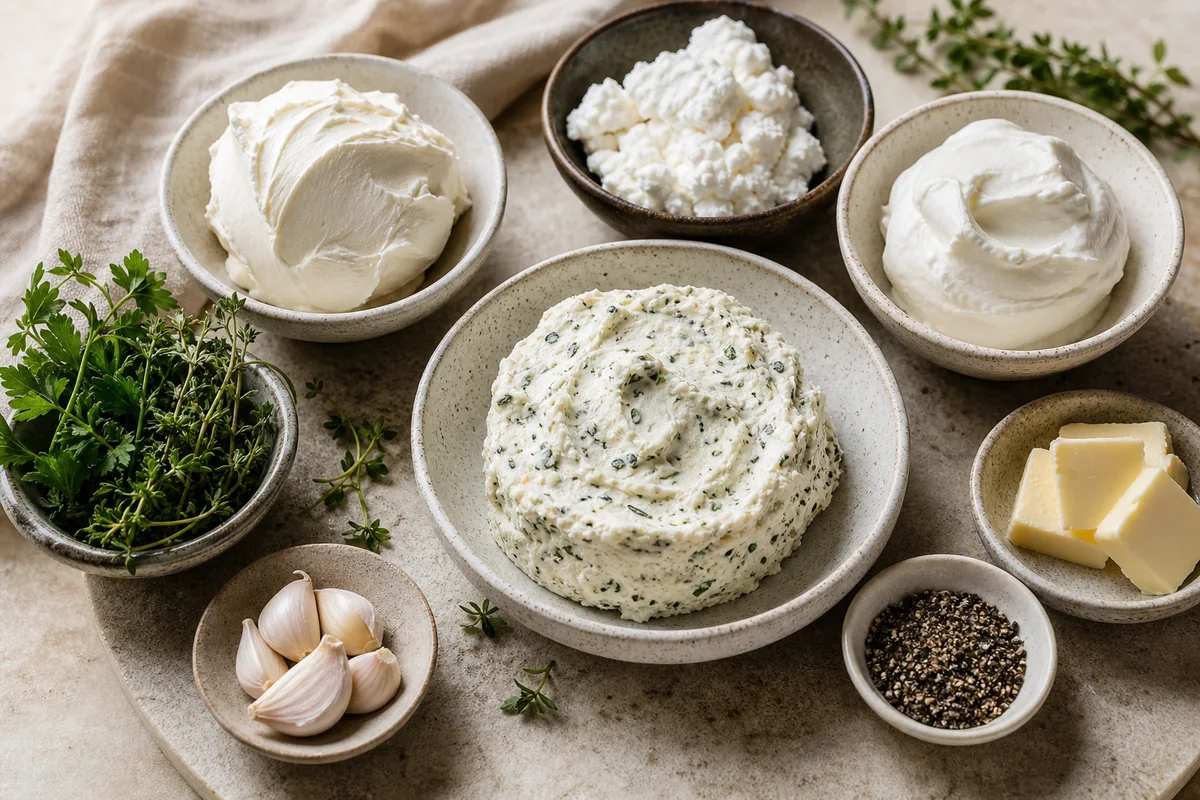
5 Best Boursin Cheese Substitutes for Better Results
Ingredients
Equipment
Method
- Decide how you’re using boursin (cold spread/dip vs. warm sauce or pasta mix-in).
- Choose the closest substitute from the table by texture first (spreadability vs. melt behavior).
- Measure using the listed ratio, then stir in herbs/garlic and add a small pinch of salt to match boursin’s savory depth.
- If your substitute is wetter (like blended yogurt), strain or simmer very briefly to thicken before serving or mixing.
- Taste and fine-tune: add lemon zest for brightness, or extra herbs for the signature boursin vibe.
Notes
- For cooked dishes, warm gently to avoid graininess in substitutes like ricotta/cottage cheese.
- Boursin’s key signature is creamy texture plus herbs plus a light tang—prioritize tang if your base tastes flat.
Tried this recipe?
Let us know how it was!
Carrie is a food writer and editor with more than 15 years of experience. She has worked for some of the biggest names in the food industry, including Bon Appétit, Food & Wine, and Martha Stewart Living.
As the Editor in Chief of EpicureDelight, Carrie oversees all of the content on the site. She also manages the team of contributing writers and editors, who help to create delicious recipes, helpful tips, and informative articles that you’ll find on the site.
A native of the Chicago area, Carrie is passionate about all things food. She loves trying new restaurants and experimenting with new recipes in her kitchen. She’s also a graduate of the Culinary Institute of America, so she knows a thing or two about food!



